
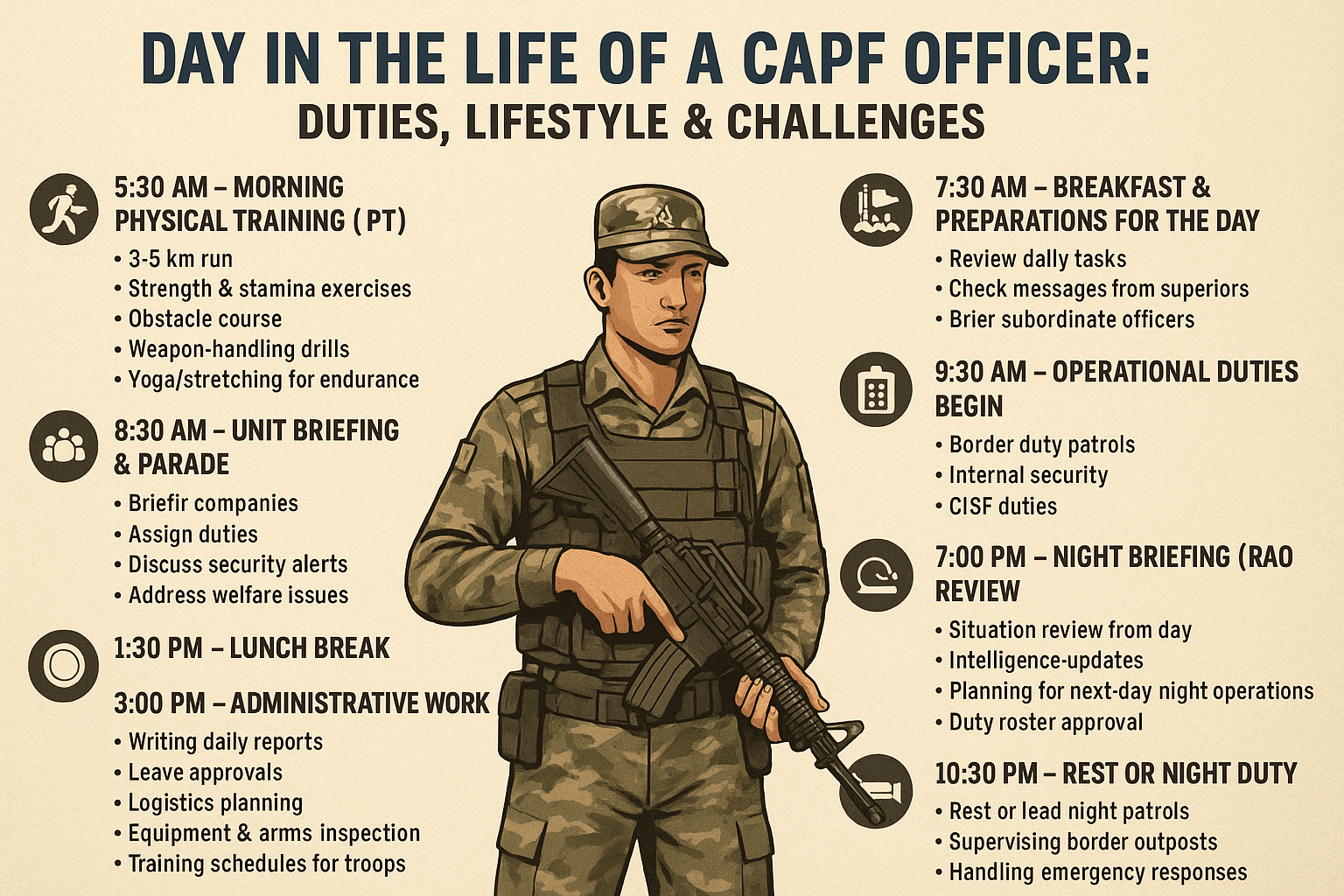
A career in the Central Armed Police Forces (CAPF)—whether in CRPF, BSF, ITBP, CISF, or SSB—is one of honour, discipline, and national service. A CAPF officer’s day is a blend of operational responsibilities, leadership tasks, physical fitness, and administrative duties. While the lifestyle is demanding, it is equally rewarding for those who value purpose, adventure, and service to the nation.
This guide provides a realistic, detailed, and SEO-optimized view of the daily routine, duties, lifestyle, and challenges faced by CAPF officers, helping aspirants understand what this prestigious career truly looks like.
Who Is a CAPF Officer?
A CAPF Officer (Assistant Commandant or above) is a Group-A Gazetted Officer responsible for leading companies/platoons, maintaining internal security, overseeing border protection, and managing critical law-and-order situations in the country. They command teams, plan operations, ensure welfare of troops and maintain high operational readiness.
Daily Routine of a CAPF Officer
Though the exact schedule varies by force and posting, here is what a typical day looks like:
🔹 5:30 AM – Morning Physical Training (PT)
Discipline begins early.
3–5 km run
Strength & stamina exercises
Obstacle course
Weapon-handling drills (in certain postings)
Yoga/stretching for endurance
Physical fitness is crucial since officers lead troops in demanding terrains—from deserts and forests to mountains and borders.
🔹 7:30 AM – Breakfast & Preparations for the Day
After PT, officers freshen up and have breakfast in the mess. This time is used to:
Review daily tasks
Check messages from superiors
Brief subordinate officers
🔹 8:30 AM – Unit Briefing & Parade
A short parade or morning roll call is conducted.
Officers:
Brief their companies
Assign duties
Discuss security alerts
Address welfare issues of jawans
🔹 9:30 AM – Operational Duties Begin
This depends on the type of posting:
1. Border Duty (BSF, ITBP, SSB)
Patrols along the international border
Surveillance using night-vision devices & sensors
Checking smuggling or infiltration attempts
Supervising sentry posts
Coordinating with Army & local police
2. Internal Security / CRPF
Anti-Naxal operations & jungle patrols
Road opening parties (ROP)
Managing law & order in disturbed areas
Intelligence gathering
Protecting sensitive installations
3. CISF Duty (Industrial Security)
Security of airports, metros, PSUs, nuclear plants
Supervising scan & frisking systems
Monitoring CCTV and Quick Reaction Teams
Coordination with civil authorities
🔹 1:30 PM – Lunch Break
Lunch is usually in the unit mess. Officers briefly rest or prepare for afternoon duties.
🔹 3:00 PM – Administrative Work
Officers handle essential paperwork and unit management:
Writing daily reports
Leave approvals
Logistics planning
Equipment and arms inspection
Training schedules
Welfare meetings for troops
Strong leadership and communication skills are essential here.
🔹 5:00 PM – Evening Sports / Fitness
Officers encourage sports and physical activities:
Volleyball / Football / Basketball
Gym session
Parade ground practice
Recreational activities for stress relief
🔹 7:00 PM – Night Briefing / Review
This includes:
Situation review from the day
Intelligence updates
Planning for next-day or night operations
Duty roster approval
Night operations are common in high-risk postings.
🔹 9:00 PM – Dinner & Personal Time
Dinner with fellow officers strengthens camaraderie.
After dinner, officers may:
Call family
Finish pending tasks
Read or prepare for career exams
🔹 10:30 PM – Rest OR Night Duty
Depending on posting:
Officers may rest
OR lead night patrols
OR supervise border outposts
OR handle emergency responses
Being on call 24×7 is part of the job.
Lifestyle of a CAPF Officer
1. Disciplined & Structured Life
Daily routines, physical fitness, and operational readiness define their lifestyle.
2. Respect & Responsibility
Officers command 100–150+ personnel and are looked up to as leaders.
3. Travel & Adventure
Postings include mountains, deserts, jungles, borders, airports, metros, and large industrial complexes.
4. Strong Camaraderie
Officers and jawans function like a family, especially in remote postings.
5. Good Facilities
CAPF officers receive:
Accommodation
Healthcare
Canteen services
Schooling options (in several locations)
Travel allowances
6. Unpredictable Schedules
Emergencies can arise anytime—riots, border incidents, terror alerts, or natural disasters.
Major Challenges Faced by CAPF Officers
1. High Operational Stress
Duty in hostile environments (Naxal zones, borders, riot-prone areas).
2. Long Working Hours
No fixed 9–5 schedule; operations can run late into the night.
3. Family Separation
Frequent transfers and field postings can make family life difficult.
4. Harsh Weather Conditions
Officers serve in temperatures ranging from –40°C (Ladakh) to 50°C (Rajasthan deserts).
5. Physical & Mental Toughness
Maintaining physical fitness and mental resilience is essential.
6. Limited Social Life
Due to remote locations and operational commitments.
Despite challenges, this career is chosen by thousands because it offers honour, leadership, national service, and extraordinary life experiences.
Why Choose a Career in CAPF?
Opportunity to lead and serve the nation
Adventure, travel, and diverse postings
Job security and good benefits
Strong professional respect
Opportunity for foreign assignments & UN peacekeeping
Fast career progression for motivated officers
For those who seek a meaningful, disciplined, and impactful life, the CAPF is a fulfilling choice.
Frequently Asked Questions (FAQ)
1. What is the daily routine of a CAPF officer?
A typical day includes PT, operational duties, patrols, administrative work, training, and night supervision depending on the posting.
2. Do CAPF officers face combat situations?
Yes, especially in CRPF (anti-Naxal operations), BSF (border firing/infiltration), and ITBP (high-altitude operations).
3. How often are officers transferred?
Generally every 2–3 years, depending on operational needs.
4. Do CAPF officers get time for family?
Yes, but field postings can limit time at home. Leave is granted based on operational circumstances.
5. What is the lifestyle like in CAPF training?
Intense, disciplined, and physically demanding with a focus on leadership, endurance, and weapons training.
6. Is being a CAPF officer risky?
Risk levels vary by posting. Internal security and border areas often involve higher risk.
7. Which CAPF force offers the best lifestyle?
Lifestyle varies:
CISF: comparatively stable (airports, metros, PSUs)
BSF/ITBP/SSB: border postings, more rugged
CRPF: dynamic, frequent operations
If you want, I can also generate an image related to this topic for your website.