

Prelims: Species, biodiversity hotspots, scientific terms
Mains (GS Paper III): Environment, biodiversity conservation, scientific developments
Interview: Interdisciplinary awareness (biology + ecology)
Context: A Rare Scientific Discovery
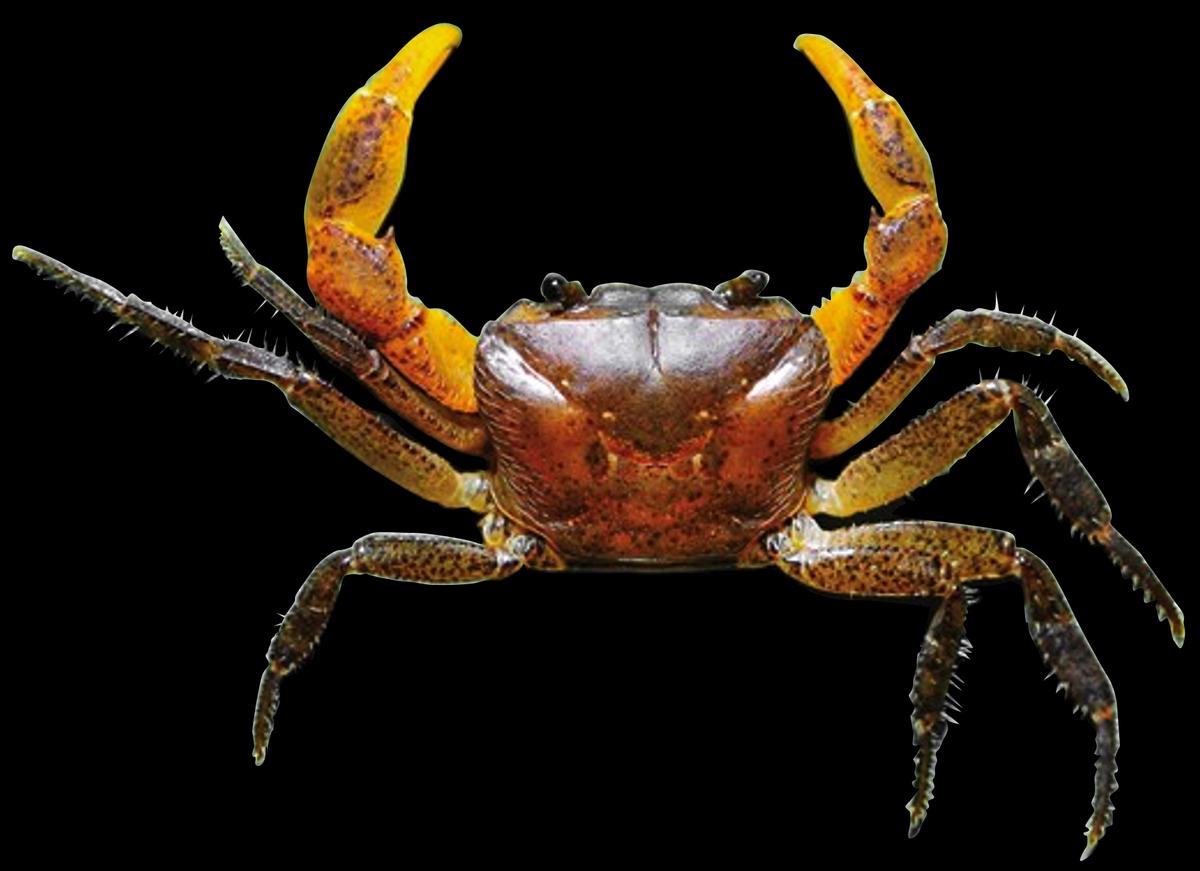
A recent scientific study has reported a rare biological phenomenon called gynandromorphy in a freshwater crab species Vela carli, discovered in Silent Valley National Park in Kerala.
Location: Central Western Ghats
Habitat: Tree holes and forest streams
Species: Vela carli (endemic freshwater crab)
This discovery is significant because it is the first recorded case in the Gecarcinucidae family.
What is Gynandromorphy?
Definition
Gynandromorphy is a biological condition where an organism exhibits both male and female characteristics simultaneously.
It is not hermaphroditism
It involves mosaic distribution of sex traits (different body parts show different sexes)
Key Features
Male and female reproductive structures present in the same individual
Asymmetrical or segmented distribution of traits
Occurs due to errors in cell division or chromosome distribution
Scientific Findings from the Study
The study (published in Crustaceana) reported:
Observation of three crabs showing dual-sex traits
Presence of:
Male reproductive structures
Female gonopores (openings)
The condition is extremely rare in crustaceans and previously unreported in this family
About Vela carli


| Feature | Details |
|---|---|
| Taxonomy | Family: Gecarcinucidae |
| Distribution | Central Western Ghats only |
| Habitat | Streams, forest floor, tree holes |
| Status | Endemic species |
Key Point for UPSC
👉 Western Ghats = Endemism hotspot + microhabitat specialization
Why is This Discovery Important?
1. Evolutionary Biology
Provides insights into sex determination mechanisms
Helps understand genetic anomalies and mutations
2. First in Family (Scientific Breakthrough)
No previous record of gynandromorphy in Gecarcinucidae
Expands scientific knowledge on crustacean biology
3. Biodiversity Significance
Highlights importance of microhabitats (tree holes)
Shows how undisturbed ecosystems support rare phenomena
4. Conservation Implications
Silent Valley remains a pristine ecosystem
Reinforces need for:
Habitat protection
Conservation of lesser-known species
Western Ghats: A Biodiversity Hotspot
Key Facts:
UNESCO World Heritage Site
One of the 8 “hottest hotspots” of biodiversity
High levels of:
Endemism
Species richness
Threats:
Deforestation
Climate change
Habitat fragmentation
Gynandromorphy vs Hermaphroditism (Important for Prelims)
| Feature | Gynandromorphy | Hermaphroditism |
|---|---|---|
| Nature | Abnormal condition | Normal biological adaptation |
| Structure | Mosaic male + female parts | Both organs functionally present |
| Cause | Genetic error | Evolutionary trait |
| Example | Crabs, insects | Earthworms, snails |
Research Institutions Involved
Centre for Conservation Ecology, MES Mampad College
Zoological Survey of India
👉 Important for UPSC: ZSI = key institution for faunal research in India
Possible UPSC Questions
Prelims
Gynandromorphy refers to:
(a) Both sexes present in different body parts ✅
(b) Same reproductive organs functioning together
(c) Asexual reproduction
(d) Cloning
Mains (GS III)
“Recent discoveries in biodiversity highlight the importance of microhabitats in conservation.” Discuss with reference to the Western Ghats.
Interview
Why are such rare phenomena important for conservation policy?
Can genetic anomalies help in evolutionary studies?
Conclusion
The discovery of gynandromorphy in Vela carli is not just a biological curiosity—it is a window into evolution, genetics, and ecological complexity. It reinforces the idea that biodiversity conservation must go beyond large species and include microhabitats and lesser-known organisms.