
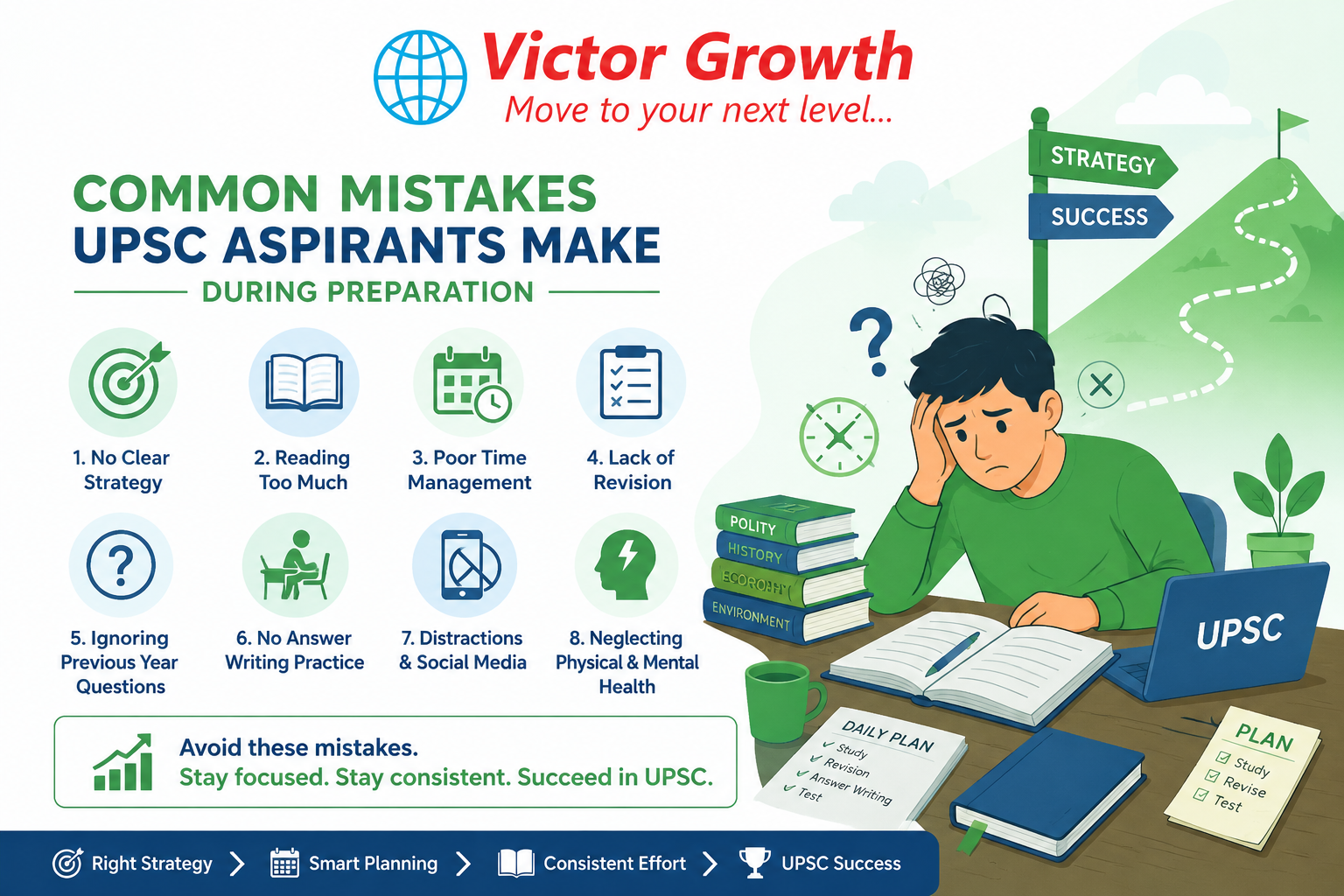
The UPSC Civil Services Examination is considered one of the toughest competitive exams in India. Every year, lakhs of aspirants begin their preparation journey with dreams of becoming IAS, IPS, IFS, and other civil servants. However, only a small percentage successfully clear all three stages — Prelims, Mains, and Interview.
One major reason many candidates struggle is not a lack of intelligence or hard work, but common preparation mistakes that negatively affect consistency, revision, answer writing, and exam performance. According to mentors from the best IAS coaching in Kerala, avoiding these mistakes can significantly improve an aspirant’s chances of success.
Ernakulam has become a major UPSC preparation hub in Kerala, and experienced coaching experts have identified several recurring mistakes made by aspirants at different stages of preparation. This article discusses the most common mistakes UPSC aspirants make and provides practical solutions to avoid them.
1. Starting Preparation Without Understanding the UPSC Syllabus
One of the biggest mistakes beginners make is starting preparation without thoroughly understanding the UPSC syllabus.
Why This Is a Problem:
- Leads to random study
- Creates confusion
- Wastes time on irrelevant topics
- Prevents focused preparation
What Experts Recommend:
Before beginning preparation:
- Read the complete UPSC syllabus carefully
- Analyze previous year question papers
- Understand subject-wise weightage
- Identify important topics
Faculty members from the best IAS coaching in Kerala strongly advise aspirants to treat the syllabus as the foundation of preparation.
2. Collecting Too Many Study Materials
Many aspirants believe that reading more books guarantees success.
Common Problems:
- Information overload
- Lack of revision
- Increased confusion
- Incomplete preparation
Smart Strategy:
Focus on limited standard books such as:
- M. Laxmikanth for Polity
- Spectrum for Modern History
- Ramesh Singh for Economy
- Shankar IAS for Environment
Revision is far more important than collecting excessive resources.
3. Ignoring NCERT Textbooks
Some aspirants directly begin advanced books without building basics.
Why NCERTs Are Important:
- Simple explanations
- Strong conceptual clarity
- Useful for Prelims and Mains
- Foundation for advanced preparation
Most successful candidates begin with NCERT textbooks from Class 6 to 12.
4. Lack of Consistency
UPSC preparation requires long-term discipline.
Common Issue:
Many students study intensely for a few days and then lose momentum.
Effects:
- Weak retention
- Poor revision
- Incomplete syllabus coverage
Expert Advice:
Maintain:
- Daily study routine
- Fixed study hours
- Consistent revision
- Regular mock practice
Consistency matters more than occasional long study sessions.
5. Ignoring Current Affairs
Current affairs are a crucial part of UPSC preparation.
Mistakes Aspirants Make:
- Reading newspapers irregularly
- Depending only on monthly PDFs
- Memorizing facts without understanding issues
Recommended Approach:
- Read newspapers daily
- Focus on analytical understanding
- Connect current affairs with static subjects
- Make short notes regularly
Current affairs preparation significantly influences Prelims, Mains, Essay, and Interview performance.
6. Neglecting Answer Writing Practice
Many aspirants focus only on reading and avoid writing practice.
Why This Is Dangerous:
UPSC Mains evaluates:
- Analytical thinking
- Presentation skills
- Writing speed
- Structured answers
Common Problems:
- Poor time management
- Weak presentation
- Incomplete answers
Solution:
Practice:
- Daily answer writing
- Essay writing
- Ethics case studies
- Timed mock tests
Most institutes offering the best IAS coaching in Kerala emphasize regular answer-writing evaluation.
7. Avoiding Mock Tests
Some aspirants postpone mock tests because they fear poor performance.
Problems Caused:
- Poor exam temperament
- Weak time management
- Low accuracy
- Lack of confidence
Benefits of Mock Tests:
- Identifies weak areas
- Improves elimination skills
- Builds confidence
- Enhances revision
Regular testing is essential for both Prelims and Mains preparation.
8. Ignoring Revision
Revision is one of the most important aspects of UPSC preparation.
Common Mistake:
Reading new topics continuously without revising older subjects.
Consequences:
- Forgetting important concepts
- Weak recall during exams
- Reduced confidence
Effective Revision Strategy:
- Daily revision
- Weekly revision
- Monthly full syllabus revision
- Short notes preparation
Top rankers repeatedly stress the importance of multiple revisions.
9. Poor Time Management
UPSC preparation involves balancing:
- Static subjects
- Current affairs
- Optional subjects
- Answer writing
- Revision
Common Issues:
- Spending excessive time on one subject
- Ignoring weaker areas
- Unplanned schedules
Expert Tips:
- Prepare realistic study plans
- Prioritize important subjects
- Use small study sessions effectively
- Avoid unnecessary distractions
10. Following Too Many Online Strategies
Social media and YouTube contain endless preparation advice.
Problems:
- Constant strategy changes
- Confusion
- Lack of focus
- Anxiety and comparison
Better Approach:
- Follow one clear strategy
- Use trusted sources
- Avoid comparing preparation with others
Coaching mentors in Ernakulam often advise aspirants to simplify their preparation process.
11. Neglecting CSAT Preparation
Many aspirants underestimate CSAT because it is qualifying in nature.
Result:
Several capable candidates fail due to poor CSAT scores.
Important Areas:
- Reading comprehension
- Logical reasoning
- Quantitative aptitude
Solution:
Practice CSAT regularly throughout preparation.
12. Not Analyzing Previous Year Questions (PYQs)
PYQs reveal:
- UPSC trends
- Important topics
- Question patterns
- Analytical approach
Common Mistake:
Ignoring PYQs until the final months.
Recommended Practice:
Analyze at least 10 years of previous papers.
13. Overdependence on Coaching Alone
Coaching provides guidance, but self-study remains essential.
Common Misconception:
Attending classes alone guarantees success.
Reality:
UPSC success depends on:
- Self-study
- Revision
- Writing practice
- Discipline
Students attending the best IAS coaching in Kerala are usually encouraged to build independent preparation habits.
14. Lack of Mental and Physical Balance
UPSC preparation can become stressful over time.
Common Problems:
- Burnout
- Anxiety
- Sleep issues
- Lack of motivation
Healthy Preparation Habits:
- Proper sleep
- Exercise
- Breaks and relaxation
- Positive mindset
Mental health is important for long-term preparation consistency.
15. Fear of Failure
Many aspirants become demotivated after mock test failures or unsuccessful attempts.
Important Reality:
Several successful IAS officers cleared UPSC after multiple attempts.
Expert Advice:
- Learn from mistakes
- Improve strategy
- Stay patient and disciplined
- Focus on gradual progress
Failure is often part of the UPSC journey.
How Coaching Institutes in Ernakulam Help Aspirants Avoid These Mistakes
Good coaching institutes provide:
- Structured preparation plans
- Standard study materials
- Answer-writing programs
- Mock test series
- Current affairs support
- Mentorship and motivation
Students searching for the best IAS coaching in Kerala usually prefer institutes that offer personalized guidance and performance monitoring.
Smart Preparation Tips Recommended by Experts
Focus on:
- Limited standard books
- Consistent revision
- Daily newspaper reading
- Regular answer writing
- Mock tests and analysis
- Balanced preparation strategy
UPSC preparation is more about discipline and smart planning than studying excessively.
Conclusion
Most UPSC aspirants fail not because they lack capability, but because of avoidable preparation mistakes such as poor revision, lack of consistency, ignoring answer writing, and following too many resources. Understanding these common mistakes early can save valuable time and improve preparation quality significantly.
Students searching for the best IAS coaching in Kerala should choose institutes that provide structured mentorship, regular evaluation, and strategic guidance. With disciplined preparation, proper planning, and continuous improvement, aspirants can avoid common pitfalls and confidently move toward UPSC success.
Frequently Asked Questions (FAQ)
What is the biggest mistake UPSC aspirants make?
One of the biggest mistakes is studying too many resources without proper revision and answer-writing practice.
How important is revision in UPSC preparation?
Revision is extremely important because it improves retention, confidence, and recall during examinations.
Should beginners start with NCERT books?
Yes. NCERT books provide strong conceptual clarity and form the foundation of UPSC preparation.
Are mock tests necessary for UPSC preparation?
Yes. Mock tests improve time management, accuracy, confidence, and exam temperament.
How many hours should I study daily for UPSC?
Most aspirants study between 6 to 10 productive hours daily depending on their preparation stage.
Is coaching enough for UPSC success?
No. Coaching provides guidance, but self-study, revision, and consistent practice are equally important.
Why do many aspirants fail in UPSC Mains?
Common reasons include lack of answer-writing practice, poor revision, weak presentation skills, and time management issues.
How important are current affairs in UPSC?
Current affairs are highly important because they influence Prelims, Mains, Essay, and Interview stages.
Can working professionals clear UPSC?
Yes. Many working professionals clear UPSC through disciplined schedules and smart preparation strategies.
How do coaching institutes in Ernakulam help UPSC aspirants?
They provide structured classes, mentorship, current affairs support, answer-writing programs, mock tests, and personalized guidance.