
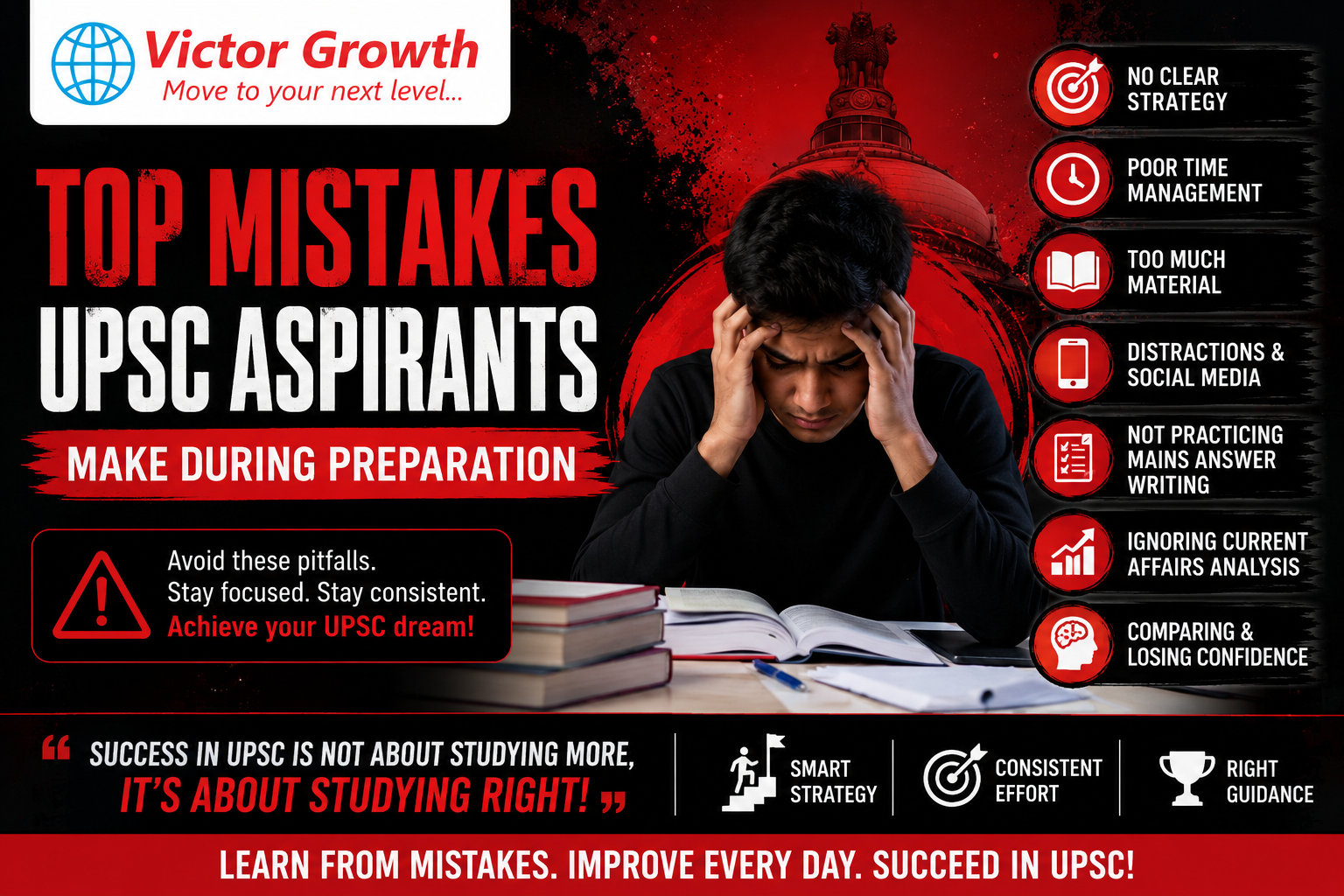
The Union Public Service Commission (UPSC) Civil Services Examination is widely regarded as one of the toughest competitive examinations in India. Every year, more than a million candidates apply for the exam, but only a few hundred secure coveted positions in the Indian Administrative Service (IAS), Indian Police Service (IPS), Indian Foreign Service (IFS), and other prestigious Central Civil Services.
While intelligence and hard work are important, many aspirants fail not because they lack ability but because they make avoidable mistakes during their preparation. These mistakes can waste valuable time, reduce confidence, and ultimately affect performance in the examination.
Whether you are a beginner or a repeat candidate, understanding these common pitfalls can significantly improve your preparation strategy. If you are looking for the best IAS coaching in Kerala, learning about these mistakes will also help you choose the right guidance and avoid costly errors.
Why Understanding Common Mistakes is Important
UPSC preparation is a marathon, not a sprint. Even a small mistake repeated over months can lead to poor results.
Avoiding common mistakes helps you:
- Save valuable preparation time
- Improve consistency
- Increase confidence
- Reduce stress
- Enhance answer writing skills
- Perform better in Prelims, Mains, and Interview
1. Starting Preparation Without Understanding the UPSC Syllabus
Many students immediately begin reading books without understanding the UPSC syllabus.
This is one of the biggest mistakes.
The syllabus is the roadmap of your preparation.
Before opening any book, carefully study:
- Preliminary syllabus
- Mains syllabus
- Optional subject syllabus
- Previous year’s question papers
Every topic you study should relate directly to the syllabus.
2. Ignoring Previous Year Question Papers
Many aspirants collect books but never analyze previous UPSC questions.
Previous papers help you understand:
- Question trends
- Important topics
- Difficulty level
- Conceptual focus
- Answer presentation
Analyzing the last 10 years of UPSC papers should be part of every preparation strategy.
3. Reading Too Many Books
Buying every recommended book is unnecessary.
Instead of reading ten books once, read the standard books multiple times.
Quality revision is far more effective than excessive reading.
Build a limited but reliable resource list and revise it consistently.
4. Ignoring NCERT Books
Many beginners directly jump to advanced reference books.
However, NCERT textbooks build strong conceptual clarity.
Subjects such as:
- History
- Geography
- Economy
- Science
- Polity
should begin with NCERTs before moving to advanced sources.
5. Lack of Proper Study Planning
Without a structured timetable, students often study randomly.
An effective plan should include:
- Daily targets
- Weekly revision
- Monthly assessments
- Newspaper reading
- Answer writing
- Mock tests
Consistency matters more than studying for long hours occasionally.
6. Neglecting Current Affairs
Current Affairs play a major role in:
- Prelims
- Mains
- Interview
Many aspirants either ignore current affairs or rely entirely on social media.
A better approach includes:
- Daily newspaper reading
- PIB updates
- Government reports
- Monthly current affairs magazines
- Budget and Economic Survey
7. Avoiding Answer Writing Practice
Many students postpone answer writing until after completing the syllabus.
This is a serious mistake.
UPSC Mains demands:
- Structured answers
- Analytical thinking
- Time management
- Presentation skills
Regular answer writing should begin early in the preparation journey.
8. Ignoring CSAT
Some aspirants assume CSAT is easy.
However, many candidates fail Prelims because they underestimate the CSAT paper.
Regular practice in:
- Comprehension
- Logical reasoning
- Quantitative aptitude
- Decision-making
is essential.
9. Not Revising Regularly
Reading without revision leads to poor retention.
A simple revision cycle could be:
- Daily revision
- Weekly revision
- Monthly revision
- Full syllabus revision before exams
Revision transforms information into long-term memory.
10. Overdependence on Coaching Alone
Joining a coaching institute is helpful, but coaching alone cannot guarantee success.
Students must:
- Read independently
- Practice regularly
- Revise consistently
- Analyze mistakes
- Develop self-discipline
The best coaching provides direction, but success depends on personal effort.
11. Comparing Yourself with Others
Every aspirant has a different background.
Constant comparison creates:
- Stress
- Anxiety
- Self-doubt
- Loss of confidence
Focus on improving your own performance rather than comparing study hours or resources.
12. Ignoring Mock Tests
Mock tests are essential because they:
- Improve speed
- Build confidence
- Identify weaknesses
- Enhance time management
- Simulate exam conditions
Analyze every mock test carefully to understand mistakes.
13. Poor Time Management
Some students spend months on one subject while ignoring others.
UPSC requires balanced preparation across all subjects.
Allocate sufficient time for:
- General Studies
- Optional Subject
- Essay
- Ethics
- CSAT
- Current Affairs
- Revision
14. Following Too Many Online Sources
The internet offers unlimited content.
Many aspirants waste hours watching random YouTube videos and downloading unnecessary PDFs.
Choose a few reliable sources and remain consistent.
Too much information often leads to confusion.
15. Ignoring Health and Mental Well-being
UPSC preparation is mentally demanding.
Ignoring health can reduce productivity.
Maintain:
- 7–8 hours of sleep
- Balanced diet
- Daily exercise
- Meditation or relaxation
- Short study breaks
A healthy mind performs better.
16. Lack of Consistency
Studying 15 hours one day and skipping the next three days is ineffective.
Instead:
- Study every day.
- Follow a realistic schedule.
- Build sustainable habits.
- Track your progress.
Consistency always beats intensity.
17. Fear of Failure
Many aspirants lose confidence after one unsuccessful attempt.
Failure should be viewed as feedback rather than the end of the journey.
Analyze:
- Weak subjects
- Poor answer writing
- Time management issues
- Revision gaps
Learn, improve, and move forward.
18. Not Seeking Proper Mentorship
Many students hesitate to seek guidance.
An experienced mentor can help:
- Clarify doubts
- Design study plans
- Evaluate answers
- Improve strategy
- Keep motivation high
The right mentorship often saves months of trial and error.
19. Ignoring the Personality Test
Some aspirants prepare only after clearing Mains.
Interview preparation should begin much earlier by improving:
- Communication skills
- General awareness
- Analytical thinking
- Confidence
- Decision-making ability
20. Losing Motivation Midway
UPSC preparation is a long journey.
Motivation naturally fluctuates.
Stay focused by:
- Celebrating small achievements
- Tracking progress
- Joining study groups
- Taking short breaks
- Remembering your purpose for becoming a civil servant
How the Right Coaching Institute Helps Avoid These Mistakes
The best IAS coaching in Kerala can help aspirants avoid these common mistakes by offering:
- Experienced faculty
- Structured study plans
- Comprehensive study materials
- Daily current affairs
- Regular mock tests
- Personalized mentorship
- Answer writing practice
- Interview guidance
- Performance analysis
- Doubt-clearing sessions
The right guidance provides direction, accountability, and confidence throughout your preparation.
Tips for Successful UPSC Preparation
✔ Understand the syllabus thoroughly.
✔ Follow limited and reliable study resources.
✔ Read newspapers daily.
✔ Practice answer writing regularly.
✔ Revise consistently.
✔ Attempt mock tests frequently.
✔ Improve time management.
✔ Maintain physical and mental health.
✔ Seek guidance from experienced mentors.
✔ Stay disciplined and consistent.
Final Thoughts
Success in the UPSC Civil Services Examination is not determined by the number of books you read or the hours you study. It depends on how effectively you prepare, revise, practice, and learn from your mistakes.
Most unsuccessful attempts are not due to lack of intelligence but because of poor planning, inconsistent preparation, limited revision, or absence of proper guidance.
By understanding and avoiding these common mistakes, you can significantly improve your chances of success. Choosing the best IAS coaching in Kerala can further strengthen your preparation through expert mentorship, structured learning, and regular evaluation, helping you move closer to your dream of becoming an IAS officer.
Frequently Asked Questions (FAQs)
1. What is the biggest mistake UPSC aspirants make during preparation?
The biggest mistake is starting preparation without understanding the UPSC syllabus and previous year’s question papers. This often leads to studying irrelevant topics.
2. Is coaching necessary to clear the UPSC examination?
No. Coaching is not mandatory, but it provides structured guidance, mentorship, test series, and expert feedback that can improve preparation and save time.
3. How many books should I study for UPSC?
It is better to study a limited number of standard books thoroughly and revise them multiple times instead of collecting too many resources.
4. How important is answer writing practice?
Answer writing is essential for UPSC Mains. Regular practice improves analytical thinking, presentation skills, time management, and overall scoring ability.
5. Should I read newspapers every day?
Yes. Daily newspaper reading helps build awareness of current affairs, which are important for Prelims, Mains, Essay, and the Interview.
6. How can I stay motivated during long-term UPSC preparation?
Set realistic goals, maintain a daily routine, revise regularly, take healthy breaks, seek mentorship, and focus on consistent improvement rather than comparing yourself with others.
7. Why is revision so important for UPSC?
Revision strengthens memory, improves recall during the examination, and helps retain important concepts over a long preparation period.
8. How can the best IAS coaching in Kerala help aspirants succeed?
The best IAS coaching in Kerala offers experienced faculty, structured study plans, updated materials, regular mock tests, answer writing practice, personalized mentorship, and interview guidance, helping aspirants avoid common mistakes and prepare effectively.