
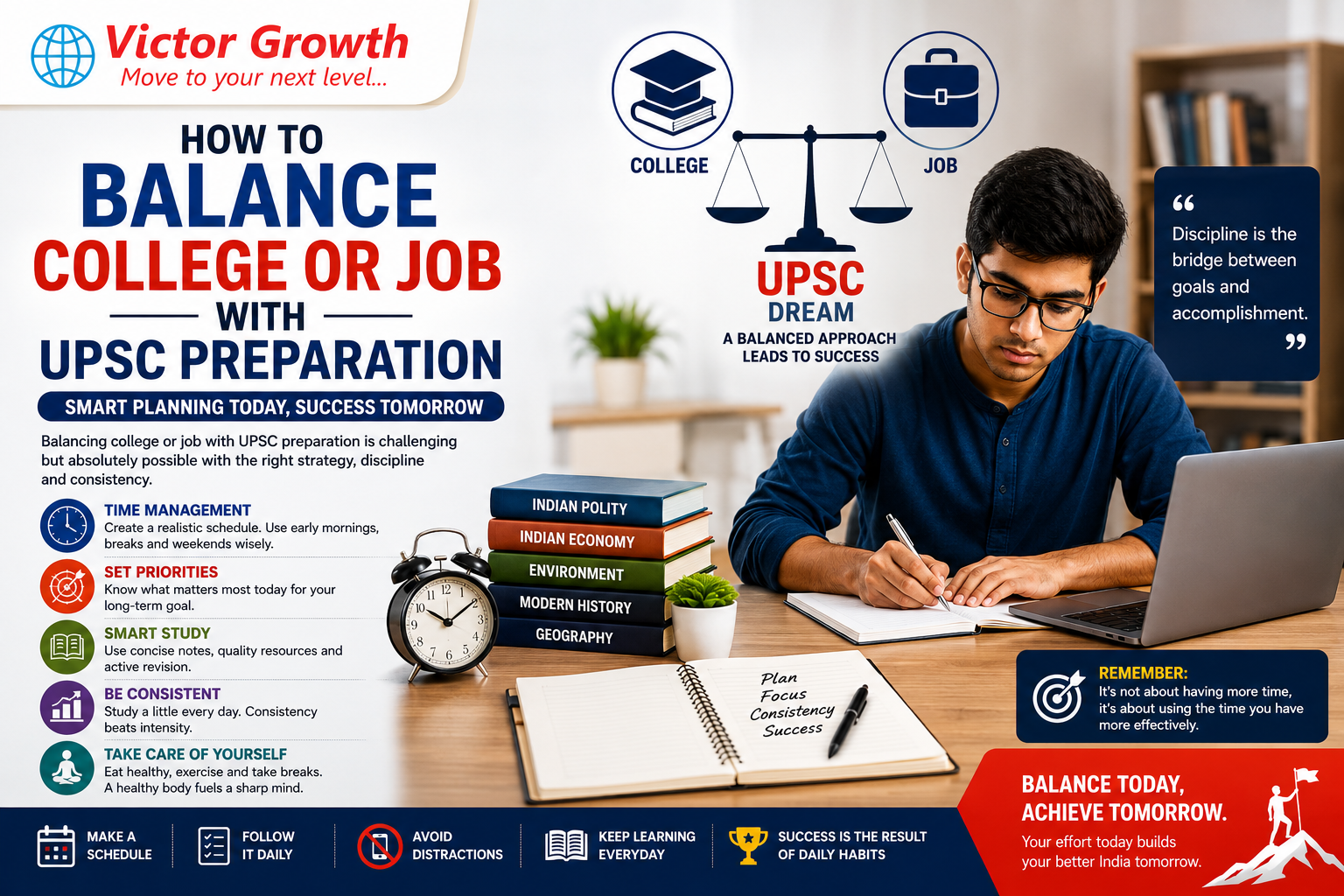
Preparing for the UPSC Civil Services Examination while managing college or a full-time job may seem overwhelming. However, every year, thousands of successful candidates prove that it is absolutely possible with the right strategy, discipline, and consistency.
Whether you are a college student planning your future or a working professional aiming for a career in the Indian Administrative Service (IAS), Indian Police Service (IPS), or Indian Foreign Service (IFS), this guide will help you build a realistic preparation strategy without sacrificing your academic or professional commitments.
If you are searching for the best IAS coaching in Kerala, understanding how to balance your responsibilities with UPSC preparation is the first step towards success.
Is It Possible to Crack UPSC While Studying or Working?
Absolutely.
Many UPSC toppers have cleared the examination while:
- Pursuing Engineering
- Studying Medicine
- Completing Law
- Working in IT companies
- Banking sector
- Public Sector Units (PSUs)
- Teaching profession
- Startups
- Government jobs
The secret isn’t studying 15 hours every day.
The secret is consistent, high-quality study over a long period.
Why Most Aspirants Fail to Balance Both
The biggest challenge isn’t lack of intelligence.
It is poor planning.
Common mistakes include:
- Trying to study for 10–12 hours after work
- Skipping revision
- Ignoring current affairs
- No fixed timetable
- Weekend procrastination
- Studying without proper guidance
- Constantly changing resources
- Burnout due to unrealistic expectations
A structured preparation plan eliminates these issues.
Step 1: Set a Clear Goal
Ask yourself:
- Are you preparing seriously?
- Which attempt are you targeting?
- How many months do you have?
For example:
- Final-year college student → UPSC 2027
- Working professional → UPSC 2028
- First-year student → Long-term preparation
A clear timeline reduces stress and improves consistency.
Step 2: Understand the UPSC Syllabus Completely
Never begin preparation without reading the syllabus.
Know the requirements of:
Preliminary Examination
- History
- Geography
- Economy
- Environment
- Science & Technology
- Polity
- Current Affairs
- CSAT
Mains Examination
- Essay
- General Studies I-IV
- Ethics
- Optional Subject
- Answer Writing
Personality Test
- Communication
- Decision Making
- Awareness
- Confidence
Knowing the syllabus prevents unnecessary study.
Step 3: Create a Realistic Daily Timetable
For College Students
Morning
6:00 AM – 7:30 AM
- Newspaper
- Current Affairs
- Editorial Notes
College Hours
Focus completely on academics.
Evening
6:30 PM – 9:30 PM
- Static Subject
- NCERT
- Standard Books
Night
30 minutes
- Revision
- Quiz
- Flashcards
Daily UPSC Study Time:
4–5 Hours
For Working Professionals
Morning
5:30 AM – 7:30 AM
- Static Subject
- Revision
Office Hours
Listen to:
- Current affairs podcasts
- Rajya Sabha TV summaries
- PIB updates during breaks
Evening
8 PM – 10 PM
- Practice Questions
- Current Affairs
- Answer Writing
Daily Study Time
3–4 Hours
Weekend Strategy
Weekends are your biggest advantage.
Saturday
- 6–8 Hours Study
- Mock Test
- Revision
Sunday
- Answer Writing
- Essay Practice
- Current Affairs Compilation
- Weak Areas
One productive weekend equals almost three weekdays.
Step 4: Follow the 80–20 Rule
Focus on the most important resources.
Instead of reading 20 books,
Read 5 books multiple times.
Recommended Resources
History
- NCERT
- Spectrum
Geography
- NCERT
- GC Leong
Polity
- M. Laxmikanth
Economy
- Basic NCERT
- Current Affairs
Environment
- Shankar IAS
Current Affairs
- Newspaper
- Monthly Magazine
- PIB
- Government Reports
Revision is more valuable than collecting books.
Step 5: Use Micro Study Sessions
You don’t always need two continuous hours.
Study during:
- Bus travel
- Lunch break
- Waiting time
- Train journey
- Coffee break
Use:
- Flashcards
- Mobile Notes
- Short Videos
- Current Affairs Apps
These small sessions add up significantly over months.
Step 6: Make Current Affairs a Daily Habit
Spend
45–60 minutes daily.
Cover
- The Hindu
- Indian Express
- PIB
- PRS
- Yojana
- Kurukshetra
- Government websites
Never postpone current affairs.
Backlogs become difficult to manage.
Step 7: Practice Answer Writing
Many aspirants study for years but fail in Mains because they never practice writing.
Start early.
Daily
Write
- One GS answer
- One Ethics case study (occasionally)
- Weekly Essay
Improve:
- Structure
- Speed
- Presentation
- Analysis
Step 8: Take Regular Mock Tests
Mock tests improve:
- Time Management
- Accuracy
- Revision
- Confidence
- Exam Temperament
Attempt:
Prelims
- Weekly MCQ Test
Mains
- Weekly Answer Writing
- Monthly Full-Length Test
Step 9: Learn Smart Revision
Ideal Revision Cycle
First Revision
Within 24 Hours
Second Revision
After One Week
Third Revision
After One Month
Fourth Revision
Before Examination
Revision converts information into long-term memory.
Step 10: Maintain Physical and Mental Health
Ignoring health reduces productivity.
Follow:
- 7 hours sleep
- Healthy food
- Daily exercise
- Walking
- Yoga
- Meditation
- Adequate hydration
A healthy body supports sustained preparation.
Time Management Tips for College Students
- Attend classes regularly.
- Use semester exams to strengthen basic subjects.
- Avoid binge-watching series.
- Limit social media.
- Study consistently rather than relying on last-minute efforts.
- Join a study group for accountability.
Time Management Tips for Working Professionals
- Wake up early.
- Inform family about your study schedule.
- Use commute time effectively.
- Take planned leave before the examination.
- Avoid excessive overtime whenever possible.
- Prepare a weekly study plan instead of focusing only on daily targets.
Common Mistakes to Avoid
- Waiting for the “perfect time” to begin.
- Buying too many books.
- Ignoring NCERTs.
- No revision.
- Excessive social media usage.
- Studying randomly without a timetable.
- Skipping mock tests.
- Comparing yourself with others.
- Inconsistent preparation.
- Neglecting physical health.
Technology Can Be Your Best Friend
Use digital tools wisely.
Helpful resources include:
- Online live classes
- Recorded lectures
- Digital notes
- Revision apps
- Mind maps
- Online test series
- Current affairs PDFs
Technology saves valuable time for busy aspirants.
Importance of Mentorship
Preparing alone often leads to confusion.
An experienced mentor helps you:
- Understand the syllabus.
- Choose the right resources.
- Track your progress.
- Identify weaknesses.
- Stay motivated.
- Avoid common mistakes.
A structured coaching program provides direction and accountability.
Why Choose the Best IAS Coaching in Kerala?
Choosing the best IAS coaching in Kerala can significantly improve your preparation, especially if you are balancing college or a demanding job.
A quality coaching institute offers:
- Comprehensive Prelims and Mains preparation
- Expert faculty
- Daily current affairs discussions
- Personalized mentorship
- Regular answer writing practice
- Comprehensive mock tests
- Interview guidance
- Printed study materials
- Online and offline learning options
- Flexible schedules for students and working professionals
With proper guidance and disciplined preparation, balancing your responsibilities while preparing for UPSC becomes much more manageable.
Final Thoughts
Balancing college or a full-time job with UPSC preparation is challenging but entirely achievable. Success depends not on the number of hours you study, but on how consistently and effectively you use the time available.
A realistic timetable, quality study materials, regular revision, answer writing practice, and expert mentorship can dramatically improve your chances of success. Remember that UPSC is a marathon, not a sprint. Stay disciplined, trust your preparation, and keep moving forward one day at a time.
If you’re looking for the best IAS coaching in Kerala, choose an institute that provides flexible learning options, experienced faculty, personalized mentorship, and a structured approach that fits around your college or work schedule.
Frequently Asked Questions (FAQs)
Can I crack UPSC while doing a full-time job?
Yes. Many successful UPSC candidates have cleared the examination while working full-time. A disciplined schedule, early morning study sessions, weekend revision, and consistent practice make it possible.
How many hours should a working professional study for UPSC?
A working professional should aim for 3–5 focused hours on weekdays and 6–8 hours on weekends. Consistency matters more than studying for very long hours.
Is college the best time to start UPSC preparation?
Yes. College provides an excellent opportunity to build a strong foundation by completing NCERTs, reading newspapers, improving writing skills, and developing conceptual clarity before graduation.
Which is the best study schedule for college students preparing for UPSC?
A balanced schedule includes:
- 1–2 hours in the morning
- College during the day
- 2–3 hours in the evening
- Revision before bed
- Longer study sessions on weekends
Can online IAS coaching help working professionals?
Yes. Online coaching offers flexible timings, recorded lectures, and the ability to study at your convenience, making it an excellent choice for professionals with busy schedules.
How important are mock tests during UPSC preparation?
Mock tests are essential for improving accuracy, time management, revision, and confidence. They also help identify weak areas before the actual examination.
How can I avoid burnout while preparing for UPSC?
Maintain a realistic timetable, get adequate sleep, exercise regularly, take short breaks, avoid excessive social media, and schedule weekly relaxation time to sustain long-term productivity.
Why should I choose the best IAS coaching in Kerala?
The best IAS coaching in Kerala provides expert guidance, structured study plans, regular mentorship, quality study materials, answer writing practice, mock tests, and flexible online/offline classes that help students and working professionals prepare efficiently while balancing their existing responsibilities.