
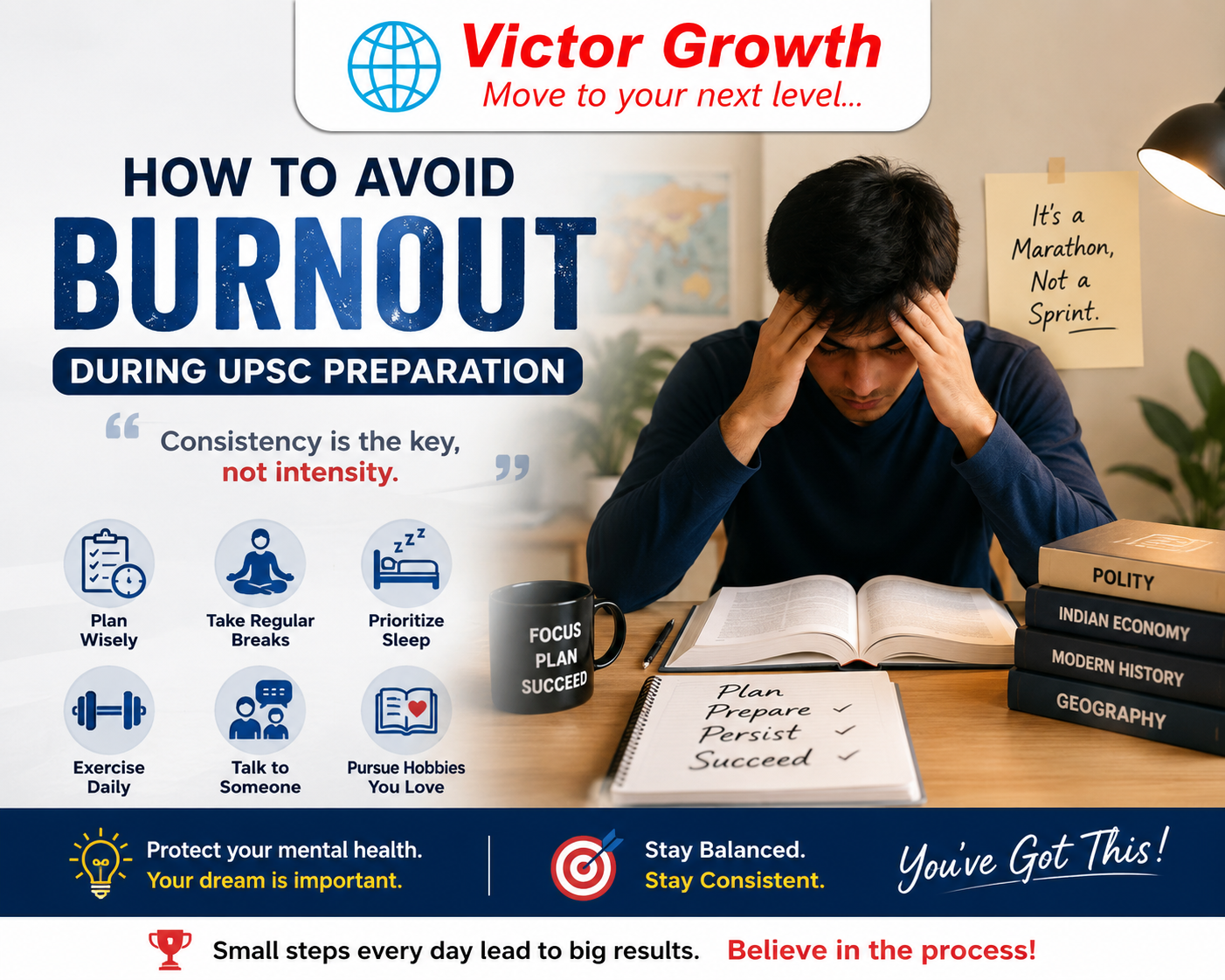
Preparing for the UPSC Civil Services Examination is often described as a marathon rather than a sprint. The journey can span one to three years—or even longer—for many aspirants. While dedication and hard work are essential, prolonged stress, unrealistic expectations, and poor work-life balance can lead to burnout, one of the biggest reasons aspirants lose motivation or discontinue their preparation.
Burnout is not simply feeling tired after a long study session. It is a state of physical, mental, and emotional exhaustion that reduces productivity, affects decision-making, and makes studying feel overwhelming.
In this comprehensive guide, you’ll learn how to recognize burnout, prevent it, recover from it, and maintain consistent preparation. If you’re looking for the best IAS coaching in Kerala, combining expert mentorship with healthy study habits can help you stay motivated throughout your UPSC journey.
What Is Burnout?
Burnout is a condition caused by prolonged stress and continuous mental effort without adequate rest or recovery.
Unlike ordinary tiredness, burnout affects:
- Motivation
- Concentration
- Memory
- Confidence
- Emotional well-being
- Physical health
- Productivity
Burnout can occur at any stage of UPSC preparation, especially during long study periods or after repeated unsuccessful attempts.
Why UPSC Aspirants Experience Burnout
Several factors contribute to burnout during UPSC preparation.
1. Unrealistic Expectations
Many aspirants expect to study:
- 12–15 hours every day
- Without breaks
- For several months continuously
Such expectations are difficult to sustain and often lead to exhaustion.
2. Information Overload
Reading from:
- Multiple books
- Numerous websites
- Several coaching materials
- Multiple YouTube channels
creates confusion rather than clarity.
Remember:
More resources do not guarantee better preparation.
3. Fear of Failure
UPSC has one of the lowest selection ratios in the country.
Constant worrying about:
- Competition
- Results
- Age limit
- Number of attempts
can create continuous stress.
4. Lack of Planning
Studying without:
- Daily goals
- Weekly targets
- Revision schedules
creates anxiety and reduces productivity.
5. Social Isolation
Many aspirants:
- Stop meeting friends
- Avoid family
- Quit hobbies
- Disconnect from social life
While reducing distractions is important, complete isolation can negatively affect mental well-being.
Signs of Burnout
Recognizing burnout early is the first step toward preventing it.
Common signs include:
- Constant tiredness
- Difficulty concentrating
- Poor memory
- Loss of motivation
- Irritability
- Anxiety
- Sleep disturbances
- Frequent headaches
- Declining mock test scores
- Feeling guilty while taking breaks
- Lack of interest in studying
- Emotional exhaustion
If these symptoms persist for weeks, it’s time to reassess your study routine.
Why Burnout Is Dangerous
Burnout affects every stage of UPSC preparation.
It may lead to:
- Reduced learning capacity
- Poor retention
- Frequent mistakes
- Low confidence
- Negative thinking
- Poor answer writing
- Reduced Prelims accuracy
- Emotional instability during the interview
Preventing burnout is therefore an important part of exam preparation.
Build a Realistic Study Schedule
One of the best ways to prevent burnout is to create a timetable you can actually follow.
Example Daily Schedule
Morning
- Newspaper
- Current Affairs
Late Morning
- Static Subject
Afternoon
- Optional Subject
Evening
- MCQs or Answer Writing
Night
- Revision
Include:
- Short breaks every 60–90 minutes
- Time for meals
- Physical activity
- Adequate sleep
A balanced timetable is more effective than an overloaded one.
Focus on Consistency, Not Study Hours
Many successful candidates study:
- 6–8 focused hours daily
rather than forcing themselves to study 14–16 hours.
Quality always outweighs quantity.
Ask yourself:
“Did I understand what I studied today?”
instead of
“How many hours did I study?”
Follow the 80–20 Rule
Identify the topics that contribute the most to your success.
Spend most of your time on:
- NCERTs
- Standard reference books
- Current Affairs
- Revision
- Mock tests
- Answer writing
Avoid collecting excessive study material.
Set Small Achievable Goals
Instead of writing:
“Finish Indian Polity.”
Break it into smaller goals.
Example:
Monday
- Fundamental Rights
Tuesday
- DPSP
Wednesday
- Fundamental Duties
Small achievements keep motivation high.
Take Planned Breaks
Breaks improve productivity.
Recommended pattern:
Study:
50–60 minutes
Break:
10 minutes
Long break after every 3–4 study sessions.
Use breaks for:
- Walking
- Stretching
- Drinking water
- Talking to family
Avoid scrolling endlessly on social media.
Prioritize Sleep
Sleep is essential for:
- Memory consolidation
- Learning
- Decision-making
- Emotional balance
Aim for:
7–8 hours of quality sleep daily.
Avoid sacrificing sleep for additional study hours.
Exercise Regularly
Physical activity reduces stress and improves concentration.
Simple options include:
- Walking
- Jogging
- Cycling
- Yoga
- Stretching
- Light strength training
Even 20–30 minutes daily can make a significant difference.
Eat a Balanced Diet
A healthy diet supports long study sessions.
Include:
- Fruits
- Vegetables
- Whole grains
- Protein
- Nuts
- Adequate water
Limit:
- Junk food
- Sugary drinks
- Excess caffeine
Good nutrition helps maintain energy and concentration.
Limit Social Media Usage
Social media often creates unnecessary stress through constant comparisons and distractions.
Tips:
- Turn off notifications.
- Schedule fixed times to check messages.
- Use website blockers during study sessions.
- Follow only educational content relevant to UPSC.
Protect your focus.
Practice Mindfulness and Relaxation
Simple relaxation techniques can reduce stress.
Try:
- Deep breathing exercises
- Meditation
- Prayer
- Journaling
- Gratitude writing
Spending just 10 minutes daily on relaxation can improve emotional resilience.
Revise Regularly
One reason aspirants feel overwhelmed is forgetting previously studied topics.
Use a structured revision cycle:
- First revision: Within 24 hours
- Second revision: After one week
- Third revision: After one month
- Final revision: Before the examination
Regular revision builds confidence.
Avoid Comparing Yourself with Others
Every aspirant has a unique background.
Some may have:
- More time
- Better resources
- Previous UPSC experience
- Academic advantages
Compare yourself only with your previous performance.
Focus on continuous improvement.
Take Mock Tests Without Fear
Many aspirants avoid mock tests because of low scores.
Remember:
Mock tests are meant to identify weaknesses.
Use them to improve:
- Time management
- Accuracy
- Revision strategy
- Confidence
Do not judge your potential based on one test.
Stay Connected with Family and Friends
Healthy relationships provide emotional support.
Spend quality time with:
- Family
- Close friends
- Mentors
A short conversation can often reduce stress and improve motivation.
Celebrate Small Wins
Reward yourself for achieving study goals.
Examples:
- Completing a subject
- Finishing a revision cycle
- Improving mock test scores
- Maintaining consistency for a week
Celebrating progress keeps you motivated.
Know When to Take a Day Off
If you feel mentally exhausted, a planned break can improve long-term productivity.
Spend the day:
- Reading a book
- Watching a documentary
- Visiting family
- Walking in nature
- Pursuing a hobby
A refreshed mind learns faster.
Seek Guidance When Needed
Many aspirants experience burnout because they study alone without direction.
A mentor can help by:
- Clarifying doubts
- Creating realistic study plans
- Tracking progress
- Providing emotional support
- Preventing unnecessary stress
Mentorship often reduces uncertainty and improves confidence.
Role of IAS Coaching in Preventing Burnout
Joining the best IAS coaching in Kerala provides a structured preparation environment that reduces confusion and helps aspirants stay motivated.
A quality coaching institute offers:
- Expert faculty
- Personalized mentorship
- Structured study plans
- Regular mock tests
- Current affairs classes
- Answer writing evaluation
- Doubt-clearing sessions
- Progress tracking
- Flexible online and offline classes
This organized approach minimizes stress and helps aspirants prepare more efficiently.
Why Choose the Best IAS Coaching in Kerala?
Preparing for UPSC without guidance often results in information overload, inconsistent study habits, and burnout. The best IAS coaching in Kerala helps aspirants stay focused by providing a clear roadmap from the first day of preparation through the Interview stage.
Benefits include:
- Comprehensive Prelims and Mains coaching
- Experienced faculty
- Personalized mentorship
- Daily current affairs discussions
- High-quality study materials
- Regular revision sessions
- Mock tests with detailed feedback
- Interview guidance
- Flexible learning options for students and working professionals
A structured coaching program reduces uncertainty and allows aspirants to concentrate on learning rather than planning.
Final Thoughts
Burnout is not a sign of weakness—it is often the result of prolonged stress without adequate recovery. The key to cracking UPSC is not studying endlessly but studying consistently while maintaining your physical and mental well-being.
Set realistic goals, limit your resources, revise regularly, sleep well, exercise, and seek guidance whenever needed. Remember that UPSC preparation is a long journey, and sustainable habits will always outperform short bursts of excessive effort.
If you’re searching for the best IAS coaching in Kerala, choose an institute that offers expert mentorship, structured preparation, and continuous support to help you stay motivated and productive throughout your UPSC journey.
Frequently Asked Questions (FAQs)
What is burnout during UPSC preparation?
Burnout is a state of physical, mental, and emotional exhaustion caused by prolonged stress and continuous study without sufficient rest or recovery. It reduces motivation, concentration, and productivity.
How can I avoid burnout while preparing for UPSC?
Maintain a realistic timetable, study consistently rather than excessively, take regular breaks, exercise, sleep 7–8 hours, eat a balanced diet, revise regularly, and avoid comparing yourself with others.
How many hours should I study daily for UPSC without burning out?
Most aspirants benefit from 6–8 focused hours of effective study. Quality, consistency, and revision are more important than extremely long study sessions.
Is taking breaks during UPSC preparation a waste of time?
No. Short, planned breaks improve concentration, reduce stress, and enhance long-term productivity. They are an essential part of effective preparation.
Can exercise improve UPSC preparation?
Yes. Regular physical activity improves memory, concentration, mood, and stress management, helping aspirants maintain consistent preparation.
How important is sleep during UPSC preparation?
Sleep is critical for learning, memory retention, decision-making, and emotional balance. Aim for 7–8 hours of quality sleep every night.
Does mentorship help reduce burnout?
Yes. An experienced mentor provides guidance, realistic planning, feedback, and motivation, reducing confusion and helping aspirants stay focused throughout their preparation.
Why should I choose the best IAS coaching in Kerala?
The best IAS coaching in Kerala provides expert faculty, structured study plans, current affairs classes, personalized mentorship, mock tests, answer writing practice, and continuous guidance. This organized approach helps aspirants prepare effectively while minimizing stress and reducing the risk of burnout.