
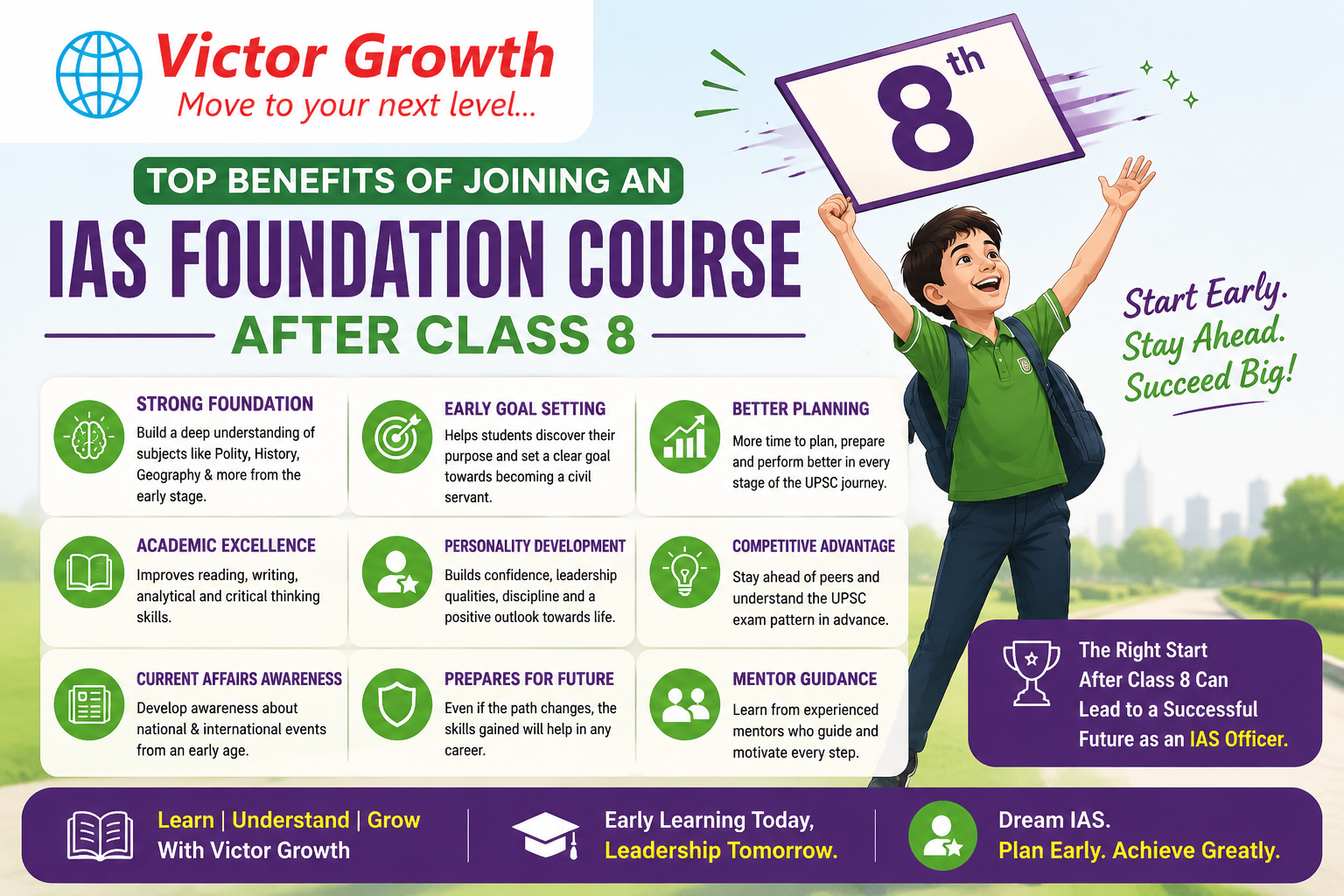
Class 8 is an important milestone in a student’s educational journey. It marks the transition from basic learning to more advanced concepts that prepare students for higher secondary education and future careers. For students who aspire to serve the nation as civil servants—or simply wish to build strong academic and life skills—this is an excellent stage to begin an IAS Foundation Course.
An IAS Foundation Course is not about preparing students to write the UPSC Civil Services Examination immediately. Instead, it focuses on building the essential skills, knowledge, discipline, and personality traits that contribute to long-term success. From improving analytical thinking and communication to developing leadership and awareness of national issues, a well-designed foundation programme lays the groundwork for future achievements.
For families seeking the best IAS coaching in Kerala, enrolling in a structured foundation course after Class 8 can provide students with a meaningful advantage while complementing their school education.
Why Is Class 8 the Right Time to Start?
By Class 8, students have developed the maturity to understand broader concepts and are naturally curious about society, science, governance, and current events. At this stage, they can begin building habits that will benefit them throughout school, college, and beyond.
Starting early allows students to:
- Learn without exam pressure
- Build concepts gradually
- Develop consistent study habits
- Explore diverse subjects
- Strengthen confidence and communication
- Balance school academics with skill development
Rather than rushing into intensive exam preparation later, students can grow steadily over several years.
1. Builds a Strong Academic Foundation
A major benefit of joining an IAS Foundation Course after Class 8 is the opportunity to strengthen core academic concepts.
Students explore subjects such as:
- Indian History
- Geography
- Indian Constitution
- Economics
- Science and Technology
- Environment
- Current Affairs
Many of these topics overlap with school subjects, enabling students to understand concepts more deeply rather than relying on rote memorization.
A strong foundation makes future learning easier and supports excellent performance in school examinations.
2. Develops Excellent Reading Habits
Reading is one of the most valuable habits for any student.
Foundation programmes encourage students to read:
- Newspapers
- Children’s magazines
- Biographies of leaders
- Science publications
- General knowledge books
- Age-appropriate non-fiction
Regular reading helps improve:
- Vocabulary
- Comprehension
- Writing ability
- Critical thinking
- Awareness of the world
These habits benefit students in every academic discipline.
3. Encourages Curiosity and Critical Thinking
Civil services preparation values students who can think independently and analyze problems from multiple perspectives.
Instead of memorizing information, foundation courses encourage students to ask:
- Why did this happen?
- What are the causes?
- What could be the solution?
- Who is affected?
- What are the long-term consequences?
This habit of inquiry enhances classroom learning and prepares students for future competitive examinations.
4. Improves Communication Skills
Communication is an essential life skill and a key quality expected of future administrators.
An IAS Foundation Course helps students become confident communicators through:
- Public speaking
- Debates
- Group discussions
- Presentations
- Storytelling
- Essay writing
Improved communication also boosts confidence in school competitions, interviews, and leadership roles.
5. Develops Leadership Qualities
Leadership is not just about holding a position—it is about taking responsibility, making informed decisions, and working effectively with others.
Foundation programmes nurture leadership by encouraging students to:
- Work in teams
- Solve problems collaboratively
- Organize activities
- Express ideas respectfully
- Understand civic responsibility
These experiences prepare students for future academic and professional challenges.
6. Builds Awareness of Current Affairs
Understanding current events is a lifelong skill.
Students gradually learn about:
- National developments
- International affairs
- Science and technology
- Environmental issues
- Government initiatives
- Sports
- Economy
- Social challenges
Instead of viewing the news as difficult or irrelevant, students learn to interpret it in a simple and meaningful way.
7. Improves Time Management and Discipline
Students who join structured foundation programmes learn how to:
- Plan their daily schedule
- Balance academics and extracurricular activities
- Set achievable goals
- Prioritize tasks
- Revise consistently
These habits become increasingly valuable during Classes 9 to 12 and in higher education.
8. Enhances Writing Skills
Strong writing skills are essential for success in school and future competitive examinations.
Foundation courses provide practice in:
- Essay writing
- Creative writing
- Report writing
- Opinion-based answers
- Structured note-making
Students learn to organize their thoughts clearly and express ideas effectively.
9. Strengthens Analytical Ability
Modern education increasingly values analysis over memorization.
Students learn to:
- Compare ideas
- Interpret information
- Evaluate evidence
- Identify patterns
- Draw logical conclusions
Analytical thinking improves performance in school projects, Olympiads, scholarship examinations, and future entrance tests.
10. Supports Better School Performance
Many parents worry that additional learning may affect school grades. In reality, a quality IAS Foundation Course complements school education.
Students often show improvement in:
- Social Science
- English
- General Science
- Reading comprehension
- Project work
- Presentations
- General awareness competitions
Because the learning is concept-based, students gain a deeper understanding of school subjects.
11. Builds Confidence for Competitive Examinations
Early exposure to structured learning prepares students for a variety of future examinations, including:
- UPSC Civil Services
- Kerala Administrative Service (KAS)
- NDA
- CDS
- SSC
- Banking examinations
- CLAT
- CUET
- Scholarship examinations
Students become comfortable with analytical questions and structured learning well before graduation.
12. Encourages Ethical Values and Responsible Citizenship
An IAS Foundation Course emphasizes values such as:
- Integrity
- Honesty
- Empathy
- Social responsibility
- Respect for diversity
- Civic awareness
Students learn not only about governance but also about becoming responsible citizens who contribute positively to society.
13. Reduces Future Preparation Pressure
Students who begin learning gradually after Class 8 are less likely to feel overwhelmed when preparing for competitive examinations later.
Early preparation helps them:
- Avoid last-minute cramming
- Build confidence
- Master concepts over time
- Develop long-term consistency
This steady approach often reduces stress and supports balanced learning.
14. Opens Multiple Career Opportunities
Even if a student eventually chooses a career other than the civil services, the skills acquired remain highly valuable.
These include careers in:
- Engineering
- Medicine
- Law
- Journalism
- Management
- Public Policy
- Research
- Entrepreneurship
- Defence Services
- International Relations
The emphasis on communication, leadership, and analytical thinking benefits virtually every profession.
What Makes a Good IAS Foundation Course?
When selecting a programme, parents should look for:
- Experienced faculty
- Structured curriculum
- Interactive teaching methods
- Age-appropriate study materials
- Regular assessments
- Current affairs sessions
- Personality development
- Communication skills training
- Individual mentorship
- Balanced approach that supports school studies
Choosing the best IAS coaching in Kerala ensures students receive guidance that is both academically enriching and developmentally appropriate.
Why Choose the Best IAS Coaching in Kerala?
The best IAS coaching in Kerala offers more than classroom teaching. Students benefit from:
- Experienced UPSC mentors
- Comprehensive study resources
- Interactive learning environment
- Leadership development activities
- Public speaking and debate practice
- Current affairs discussions
- Personal mentorship
- Regular feedback and progress tracking
- Skill-based learning that complements school education
A strong foundation programme equips students with the confidence and capabilities needed for future success.
Conclusion
Joining an IAS Foundation Course after Class 8 is one of the most effective ways to invest in a student’s long-term academic and personal development. Rather than focusing solely on a distant competitive examination, these programmes cultivate curiosity, discipline, communication, leadership, and analytical thinking—qualities that benefit students throughout life.
For parents looking for the best IAS coaching in Kerala, choosing a structured and age-appropriate foundation programme can help children excel in school while preparing them for future competitive examinations and leadership opportunities. The journey to becoming a capable professional—or even an IAS officer—begins with building the right foundation.
Frequently Asked Questions (FAQs)
1. Why should students join an IAS Foundation Course after Class 8?
Class 8 is an ideal stage to begin developing strong academic concepts, reading habits, communication skills, and critical thinking without the pressure of competitive examinations.
2. Will an IAS Foundation Course affect school studies?
No. A well-designed programme complements school education by strengthening conceptual understanding, improving study habits, and enhancing communication and writing skills.
3. Is the course only useful for students who want to become IAS officers?
No. The course develops transferable skills such as leadership, analytical thinking, communication, and discipline that are valuable in almost every career.
4. What subjects are taught in an IAS Foundation Course?
Students typically learn:
- Indian History
- Geography
- Indian Polity
- Economics
- Science and Technology
- Environment
- Current Affairs
- Communication Skills
- Personality Development
5. How much time should students spend on an IAS Foundation Course?
Most foundation programmes require 3–6 hours per week, allowing students to balance school academics, extracurricular activities, and personal interests.
6. Does an IAS Foundation Course help with other competitive exams?
Yes. The skills developed through the course are useful for exams such as KAS, NDA, CDS, CLAT, CUET, SSC, banking examinations, scholarship tests, and many other competitive assessments.
7. What qualities should parents look for in the best IAS coaching in Kerala?
Parents should consider:
- Experienced faculty
- Structured and age-appropriate curriculum
- Interactive teaching methods
- Current affairs integration
- Personality development
- Individual mentorship
- Regular assessments
- Strong academic support
8. How does an IAS Foundation Course improve personality development?
Students gain confidence through public speaking, debates, teamwork, leadership activities, ethical discussions, and communication exercises, helping them become well-rounded individuals.