The Ultimate Reading List for Early UPSC Preparation | Best IAS Coaching in Kerala
Preparing for the Union Public Service Commission (UPSC) Civil Services Examination is a long-term journey that rewards consistency, conceptual clarity, and disciplined learning. Students who begin their preparation during Classes 8–12 gain a significant advantage by developing strong fundamentals, analytical thinking, reading habits, and current affairs awareness before entering college.
One of the most important aspects of early preparation is choosing the right books. With thousands of study materials available, students often become confused about where to begin. Reading too many books can lead to information overload, while reading the right resources builds a strong foundation for future success.
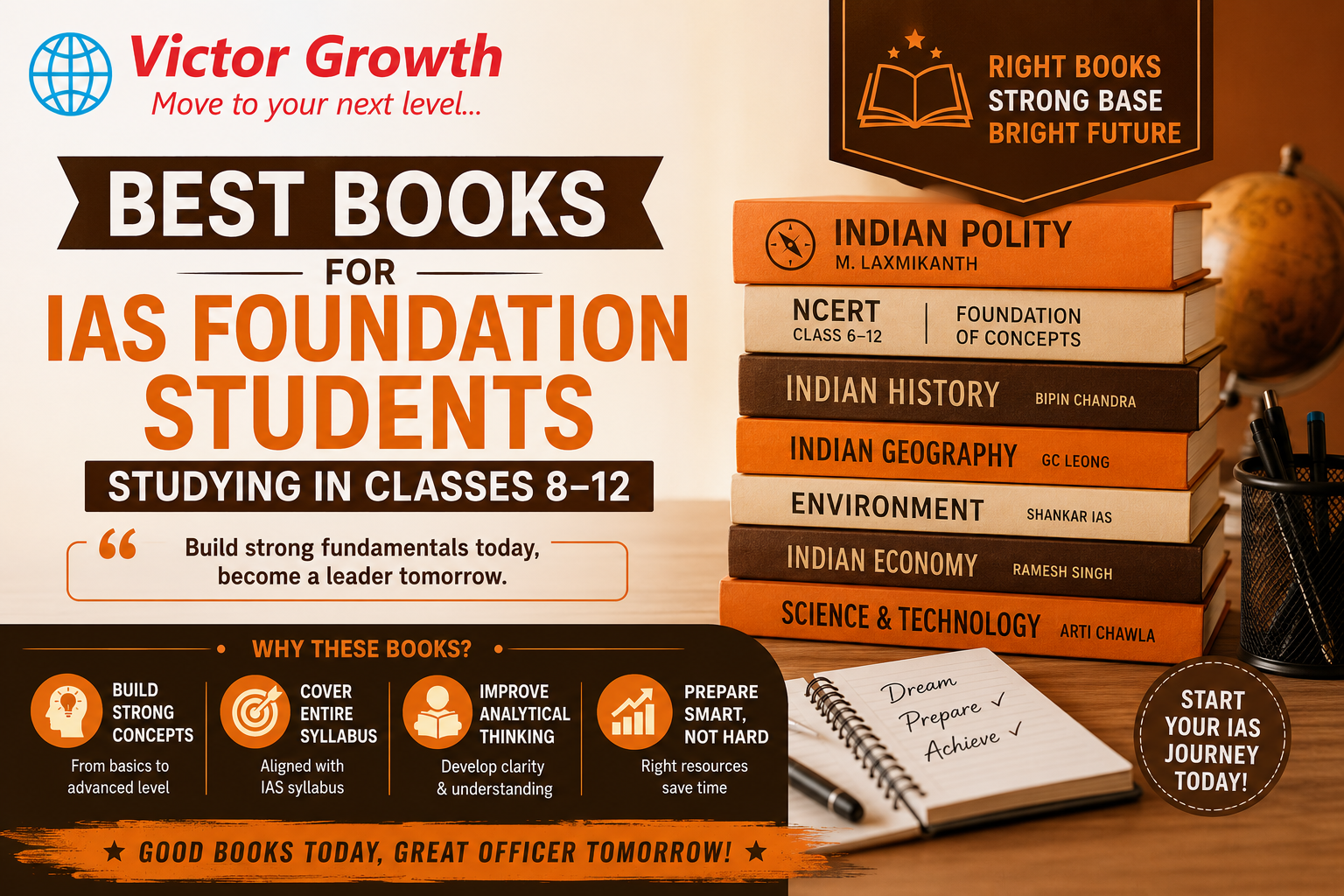
The best IAS coaching in Kerala recommends a carefully curated list of age-appropriate books that strengthen conceptual knowledge without overwhelming young learners. This guide covers the best books for IAS Foundation students studying in Classes 8–12 and explains how each resource contributes to long-term UPSC preparation.
Why Should Students Start IAS Preparation in Classes 8–12?
Starting early is not about studying advanced UPSC topics at a young age. Instead, it is about gradually building the skills required to excel in competitive examinations.
Early preparation helps students:
- Develop strong conceptual understanding
- Improve reading habits
- Enhance vocabulary
- Strengthen writing skills
- Build analytical thinking
- Improve communication skills
- Stay updated with current affairs
- Develop leadership qualities
- Reduce pressure during graduation
- Prepare systematically for UPSC and other competitive examinations
Students who build these habits early often find the Civil Services Examination less intimidating later.
How to Choose the Right Books for IAS Foundation Students
Before selecting study materials, students should ensure that books are:
- Age appropriate
- Concept-based rather than fact-heavy
- Written in simple language
- Aligned with the NCERT curriculum
- Helpful for improving analytical thinking
- Relevant to current affairs and general awareness
- Suitable for long-term preparation
Quality matters more than quantity. Reading fewer books thoroughly is more beneficial than collecting many books without understanding them.
1. NCERT Textbooks – The Foundation of UPSC Preparation
Every successful UPSC aspirant begins with NCERT books.
These books provide:
- Clear concepts
- Simple language
- Logical explanations
- Authentic information
- Strong academic fundamentals
Students from Classes 8–12 should thoroughly study NCERT textbooks in the following subjects.
History
Recommended Classes:
- Class 8
- Class 9
- Class 10
- Class 11 (Ancient, Medieval, Modern)
- Class 12 (Themes in Indian and World History)
History helps students understand:
- Indian civilization
- Freedom struggle
- Constitutional development
- Cultural heritage
- World events
Geography
Study NCERT Geography books from:
- Classes 6–12
Topics include:
- Earth and Universe
- Climate
- Landforms
- Agriculture
- Population
- Resources
- Environment
- Indian Geography
- World Geography
Geography develops map-reading skills and environmental awareness.
Political Science
Recommended books:
- Class 9 Political Science
- Class 10 Democratic Politics
- Class 11 Indian Constitution at Work
- Class 12 Politics in India Since Independence
- Class 12 Contemporary World Politics
Students learn:
- Constitution
- Democracy
- Parliament
- Judiciary
- Elections
- Governance
- International Relations
Economics
Study:
- Class 9 Economics
- Class 10 Economics
- Class 11 Indian Economic Development
- Class 12 Macroeconomics
- Class 12 Microeconomics
Economics builds understanding of:
- Budget
- Inflation
- Banking
- Employment
- Development
- Government schemes
Science
Study NCERT Science from:
- Classes 8–10
And Physics, Chemistry, Biology for Classes 11–12.
Science develops logical reasoning and scientific temperament.
2. Oxford School Atlas
A good atlas is essential for UPSC preparation.
Students should practice locating:
- Countries
- Rivers
- Mountains
- Seas
- Borders
- Capitals
- Important geographical regions
Regular map practice improves geographical understanding and current affairs preparation.
3. Indian Constitution at Work (NCERT Class 11)
This is one of the most valuable books for future UPSC aspirants.
Students learn about:
- Fundamental Rights
- Directive Principles
- Parliament
- Judiciary
- Federalism
- Constitutional Bodies
Reading this book during school creates a strong foundation for Polity.
4. India Year Book (Reference Reading)
For students in Classes 11–12, selected chapters of the India Year Book can provide valuable insights into:
- Government initiatives
- National development
- Economy
- Agriculture
- Education
- Science
- Culture
Students should not attempt to memorize the entire book but use it selectively under guidance.
5. Yojana Magazine
Yojana is one of the most recommended government publications for UPSC aspirants.
Benefits include:
- Balanced perspectives
- Government policies
- Social issues
- Economic development
- Rural development
- Education
- Health
- Governance
Students in higher secondary classes can begin reading one issue every month.
6. Kurukshetra Magazine
Kurukshetra focuses on:
- Rural development
- Agriculture
- Sustainable development
- Panchayati Raj
- Government welfare programs
It helps students understand grassroots governance and rural administration.
7. The Hindu Newspaper
Reading The Hindu develops:
- Vocabulary
- Editorial analysis
- Critical thinking
- Writing skills
- Current affairs knowledge
Students should focus on:
- National news
- International news
- Economy
- Science
- Environment
- Editorials
- Government policies
Avoid spending excessive time on political controversies and entertainment news.
8. The Indian Express (Alternative Newspaper)
Students may also choose The Indian Express, particularly for:
- Explained articles
- Editorials
- Policy analysis
- International relations
Both newspapers are excellent for building analytical thinking.
9. Children’s Science and Knowledge Books
Students in Classes 8–10 should also read books that stimulate curiosity.
Examples include:
- Science encyclopedias
- Space exploration books
- Wildlife books
- Environmental science books
Curiosity is one of the most important qualities of a future civil servant.
10. Books on Indian Culture
Recommended topics include:
- Indian heritage
- Festivals
- Classical dances
- Architecture
- Temples
- Literature
- Music
- Art
Understanding India’s cultural diversity is important for UPSC preparation.
11. Books on Great Leaders
Students should read biographies of:
- Mahatma Gandhi
- Dr. B.R. Ambedkar
- Sardar Vallabhbhai Patel
- Dr. A.P.J. Abdul Kalam
- Swami Vivekananda
- Subhas Chandra Bose
- Lal Bahadur Shastri
These books inspire leadership, discipline, and ethical values.
12. Books That Improve Vocabulary
Language plays an important role in competitive examinations.
Students should regularly improve:
- Vocabulary
- Grammar
- Reading comprehension
- Writing ability
Reading quality English books and newspapers naturally strengthens language skills.
13. General Knowledge Books
Students may use age-appropriate general knowledge books covering:
- India
- World
- Science
- Geography
- History
- Sports
- Awards
- International organizations
General awareness should be built gradually rather than through rote memorization.
14. Environmental Books
Students should develop awareness of:
- Biodiversity
- Wildlife
- Climate Change
- Conservation
- Sustainable Development
Environmental knowledge is increasingly important in UPSC.
15. Books That Improve Logical Thinking
Students should regularly practice:
- Puzzles
- Logical reasoning
- Brain teasers
- Mathematical reasoning
These activities improve analytical ability and decision-making.
Reading Habits Every IAS Foundation Student Should Develop
The best IAS coaching in Kerala encourages students to develop consistent reading habits rather than focusing only on examination-oriented learning.
Students should:
- Read every day for at least one hour.
- Maintain a notebook for important points.
- Revise weekly.
- Highlight difficult words.
- Write summaries after completing chapters.
- Read newspapers regularly.
- Practice map work every week.
- Discuss current affairs with teachers and peers.
Consistency is far more important than studying for long hours occasionally.
Books Students Should Avoid During Early Preparation
Many students make the mistake of starting advanced UPSC books too early.
Students in Classes 8–10 should avoid:
- Reading multiple advanced reference books simultaneously.
- Memorizing facts without understanding concepts.
- Buying too many guidebooks.
- Depending entirely on coaching notes.
- Ignoring school textbooks.
A strong foundation always begins with NCERTs and age-appropriate reading.
Role of IAS Foundation Coaching in Selecting the Right Books
Choosing the correct books is easier with expert guidance.
The best IAS coaching in Kerala helps students:
- Create structured reading plans.
- Avoid unnecessary books.
- Build concepts gradually.
- Connect school subjects with UPSC topics.
- Develop answer-writing skills.
- Improve analytical thinking.
- Stay motivated through mentorship.
With proper guidance, students spend more time learning and less time deciding what to study.
Why Victor Growth is Among the Best IAS Coaching in Kerala
Victor Growth offers a well-designed IAS Foundation Program that helps students in Classes 8–12 build a strong academic base while developing leadership, communication, and analytical skills. Rather than overwhelming students with advanced material, the program focuses on age-appropriate learning, ensuring concepts are understood deeply before progressing to higher-level UPSC preparation.
Key features include:
- Expert faculty guidance
- Structured booklists and study plans
- NCERT-based conceptual learning
- Daily current affairs discussions
- Reading habit development
- Leadership and personality development sessions
- Answer writing practice
- Regular assessments and progress tracking
- Individual mentorship
- Integrated preparation for UPSC and other competitive examinations
Students receive the right balance of school education and competitive exam preparation, making Victor Growth a trusted choice for those seeking the best IAS coaching in Kerala.
Conclusion
The journey to becoming an IAS officer begins with building a strong educational foundation, not with memorizing advanced study materials. Students in Classes 8–12 should focus on understanding concepts, cultivating reading habits, and developing curiosity about the world around them.
NCERT textbooks, quality newspapers, government publications, atlases, biographies, and carefully selected reference books provide everything a young aspirant needs to prepare effectively. Combined with expert guidance from the best IAS coaching in Kerala, these resources lay the groundwork for success in UPSC and other competitive examinations.
Remember, becoming a civil servant is a marathon, not a sprint. The right books, read consistently over time, can shape not only your preparation but also your perspective as a future leader.
Frequently Asked Questions (FAQs)
1. Which books are best for IAS Foundation students in Classes 8–12?
The best books include NCERT textbooks (Classes 6–12), The Hindu or The Indian Express, Oxford School Atlas, Yojana, Kurukshetra, and selected biographies of national leaders.
2. Are NCERT books enough for early IAS preparation?
Yes. NCERT books provide strong conceptual clarity and are the most recommended starting point for IAS Foundation students.
3. Should Class 8 students start reading advanced UPSC books?
No. Students should focus on school textbooks, age-appropriate general knowledge books, and reading newspapers rather than advanced UPSC reference books.
4. Which newspaper is best for IAS Foundation students?
The Hindu is widely recommended for its editorials and national coverage. The Indian Express is also an excellent alternative, especially for its “Explained” section.
5. Why is reading newspapers important for IAS preparation?
Newspapers improve vocabulary, analytical thinking, writing skills, and awareness of current affairs, all of which are essential for competitive examinations.
6. Should students read Yojana and Kurukshetra magazines?
Yes. Students in Classes 11–12 can begin reading selected articles to understand government policies, rural development, social issues, and governance.
7. How many books should an IAS Foundation student study?
It is better to study a limited number of high-quality books thoroughly rather than collecting too many resources. Conceptual understanding is more important than quantity.
8. Can IAS Foundation books help in other competitive exams?
Yes. These books build the fundamentals required for UPSC, Kerala PSC, SSC, Banking, CDS, AFCAT, CAPF, State PSC, and many other government examinations.
9. How does the best IAS coaching in Kerala guide students in book selection?
Experienced coaching institutes provide structured reading plans, recommend standard resources, monitor progress, and help students avoid unnecessary or overly advanced books.
10. Why should students join an IAS Foundation Program during school?
Starting early allows students to build conceptual clarity, reading habits, leadership skills, communication abilities, and confidence gradually, making future competitive exam preparation much more effective.