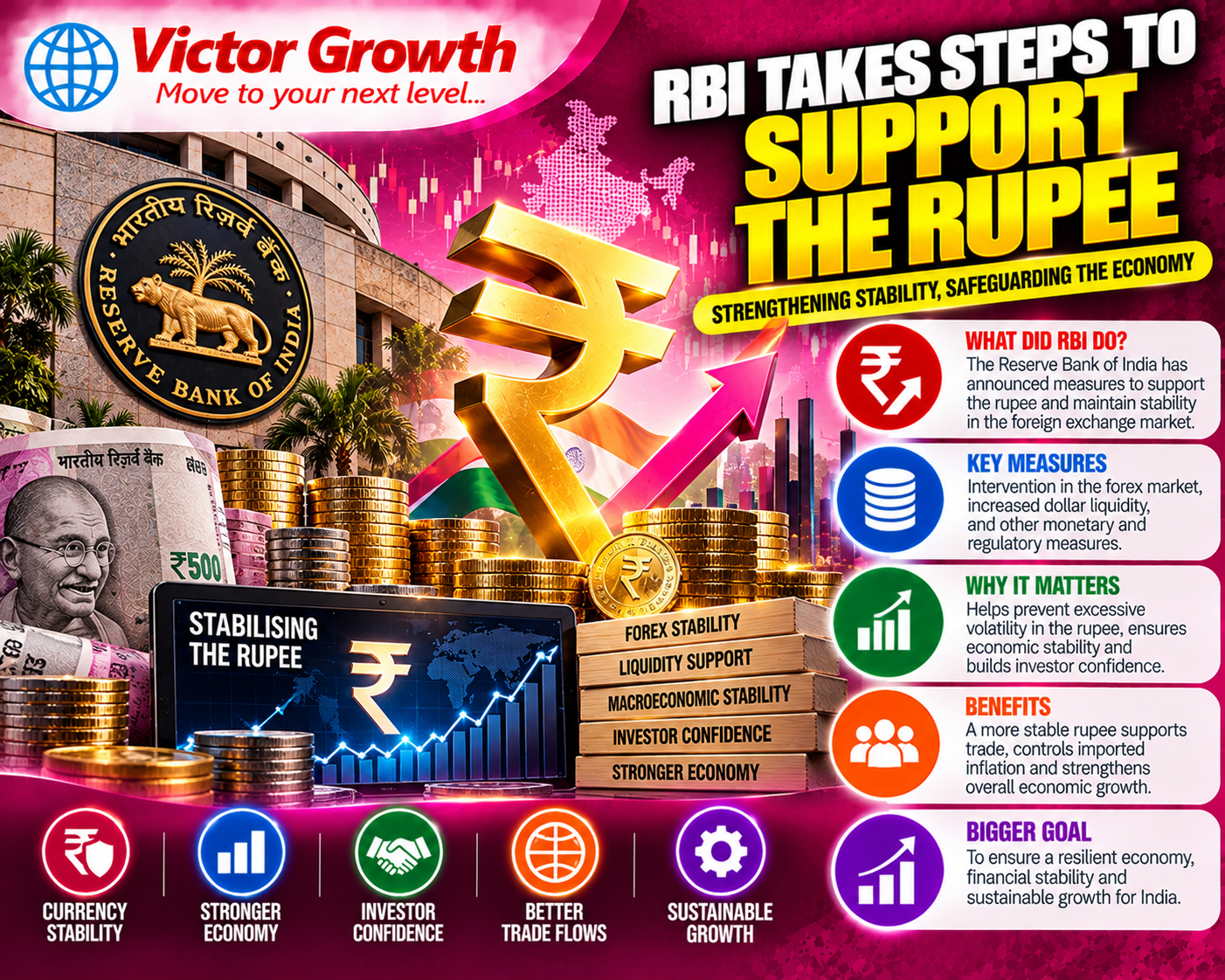
The Reserve Bank of India (RBI) announced a series of measures in October 2026 to support the Indian rupee, which faced pressure from rising oil prices, foreign capital outflows and strong demand for US dollars. The measures aim to reduce excessive dollar demand, discourage speculative currency trading and maintain orderly conditions in the foreign-exchange market.
Key Measures Taken by the RBI
1. Special Dollar Window for Oil Companies
The RBI introduced a special facility to meet the daily dollar requirements of three public-sector oil marketing companies:
Indian Oil Corporation (IOC)
Hindustan Petroleum Corporation (HPCL)
Bharat Petroleum Corporation (BPCL)
By supplying dollars directly from its foreign-exchange reserves, the RBI aims to reduce these companies’ demand for dollars in the regular market.
2. Foreign Exchange Risk Reserve
The RBI introduced a Foreign Exchange Risk Reserve (FERR) requirement for certain large foreign-exchange derivative contracts. Dealers must maintain a reserve equivalent to 20% of the notional value of qualifying transactions exceeding US$2 million.
The measure is intended to increase the cost of excessive currency hedging and discourage destabilising speculative activity.
3. Tighter Rules for Currency Derivatives
The RBI reduced the limit for certain foreign-exchange derivative positions that can be undertaken without establishing an underlying exposure from US$100 million to US$5 million. It also restricted the rebooking of cancelled rupee-related derivative contracts to improve market discipline.
Why Is the Indian Rupee Under Pressure?
Several factors can contribute to the depreciation of the rupee:
High crude oil prices: India imports a large proportion of its crude oil, increasing demand for dollars when oil prices rise.
Foreign capital outflows: Foreign investors selling Indian assets can increase demand for dollars.
Strong US dollar: Global uncertainty and attractive US financial returns can strengthen the dollar.
Trade deficit: Higher imports relative to exports can increase demand for foreign currency.
Speculative trading: Excessive one-sided bets can intensify short-term currency volatility.
Significance of the RBI’s Measures
The measures may reduce excessive volatility, ease pressure on the rupee and improve confidence in the foreign-exchange market. A weaker rupee can make imports more expensive, contributing to inflation and increasing the cost of overseas education and travel.
However, supplying dollars directly to oil companies may reduce foreign-exchange reserves. Tighter derivative rules can also increase hedging costs for legitimate importers and businesses. The measures therefore aim to balance currency stability with the need for efficient foreign-exchange markets.
UPSC Exam Relevance
Prelims: RBI, foreign-exchange reserves, currency derivatives, exchange rates and the balance of payments.
GS Paper III: Indian economy, inflation, external-sector stability and monetary policy.
Possible UPSC Mains Question: Why does the Indian rupee depreciate against the US dollar? Discuss the role and limitations of the RBI in managing exchange-rate volatility.
Conclusion
The RBI’s measures represent an effort to support the rupee by addressing dollar demand and excessive activity in currency derivatives. Sustained currency stability will also depend on global oil prices, export performance, capital flows and the strength of India’s external sector.