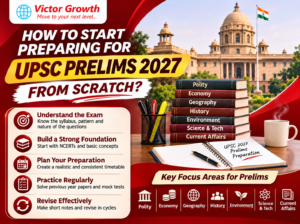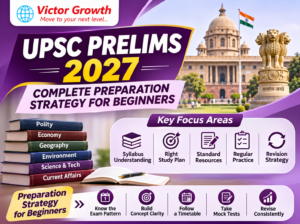
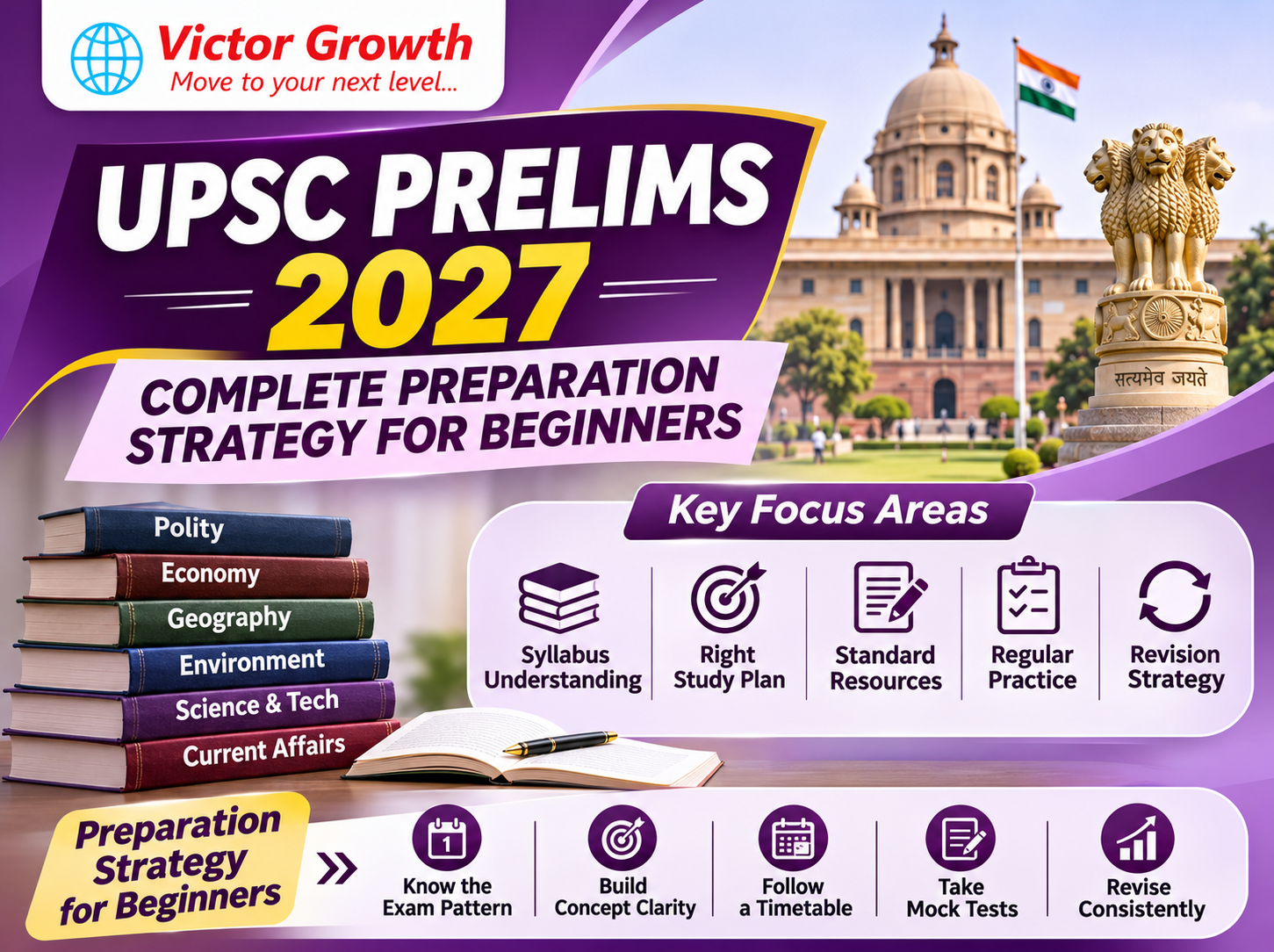
Preparing for the UPSC Civil Services Preliminary Examination can feel challenging, especially for beginners. The vast syllabus, multiple subjects, and intense competition require a clear strategy, consistent effort, and regular revision. However, with the right approach and a well-planned timetable, beginners can gradually build the knowledge and confidence needed to prepare for UPSC Prelims 2027.
For aspirants looking for the best UPSC coaching in Kerala, understanding the examination pattern, selecting the right study materials, and following a structured preparation plan are important first steps.
1. Understand the UPSC Prelims 2027 Exam Pattern
The UPSC Civil Services Preliminary Examination consists of two objective-type papers:
| Paper | Subject | Marks |
|---|---|---|
| General Studies Paper I | History, Geography, Polity, Economy, Environment, Science and Current Affairs | 200 |
| General Studies Paper II (CSAT) | Comprehension, Reasoning, Decision-making and Basic Numeracy | 200 |
Both papers carry 200 marks each.
Each paper is conducted for two hours.
CSAT is qualifying, with a minimum of 33% marks required.
There is negative marking for incorrect answers.
General Studies Paper I marks determine qualification for the Mains examination, subject to meeting the CSAT qualifying requirement.
Always refer to the official UPSC notification for the latest examination rules and dates.
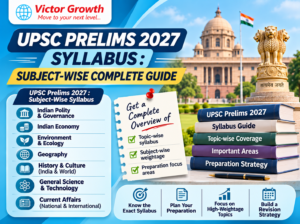
2. Understand the Complete UPSC Prelims Syllabus
Before starting preparation, go through the official syllabus carefully. It helps you identify important subjects and avoid unnecessary reading.
Indian Polity: Constitution, Fundamental Rights, Parliament, President, Prime Minister, Judiciary, constitutional bodies, and local government.
History: Ancient, Medieval, and Modern Indian History, with special attention to the freedom struggle.
Geography: Indian and World Geography, physical features, climate, rivers, resources, and mapping.
Indian Economy: Basic economic concepts, banking, inflation, budgeting, taxation, government schemes, and economic developments.
Environment and Ecology: Biodiversity, climate change, ecosystems, conservation, and environmental conventions.
Science and Technology: Space technology, biotechnology, information technology, and important scientific developments.
Current Affairs: National and international events, government initiatives, reports, awards, and important developments.
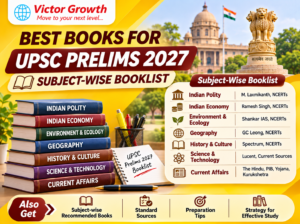
3. Choose the Right Books and Study Materials
Beginners should avoid collecting too many books. Start with basic textbooks and gradually move towards standard UPSC preparation materials.
Useful resources include:
NCERT textbooks: Build basic understanding of History, Geography, Economics, and Science.
Indian Polity by M. Laxmikanth: A standard reference for Indian Polity.
Modern India by Spectrum: Useful for preparing Modern Indian History.
A standard Geography reference: Use it along with NCERT textbooks and an atlas.
Newspaper: Read a reliable newspaper daily for relevant current affairs.
Previous-year question papers: Understand the question pattern and important areas.
Focus on understanding and revising your sources rather than continuously adding new materials.
4. Follow a Practical Daily Study Timetable
A consistent timetable helps beginners cover the syllabus without feeling overwhelmed.
| Activity | Suggested time |
|---|---|
| Static subject preparation | 2 hours |
| Current affairs and newspaper | 45 minutes |
| Second subject or revision | 1 hour |
| MCQ practice | 30 minutes |
| CSAT practice | 30 minutes |
Adjust the schedule according to your availability. Students and working professionals can divide these sessions throughout the day.
5. Make Revision and Mock Tests a Priority
Reading alone is not enough to clear UPSC Prelims. Regular revision and question practice are essential.
Revise every topic after completing it.
Prepare short notes for important facts and concepts.
Solve previous-year UPSC questions.
Attempt topic-wise and full-length mock tests.
Analyse incorrect answers and understand why you made mistakes.
Practise CSAT regularly instead of postponing it.
Mock tests help improve accuracy, time management, and question-solving strategies.
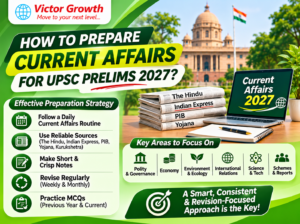
6. Prepare Current Affairs Systematically
Current affairs are an important part of General Studies Paper I. Read the newspaper daily, but focus on issues relevant to the UPSC syllabus.
Give attention to government policies, international relations, economic developments, environmental issues, science and technology, and important national events.
Prepare concise notes and revise them regularly. Monthly current affairs compilations can help organise information, but they should support—not replace—daily reading and conceptual understanding.
7. How to Choose the Best UPSC Coaching in Kerala
Beginners often benefit from structured guidance, especially when they are unfamiliar with the syllabus and examination process. When searching for the best UPSC coaching in Kerala, consider the following factors:
Experienced Faculty: Teachers should explain complex topics in a simple and clear manner.
Structured Study Plan: The programme should cover the complete syllabus systematically.
Updated Study Materials: Notes should be relevant to the latest syllabus and examination requirements.
Regular Mock Tests: Assessments should include detailed performance analysis.
Current Affairs Guidance: Look for regular discussions and revision support.
Personal Attention: Doubt-clearing sessions and individual guidance can improve learning.
Choose a coaching institute that encourages independent study, regular revision, and analytical thinking rather than depending entirely on classroom teaching.
8. Common Mistakes Beginners Should Avoid
Starting preparation without understanding the syllabus.
Collecting too many books and study materials.
Ignoring NCERT fundamentals.
Avoiding CSAT practice.
Reading current affairs without revision.
Taking mock tests without analysing mistakes.
Neglecting previous-year question papers.
A focused and realistic preparation strategy is more effective than studying without direction.
Frequently Asked Questions (FAQs)
1. When should beginners start preparing for UPSC Prelims 2027?
Beginners should start as early as possible, allowing enough time to understand the syllabus, complete basic textbooks, revise subjects, and practise mock tests.
2. How many hours should I study daily for UPSC Prelims?
The required study time depends on your background and schedule. Beginners can start with 4–6 focused hours daily and gradually increase their study time if necessary.
3. Is NCERT enough for UPSC Prelims 2027?
NCERT textbooks are useful for building basic concepts, but candidates should also study standard reference books, current affairs, and previous-year questions.
4. Is CSAT compulsory for UPSC Prelims?
Yes. Candidates must appear for CSAT (General Studies Paper II) and score at least 33% to qualify. It is important not to ignore this paper.
5. How can I find the best UPSC coaching in Kerala?
Compare faculty experience, syllabus coverage, study materials, mock tests, current affairs support, and individual guidance before selecting a coaching institute.
Conclusion
Preparing for UPSC Prelims 2027 requires a combination of conceptual understanding, current affairs knowledge, regular revision, and consistent practice. Beginners should start with the syllabus and NCERT textbooks, follow a realistic timetable, and gradually improve their performance through mock tests. With disciplined self-study and the right guidance from a suitable coaching programme, aspirants can build a strong foundation for the Civil Services Examination.