Understanding the UPSC Prelims 2027 syllabus is the first step towards effective Civil Services preparation. The syllabus covers a wide range of subjects, including History, Geography, Indian Polity, Economy, Environment, Science and Technology, and Current Affairs. Beginners should understand each subject clearly before selecting study materials or preparing a timetable.
A subject-wise approach helps aspirants organise their preparation, identify important topics, and revise systematically. This guide provides an overview of the UPSC Prelims syllabus and practical tips to prepare for each subject.
Note: The official UPSC Civil Services Examination 2027 notification and syllabus should be checked when released. The following guide is based on the latest published Civil Services Prelims syllabus.
1. UPSC Prelims 2027 Exam Pattern
The Preliminary Examination consists of two compulsory objective-type papers.
| Paper | Subject | Marks |
|---|---|---|
| General Studies Paper I | General Studies | 200 |
| General Studies Paper II | CSAT | 200 |
Both papers have a duration of two hours.
CSAT is qualifying in nature, with a minimum requirement of 33%.
General Studies Paper I marks are considered for Prelims qualification.
Negative marking applies to incorrect answers.
Candidates must appear for both papers.
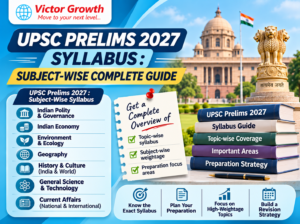
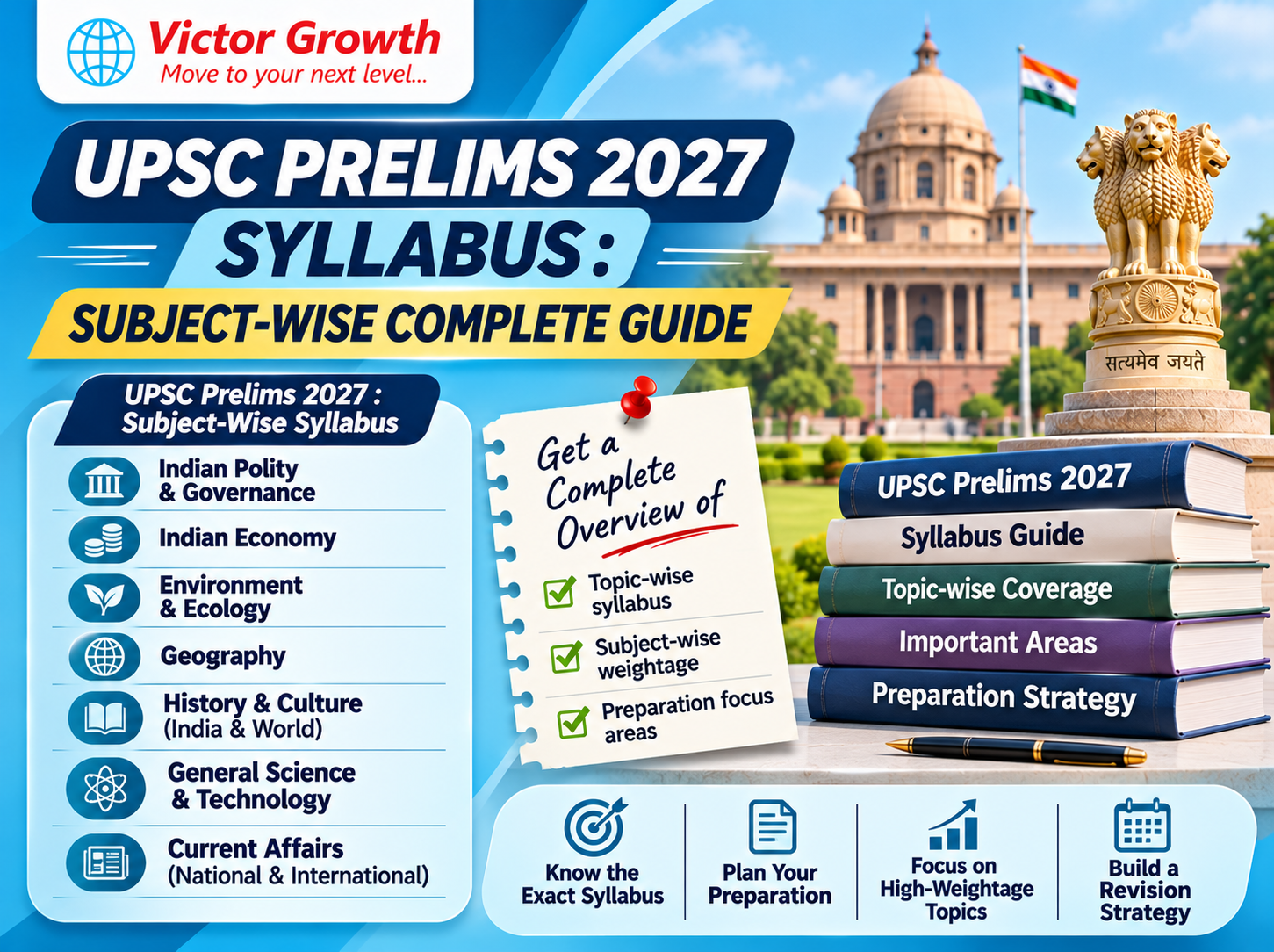
2. Subject-Wise UPSC Prelims 2027 Syllabus
A. Indian History
History is an important part of General Studies Paper I. Candidates should understand India’s historical development and major events.
Important topics include:
Ancient Indian History: Indus Valley Civilisation, Vedic Period, Mauryan and Gupta Empires.
Medieval Indian History: Delhi Sultanate, Mughal Empire, and important regional kingdoms.
Modern Indian History: British rule, social and religious reform movements, and the Indian freedom struggle.
Indian National Movement: Important leaders, movements, organisations, and events.
Preparation Tip: Focus particularly on Modern Indian History, important personalities, movements, and their contributions.
B. Indian and World Geography
Geography covers physical, social, and economic aspects of India and the world.
Important topics include:
Physical Geography: Earth structure, landforms, climate, and oceans.
Indian Geography: Rivers, mountains, soils, forests, agriculture, and natural resources.
World Geography: Continents, oceans, climatic regions, and important geographical features.
Economic Geography: Industries, transportation, resources, and population distribution.
Environmental Geography: Natural disasters, climate patterns, and ecological changes.
Preparation Tip: Use maps and atlases regularly to understand locations, rivers, mountain ranges, and important geographical features.
C. Indian Polity and Governance
Indian Polity is an important subject for UPSC Prelims. It focuses on the Constitution, political institutions, and governance mechanisms.
Important topics include:
Historical background of the Indian Constitution.
Preamble and salient features of the Constitution.
Fundamental Rights and Fundamental Duties.
Directive Principles of State Policy.
President, Vice-President, Prime Minister, and Council of Ministers.
Parliament and State Legislatures.
Supreme Court and High Courts.
Constitutional and statutory bodies.
Panchayati Raj and local self-government.
Public policy and rights-related issues.
Preparation Tip: Understand constitutional provisions and the functions of important institutions instead of memorising facts alone.
D. Indian Economy
The Economy section tests candidates’ understanding of economic and social development.
Important topics include:
Basic economic concepts.
National income and GDP.
Inflation and unemployment.
Banking and monetary policy.
Fiscal policy and taxation.
Union Budget and government expenditure.
Poverty and inclusive growth.
Sustainable development.
Government schemes and social sector initiatives.
Demographic trends and economic development.
Preparation Tip: Build a strong foundation in basic economic concepts and connect them with current economic developments.
E. Environment and Ecology
Environmental topics are important for understanding biodiversity, conservation, and climate-related challenges.
Important topics include:
Ecosystems and ecological relationships.
Biodiversity and conservation.
National parks, wildlife sanctuaries, and biosphere reserves.
Endangered species.
Climate change and global warming.
Environmental pollution.
Environmental conventions and agreements.
Sustainable development and conservation initiatives.
Preparation Tip: Connect environmental concepts with current affairs, international agreements, and important conservation programmes.
F. Science and Technology
This section focuses on general scientific developments and their applications.
Important topics include:
Basic Physics, Chemistry, and Biology.
Space technology and satellite programmes.
Biotechnology and genetic engineering.
Artificial Intelligence and emerging technologies.
Information and communication technology.
Defence technology and scientific developments.
Health-related scientific advancements.
Preparation Tip: Focus on the basic principles and practical applications of important technologies rather than studying highly technical details.
G. Current Affairs
Current events of national and international importance are an important part of General Studies Paper I.
Focus on:
Government schemes and policies.
Important national and international developments.
International organisations and summits.
Awards, appointments, and reports.
Science and technology developments.
Environmental news.
Economic and social developments.
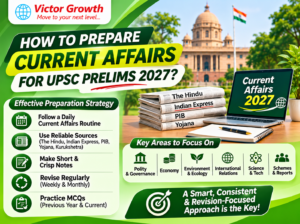
Preparation Tip: Read a reliable newspaper daily, prepare short notes, and revise monthly current affairs regularly.
3. CSAT Syllabus: General Studies Paper II
CSAT is a qualifying paper, but candidates should not ignore it during preparation.
Important topics include:
Reading comprehension.
Interpersonal and communication skills.
Logical reasoning and analytical ability.
Decision-making and problem-solving.
General mental ability.
Basic numeracy up to Class 10 level.
Data interpretation, including charts, graphs, and tables.
Preparation Tip: Practise comprehension, reasoning, and basic mathematics regularly. Solve previous-year CSAT papers to understand the question pattern.
4. How to Prepare the UPSC Prelims 2027 Syllabus Effectively
Following a structured preparation strategy can make the extensive syllabus easier to manage.
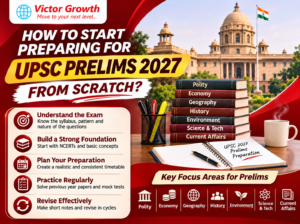
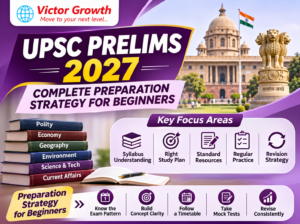
Understand the syllabus: Divide every subject into smaller topics and prepare a checklist.
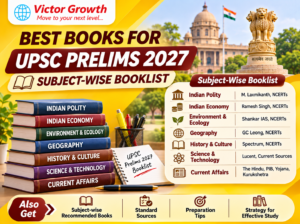
Choose standard books: Start with NCERT textbooks and gradually move to recommended reference books.
Read newspapers: Develop a daily current affairs reading habit.
Practise MCQs: Solve topic-wise questions after completing each subject.
Revise regularly: Prepare short notes and revise completed topics.
Attempt mock tests: Evaluate your preparation and identify weak areas.
Practise CSAT: Give regular attention to the qualifying paper.
5. Choosing the Right UPSC Coaching in Kerala
Beginners may benefit from structured guidance while covering the extensive UPSC syllabus. When searching for the best UPSC coaching in Kerala, consider faculty experience, subject-wise classes, updated study materials, current affairs support, mock tests, and individual doubt-clearing sessions.
A good coaching programme should help aspirants understand concepts, follow a realistic timetable, and develop independent preparation habits. If you are also exploring the best NDA coaching in Kerala, check that the programme is specifically designed for NDA rather than assuming that UPSC and NDA coaching have the same syllabus or teaching approach.
Frequently Asked Questions (FAQs)
1. What are the main subjects in the UPSC Prelims 2027 syllabus?
The main areas include History, Geography, Indian Polity, Economy, Environment and Ecology, Science and Technology, and Current Affairs. CSAT is the second compulsory paper.
2. Is the UPSC Prelims 2027 syllabus different from the 2026 syllabus?
The 2027 syllabus must be confirmed through the official UPSC notification when released. Aspirants can use the latest published syllabus as their preparation foundation in the meantime.
3. Is CSAT compulsory for UPSC Prelims?
Yes. Candidates must appear for CSAT and secure at least 33% marks to qualify.
4. Which subject should beginners study first?
Beginners can start with Indian Polity, History, and Geography to build their foundation. The order can be adjusted according to individual strengths and learning needs.
5. Are NCERT books sufficient for UPSC Prelims 2027?
NCERT books are useful for understanding basic concepts, but candidates should also refer to standard books, current affairs materials, and previous-year question papers.
6. How can I cover the UPSC Prelims syllabus on time?
Prepare a subject-wise timetable, set weekly targets, revise regularly, and practise MCQs. Avoid collecting too many study materials and focus on completing selected resources.
Conclusion
The UPSC Prelims 2027 syllabus covers several subjects that require systematic preparation and regular revision. Understanding the syllabus, selecting the right books, following current affairs, and practising mock tests can help aspirants prepare effectively. Start with the basics, maintain consistency, and gradually strengthen your knowledge across all subjects. A clear preparation strategy and the right academic guidance can help you move closer to your Civil Services goal.