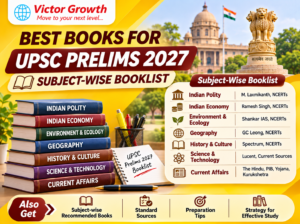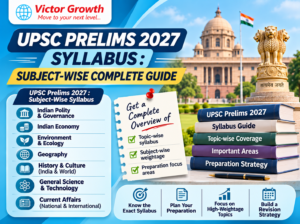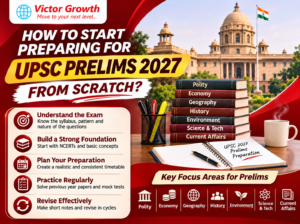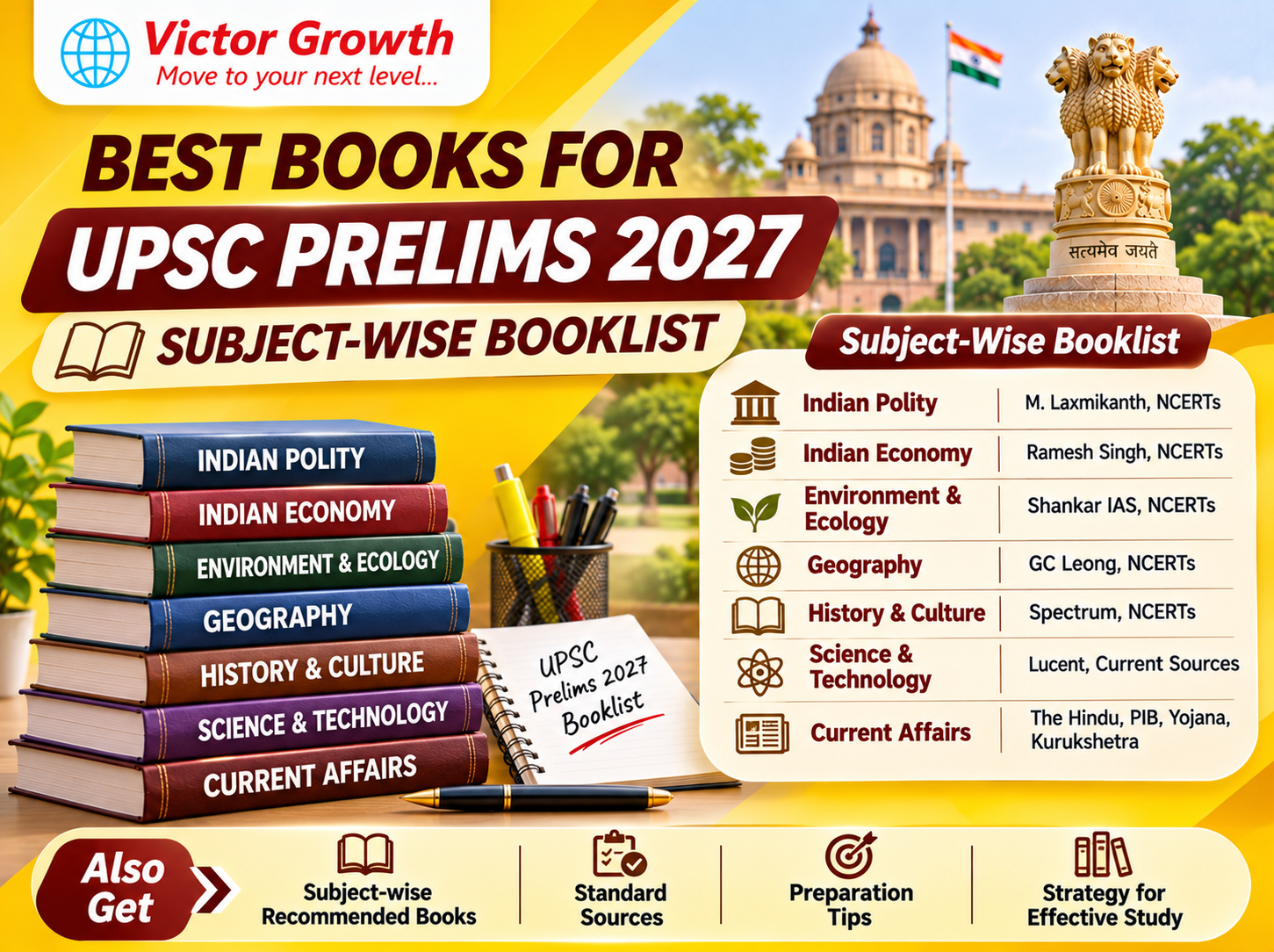
Choosing the right books is one of the most important steps in preparing for UPSC Prelims 2027. With a vast syllabus covering History, Geography, Indian Polity, Economy, Environment, Science and Technology, and Current Affairs, beginners often find it difficult to decide which books to study.
Instead of collecting too many resources, aspirants should focus on a limited number of reliable books and revise them multiple times. This subject-wise booklist will help beginners organise their preparation and build a strong foundation for the Civil Services Examination.
For students exploring competitive examination guidance, choosing the right study resources and a structured learning programme is equally important.
1. Indian Polity
<AsyncImage query=”Indian Polity M Laxmikanth latest edition book cover” aspectRatio=”3:4″ maxWidth=”104px” />
Recommended Book:
Indian Polity – M. Laxmikanth
NCERT Political Science textbooks
This is one of the most recommended books for understanding the Indian Constitution and political system.
Important topics to study:
Fundamental Rights and Duties.
Parliament and State Legislatures.
President and Prime Minister.
Supreme Court and High Courts.
Constitutional and statutory bodies.
Panchayati Raj institutions.
2. Indian History
<AsyncImage query=”A Brief History of Modern India Spectrum Rajiv Ahir book cover” aspectRatio=”3:4″ maxWidth=”104px” />
Recommended Books:
A Brief History of Modern India – Rajiv Ahir (Spectrum).
NCERT History textbooks.
Themes in Indian History – NCERT, for selected topics.
Focus on the freedom struggle, important movements, reform organisations, historical personalities, and major events.
Preparation Tip: Give particular attention to Modern Indian History and practise previous-year questions to understand frequently tested areas.
3. Geography
<AsyncImage query=”Certificate Physical and Human Geography Goh Cheng Leong book cover” aspectRatio=”3:4″ maxWidth=”104px” />
Recommended Books:
Certificate Physical and Human Geography – Goh Cheng Leong.
NCERT Geography textbooks.
Oxford Student Atlas or another reliable school atlas.
Study physical geography, Indian geography, climate, rivers, mountains, agriculture, natural resources, and world mapping.
Preparation Tip: Practise map-based learning regularly. It helps you remember geographical locations and important features.
4. Indian Economy
<AsyncImage query=”Indian Economy Vivek Singh book cover UPSC” aspectRatio=”3:4″ maxWidth=”104px” />
Recommended Resources:
Indian Economy – Vivek Singh.
NCERT Economics textbooks.
Union Budget and Economic Survey summaries.
Important areas include GDP, inflation, banking, monetary policy, fiscal policy, taxation, poverty, unemployment, and government schemes.
Preparation Tip: Understand basic economic concepts first and connect them with current economic developments.
5. Environment and Ecology
<AsyncImage query=”Environment Shankar IAS Academy book cover UPSC” aspectRatio=”3:4″ maxWidth=”104px” />
Recommended Book:
Environment – Shankar IAS Academy.
NCERT Biology textbooks for basic ecological concepts.
Focus on biodiversity, ecosystems, national parks, wildlife sanctuaries, climate change, pollution, and environmental conventions.
Preparation Tip: Combine textbook reading with current affairs, especially environmental reports, conservation initiatives, and international agreements.
6. Science and Technology
Recommended Resources:
NCERT Science textbooks from Classes 6–10.
Selective Class 11 and 12 NCERT Science topics.
Newspaper articles and reliable current affairs materials.
Important areas include space technology, biotechnology, artificial intelligence, defence technology, information technology, and recent scientific developments.
Preparation Tip: Focus on the basic principles and practical applications of scientific developments rather than studying highly technical details.
7. Current Affairs
Recommended Resources:
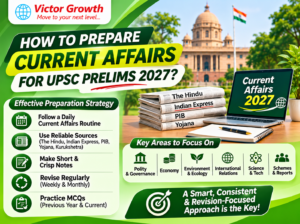
The Hindu or The Indian Express.
PIB (Press Information Bureau).
Monthly current affairs compilations.
Government reports and official releases when relevant.
Focus on national developments, government policies, international relations, economy, environment, science and technology, and important reports.
Preparation Tip: Read the newspaper daily, prepare concise notes, and revise monthly compilations. Avoid collecting multiple current affairs magazines.
8. CSAT Preparation Books
<AsyncImage query=”CSAT UPSC Civil Services Aptitude Test manual book cover Tata McGraw Hill” aspectRatio=”3:4″ maxWidth=”104px” />
Recommended Resources:
Analytical Reasoning – M.K. Pandey.
A standard CSAT practice manual.
UPSC previous-year CSAT question papers.
Practise comprehension, logical reasoning, basic numeracy, data interpretation, and problem-solving.
Preparation Tip: CSAT is qualifying, but it should not be ignored. Practise regularly and aim to score comfortably above the qualifying requirement.
9. How to Use These Books Effectively
Having the right books is only the beginning. Follow these simple strategies to make your preparation more productive:
Start with NCERT textbooks to build basic concepts.
Read one standard reference book for each subject.
Make short notes for difficult concepts and important facts.
Solve previous-year UPSC questions after completing each topic.
Revise every subject regularly instead of repeatedly changing books.
Attempt mock tests and analyse your mistakes.
Remember, completing a limited booklist with proper revision is more useful than collecting too many study materials.
10. Choosing the Best UPSC Coaching in Kerala
Beginners may benefit from expert guidance to understand difficult subjects, organise study schedules, and maintain consistency. When searching for the best UPSC coaching in Kerala, consider the following:
Experienced and knowledgeable faculty.
Subject-wise syllabus coverage.
Updated study materials.
Regular mock tests and performance analysis.
Current affairs discussions.
Doubt-clearing and revision sessions.
Choose a coaching programme that encourages independent learning and helps students use their study resources effectively.
Frequently Asked Questions (FAQs)
1. Which is the best book for UPSC Prelims 2027?
There is no single book that covers the entire syllabus. M. Laxmikanth is widely used for Polity, Spectrum for Modern History, Goh Cheng Leong for Physical Geography, and Shankar IAS for Environment.
2. Are NCERT books enough for UPSC Prelims 2027?
NCERT books provide a strong foundation, but candidates should also use standard reference books, current affairs materials, and previous-year question papers.
3. How many books should I read for UPSC Prelims?
Focus on one or two reliable resources per subject. Multiple revisions of selected books are more effective than reading too many sources.
4. Is newspaper reading necessary for UPSC Prelims?
Yes. Newspaper reading helps candidates understand current national and international developments and connect them with static subjects.
5. Which book is best for UPSC CSAT preparation?
A standard CSAT practice manual, along with previous-year question papers, is useful for practising comprehension, reasoning, numeracy, and data interpretation.
6. How can coaching help with UPSC book selection?
A good coaching programme can recommend subject-wise resources, explain difficult concepts, provide study plans, and guide candidates through revision and mock tests.
Conclusion
Choosing the best books for UPSC Prelims 2027 is about selecting reliable resources and using them consistently. Start with NCERT textbooks, move to standard reference books, follow current affairs, and practise previous-year questions. Combine effective self-study with regular revision and suitable academic guidance to build a strong foundation for the Civil Services Examination.