1. Context
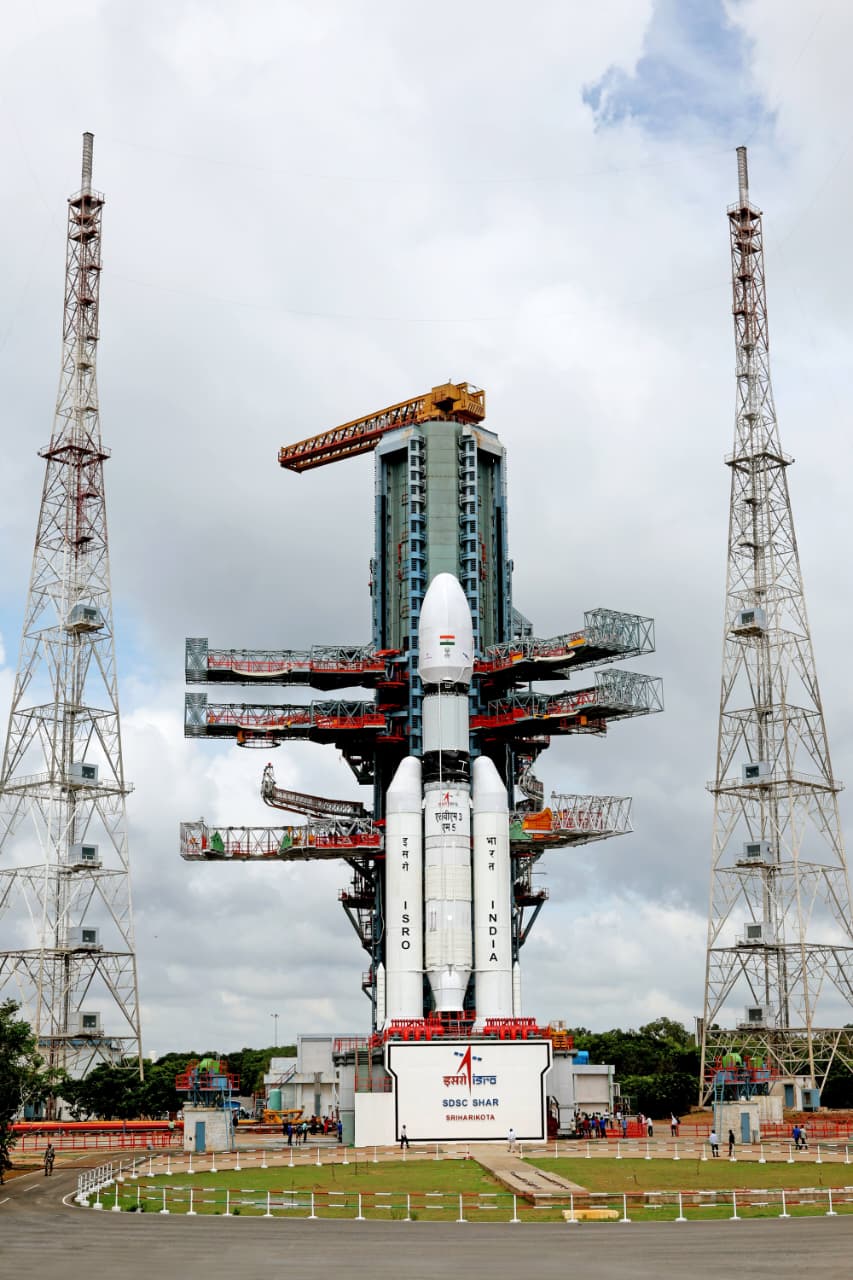
The Indian Space Research Organisation (ISRO) is set to launch CMS-03, a communication satellite, using the Launch Vehicle Mark-3 (LVM3) on November 2, 2025.
This will be the 5th operational flight of the LVM3 rocket, also known as LVM3-M5.
The mission will mark another milestone in India’s capability to launch heavy communication satellites from Indian soil.
2. About CMS-03 Communication Satellite
Type: Multi-band communication satellite.
Weight: Approximately 4400 kg — the heaviest communication satellite to be launched from India to Geosynchronous Transfer Orbit (GTO).
Purpose:
To provide communication services across a wide oceanic region, including the Indian landmass.
To enhance India’s telecommunication, tele-education, telemedicine, and disaster management capabilities.
Orbit: Geosynchronous Transfer Orbit (GTO), which will later be adjusted to a Geostationary Orbit (GEO).
Lifespan: Expected operational life of 12–15 years (typical for communication satellites).
3. Significance of CMS-03
Strengthens India’s indigenous communication infrastructure, reducing dependency on foreign satellites.
Supports maritime and remote area connectivity, crucial for India’s strategic and economic interests in the Indian Ocean Region (IOR).
Enhances government and defense communication networks.
Aligns with the Digital India and BharatNet initiatives.
4. About LVM3 (Launch Vehicle Mark-3)
Also known as: GSLV Mk-III (Geosynchronous Satellite Launch Vehicle Mark III).
Type: Three-stage heavy-lift launch vehicle developed by ISRO.
Payload capacity:
Up to 4 tonnes (4000 kg) to GTO.
Up to 8 tonnes (8000 kg) to Low Earth Orbit (LEO).
Stages:
First stage (S200): Two large solid boosters.
Second stage (L110): Liquid propellant stage.
Third stage (C25): Cryogenic upper stage (powered by CE-20 engine).
Height: Around 43 meters.
5. LVM3 Mission History
| Mission | Date | Payload / Objective | Outcome |
|---|---|---|---|
| LVM3-X / CARE | Dec 2014 | Experimental flight with crew module | Successful |
| LVM3-D1 | Jun 2017 | GSAT-19 communication satellite | Successful |
| LVM3-D2 | Nov 2018 | GSAT-29 | Successful |
| LVM3-M1 | Jul 2019 | Chandrayaan-2 | Successful |
| LVM3-M2 | Oct 2022 | OneWeb satellites (commercial) | Successful |
| LVM3-M3 | Mar 2023 | OneWeb satellites (commercial) | Successful |
| LVM3-M4 | Jul 2023 | Chandrayaan-3 lunar mission | Successful |
| LVM3-M5 | Nov 2025 | CMS-03 communication satellite | Upcoming |
6. Key Milestone from Previous Mission
LVM3-M4 (Chandrayaan-3 mission) — helped India become the first country to successfully land near the lunar south pole (August 2023).
Demonstrated LVM3’s reliability and heavy payload capacity, paving the way for future deep-space and communication missions.
7. Pre-Launch Updates
The rocket and CMS-03 satellite have been fully assembled and integrated.
The integrated vehicle was moved to the launch pad on October 26, 2025 for final pre-launch checks, including system tests and propellant filling.
8. Strategic and Technological Importance
Enhances India’s self-reliance (Atmanirbhar Bharat) in satellite communication technology.
Positions LVM3 as a commercially viable launch vehicle for global customers, competing with SpaceX’s Falcon 9 and Ariane-5.
Boosts India’s space diplomacy and participation in the global satellite launch market.
Supports national security and maritime domain awareness through improved connectivity.
9. Future Prospects
LVM3 is expected to serve as the launch vehicle for India’s Gaganyaan human spaceflight program.
Will be used for upcoming heavy payload missions including advanced communication, navigation, and Earth observation satellites.
Contributes to India’s long-term goal of establishing a strong presence in commercial space launches.
10. UPSC Relevance
GS Paper 3 – Science and Technology:
Space technology, satellite communication, indigenous launch vehicle development.
Possible UPSC Question:
“Discuss the significance of the LVM3 launch vehicle in enhancing India’s self-reliance and global competitiveness in space technology.”
OR
“Explain the role of communication satellites like CMS-03 in supporting India’s digital and strategic infrastructure.”