1. Context
The Indian Ministry of External Affairs (MEA) recently announced that India stands ready to support Afghanistan in managing its water resources, including hydroelectric projects on the Kunar River.
The statement followed Afghanistan’s plan to construct dams on the Kunar River, potentially reducing water flow into Pakistan.
This development has triggered a new dimension of regional tension — what analysts are calling a possible “water war” between Pakistan and Afghanistan.
2. Background of the Issue
Afghanistan’s Water Minister, Mullah Abdul Latif Mansoor, announced that the Taliban’s Supreme Leader, Hibatullah Akhundzada, had ordered immediate construction of dams on the Kunar River.
The announcement came amid recent border clashes between Afghan and Pakistani forces, which caused numerous casualties on both sides.
The Kunar River plays a vital hydrological and agricultural role for both Afghanistan and Pakistan.
3. The Kunar River System
Origin: Arises in the Hindu Kush mountains of Pakistan’s Khyber Pakhtunkhwa (Chitral region).
Course: Flows through Afghanistan’s Kunar and Nangarhar provinces and re-enters Pakistan via the Kabul River.
Length: Approximately 480–500 km within Afghanistan (not 5,000 km — that’s likely a reporting typo).
Significance:
Major tributary of the Kabul River, which merges with the Indus River in Pakistan.
Critical for irrigation, drinking water, and hydroelectric generation, especially in northwestern Pakistan.
4. Afghanistan’s Plan
Afghanistan aims to construct multiple dams on the Kunar and Kabul Rivers to:
Generate hydroelectric power for domestic consumption.
Improve irrigation capacity and reduce drought impact.
Exercise sovereign control over its natural water resources.
Afghan authorities have emphasized that these projects will be implemented by Afghan companies, asserting economic self-reliance.
5. India’s Response
MEA Spokesperson Randhir Jaiswal confirmed that India is open to cooperating with Afghanistan on such projects.
India has a long history of development assistance to Afghanistan, including:
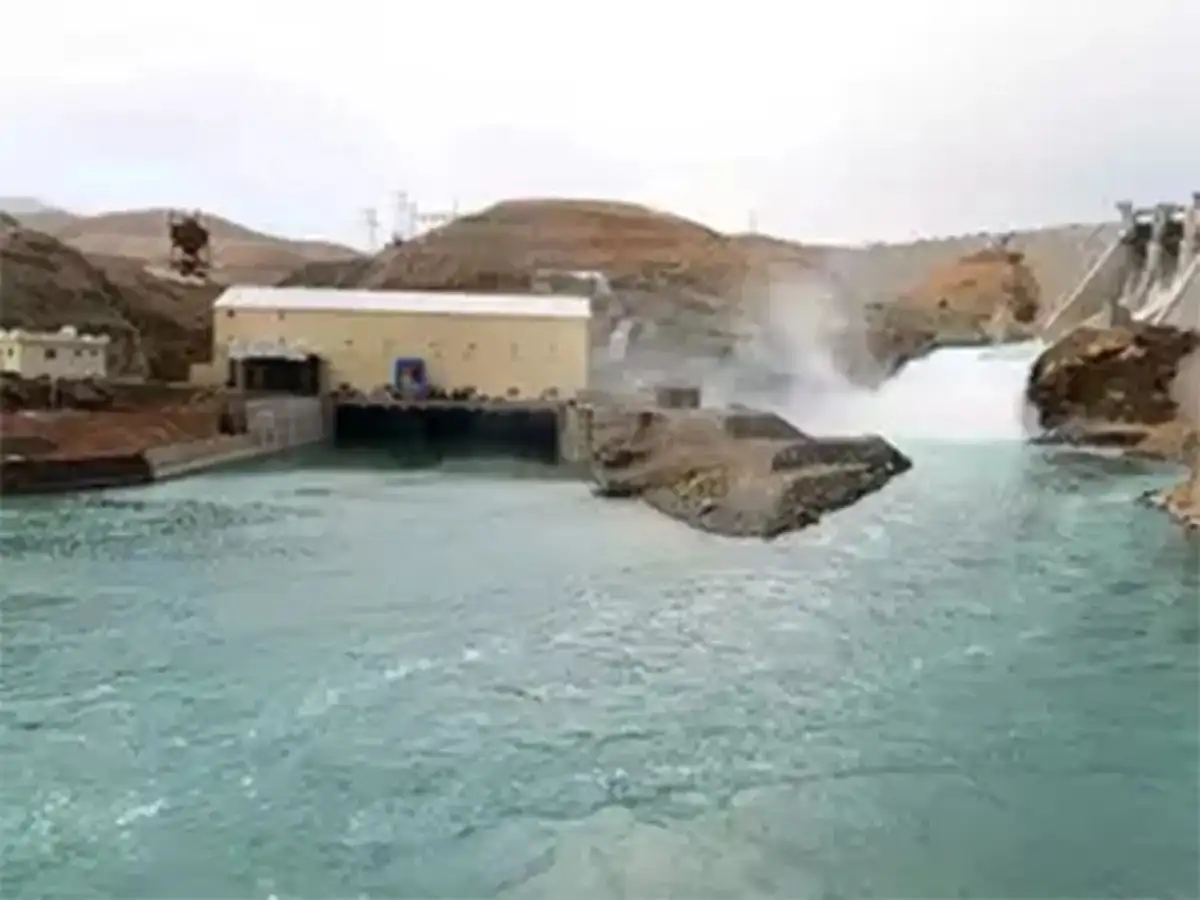
Salma Dam (Afghan–India Friendship Dam) in Herat, completed in 2016, providing power and irrigation to thousands of families.
Shatoot Dam project near Kabul (planned), aimed at providing drinking water to the city.
Jaiswal reiterated that India respects Afghanistan’s sovereignty and will support projects that promote sustainable water management.
6. Pakistan’s Concerns
The Kunar River contributes about 17 million acre-feet (MAF) of water annually to Pakistan.
If Afghanistan dams the river, Pakistan’s inflow could drop by around 3 MAF, leading to:
Reduced irrigation water for Khyber Pakhtunkhwa and Punjab.
Threats to food security during critical Kharif cropping seasons (April–June).
Depletion of Tarbela Dam levels, affecting hydropower and agriculture.
Pakistan accuses the Taliban of weaponizing water, especially after India’s suspension of the Indus Waters Treaty (IWT) following the Pahalgam terror attack (April 2025).
7. India’s Indus Waters Treaty Suspension (Context Link)
Following the Pahalgam terror attack, India suspended the IWT — a 1960 agreement that governs the sharing of Indus River waters between India and Pakistan.
This has already caused shortages downstream in Pakistan.
A June report (2025) by Pakistan’s Indus River System Authority (IRSA) recorded:
A 13.3% year-on-year water shortfall,
Lower releases to key dams,
Delayed Kharif crop sowing, worsening Pakistan’s food and rural economic crisis.
8. A “Double Water Squeeze” for Pakistan
With India restricting Indus flows from the east and Afghanistan planning to dam Kunar waters from the west, Pakistan faces a hydrological double jeopardy.
Pakistan’s over-dependence on transboundary rivers makes it highly vulnerable to regional water politics.
Both India and Afghanistan, as upstream states, are now asserting their sovereign rights over shared rivers — something Pakistan can no longer influence diplomatically.
9. Strategic and Diplomatic Dimensions
India–Afghanistan Cooperation: Strengthens India’s strategic foothold in Afghanistan and the broader Central Asian region.
Regional Realignment: Drives a potential Afghanistan–India partnership against Pakistan’s influence.
Pakistan’s Isolation: Its military and militant policies have backfired, alienating both neighbours.
Hydropolitics: Water is increasingly becoming a tool of geopolitical leverage, similar to energy diplomacy.
10. Broader Implications
For Afghanistan:
Enhances energy independence and infrastructure.
Bolsters legitimacy of Taliban government domestically.
For India:
Expands soft power and technical cooperation.
Reinforces its commitment to regional development without direct interference.
For Pakistan:
Increases vulnerability to water scarcity and agricultural decline.
Forces Islamabad to rethink its foreign policy towards both India and Afghanistan.
11. Way Forward
Regional water-sharing mechanisms between Afghanistan, Pakistan, and India are urgently needed.
Encourage technical cooperation and joint hydrological data sharing to avoid conflict.
Promote sustainable transboundary water management under international norms (e.g., Helsinki Rules, UN Watercourses Convention).
India can play a balancing role by promoting inclusive water diplomacy in South Asia.
12. UPSC Relevance
GS Paper 2 – International Relations
India’s neighbourhood policy, India–Pakistan–Afghanistan relations, regional geopolitics, and water diplomacy.
GS Paper 3 – Environment / Security
Transboundary river management, water security, and strategic resources.
13. Possible UPSC Mains Questions
“Discuss how transboundary river management has become a tool of diplomacy and strategic leverage in South Asia.”
“Evaluate the implications of India–Afghanistan cooperation on the Kunar River for regional stability and Pakistan’s water security.”
“Hydropolitics in South Asia is emerging as a new frontier of regional conflict. Comment.”