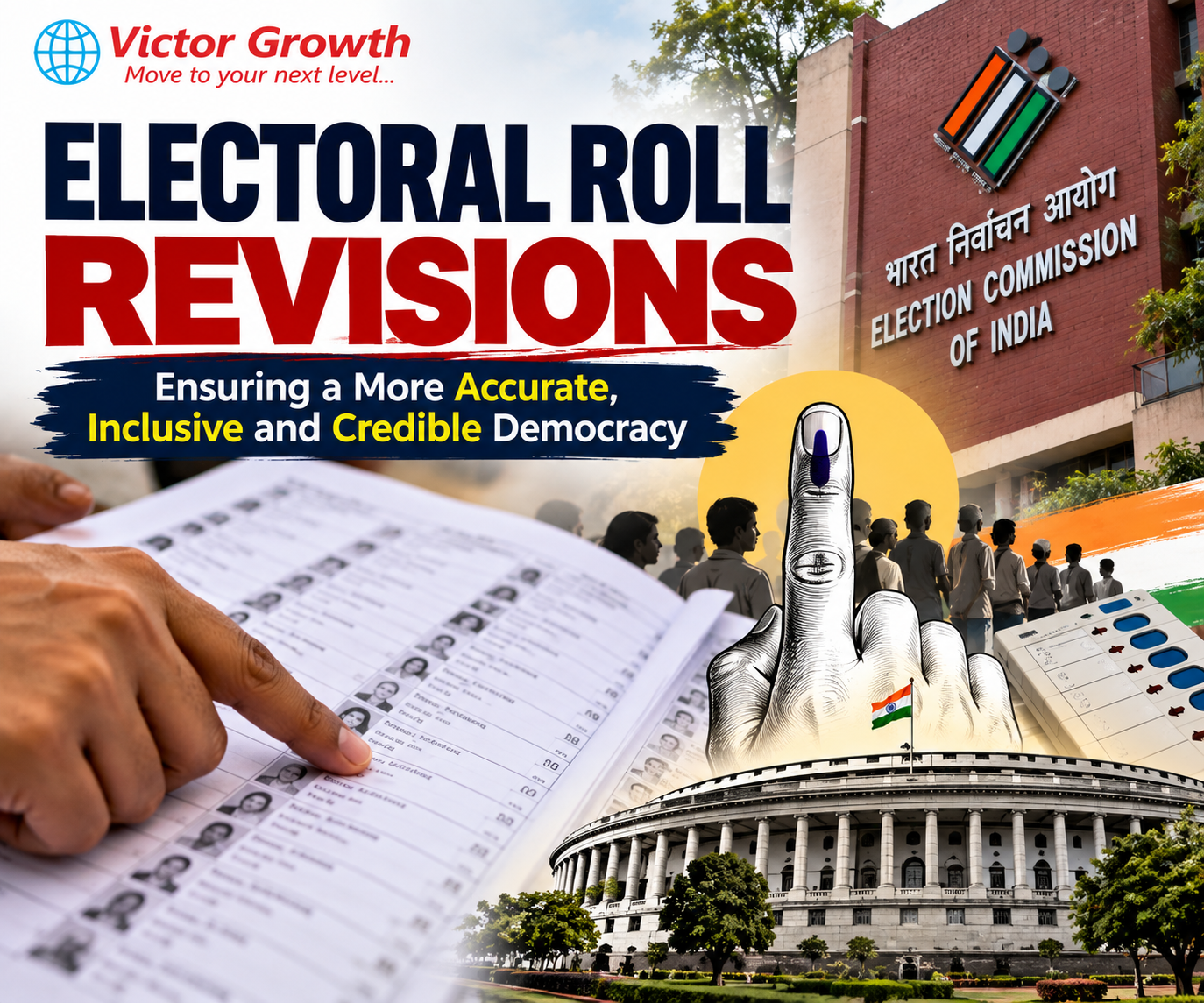
Electoral rolls are the foundation of India’s electoral process because only a person whose name is included in the electoral roll can exercise the right to vote. The preparation, updation and revision of electoral rolls are therefore essential for ensuring free, fair and inclusive elections.
The issue has gained renewed importance with the Election Commission of India (ECI) undertaking Special Intensive Revision (SIR) of electoral rolls in 2026.
What is an Electoral Roll?
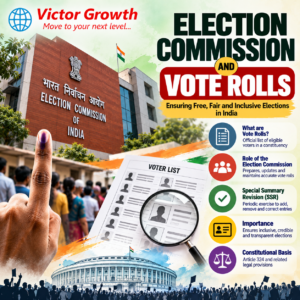
An electoral roll is the official list of eligible voters in a constituency.
Under the Representation of the People Act, 1950, electoral rolls are prepared for constituencies and are subject to revision as prescribed by law. The Act also provides for correction, inclusion and deletion of names.
A person must generally:
- Be an Indian citizen
- Be at least 18 years old on the qualifying date
- Be ordinarily resident in the relevant constituency
- Not be disqualified under law
The ECI currently recognises four qualifying dates: 1 January, 1 April, 1 July and 1 October.
Why is Electoral Roll Revision Necessary?
Electoral rolls are dynamic. People:
- Turn 18 and become eligible to vote
- Change their place of residence
- Die
- Change personal details
- Move between constituencies
Regular revision helps ensure that:
Eligible voters are included + Ineligible or duplicate entries are removed + Existing information is corrected.
This contributes to the principle of universal adult suffrage and electoral integrity.
Types of Electoral Roll Revision
1. Intensive Revision
An intensive revision involves preparing the electoral roll afresh through detailed enumeration. Booth Level Officers (BLOs) undertake house-to-house verification and collect information about eligible residents.
2. Summary Revision
In a summary revision, the existing electoral roll is updated rather than prepared afresh. A draft roll is published and citizens are given an opportunity to submit claims and objections.
3. Special Summary Revision (SSR)
The ECI can order a special revision when inaccuracies or other circumstances require additional measures. It may include activities such as house-to-house verification and special campaigns.
4. Special Intensive Revision (SIR)
SIR is a more detailed exercise involving enumeration and verification of electors. In its 2026 SIR order, the ECI stated that the objective is to ensure that no eligible citizen is left out and no ineligible person is included in the electoral roll.
How Does Electoral Roll Revision Work?
The process broadly involves:
Pre-revision activities → Enumeration/verification → Draft Electoral Roll → Claims & Objections → Verification → Final Electoral Roll
During revision, Booth Level Officers (BLOs) play an important field-level role. The Electoral Registration Officer (ERO) processes applications and takes decisions according to the prescribed legal procedure.
Recognised political parties can also participate through Booth Level Agents (BLAs), helping improve transparency and identify discrepancies.
Important Forms for UPSC
| Form | Purpose |
|---|---|
| Form 6 | New voter registration |
| Form 6A | Registration of overseas Indian elector |
| Form 7 | Objection/deletion of name |
| Form 8 | Correction, shifting of residence and replacement/updation of EPIC |
These services are available through the ECI’s Voters’ Services Portal.
Constitutional and Legal Framework
The Election Commission of India derives its constitutional authority primarily from Article 324, which vests in it the superintendence, direction and control of elections.
The preparation and revision of electoral rolls are principally governed by the:
- Representation of the People Act, 1950
- Registration of Electors Rules, 1960
- Instructions and directions issued by the Election Commission
Section 21 of the Representation of the People Act, 1950 specifically deals with the preparation and revision of electoral rolls, while Sections 22 and 23 deal with correction and inclusion of names.
Key Issues and Challenges
Electoral roll revision involves balancing two objectives:
Electoral inclusion: Ensuring that genuine citizens who are eligible to vote are not excluded.
Electoral integrity: Preventing duplicate, deceased, shifted or otherwise ineligible entries from remaining on the rolls.
The process therefore requires:
- Accurate verification
- Transparent procedures
- Adequate notice and opportunity for claims and objections
- Protection of personal data
- Effective grievance redressal
- Coordination between election officials and citizens
UPSC Relevance
Prelims
Focus on:
- Article 324
- Representation of the People Act, 1950
- Registration of Electors Rules, 1960
- ECI, ERO and BLO
- Intensive vs Summary Revision
- SSR vs SIR
- Electoral roll qualifying dates
- Forms 6, 6A, 7 and 8
GS Paper II – Polity & Governance
Possible Mains Question:
“An accurate electoral roll is essential for ensuring both electoral inclusion and the integrity of the democratic process. Discuss the importance and challenges of electoral roll revision in India.”
A strong answer should cover constitutional provisions, legal framework, revision mechanisms, inclusion, transparency, data protection and grievance redressal.
Conclusion
Electoral roll revision is not merely an administrative exercise. It is a critical component of India’s democratic architecture. A credible electoral roll must simultaneously ensure maximum inclusion of eligible voters and minimum scope for erroneous or ineligible entries.
For UPSC aspirants, the topic provides an excellent link between Constitutional Bodies, Electoral Reforms, Representation of the People Act, Fundamental Democratic Principles and Governance.