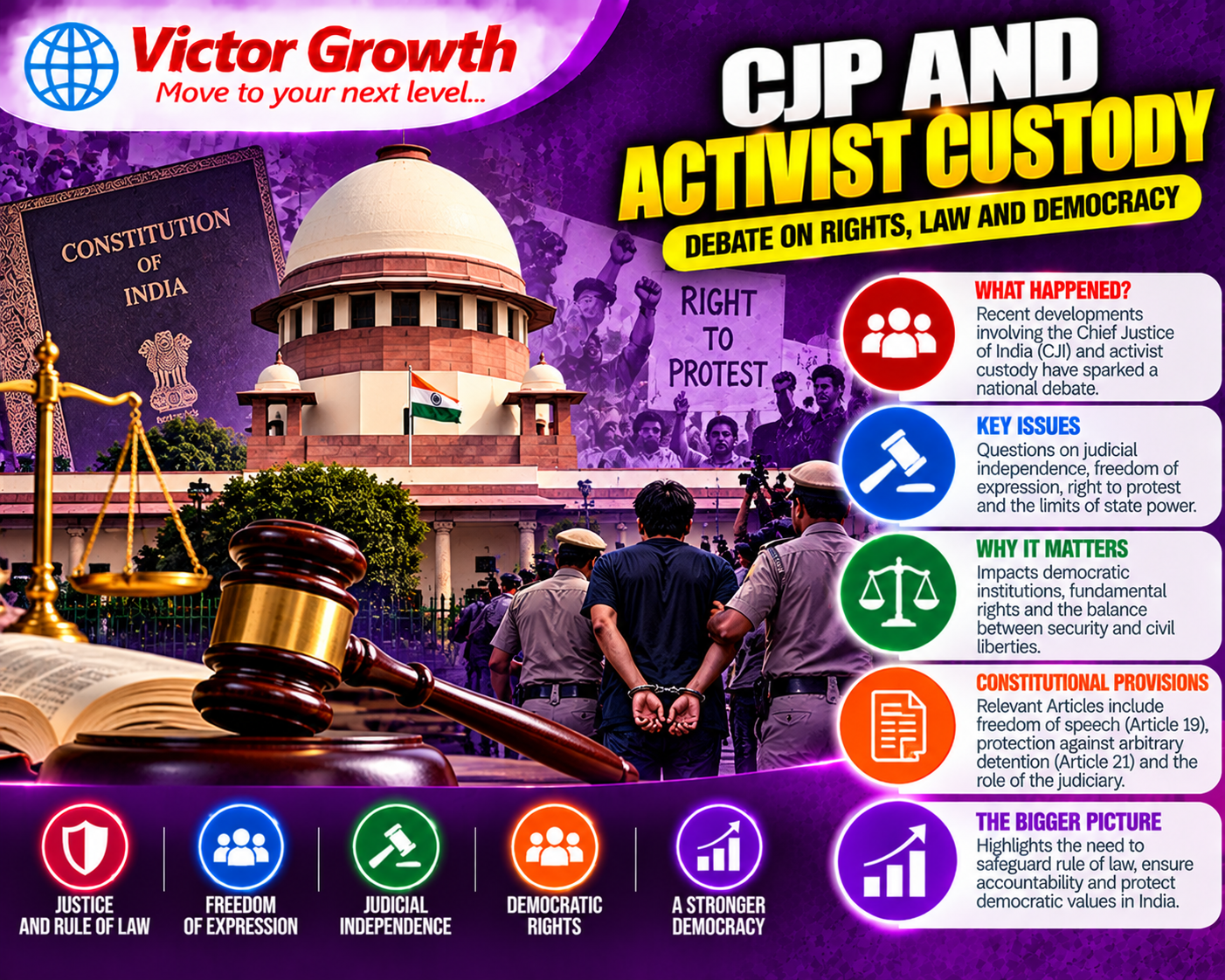
In October 2026, leaders of the Cockroach Janta Party (CJP), including Saurav Das and Ashutosh Ranka, were sent to five days of custody after allegedly entering the Jantar Mantar protest area in New Delhi without authorisation. The police cited alleged violations of restrictions and concerns about public order, while the arrests triggered debate over the right to peaceful protest and freedom of dissent. <Cite refs={[“turn150717search0″,”turn150717search6”]}/>
The incident has become relevant to discussions on civil liberties, police powers and democratic accountability.
What Is the Background?
The CJP protest movement was demanding action over alleged irregularities in the Special Intensive Revision (SIR) of electoral rolls and calling for the resignation of Chief Election Commissioner Gyanesh Kumar.
Police said Jantar Mantar was no longer a designated protest site and alleged that the leaders entered the area without permission. Rights advocates, meanwhile, raised concerns about restrictions on peaceful assembly and the treatment of those detained. These are competing positions; the allegations must be distinguished from established legal findings. <Cite refs={[“turn150717search3″,”turn150717search6”]}/>
Constitutional Provisions Involved
Article 19(1)(a): Guarantees freedom of speech and expression.
Article 19(1)(b): Protects the right to assemble peaceably and without arms.
Article 19(2): Permits reasonable restrictions on freedom of speech on specified constitutional grounds.
Article 19(3): Allows reasonable restrictions on peaceful assembly in the interests of public order and the sovereignty and integrity of India.
Article 21: Protects life and personal liberty.
Article 22: Provides safeguards relating to arrest and detention, including specified protections against arbitrary detention.
The Constitution protects peaceful dissent, but the right to protest is not absolute. Restrictions must have a lawful basis and satisfy applicable constitutional requirements.
Why Is the Issue Important?
1. Democracy and dissent
Peaceful protest enables citizens to question public authorities, raise grievances and participate in democratic debate beyond elections.
2. Public order
Authorities have a responsibility to prevent violence, protect public safety and regulate demonstrations through lawful and proportionate measures.
3. Police accountability
Arrests and detention must follow legal procedures. Access to legal remedies and judicial scrutiny are important safeguards against arbitrary action.
4. Electoral integrity
Disputes over voter-list revision highlight the importance of transparent electoral processes, accurate voter rolls and accessible grievance-redress mechanisms.
Challenges and the Way Forward
India must balance public order with fundamental rights. Unclear protest permissions, disproportionate restrictions, delays in legal remedies and declining public trust can deepen tensions.
Authorities should provide transparent rules for demonstrations, facilitate peaceful protests at suitable locations and ensure that any restrictions are necessary and proportionate. Allegations concerning electoral rolls should be addressed through transparent verification, effective appeals and independent scrutiny under the law.
UPSC Exam Relevance
Prelims: Fundamental Rights, Articles 19, 21 and 22; electoral-roll revision.
Mains GS Paper II: Fundamental Rights, constitutional governance, Election Commission and democratic accountability.
Essay: Democracy, dissent and the balance between liberty and public order.
Possible UPSC Mains Question: “The right to peaceful protest is an essential feature of democracy, but it is subject to reasonable restrictions.” Discuss with reference to constitutional provisions and the role of law-enforcement agencies.
Conclusion
The CJP and activist-custody issue highlights a fundamental democratic challenge: protecting public order without undermining peaceful dissent. A constitutional democracy must ensure lawful policing, transparent institutions and meaningful avenues for citizens to express grievances.
SEO Title: CJP and Activist Custody: Right to Protest | UPSC Current Affairs
Meta Description: Understand the CJP custody issue, constitutional provisions on peaceful protest, police powers, public order and democratic rights for UPSC preparation.
URL Slug: cjp-activist-custody-right-to-protest-upsc