Joining the Indian Air Force as an officer is a dream for many young aspirants. The Air Force Common Admission Test (AFCAT) provides an opportunity to enter the Flying Branch and Ground Duty (Technical and Non-Technical) branches. However, clearing AFCAT requires proper planning, subject knowledge, regular practice and a clear understanding of the selection process.
For beginners, preparing for AFCAT 2027 may seem challenging, especially when balancing English, General Awareness, Numerical Ability and Reasoning. With a structured study plan and consistent effort, aspirants can build a strong foundation and improve their chances of success.
This article explains the AFCAT 2027 exam pattern, syllabus, preparation strategy and useful tips for beginners.
1. Understand the AFCAT 2027 Examination
Before starting preparation, understand the examination pattern and selection process.
Examination date: 31 January 2027
Application period: 12 November to 11 December 2026
Course commencement: January 2028
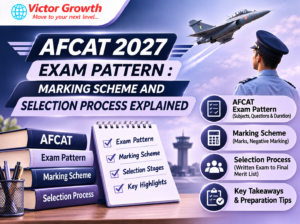
The AFCAT examination is conducted online and consists of objective-type questions.
Particulars | Details |
|---|---|
Total questions | 100 |
Maximum marks | 300 |
Duration | 2 hours |
Correct answer | +3 marks |
Incorrect answer | -1 mark |
Unattempted question | 0 marks |
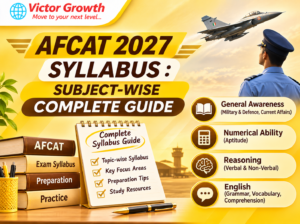
The examination covers four main areas: English, General Awareness, Numerical Ability, and Reasoning and Military Aptitude.
2. Understand the AFCAT 2027 Syllabus
Beginners should understand the syllabus before selecting books or starting preparation.
A. English
English tests vocabulary, grammar and comprehension skills.
Important topics include:
Reading comprehension
Synonyms and antonyms
Error detection
Sentence completion
Idioms and phrases
Cloze test
One-word substitution
Sentence rearrangement
Preparation tip: Read English newspapers regularly, learn new vocabulary and practise grammar exercises every day.
B. General Awareness
General Awareness covers static subjects and current affairs.
Important topics include:
Indian History and Geography
Indian Polity and Economy
Basic Science
Environment and Ecology
Art and Culture
Sports and important personalities
National and international organisations
Defence-related developments
Current national and international affairs
Preparation tip: Read newspapers, revise important current affairs and prepare short notes on defence exercises, military operations and important national events.
C. Numerical Ability
Numerical Ability tests basic mathematical understanding. The questions are generally based on the matriculation-level standard.
Important topics include:
Percentage and Average
Profit and Loss
Ratio and Proportion
Time and Work
Time, Speed and Distance
Simple and Compound Interest
Number System
Probability
Mixture and Alligation
Mensuration
Preparation tip: Start with basic mathematical concepts and gradually move towards timed problem-solving practice.
D. Reasoning and Military Aptitude
This section tests logical thinking, analytical ability and visual reasoning.
Important topics include:
Verbal reasoning
Non-verbal reasoning
Analogy
Classification
Series
Coding and decoding
Pattern recognition
Spatial ability
Preparation tip: Practise reasoning questions regularly. Focus on understanding the logic behind each question rather than memorising answers.
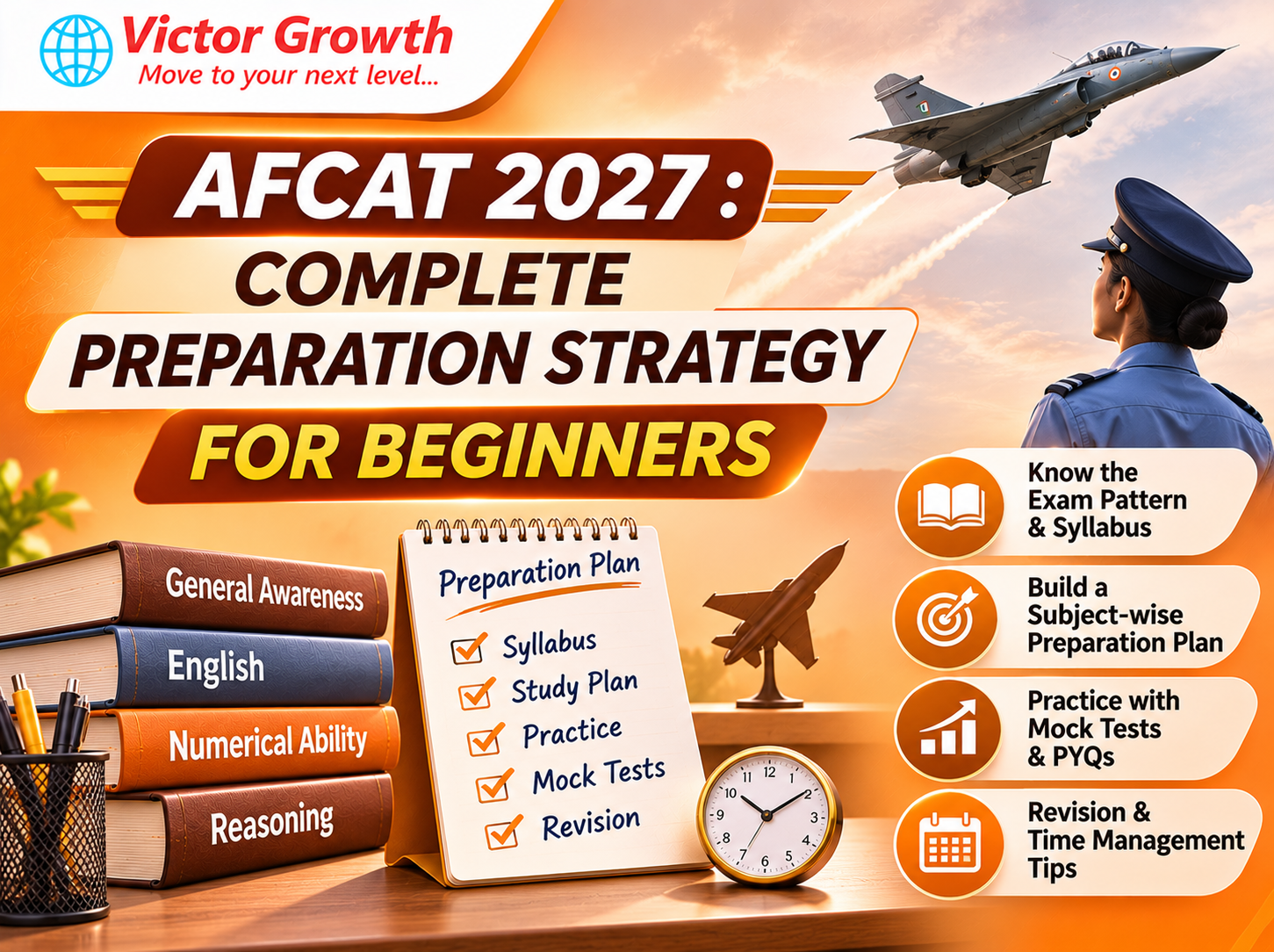
3. Follow a Daily Study Timetable
A proper timetable helps beginners cover all four subjects without neglecting any section.
Here is a suggested daily study schedule:
Time | Subject |
|---|---|
6:00 AM – 7:00 AM | English |
7:00 AM – 8:00 AM | Numerical Ability |
10:00 AM – 11:00 AM | General Awareness |
4:00 PM – 5:00 PM | Reasoning and Military Aptitude |
7:00 PM – 7:30 PM | Current Affairs Revision |
7:30 PM – 8:00 PM | Practice Questions |
Beginners can adjust the timetable according to their college, work and personal commitments. Consistent daily preparation is more effective than studying for long hours occasionally.
4. Prepare a Subject-Wise Strategy
A balanced preparation strategy is essential for improving overall performance.
English: Improve vocabulary, grammar and reading speed through daily practice.
General Awareness: Revise static GK and current affairs regularly.
Numerical Ability: Practise basic mathematical concepts and solve questions within a time limit.
Reasoning: Solve different types of verbal and non-verbal reasoning questions.
Mock Tests: Attempt regular tests and analyse mistakes to improve accuracy.
Do not focus only on your strongest subject. Give additional time to areas where you need improvement.
5. Practise Previous Year Questions and Mock Tests
Previous Year Question Papers help beginners understand the AFCAT examination pattern and question difficulty.
Follow these steps:
Solve topic-wise previous year questions after completing each chapter.
Attempt full-length mock tests regularly.
Practise answering questions within the two-hour time limit.
Analyse incorrect answers and understand the concepts.
Maintain a notebook of frequently repeated mistakes.
Since AFCAT has negative marking, avoid random guessing. Develop the ability to identify questions that you can answer confidently.
6. Understand the AFSB Selection Process
Clearing the written examination is only one stage of AFCAT selection. Candidates who qualify are called for the Air Force Selection Board (AFSB) testing, subject to eligibility and other requirements.
The AFSB process generally includes:
Stage I: Officer Intelligence Rating Tests and Picture Perception and Discussion Test.
Stage II: Psychological tests, Group Tests and Personal Interview.
Medical Examination: Candidates recommended by the AFSB undergo the prescribed medical examination.
Beginners should develop communication skills, confidence, leadership qualities, decision-making ability and general awareness alongside written examination preparation.
7. Common Mistakes Beginners Should Avoid
Many aspirants lose valuable preparation time because of avoidable mistakes.
Starting preparation without understanding the syllabus.
Ignoring basic mathematical concepts.
Studying current affairs without regular revision.
Depending on too many books and study materials.
Avoiding mock tests because of low scores.
Neglecting AFSB preparation.
Ignoring physical fitness and daily discipline.
A focused preparation strategy and consistent revision can help you avoid these mistakes.
8. Choose the Right AFCAT Coaching in Kerala
Proper academic guidance can help beginners understand difficult topics, follow a structured timetable and prepare through regular assessments.
When searching for the best NDA coaching in Kerala, aspirants should also understand that NDA and AFCAT are different examinations. NDA is an entry route for candidates joining the Armed Forces after Class 12, whereas AFCAT is an officer-entry examination for eligible graduates and other candidates meeting the prescribed qualifications.
Before choosing a coaching institute, evaluate:
Faculty experience and teaching quality.
Complete syllabus coverage.
Updated study materials.
Regular mock tests and performance analysis.
Doubt-clearing sessions.
Guidance for AFSB preparation.
Victor Growth Coaching Centre in Kochi provides coaching support for defence examination aspirants. Beginners should choose a programme that matches their target examination and offers consistent academic guidance.
Frequently Asked Questions (FAQs)
1. Can beginners prepare for AFCAT 2027?
Yes. Beginners can prepare by understanding the syllabus, strengthening basic concepts and following a consistent daily study timetable.
2. How many hours should I study daily for AFCAT?
Around 3–5 focused hours can be a useful starting point. Increase study time according to your preparation level and available time.
3. Is mathematics difficult in AFCAT?
Numerical Ability is generally based on matriculation-level mathematics. Regular practice of basic concepts can help improve performance.
4. Is there negative marking in AFCAT?
Yes. Three marks are awarded for every correct answer, and one mark is deducted for every incorrect answer.
5. Is coaching necessary for AFCAT preparation?
Coaching is not compulsory. However, structured classes, mock tests and expert guidance can help aspirants prepare more systematically.
6. What happens after clearing the AFCAT written examination?
Candidates who qualify are called for AFSB testing. Those recommended by the board must also clear the prescribed medical examination and meet the final selection requirements.
7. When is the AFCAT 01/2027 examination?
According to the official notification, AFCAT 01/2027 is scheduled for 31 January 2027.
Conclusion
AFCAT 2027 preparation becomes easier when beginners follow a structured study plan and focus on building strong fundamentals. Understand the syllabus, practise all four subjects, solve previous year questions and take regular mock tests. Along with written examination preparation, develop the confidence, communication and leadership skills required for AFSB testing.