Master AFCAT with Smart Preparation: Learn from Previous Year Papers
If you are aspiring to join the Indian Air Force as a Flying Officer or Ground Duty Officer, cracking the AFCAT examination requires more than hard work—it demands a smart strategy. One of the most effective ways to improve your AFCAT score is by analyzing previous year question papers.
At Victor Growth, regarded by many aspirants as the Best AFCAT Coaching in Kerala, we have observed that candidates who systematically practice previous year papers significantly outperform those who rely solely on theory.
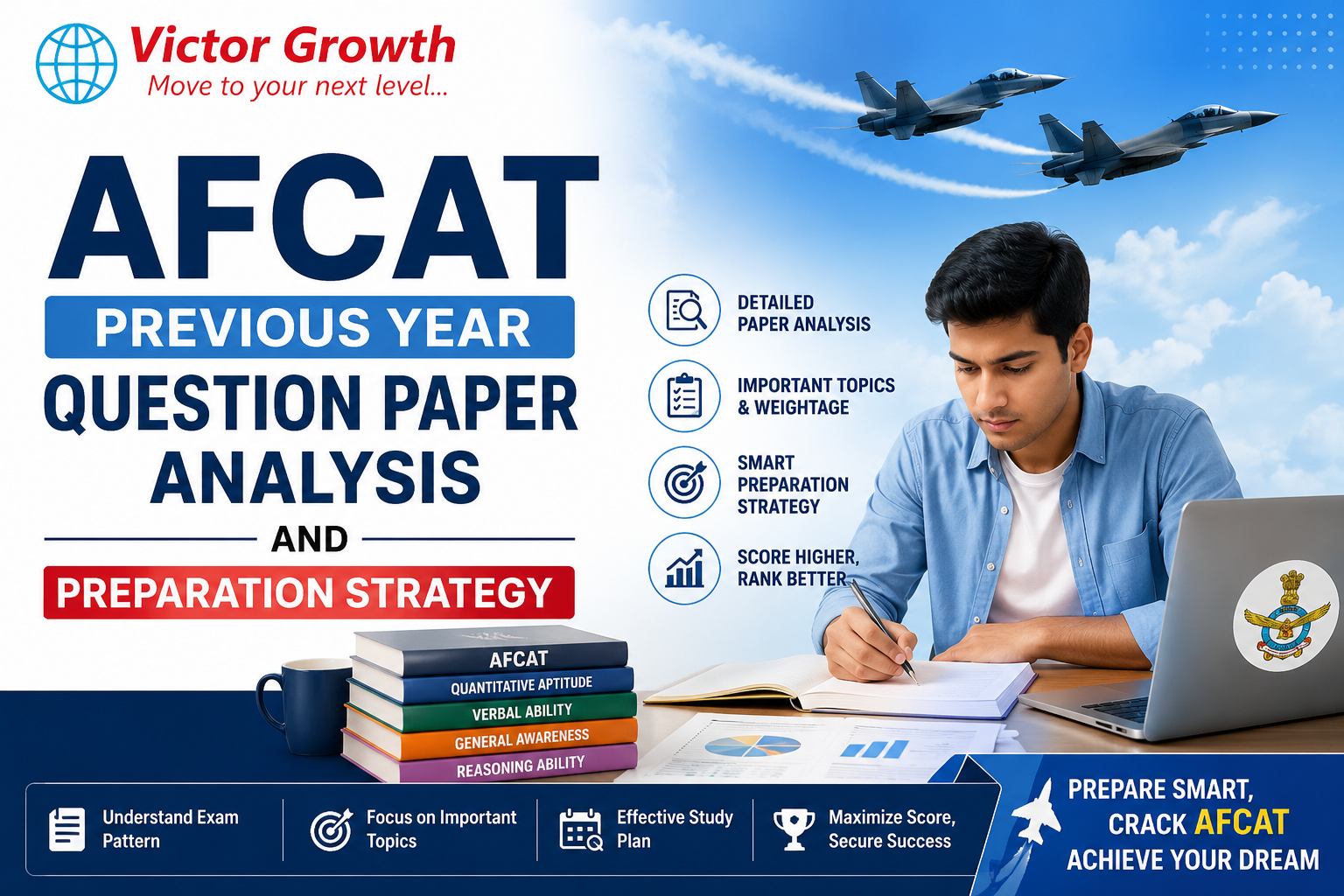
This comprehensive guide provides a detailed AFCAT previous year paper analysis, section-wise trends, important topics, and a preparation strategy to maximize your score.
Understanding AFCAT Exam Pattern
Before analyzing previous papers, it is essential to understand the exam structure.
| Section | Questions | Marks |
|---|---|---|
| General Awareness | 25 | 75 |
| Verbal Ability in English | 30 | 90 |
| Numerical Ability | 18 | 54 |
| Reasoning and Military Aptitude | 32 | 96 |
| Total | 100 | 300 |
Time Duration
2 Hours
Marking Scheme
- Correct Answer: +3
- Incorrect Answer: -1
- Unattempted: 0
Candidates applying for the Flying Branch also need to appear for the EKT (Engineering Knowledge Test).
Why Solve AFCAT Previous Year Papers?
Previous year papers help candidates:
- Understand question patterns.
- Identify frequently asked topics.
- Improve speed and accuracy.
- Learn time management.
- Reduce examination anxiety.
- Predict expected difficulty levels.
According to expert faculty at the Best AFCAT Coaching in Kerala, solving at least 10 previous papers can improve overall performance substantially.
AFCAT Previous Year Paper Analysis
Overall Difficulty Level
| Year | Difficulty |
|---|---|
| AFCAT 1 2023 | Easy to Moderate |
| AFCAT 2 2023 | Moderate |
| AFCAT 1 2024 | Moderate |
| AFCAT 2 2024 | Moderate |
| AFCAT 1 2025 | Moderate |
| AFCAT 2 2025 | Moderate to Difficult |
The AFCAT generally maintains a moderate difficulty level, emphasizing speed over complexity.
Section-Wise Analysis
English Section Analysis
Number of Questions:
30
Difficulty:
Easy to Moderate
Frequently Asked Topics
Vocabulary
- Synonyms
- Antonyms
- One-word substitution
- Idioms
- Phrases
Grammar
- Error detection
- Sentence improvement
- Fill in the blanks
- Cloze test
Reading
- Comprehension
- Sentence arrangement
Most Repeated Areas
- Idioms and phrases
- Cloze passages
- Error spotting
- Vocabulary
Preparation Strategy
- Read newspapers daily.
- Learn 20 new words every day.
- Practice grammar exercises.
- Solve comprehension passages regularly.
General Awareness Analysis
Number of Questions:
25
This section often decides the overall AFCAT score.
Important Areas
History
- Ancient India
- Medieval India
- Modern India
- Freedom Movement
Geography
- Indian rivers
- Mountains
- States
- Capitals
- Climate
Polity
- Constitution
- Fundamental Rights
- Parliament
- President
- Prime Minister
Economy
- Budget
- Inflation
- RBI
- Banking
Defence
- Military exercises
- Missile systems
- Defence commands
Science
- Physics
- Chemistry
- Biology
Current Affairs
- Awards
- Sports
- International relations
- Space missions
- Defence developments
Frequently Asked Questions
- Bharat Ratna winners
- Nobel Prize
- G20 and G7
- Indian Air Force exercises
- Space missions
- Military operations
Preparation Tips
- Cover last 8–12 months of current affairs.
- Study defence updates regularly.
- Revise static GK weekly.
Numerical Ability Analysis
Number of Questions:
18
Important Topics
Arithmetic
- Percentage
- Profit and Loss
- Time and Work
- Time and Distance
- Ratio
- Average
Number System
- Divisibility
- HCF
- LCM
Algebra
- Linear equations
Simplification
Decimal Fractions
Data Interpretation
Repeated Topics
- Percentage
- Average
- Ratio
- Speed and distance
- Simple interest
Preparation Strategy
- Memorize multiplication tables.
- Learn squares up to 50.
- Practice calculations mentally.
- Solve timed quizzes.
Reasoning and Military Aptitude Analysis
Number of Questions:
32
Topics
Verbal Reasoning
- Analogy
- Coding-Decoding
- Blood Relations
- Direction Sense
- Series
Non-Verbal Reasoning
- Mirror Images
- Figure Completion
- Pattern Recognition
Military Aptitude
- Spatial ability
- Cube problems
- Embedded figures
Frequently Asked Questions
- Venn diagrams
- Figure series
- Coding-decoding
- Pattern completion
Preparation Strategy
- Practice daily.
- Learn shortcuts.
- Solve mixed reasoning sets.
Most Important AFCAT Topics Based on Previous Papers
English
✓ Error Detection
✓ Cloze Test
✓ Idioms
✓ Vocabulary
✓ Reading Comprehension
GK
✓ Defence Exercises
✓ Indian Constitution
✓ Geography
✓ Awards
✓ Space Missions
✓ Current Affairs
Mathematics
✓ Percentage
✓ Ratio
✓ Time and Work
✓ Profit and Loss
✓ Average
Reasoning
✓ Analogy
✓ Coding
✓ Venn Diagram
✓ Figure Series
✓ Spatial Ability
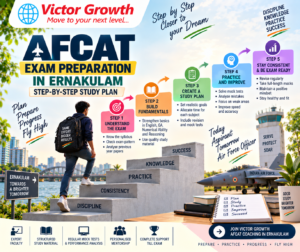
AFCAT Preparation Strategy Based on Previous Year Papers
Stage 1: Understand the Syllabus
Spend one week understanding the entire syllabus.
Stage 2: Build Concepts
Complete:
- English Grammar
- Basic Mathematics
- Reasoning Concepts
- Static GK
Duration:
30–40 days.
Stage 3: Solve Previous Year Papers
Practice at least:
- AFCAT 1 Previous Papers
- AFCAT 2 Previous Papers
Cover the last 8–10 examinations.
Stage 4: Mock Tests
Attempt:
- 20 Full-Length Mock Tests
- Sectional Tests
Analyse mistakes after every test.
Stage 5: Revision
Maintain notebooks for:
- Vocabulary
- Formulas
- Current Affairs
- Defence Updates
- Important Facts
60-Day AFCAT Preparation Plan
First 20 Days
- English
- Basic Maths
- Static GK
Next 20 Days
- Reasoning
- Current Affairs
- Previous Year Papers
Last 20 Days
- Mock Tests
- Revision
- Time Management
- Weak Area Improvement
Common Mistakes to Avoid
1. Ignoring Previous Year Papers
Many candidates study theory but fail to practice actual AFCAT questions.
2. Neglecting Current Affairs
General Awareness can significantly improve your score.
3. Poor Time Management
Practice solving 100 questions within 120 minutes.
4. Guessing Too Much
Negative marking can reduce your overall score.
5. Skipping Mock Tests
Mocks simulate the actual examination environment.
Score Target for AFCAT
Although the official cut-off varies every year, aspirants should aim for:
| Section | Target |
|---|---|
| English | 22+ |
| GK | 18+ |
| Maths | 13+ |
| Reasoning | 24+ |
| Overall | 70–80+ correct attempts with good accuracy |
How the Best AFCAT Coaching in Kerala Uses Previous Year Papers
At Victor Growth, our AFCAT preparation methodology includes:
- Detailed previous year paper discussions.
- Topic-wise trend analysis.
- Daily practice sessions.
- Weekly mock examinations.
- Current affairs updates.
- Personalized mentoring.
- SSB interview guidance.
- AFSB personality development sessions.
This structured approach helps students identify patterns and improve their exam-taking strategy effectively.
Final Thoughts
AFCAT is not an examination that demands extraordinary intelligence; it rewards candidates who prepare strategically and consistently. Previous year question papers serve as the best indicator of the exam pattern, frequently asked topics, and expected difficulty level.
A successful AFCAT preparation plan should combine:
- Thorough syllabus coverage,
- Consistent practice of previous papers,
- Regular mock tests,
- Current affairs preparation,
- Smart revision techniques.
If you aspire to secure a high score and move confidently toward the AFSB interview stage, integrating previous year paper analysis into your daily preparation is indispensable. Guided mentorship and structured practice from the Best AFCAT Coaching in Kerala can further enhance your chances of success.
Frequently Asked Questions (FAQs)
1. Are previous year question papers enough for AFCAT preparation?
No. They should be combined with concept building, mock tests, and current affairs preparation.
2. How many previous year papers should I solve?
Aim for at least 8–10 AFCAT previous papers before the exam.
3. Which section is the most scoring in AFCAT?
English and Reasoning are generally the highest-scoring sections with regular practice.
4. Is the AFCAT exam difficult?
The exam is usually of easy to moderate difficulty, but effective time management is crucial.
5. How important is Current Affairs in AFCAT?
Very important. Questions are frequently asked from national, international, defence, sports, and science-related events.
6. Can I crack AFCAT in 60 days?
Yes. With a disciplined study plan, regular mock tests, and previous year paper practice, many candidates successfully prepare within two months.
7. What is a good score in AFCAT?
A score comfortably above the expected cut-off, with strong accuracy, improves your chances of qualifying for the AFSB interview.
8. Why should I join the Best AFCAT Coaching in Kerala?
Expert guidance, structured study plans, previous year paper analysis, mock tests, current affairs support, and SSB interview preparation can significantly improve your chances of success in the AFCAT examination.