
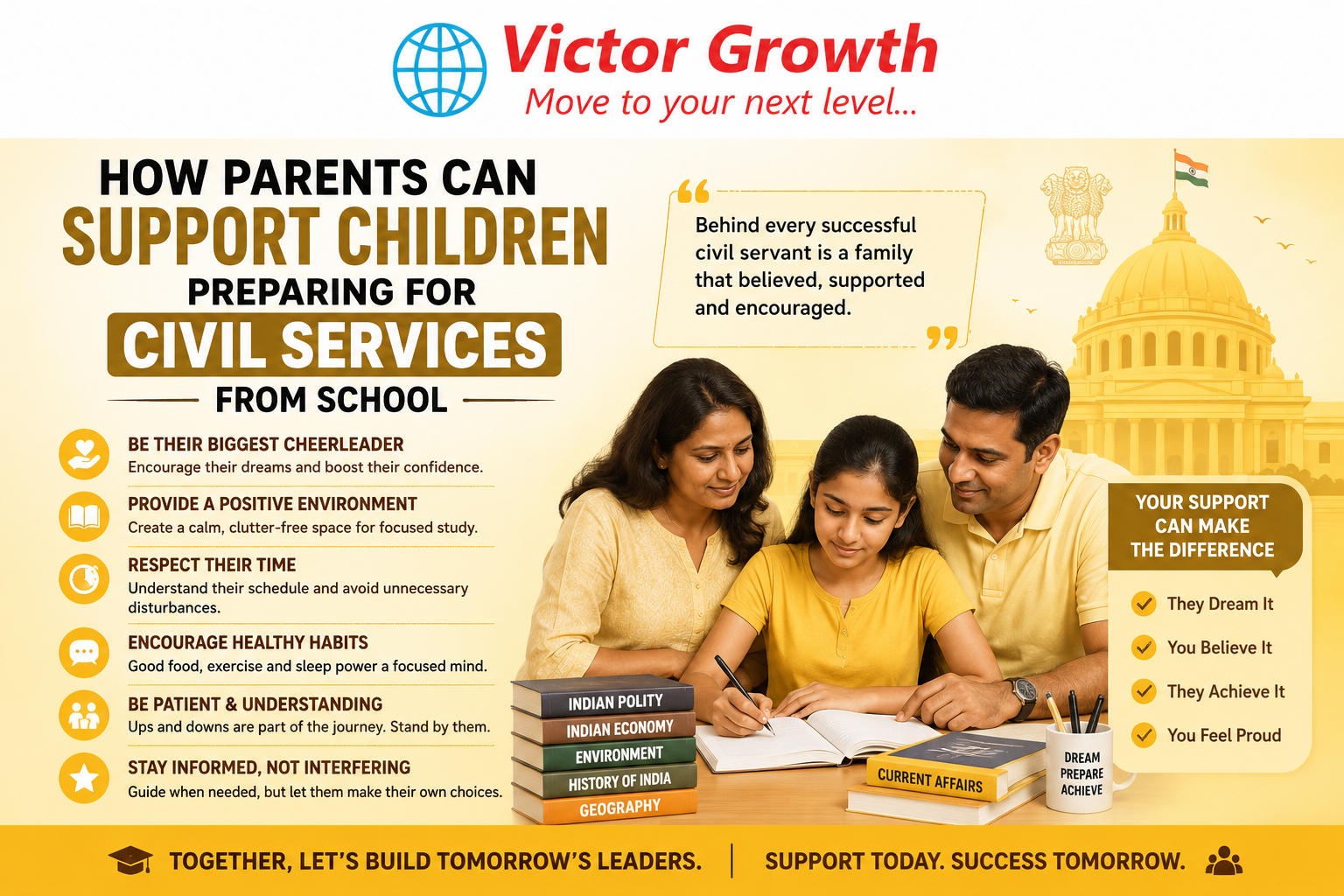
A Complete Guide to Nurturing Future IAS Officers | Best IAS Coaching in Kerala
Every year, thousands of students dream of becoming Indian Administrative Service (IAS) officers and serving the nation through leadership, governance, and public administration. While dedication and hard work from students are essential, the role of parents is equally important in shaping this journey. The values, habits, discipline, and encouragement that children receive at home during their school years often lay the foundation for future success in the Union Public Service Commission (UPSC) Civil Services Examination.
Preparing for Civil Services does not begin after graduation. The journey starts much earlier by developing curiosity, strong academic fundamentals, reading habits, analytical thinking, leadership qualities, and emotional resilience. Parents play a vital role in creating an environment where these qualities can flourish naturally.
The best IAS coaching in Kerala recognizes that successful IAS preparation is a collaborative effort involving students, parents, teachers, and mentors. This comprehensive guide explains how parents can effectively support children preparing for Civil Services from school while ensuring balanced academic and personal development.
Why Early Preparation for Civil Services Matters
The UPSC Civil Services Examination is not simply a test of knowledge. It evaluates:
- Conceptual understanding
- Analytical thinking
- Leadership qualities
- Decision-making ability
- Communication skills
- Ethical values
- Emotional intelligence
- Problem-solving skills
These qualities cannot be developed overnight. They are built gradually through years of learning and guidance. Parents who encourage positive habits from an early age give their children a significant advantage in future competitive examinations.
Create a Positive Learning Environment at Home
Children learn best in an environment that encourages curiosity and discipline.
Parents should:
- Provide a quiet study space.
- Maintain a regular study routine.
- Reduce unnecessary distractions.
- Encourage questions and discussions.
- Appreciate effort rather than only results.
A calm and supportive atmosphere improves concentration and helps children develop a love for learning.
Encourage Reading Habits
Reading is one of the most important habits for future IAS officers.
Parents can encourage children to read:
- NCERT textbooks beyond school requirements
- Age-appropriate history and geography books
- Science magazines
- Children’s encyclopedias
- Biographies of national leaders
- Newspapers
- General knowledge books
Reading regularly improves vocabulary, comprehension, imagination, and analytical thinking.
Parents can also create a small home library to make reading a daily habit.
Introduce Newspapers Early
Reading newspapers is essential for Civil Services preparation.
Parents should encourage children to read reliable newspapers such as:
- The Hindu
- The Indian Express
Initially, students may focus on:
- National news
- Science
- Environment
- Sports
- Government initiatives
- Educational developments
As they grow older, they can gradually begin reading editorials and policy discussions.
Reading newspapers together and discussing important events makes learning enjoyable.
Focus on Conceptual Learning, Not Memorization
Many parents unknowingly emphasize marks more than understanding.
Instead of asking:
“Did you memorize the chapter?”
Ask:
- What did you learn?
- Why is this topic important?
- How does it relate to current events?
- Can you explain it in your own words?
Conceptual learning forms the strongest foundation for UPSC preparation.
Develop Curiosity
Future civil servants are lifelong learners.
Parents should encourage children to ask questions such as:
- Why does climate change occur?
- How does Parliament function?
- Why do elections matter?
- What causes inflation?
- How do government schemes help people?
Answering these questions together develops curiosity and analytical thinking.
Encourage Participation Beyond Academics
Civil servants require leadership and communication skills.
Parents should motivate children to participate in:
- Quiz competitions
- Debates
- Elocution contests
- Essay competitions
- Science exhibitions
- Model United Nations (MUN)
- School leadership activities
- Social service programs
These experiences improve confidence and personality.
Support Balanced Time Management
School students should not spend excessive hours preparing for UPSC.
Parents can help by creating a balanced routine including:
- School studies
- Homework
- Reading
- Current affairs
- Physical exercise
- Recreation
- Family time
- Adequate sleep
Consistency is more beneficial than long study hours.
Encourage Daily Current Affairs Discussions
Current affairs should become part of everyday conversations.
During family discussions, parents can ask:
- What important news did you read today?
- Why is this event significant?
- How might it affect society?
- What solution would you suggest?
These conversations naturally improve critical thinking and communication.
Build Strong General Knowledge
General knowledge should develop gradually.
Parents can help children learn about:
- Indian states and capitals
- National parks
- Rivers and mountains
- Important personalities
- Awards
- Government institutions
- International organizations
- Scientific discoveries
Games, quizzes, and educational activities make learning enjoyable.
Encourage Ethical Values
UPSC places great importance on ethics and integrity.
Parents should teach values such as:
- Honesty
- Responsibility
- Compassion
- Respect
- Discipline
- Fairness
- Empathy
- Accountability
Children who grow up with strong moral values become responsible leaders.
Promote Independent Thinking
Avoid providing answers immediately.
Instead, encourage children to:
- Research independently.
- Compare different viewpoints.
- Analyze evidence.
- Form balanced opinions.
Independent thinking is one of the defining qualities of successful IAS officers.
Limit Screen Time Wisely
Technology should support learning rather than become a distraction.
Parents can:
- Set reasonable screen-time limits.
- Encourage educational content.
- Monitor social media usage.
- Promote reading instead of endless scrolling.
Balanced digital habits improve concentration and productivity.
Encourage Physical Fitness
Healthy students learn more effectively.
Parents should ensure children:
- Exercise regularly.
- Play outdoor games.
- Practice yoga.
- Eat nutritious food.
- Stay hydrated.
- Get sufficient sleep.
Physical health directly influences memory, concentration, and emotional well-being.
Teach Time Management
Parents can help children learn to:
- Set daily goals.
- Prioritize important tasks.
- Follow a timetable.
- Revise regularly.
- Avoid procrastination.
These habits remain valuable throughout UPSC preparation and professional life.
Appreciate Effort, Not Just Marks
Many talented students lose confidence due to excessive pressure.
Parents should celebrate:
- Consistency
- Improvement
- Discipline
- Curiosity
- Hard work
- Good habits
Encouraging effort builds resilience and a growth mindset.
Avoid Comparing Children
Every child learns differently.
Avoid comparisons with:
- Friends
- Siblings
- Relatives
- Classmates
Instead, encourage children to compete with their own previous performance.
Confidence grows when children feel accepted and supported.
Develop Leadership Skills
Parents can nurture leadership by encouraging children to:
- Organize family activities.
- Take responsibility.
- Solve everyday problems.
- Volunteer in community programs.
- Help younger siblings with studies.
Leadership develops through experience, not lectures.
Encourage Writing Skills
Writing is a crucial component of UPSC preparation.
Parents can encourage children to:
- Maintain a journal.
- Write essays.
- Summarize newspaper articles.
- Participate in writing competitions.
- Maintain current affairs notes.
Writing improves clarity of thought and communication.
Help Children Handle Failure Positively
Failure is a natural part of learning.
Parents should teach children to:
- Analyze mistakes.
- Learn from setbacks.
- Stay motivated.
- Focus on continuous improvement.
Emotional resilience is essential for success in competitive examinations.
Encourage Community Awareness
Future IAS officers should understand society.
Parents can involve children in:
- Environmental campaigns
- Cleanliness drives
- Charity activities
- Tree plantation programs
- Awareness campaigns
These experiences build empathy and social responsibility.
Build Long-Term Discipline
Rather than forcing intensive preparation, parents should help children develop habits such as:
- Reading daily
- Revising regularly
- Asking questions
- Maintaining curiosity
- Staying organized
- Respecting time
Small daily habits eventually lead to extraordinary achievements.
Work Together with Teachers and Mentors
Parents should maintain regular communication with:
- School teachers
- IAS Foundation mentors
- Subject experts
Constructive feedback helps identify strengths and areas requiring improvement.
How the Best IAS Coaching in Kerala Supports Parents and Students
A quality IAS Foundation Program understands that parental involvement significantly influences student success.
The best IAS coaching in Kerala supports families through:
- Parent orientation sessions
- Personalized mentoring
- Progress reports
- Structured study plans
- Time management guidance
- Leadership development programs
- Current affairs sessions
- Personality development workshops
- Career counseling
- Regular assessments
This collaborative approach creates a strong support system for students.
Why Victor Growth is Among the Best IAS Coaching in Kerala
Victor Growth believes that parents are valuable partners in every student’s IAS journey. Its IAS Foundation Program is designed to involve both students and parents in creating a structured, motivating, and balanced learning environment.
The program offers:
- Comprehensive NCERT-based learning
- Daily current affairs sessions
- Leadership and personality development
- Parent interaction and guidance
- Regular progress tracking
- Individual mentoring
- Answer-writing practice
- Weekly assessments
- Time management support
- Integrated preparation for UPSC and other competitive examinations
By combining academic excellence with parental involvement and holistic development, Victor Growth helps students build confidence, discipline, and the skills needed to become future civil servants. This student-centered approach makes it one of the trusted choices for families seeking the best IAS coaching in Kerala.
Conclusion
The journey toward becoming an IAS officer begins long before the UPSC examination. During school years, parents play a pivotal role in nurturing curiosity, discipline, leadership, ethical values, and a lifelong love for learning.
Rather than focusing solely on marks, parents should encourage conceptual understanding, reading habits, critical thinking, communication skills, and balanced personal development. These qualities not only improve academic performance but also prepare children for the challenges of Civil Services and future leadership roles.
With consistent encouragement at home and expert guidance from the best IAS coaching in Kerala, students can build a strong foundation that supports long-term success in UPSC and beyond. Every meaningful conversation, every book read together, and every habit developed today can become a stepping stone toward a rewarding career in public service.
Frequently Asked Questions (FAQs)
1. How can parents help children prepare for Civil Services from school?
Parents can encourage reading habits, support conceptual learning, discuss current affairs, promote discipline, and create a positive learning environment without placing excessive pressure on their children.
2. At what age should students start preparing for IAS?
Students can begin developing foundational skills during Classes 8–12 by focusing on NCERT textbooks, reading newspapers, improving general knowledge, and building leadership and communication skills.
3. Should parents prioritize marks or conceptual understanding?
Conceptual understanding should always come first. Strong concepts help students perform well in school while also laying the groundwork for future UPSC preparation.
4. Which books should parents encourage children to read?
Parents can recommend NCERT textbooks, biographies of national leaders, history and geography books, science magazines, general knowledge books, and reliable newspapers such as The Hindu or The Indian Express.
5. How important are current affairs for school students?
Current affairs improve general awareness, analytical thinking, vocabulary, communication skills, and understanding of governance, all of which are essential for UPSC preparation.
6. How can parents improve their child’s general knowledge?
Encourage regular newspaper reading, educational documentaries, quizzes, discussions on current events, map practice, and participation in school competitions.
7. Should school students study UPSC books?
Students should first master NCERT textbooks and school subjects. Advanced UPSC books can be introduced gradually under expert guidance through an IAS Foundation Program.
8. How does the best IAS coaching in Kerala involve parents?
Leading coaching institutes provide parent orientation sessions, regular progress updates, mentoring, study plans, career guidance, and collaborative support to help students achieve long-term success.
9. How can parents reduce exam stress for children?
Parents should maintain realistic expectations, appreciate consistent effort, encourage healthy routines, avoid comparisons, and create a supportive home environment where mistakes are viewed as opportunities to learn.
10. Why should parents enroll their child in an IAS Foundation Program?
An IAS Foundation Program helps children build strong academic fundamentals, leadership qualities, communication skills, critical thinking, and disciplined study habits while receiving structured guidance from experienced mentors, preparing them for UPSC and other competitive examinations.