Indian Polity is one of the most important subjects in the UPSC Civil Services Preliminary Examination. It helps candidates understand the Indian Constitution, government institutions, fundamental rights, governance, and the political structure of the country. A good understanding of Polity is essential for answering both factual and analytical questions in General Studies Paper I.
For beginners preparing for UPSC Prelims 2027, the key is to study the subject systematically, understand constitutional concepts, and practise previous-year questions. This guide explains how to prepare Indian Polity effectively with the right books, important topics, and revision techniques.
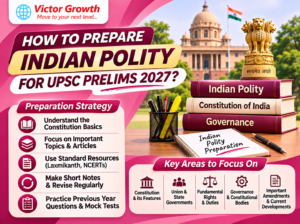
1. Understand the UPSC Indian Polity Syllabus
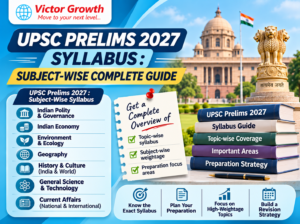
Before starting preparation, go through the syllabus and identify the major areas that require attention.
Important topics include:
Historical background and making of the Indian Constitution.
Preamble and salient features of the Constitution.
Fundamental Rights and Fundamental Duties.
Directive Principles of State Policy.
President, Vice-President, Prime Minister, and Council of Ministers.
Parliament and State Legislatures.
Supreme Court and High Courts.
Centre-State relations and federalism.
Constitutional and statutory bodies.
Panchayati Raj and local self-government.
Elections, electoral reforms, and governance.
Understanding the syllabus helps you prepare relevant topics without wasting time on unnecessary information.
2. Select the Best Books for Polity Preparation
Choosing the right study materials is important for effective preparation. Beginners should avoid collecting too many books.
Recommended resources:
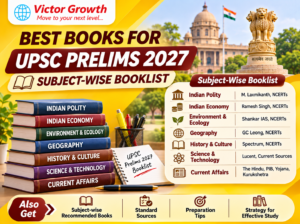
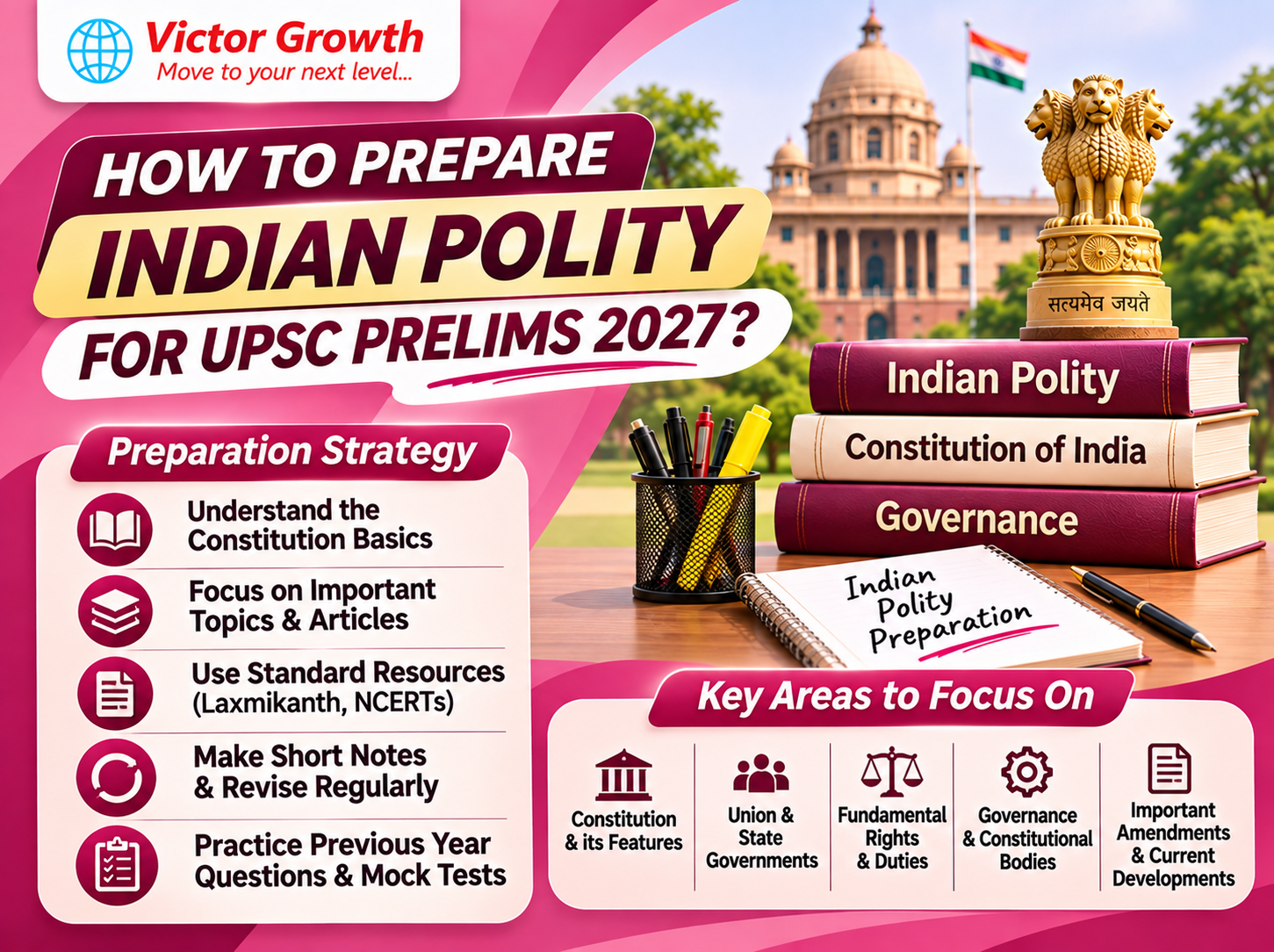
Indian Polity by M. Laxmikanth: A standard reference book covering constitutional provisions, political institutions, and governance.
NCERT Political Science: Useful for understanding basic constitutional and political concepts.
Previous-Year Question Papers: Help identify question patterns and important concepts.
The Constitution of India: Useful for referring to original constitutional provisions when required.
Start with NCERT basics and gradually move to the standard reference book. Revise selected resources multiple times.
3. Focus on High-Priority Polity Topics
Some topics form the foundation of Indian Polity and deserve special attention.
A. Fundamental Rights and Directive Principles
Understand the different Fundamental Rights, their constitutional provisions, reasonable restrictions, and the relationship between Fundamental Rights and Directive Principles.
B. Parliament and State Legislatures
Study the composition, powers, functions, legislative procedures, parliamentary committees, and privileges of legislatures.
C. President and Prime Minister
Understand their constitutional positions, election procedures, powers, responsibilities, and relationship with the Council of Ministers.
D. Judiciary
Focus on the structure of the Supreme Court and High Courts, judicial review, writs, judicial independence, and jurisdiction.
E. Constitutional Bodies
Study the functions and powers of the Election Commission, UPSC, Finance Commission, and Comptroller and Auditor General.
F. Centre-State Relations
Understand legislative, administrative, and financial relations between the Union and States, along with important federal provisions.
4. Connect Current Affairs with Indian Polity
Current affairs are an important part of UPSC preparation. Many contemporary developments can be understood better through constitutional concepts.
Pay attention to:
Important Supreme Court judgments.
Constitutional amendments and new laws.
Election Commission developments.
Parliamentary proceedings and important bills.
Centre-State disputes and federal issues.
Government policies and governance initiatives.
Reports related to constitutional institutions.
For example, while studying Parliament, follow important bills, legislative procedures, and parliamentary developments in the news.
5. Follow a Daily Polity Study Routine
A simple timetable can help beginners maintain consistency.
| Activity | Suggested time |
|---|---|
| Study a new Polity topic | 40 minutes |
| Revise previous topics | 15 minutes |
| Read related current affairs | 15 minutes |
| Practise MCQs | 20 minutes |
At the end of every week, revise the topics completed and attempt a short subject-wise test.
6. Practise Previous-Year Questions and Mock Tests
Regular question practice is essential for improving your performance in UPSC Prelims.
Solve previous-year questions after completing each chapter.
Practise statement-based and conceptual MCQs.
Understand why each option is correct or incorrect.
Attempt topic-wise mock tests.
Maintain a notebook of confusing concepts and common mistakes.
Do not simply check your score after a mock test. Analyse your answers and revise the topics where you made mistakes.
7. Common Mistakes to Avoid
Avoid these common mistakes while preparing Indian Polity:
Memorising articles without understanding constitutional concepts.
Referring to multiple books for the same topic.
Ignoring previous-year questions.
Preparing current affairs separately without connecting them to static Polity.
Skipping regular revision.
Focusing only on factual questions and neglecting conceptual understanding.
A focused approach with repeated revision is more effective than studying too many resources.
8. Choosing the Best UPSC Coaching in Kerala
Proper academic guidance can help candidates understand difficult constitutional concepts and follow a structured preparation plan. When searching for the best UPSC coaching in Kerala, consider the following:
Experienced faculty with strong subject knowledge.
Systematic coverage of the complete UPSC syllabus.
Updated study materials and current affairs discussions.
Regular chapter-wise tests and full-length mock examinations.
Doubt-clearing and revision sessions.
Individual guidance and performance evaluation.
A good coaching programme should help aspirants develop conceptual clarity, analytical thinking, and independent study habits.
Frequently Asked Questions (FAQs)
1. Which is the best book for Indian Polity for UPSC Prelims 2027?
Indian Polity by M. Laxmikanth is a widely recommended reference book. NCERT Political Science textbooks are useful for beginners.
2. How many months are required to prepare Indian Polity?
The time required depends on your existing knowledge and study schedule. Focus on completing the syllabus systematically and revising important concepts regularly.
3. Is Indian Polity difficult for beginners?
No. Students can understand Polity easily by starting with basic constitutional concepts and gradually studying the different institutions and their functions.
4. Should I memorise all the articles of the Constitution?
No. Understand important constitutional articles, their provisions, and their applications. Conceptual clarity is more useful than memorising every article.
5. Are previous-year questions important for Polity?
Yes. They help candidates understand UPSC’s question style, identify important concepts, and improve their ability to solve objective questions.
6. How can I find the best UPSC coaching in Kerala?
Compare faculty experience, syllabus coverage, study materials, mock tests, current affairs support, and individual guidance before selecting a coaching institute.
Conclusion
Indian Polity preparation for UPSC Prelims 2027 requires a clear understanding of the Constitution, important institutions, and governance mechanisms. Begin with NCERT textbooks, follow a standard reference book, connect current affairs with static concepts, and practise previous-year questions regularly. With consistent revision, disciplined preparation, and the right academic guidance, aspirants can build a strong foundation in Indian Polity and improve their overall General Studies preparation.