
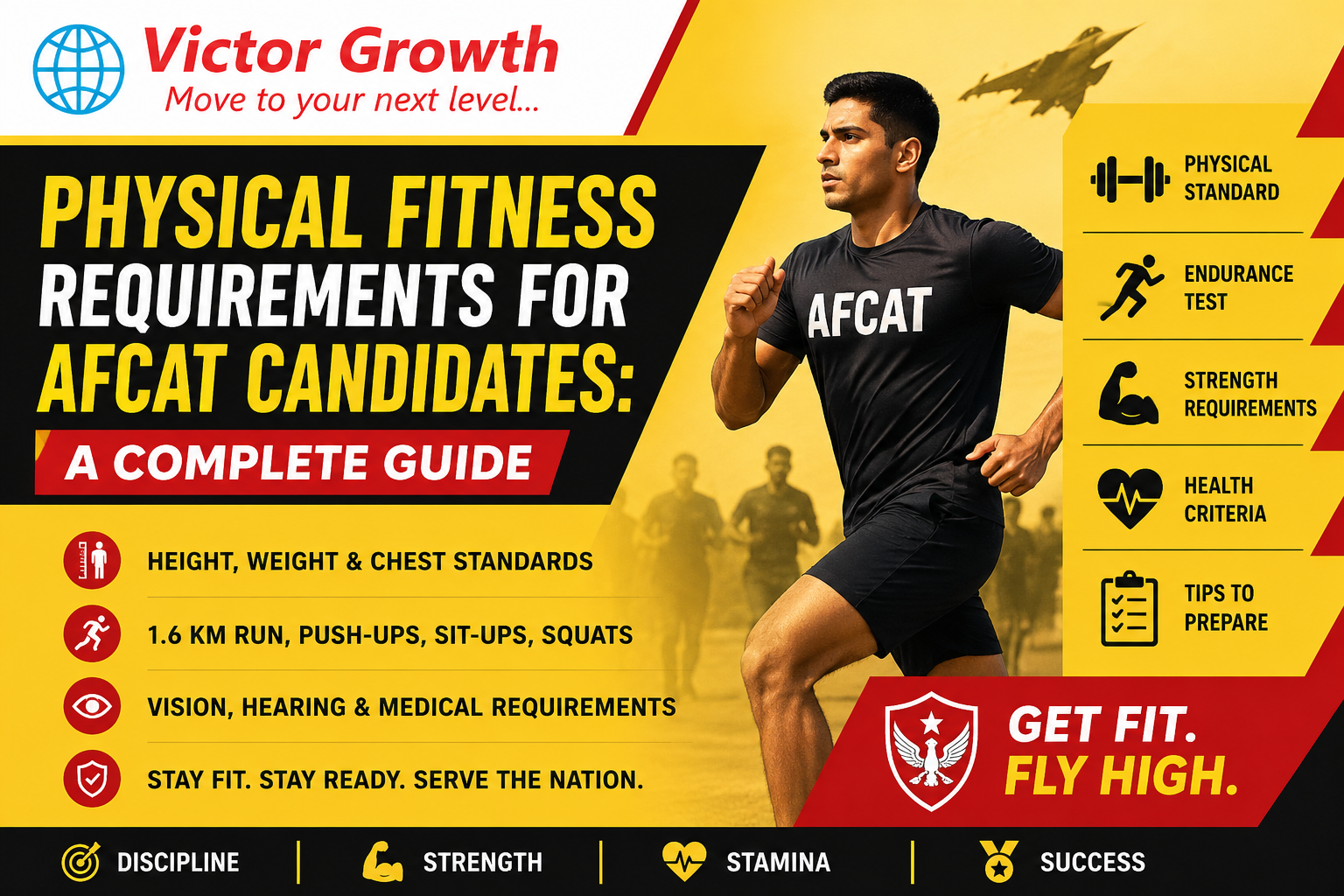
Everything You Need to Know About Physical Fitness, Medical Standards, and Preparation for AFCAT Selection
The Air Force Common Admission Test (AFCAT) is one of the most prestigious pathways to becoming an officer in the Indian Air Force. Every year, thousands of candidates compete for opportunities in the Flying Branch, Ground Duty (Technical), and Ground Duty (Non-Technical) branches. While most aspirants focus heavily on the written examination and Air Force Selection Board (AFSB) interview, many overlook an equally important aspect of the selection process—physical fitness and medical standards.
A candidate may clear the AFCAT written examination and perform exceptionally well in the AFSB interview, but failure to meet the prescribed medical standards can result in rejection. Therefore, understanding and maintaining the required physical fitness standards is essential from the very beginning of your preparation journey.
Many aspirants enrolled in the best AFCAT coaching in Kerala receive guidance not only for academics and AFSB preparation but also regarding medical fitness requirements, helping them avoid last-minute surprises during the selection process.
This comprehensive guide explains the physical fitness requirements, medical standards, common reasons for rejection, fitness preparation tips, and everything AFCAT aspirants need to know to stay physically ready for a career in the Indian Air Force.
Why Physical Fitness Matters in AFCAT Selection
The Indian Air Force demands officers who are:
- Physically fit
- Mentally strong
- Medically healthy
- Operationally ready
Air Force officers may be required to:
- Operate in challenging environments
- Handle stressful situations
- Lead teams effectively
- Maintain high levels of endurance and alertness
Therefore, medical fitness is considered an essential component of the selection process.
Overview of the AFCAT Selection Process
The AFCAT selection process includes:
Stage 1
AFCAT Written Examination
Stage 2
Air Force Selection Board (AFSB)
Stage 3
Medical Examination
Stage 4
Final Merit List
The medical examination is conducted only after a candidate receives recommendation from the AFSB.
Difference Between Physical Fitness and Medical Fitness
Many aspirants confuse physical fitness with medical fitness.
Physical Fitness
Refers to:
- Strength
- Endurance
- Stamina
- Flexibility
- Body composition
Medical Fitness
Refers to:
- Vision standards
- Hearing ability
- Organ function
- General health
- Absence of disqualifying medical conditions
Candidates must satisfy both requirements.
General Physical Standards for AFCAT Candidates
The Indian Air Force prescribes specific physical standards.
These standards may vary depending on:
- Branch applied for
- Gender
- Flying or Ground Duty role
Candidates should always refer to the latest official AFCAT notification for branch-specific standards.
Height Requirements
Height is one of the most important physical parameters evaluated during medical examination.
Why Height Matters
Certain Air Force duties, especially in the Flying Branch, require candidates to fit safely within aircraft cockpit dimensions.
Candidates below the prescribed minimum height may face disqualification depending on the branch.
Weight Standards
Weight is assessed in proportion to:
- Height
- Age
- Body composition
Candidates who are:
Overweight
May face medical concerns related to fitness and endurance.
Underweight
May be considered medically unfit if body standards are not met.
Maintaining a healthy Body Mass Index (BMI) is recommended.
Vision Standards for AFCAT Candidates
Vision standards are among the most important medical requirements.
The Flying Branch generally has stricter visual standards than Ground Duty branches.
Visual Acuity
Candidates must possess acceptable levels of:
- Near vision
- Distant vision
Vision requirements vary depending on the branch selected.
Color Vision
The Indian Air Force requires normal color perception.
Color blindness may affect eligibility for certain branches.
Eye Health
Medical examiners assess:
- Eye structure
- Retinal health
- Corneal condition
- Overall visual function
Candidates considering corrective procedures should verify eligibility criteria beforehand.
Hearing Standards
Good hearing ability is essential for Air Force personnel.
The hearing examination evaluates:
- Ability to hear normal conversation
- Detection of hearing impairments
- Ear health
Chronic hearing problems can affect medical fitness.
Dental Standards
Many candidates underestimate dental fitness.
The medical examination includes assessment of:
- Oral hygiene
- Dental alignment
- Missing teeth
- Overall dental health
Poor dental condition may require corrective treatment before selection.
Cardiovascular Fitness
The heart and circulatory system are thoroughly examined.
Medical authorities assess:
- Heart function
- Blood pressure
- Cardiovascular health
Maintaining an active lifestyle helps improve cardiovascular fitness.
Respiratory Health
Candidates should possess healthy respiratory function.
Conditions such as:
- Severe asthma
- Chronic respiratory disorders
- Significant lung problems
may impact medical eligibility.
Musculoskeletal Fitness
The medical board evaluates:
- Bones
- Joints
- Spine
- Limbs
- Posture
Common Areas Examined
Spinal Alignment
Significant spinal deformities may affect eligibility.
Joint Function
Normal mobility and function are expected.
Limb Structure
Candidates should possess normal functional movement.
Mental and Psychological Health
The Indian Air Force expects officers to be mentally resilient.
Medical evaluations may include assessment of:
- Mental stability
- Emotional health
- Psychological fitness
Strong mental health supports operational effectiveness.
Common Medical Tests Conducted After AFSB
Candidates recommended by the AFSB typically undergo a comprehensive medical evaluation.
Physical Examination
Assessment of:
- Height
- Weight
- Body proportions
Eye Examination
Evaluation of:
- Vision
- Color perception
- Eye health
Ear, Nose, and Throat Examination
Assessment of ENT health and hearing ability.
Dental Examination
Review of oral and dental condition.
Blood Tests
Used to assess overall health and detect medical conditions.
Urine Tests
Helps evaluate kidney function and general health.
Chest Examination
Assessment of respiratory and cardiovascular health.
Orthopedic Examination
Evaluation of posture, joints, bones, and mobility.
Common Reasons for Medical Rejection
Many AFCAT aspirants are surprised by medical rejections.
Some common reasons include:
Poor Vision
Failure to meet prescribed standards.
Excess Weight
Obesity can affect fitness assessment.
Underweight Condition
Insufficient body weight may indicate health concerns.
Hearing Deficiencies
Hearing impairments may lead to disqualification.
Orthopedic Problems
Significant bone or joint issues.
Chronic Medical Conditions
Conditions affecting operational readiness.
Dental Issues
Untreated oral health problems.
Understanding these factors early allows candidates to take corrective action.
Fitness Preparation for AFCAT Aspirants
The best approach is to begin fitness preparation alongside academic preparation.
Recommended Physical Activities
Running
Improves:
- Endurance
- Stamina
- Cardiovascular fitness
Aim for regular running sessions several times a week.
Walking
A simple but effective fitness activity.
Suitable for beginners.
Strength Training
Helps develop:
- Muscular strength
- Stability
- Injury prevention
Flexibility Exercises
Stretching improves:
- Mobility
- Recovery
- Joint health
Yoga
Yoga helps improve:
- Flexibility
- Breathing
- Concentration
- Stress management
Importance of Nutrition
Physical fitness depends heavily on proper nutrition.
Healthy Eating Habits
Focus on:
- Fruits
- Vegetables
- Whole grains
- Lean protein
Hydration
Adequate water intake supports:
- Performance
- Recovery
- Overall health
Avoid Excessive Junk Food
Poor eating habits can contribute to:
- Weight gain
- Reduced fitness
- Health issues
Sleep and Recovery
Many AFCAT aspirants sacrifice sleep during preparation.
This is a mistake.
Quality sleep improves:
- Memory
- Recovery
- Mental alertness
- Overall performance
Aim for adequate daily sleep.
Fitness Tips for Working Professionals Preparing for AFCAT
Working professionals often face unique challenges.
Schedule Morning Workouts
Before office hours.
Use Weekends Effectively
Longer exercise sessions.
Stay Active During the Day
Walk whenever possible.
Follow Consistent Routines
Small daily efforts create long-term results.
Role of AFCAT Coaching in Physical Fitness Awareness
The best AFCAT coaching in Kerala often helps candidates understand:
Medical Standards
Awareness of eligibility requirements.
Fitness Guidelines
Preparation recommendations.
Lifestyle Management
Healthy routines and habits.
AFSB Readiness
Developing confidence and physical preparedness.
Such guidance helps candidates approach medical examinations with greater confidence.
Physical Fitness and Officer-Like Qualities
Fitness is not only about passing medical tests.
Physically fit candidates often demonstrate:
- Better confidence
- Greater stamina
- Improved leadership presence
- Higher mental resilience
These qualities positively influence performance during AFSB tasks and future military training.
Conclusion
Physical fitness is a critical but often underestimated component of AFCAT selection. While academic preparation and AFSB performance are important, candidates must also meet the Indian Air Force’s medical and physical standards to secure final selection.
By understanding the requirements early, maintaining a healthy lifestyle, exercising regularly, and addressing potential medical concerns in advance, aspirants can significantly improve their chances of success.
Candidates preparing under the guidance of the best AFCAT coaching in Kerala benefit from structured preparation, medical awareness, and expert mentoring that help them stay ready for every stage of the AFCAT selection process.
Remember, the journey to becoming an Air Force officer requires excellence in mind, body, and character. Begin building your fitness today and take one step closer to earning your place in the Indian Air Force.
Frequently Asked Questions (FAQs)
1. Is physical fitness important for AFCAT?
Yes. Candidates must meet the prescribed medical and physical standards to qualify for final selection.
2. Does AFCAT include a physical fitness test?
There is no separate physical fitness test during AFCAT, but candidates must clear comprehensive medical examinations after AFSB recommendation.
3. Are vision standards important in AFCAT?
Yes. Vision standards are critical, especially for candidates applying to the Flying Branch.
4. Can overweight candidates apply for AFCAT?
Candidates can apply, but they must meet prescribed medical fitness standards during the medical examination.
5. Is running necessary for AFCAT preparation?
Running is highly recommended because it improves stamina, endurance, and cardiovascular fitness.
6. What are common reasons for medical rejection?
Common reasons include poor vision, obesity, underweight condition, hearing deficiencies, orthopedic issues, and certain chronic medical conditions.
7. Does the Indian Air Force check dental health?
Yes. Dental fitness is part of the medical examination process.
8. How can I improve my fitness for AFCAT?
Regular exercise, running, strength training, proper nutrition, hydration, and adequate sleep are essential.
9. When should I start fitness preparation for AFCAT?
Ideally, fitness preparation should begin alongside academic preparation to ensure readiness for medical examinations.
10. Why should I join the best AFCAT coaching in Kerala?
The best AFCAT coaching in Kerala provides complete guidance for AFCAT preparation, AFSB interviews, medical awareness, study materials, mock tests, and personality development, helping candidates maximize their chances of becoming officers in the Indian Air Force.