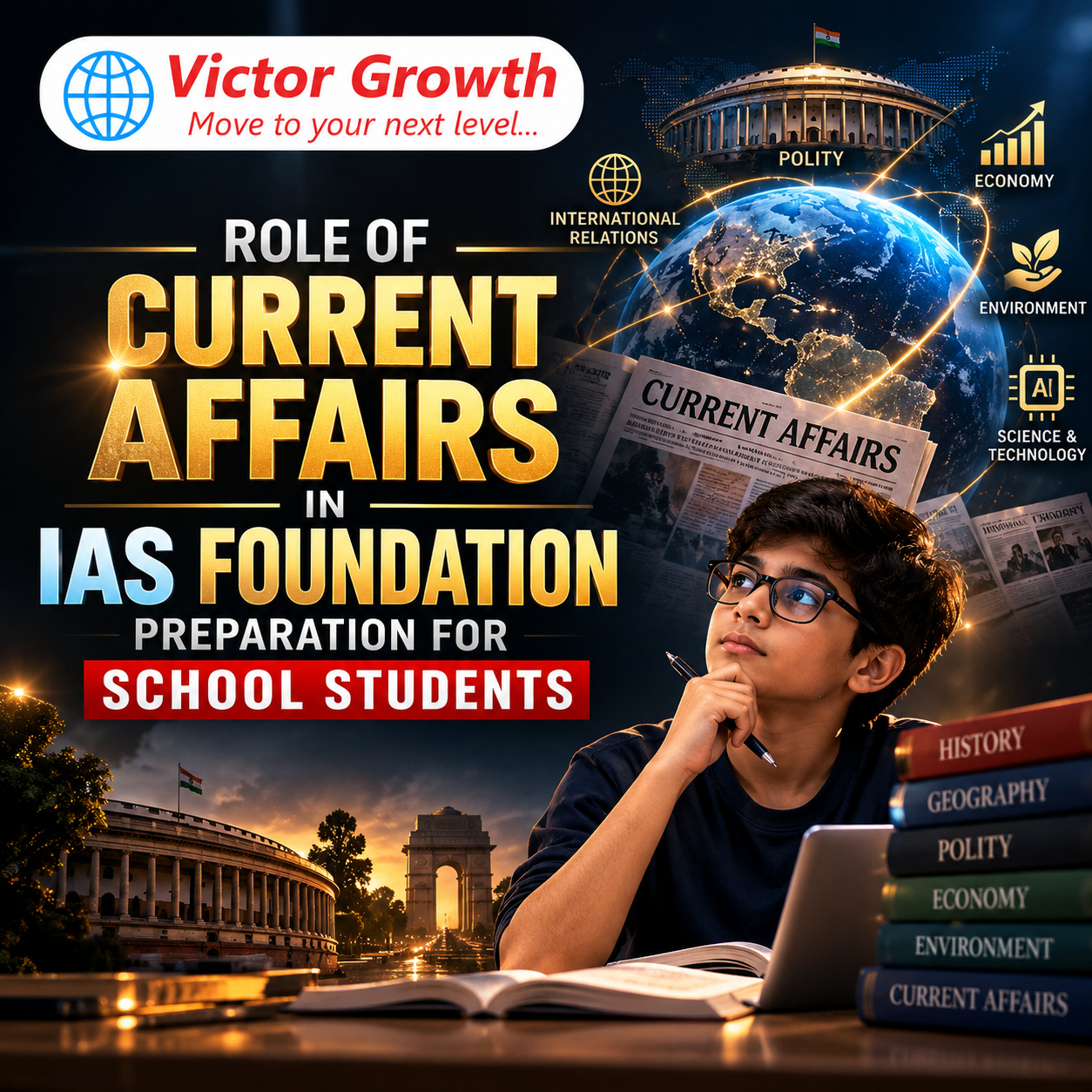
Current affairs play an important role in UPSC Civil Services preparation. The UPSC syllabus explicitly includes current events of national and international importance, along with areas such as history, geography, polity, economy, environment and science.
While school students do not need intensive UPSC-level current affairs preparation, developing the habit of understanding important events from an early age can provide a valuable foundation for the future.
For parents searching for the Best IAS Coaching in Kerala, an effective IAS Foundation programme should introduce current affairs in a simple, age-appropriate and engaging manner.
What Are Current Affairs?
Current affairs refer to important events and developments happening in India and around the world.
For school students, these may include:
Major government initiatives
Important national events
International developments
Science and technology
Environment and climate change
Economy
Important Supreme Court or constitutional developments
Sports and cultural achievements
Major international organisations and events
The objective is not to remember every news story but to understand the important issues shaping society.
Why Are Current Affairs Important for IAS Foundation Preparation?
1. Develops Awareness About the World
School textbooks cannot cover everything happening in society.
Following important news helps students understand what is happening around them and encourages them to become informed citizens.
For example, a student learning about climate change in school can better understand the topic by following real-world developments related to extreme weather, renewable energy and environmental policies.
2. Connects Textbook Knowledge With Real Life
One of the biggest advantages of current affairs is that it connects academic concepts with real-world events.
For example:
School Civics + Election News = Better Understanding of Democracy
School Geography + Climate News = Better Understanding of Environment
School Economics + Budget News = Better Understanding of the Economy
This makes learning more meaningful.
3. Develops Analytical Thinking
Students should not simply ask, “What happened?”
They should gradually learn to ask:
Why did it happen?
What caused it?
Who is affected?
What could be the consequences?
What solutions are possible?
This habit of analysing issues is highly valuable for future Civil Services preparation.
4. Improves Reading and Comprehension
Regular exposure to news and informative articles can help students improve their:
Vocabulary
Reading ability
Comprehension
Concentration
Ability to identify important information
These skills can become valuable when students eventually undertake extensive UPSC preparation.
5. Builds a Strong General Studies Foundation
UPSC preparation covers diverse areas including polity, economy, geography, history, environment and science. Current affairs can help students gradually see how these subjects interact with one another.
For example, a news report about a new environmental policy can involve science, geography, economics, governance and social issues simultaneously.
What Current Affairs Should School Students Follow?
Students do not need to follow every news story.
They can focus on major developments related to:
National Affairs
Government programmes, important institutions, elections, major policy decisions and significant national developments.
International Affairs
Major global events, international organisations, important agreements and developments involving India.
Science and Technology
Space missions, artificial intelligence, major scientific discoveries, biotechnology and emerging technologies.
Environment
Climate change, biodiversity, pollution, conservation and renewable energy.
Economy
Basic awareness of inflation, banking, taxation, employment, government budgets and economic development.
Social Issues
Education, health, poverty, women and children, social welfare and other important issues affecting society.
How Much Current Affairs Should School Students Study?
Less is often more at the foundation stage.
Students do not need to spend hours reading newspapers every day.
A practical approach can be:
20–30 minutes of reading per day
or
2–3 structured current-affairs sessions per week.
The focus should be on understanding and discussion rather than memorising hundreds of facts.
How Can Parents Make Current Affairs Interesting?
Parents can make current affairs part of everyday conversation.
For example, after reading an important news story, ask:
What happened?
Why is it important?
How does it affect people?
What do you think could be done?
Such conversations encourage children to think independently and express their opinions.
How Can an IAS Foundation Course Teach Current Affairs?
A good foundation programme should make current affairs age-appropriate.
Useful methods include:
Current-affairs quizzes
Classroom discussions
Short news summaries
Visual presentations
Map-based activities
Group discussions
Simple case studies
Current-affairs-based questions
Connecting news with school subjects
This approach can make current affairs more interesting than simply asking students to memorise newspaper headlines.
Current Affairs and Future UPSC Preparation
The purpose of introducing current affairs during school is not to prepare students for immediate UPSC examinations.
Instead, it helps establish a long-term habit.
A student who gradually develops the ability to:
Read → Understand → Analyse → Discuss → Connect with concepts
may find it easier to handle the extensive current-affairs component when serious UPSC preparation begins later.
Common Mistakes to Avoid
Parents and students should avoid:
Reading too many newspapers
Collecting excessive current-affairs PDFs
Memorising every headline
Spending several hours on news
Following unreliable social-media information
Ignoring school academics
Turning current affairs into an examination burden
The goal should be awareness and understanding, not information overload.
Choosing the Best IAS Coaching in Kerala for Foundation Preparation
Parents searching for the Best IAS Coaching in Kerala should check how the institute approaches current affairs for school students.
Look for:
Age-appropriate content
Reliable sources
Interactive discussions
Regular quizzes
Concept-based explanations
Connection with school subjects
Simple study materials
Mentorship
Balanced schedules
A good programme should make students curious about the world rather than overwhelm them with information.
IAS Foundation at Victor Growth
Victor Growth, Kadavanthra, Kochi, provides foundation-oriented learning for school students interested in developing an early understanding of Civil Services and competitive examinations.
Current affairs can be integrated with general awareness, conceptual learning, quizzes, discussions, reading activities and analytical exercises.
For parents searching for the Best IAS Coaching in Kerala, the focus should be on finding a foundation programme that introduces current affairs systematically while keeping the learning age-appropriate and enjoyable.
Frequently Asked Questions
1. Is current affairs important for IAS Foundation Preparation?
Yes. Current affairs can help school students develop awareness, reading skills, analytical thinking and an understanding of real-world issues.
2. Should school students read newspapers every day?
They can develop a reading habit, but they do not need to read the entire newspaper. Age-appropriate news and curated current-affairs material can be sufficient.
3. How much time should school students spend on current affairs?
Around 20–30 minutes of meaningful reading or a few structured sessions per week can be adequate for foundation-level learning.
4. What current affairs topics should school students follow?
They can focus on important developments in India, world affairs, science and technology, environment, economy, governance and major social issues.
5. Should students make current-affairs notes?
Simple notes, summaries or mind maps can be useful. Students do not need extensive UPSC-style notes at the school level.
6. How can parents choose the Best IAS Coaching in Kerala?
Parents should evaluate the curriculum, faculty, mentorship, current-affairs methodology, study materials, assessments and whether the programme is designed specifically for school students.
7. Does studying current affairs from school guarantee UPSC success?
No. Current affairs provide one part of a broader foundation. Future UPSC success depends on sustained preparation, conceptual understanding, analytical ability and examination performance.
Conclusion
Current affairs can play an important role in IAS Foundation Preparation by helping school students understand the world beyond their textbooks. More importantly, it develops the habit of reading, questioning, connecting ideas and analysing real-world issues.
The right approach is not to make children memorise daily news but to encourage them to read, understand, discuss and think.
For parents searching for the Best IAS Coaching in Kerala, an effective foundation programme should use current affairs as a tool for developing awareness, curiosity and analytical thinking, while keeping school education and the overall well-being of the student as priorities.