
Introduction
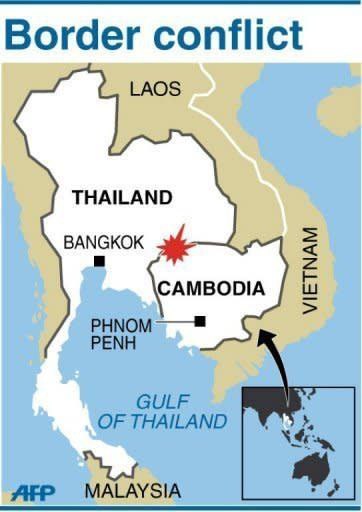
Thailand and Cambodia have witnessed renewed military clashes along their shared border, marking one of the most serious escalations in recent years. The violence has resulted in casualties on both sides, displacement of civilians, and the collapse of a fragile ceasefire brokered earlier in 2025 with international involvement.
The dispute is long-standing, rooted in colonial-era border demarcation, and periodically resurfaces due to territorial claims, nationalism, and political instability.
Background of the Border Dispute
Colonial Legacy
The dispute dates back to the early 20th century, when borders were drawn during the French colonial rule of Cambodia.
Maps prepared by French authorities left certain areas ambiguously demarcated, leading to overlapping claims.
Thailand disputes some of these colonial-era boundaries, especially in areas surrounding historical monuments.
Preah Vihear Temple Dispute
A major flashpoint is the 11th-century Preah Vihear Temple, located near the Thailand–Cambodia border.
In 2008, Cambodia’s attempt to register the temple as a UNESCO World Heritage Site triggered strong protests in Thailand.
Although the International Court of Justice (ICJ) ruled largely in Cambodia’s favour, Thailand disputes surrounding territory claims.
This episode intensified nationalist sentiments and led to periodic military standoffs.
Recent Escalations (2025)
May 2025 Incident
Tensions escalated after a Cambodian soldier was killed during a border clash.
Diplomatic relations deteriorated to their lowest point in over a decade.
July 2025 Clashes
Both sides exchanged heavy gunfire, rockets, and air strikes.
At least 48 people were killed, and thousands were displaced.
Thailand accused Cambodia of firing rockets, while Cambodia blamed Thai aggression.
The violence prompted international concern, leading to external mediation.
December 2025 Clashes
Fighting resumed in December, despite an existing ceasefire.
Thailand’s claim:
Cambodian forces fired first in Ubon Ratchathani province.
Thailand responded with air strikes on military targets.
Cambodia’s claim:
Thai forces initiated attacks in Preah Vihear province.
Cambodia initially refrained from retaliation to respect the ceasefire.
Accusations include:
Use of rockets, drones, and air strikes
Attacks affecting civilian areas on both sides
Casualties include Thai soldiers and Cambodian civilians.
Areas Affected
Thailand: Ubon Ratchathani, Buriram, Surin, Si Sa Ket, Sa Kaeo, Trat
Cambodia: Banteay Meanchey, Battambang, Pursat, Oddar Meanchey, Preah Vihear
Economic and Diplomatic Measures
Cambodia imposed border restrictions, including:
Ban on imports from Thailand (fruits, vegetables)
Suspension of power and internet supplies
Both countries reinforced troop deployments along the border.
Role of International Mediation
US and Regional Mediation
US President Donald Trump, with support from Malaysia, mediated a ceasefire after the July clashes.
The agreement included:
Withdrawal of heavy weapons
Deployment of interim observers
Release of detained Cambodian soldiers
Thailand later paused the agreement, citing unresolved security threats.
Cambodia claimed continued commitment to the ceasefire.
Why Has the Ceasefire Failed?
Mutual distrust between armed forces
Ambiguous borders and unresolved territorial claims
Domestic political instability in both countries
Nationalist pressures limiting leadership flexibility
Lack of a robust enforcement and monitoring mechanism
Current Situation and Future Outlook
Both sides accuse each other of violating the ceasefire.
International actors have urged restraint, but escalation risks remain.
Analysts warn of:
Absence of strong political leadership
Possibility of repeated cycles of violence and de-escalation
Travel Advisory
Foreign governments advise against non-essential travel within 50 km of the border on both sides due to security risks.
Implications for the Region (UPSC Mains Value Addition)
Regional Stability
Threatens ASEAN unity and regional peace.
Undermines confidence in regional conflict-resolution mechanisms.
Humanitarian Impact
Civilian displacement
Damage to livelihoods in border regions
Lessons for International Relations
Importance of:
Clear border demarcation
Confidence-building measures
Neutral third-party monitoring
Way Forward
Revival of bilateral dialogue mechanisms
Acceptance of international arbitration or ICJ rulings
Strengthening ASEAN’s role in preventive diplomacy
Demilitarisation of sensitive zones
Community-level cross-border cooperation
UPSC Prelims Pointers
Dispute origin: French colonial-era border demarcation
Key site: Preah Vihear Temple
International body involved earlier: ICJ
Nature of conflict: Territorial dispute + nationalism
Region: Mainland Southeast Asia
Conclusion
The Thailand–Cambodia border conflict highlights how historical disputes, unresolved boundaries, and domestic politics can destabilise regional peace even in the presence of ceasefire agreements. Sustainable resolution requires political will, trust-building, and effective international mediation, making it a significant case study for UPSC aspirants in International Relations and conflict management.