
A Complete Guide to Balancing School, Studies, and UPSC Preparation | Best IAS Coaching in Kerala
Preparing for the Union Public Service Commission (UPSC) Civil Services Examination is a marathon, not a sprint. Students who begin their preparation during Classes 8–12 enjoy a significant advantage because they have enough time to build concepts gradually without feeling overwhelmed. However, one of the biggest challenges young aspirants face is balancing school studies, extracurricular activities, family responsibilities, and UPSC preparation.
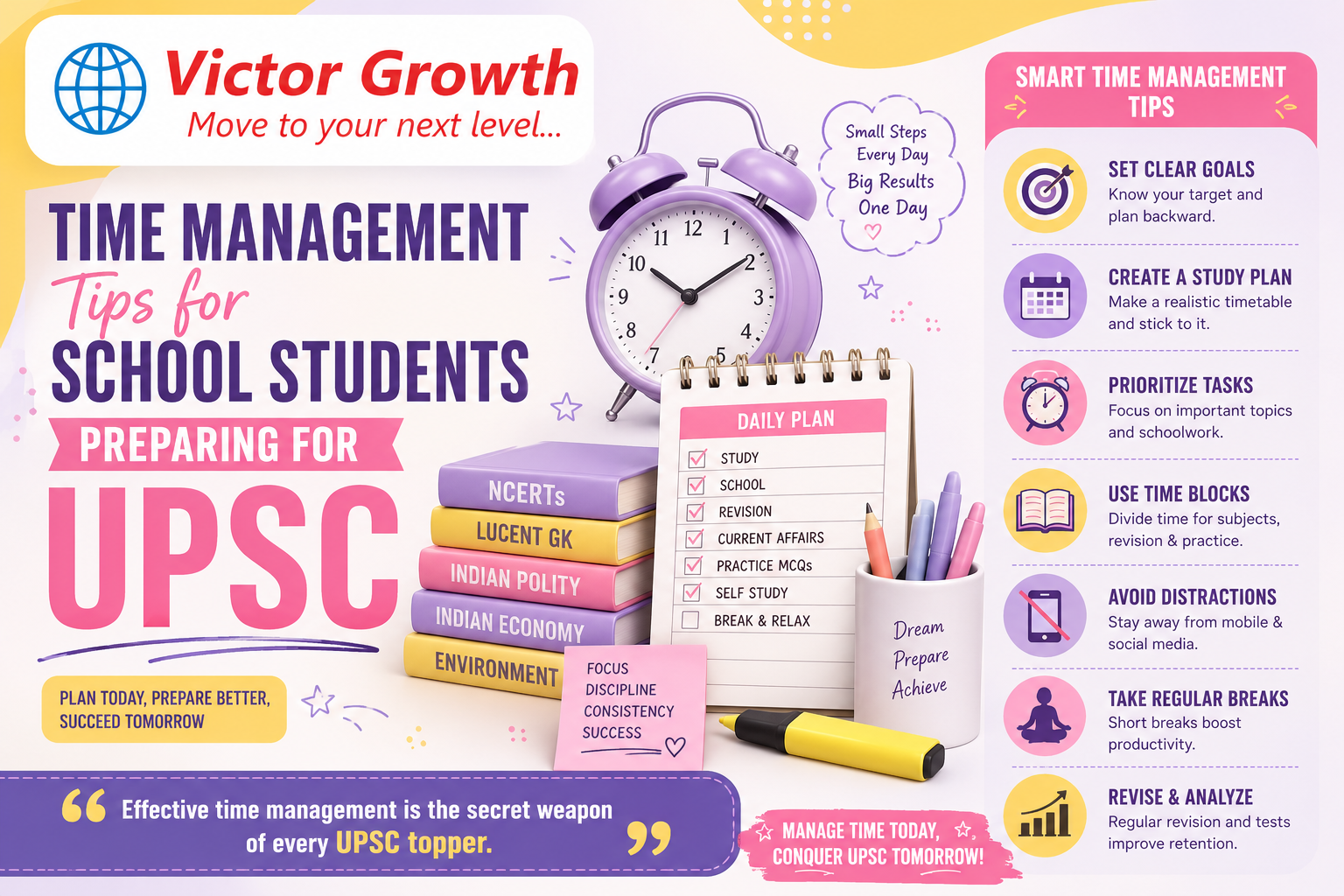
The key to succeeding in both academics and competitive exam preparation is effective time management. A well-planned daily routine helps students study consistently, reduces stress, improves productivity, and ensures that neither school education nor UPSC preparation is neglected.
The best IAS coaching in Kerala emphasizes smart planning rather than studying for long hours. This guide provides practical and proven time management strategies that help school students prepare for UPSC while maintaining excellent academic performance.
Why Time Management is Important for UPSC Aspirants
Time is the most valuable resource for any student. Unlike money or books, lost time cannot be recovered. Successful UPSC aspirants are not always those who study the longest—they are those who use their time effectively.
Good time management helps students:
- Balance school and UPSC preparation
- Complete homework without stress
- Build consistent study habits
- Improve concentration
- Reduce last-minute exam pressure
- Increase confidence
- Maintain physical and mental well-being
- Develop discipline, a key quality for future civil servants
Learning to manage time during school years also builds lifelong habits that benefit students in college, careers, and public service.
Start Early, But Start Smart
Many students believe they need to study UPSC topics for six to eight hours every day. This is neither necessary nor advisable for school students.
Instead:
- Focus on understanding school subjects deeply.
- Read quality books consistently.
- Build curiosity about current affairs.
- Develop analytical thinking.
- Improve communication skills.
The goal during Classes 8–12 is to build a strong foundation rather than rush through the UPSC syllabus.
Create a Daily Study Schedule
A structured timetable helps students stay organized and avoid wasting time.
A balanced day should include:
- School hours
- Homework
- School revision
- UPSC foundation study
- Newspaper reading
- Physical activity
- Family time
- Sleep
Consistency is more important than perfection. Even 1–2 hours of focused UPSC preparation each day can produce excellent long-term results.
Prioritize School Academics
One common mistake is neglecting school studies in favor of competitive exam preparation.
School education forms the base of UPSC preparation because subjects such as:
- History
- Geography
- Political Science
- Economics
- Science
- English
are directly connected to the UPSC syllabus.
Students should first master school textbooks before moving to additional resources.
Use the “School-to-UPSC” Approach
Instead of studying separately for school and UPSC, connect both.
For example:
- NCERT History chapters help with UPSC History.
- Geography lessons improve map skills.
- Political Science introduces constitutional concepts.
- Economics develops an understanding of national development.
- Science strengthens logical reasoning.
This integrated approach saves time and improves conceptual clarity.
Set Daily and Weekly Goals
Large goals often seem intimidating.
Break them into smaller targets.
Examples:
Daily goals:
- Read one newspaper editorial.
- Revise one NCERT chapter.
- Learn ten new vocabulary words.
- Practice one map exercise.
Weekly goals:
- Complete one History chapter.
- Revise current affairs.
- Solve one quiz.
- Write one short essay.
Achieving small goals consistently leads to significant progress over time.
Follow the 45–15 Study Rule
Long study sessions reduce concentration.
A productive method is:
- Study for 45 minutes.
- Take a 10–15 minute break.
- Resume with a fresh mind.
This improves focus, reduces fatigue, and increases retention.
Avoid Multitasking
Trying to study while watching television, checking social media, or using mobile phones reduces efficiency.
During study time:
- Keep your phone away.
- Turn off notifications.
- Study one subject at a time.
- Focus completely on the current task.
Single-tasking improves productivity and helps students finish work faster.
Read Newspapers Every Day
Current affairs are essential for UPSC preparation.
Spend 20–30 minutes reading:
- National news
- International affairs
- Economy
- Science and Technology
- Environment
- Government schemes
- Editorials
Avoid spending time on entertainment news or unnecessary political debates.
Reading newspapers consistently improves vocabulary, comprehension, and analytical thinking.
Develop a Reading Habit
Reading should become a daily habit rather than an occasional activity.
Students should regularly read:
- NCERT textbooks
- Newspapers
- Biographies
- General knowledge books
- Government magazines such as Yojana and Kurukshetra (for higher secondary students)
Reading improves concentration and expands knowledge across subjects.
Practice Active Learning
Passive reading is less effective than active learning.
After studying:
- Write summaries.
- Create mind maps.
- Make flashcards.
- Teach the topic to someone else.
- Solve practice questions.
Active learning helps students remember concepts for a longer period.
Keep a Current Affairs Notebook
Maintain a dedicated notebook for:
- Important government schemes
- National events
- International developments
- Environmental issues
- Science and technology updates
- Awards and appointments
Weekly revision of this notebook saves considerable time before exams.
Make Use of Weekends
Weekends provide extra time for:
- Revising school lessons
- Reading additional books
- Solving quizzes
- Practicing answer writing
- Watching educational documentaries
- Improving map skills
Avoid wasting weekends entirely on entertainment or excessive screen time.
Limit Mobile Phone Usage
Excessive smartphone use is one of the biggest obstacles to effective time management.
Students should:
- Set daily screen-time limits.
- Avoid social media during study hours.
- Use educational apps only when necessary.
- Keep the phone away while studying.
Reducing distractions significantly improves concentration.
Learn Time Blocking
Time blocking means assigning specific tasks to fixed time slots.
Example:
- Morning: School preparation
- Afternoon: Homework
- Evening: UPSC Foundation study
- Night: Newspaper reading and revision
A structured routine minimizes procrastination and helps students stay organized.
Revise Regularly
Revision is essential for long-term memory.
A simple revision cycle:
- Revise the same day.
- Revise after one week.
- Revise after one month.
Frequent revision reduces forgetting and strengthens understanding.
Practice Writing Every Week
Writing skills are crucial for UPSC.
Students should regularly write:
- Essays
- Short answers
- Current affairs summaries
- Opinion pieces
Writing improves clarity of thought and prepares students for descriptive examinations.
Stay Physically Active
Good health improves learning efficiency.
Students should spend at least 30–45 minutes daily on:
- Walking
- Running
- Cycling
- Yoga
- Outdoor games
Regular exercise improves memory, concentration, and stress management.
Sleep is Essential
Many students believe sleeping less means studying more.
In reality, adequate sleep improves:
- Memory
- Concentration
- Decision-making
- Learning ability
School students should aim for 8–9 hours of quality sleep every night.
Don’t Compare Yourself with Others
Every student learns at a different pace.
Instead of comparing:
- Focus on your own progress.
- Track weekly improvements.
- Celebrate small achievements.
- Learn from mistakes.
Consistency matters more than competition.
Learn from Mock Tests
Regular assessments help students understand:
- Strengths
- Weaknesses
- Time management during exams
- Areas requiring revision
Mock tests also reduce examination anxiety and improve confidence.
Role of Parents in Time Management
Parents can support students by:
- Encouraging a fixed routine
- Providing a quiet study environment
- Limiting unnecessary distractions
- Appreciating consistent effort
- Avoiding excessive academic pressure
A supportive home environment greatly enhances productivity.
How the Best IAS Coaching in Kerala Helps Students Manage Time
Professional guidance helps students avoid common mistakes and use their time effectively.
The best IAS coaching in Kerala provides:
- Personalized study plans
- Structured weekly schedules
- Expert mentorship
- Regular assessments
- Current affairs guidance
- Time management workshops
- Progress monitoring
- Balanced preparation strategies for school and UPSC
Students learn how to study efficiently instead of simply studying longer.
Why Victor Growth is Among the Best IAS Coaching in Kerala
Victor Growth offers a comprehensive IAS Foundation Program designed specifically for school students in Classes 8–12. The program helps students balance academic excellence with competitive exam preparation through structured planning and expert mentorship.
Key features include:
- Personalized study timetables
- NCERT-based conceptual learning
- Daily current affairs sessions
- Time management guidance
- Leadership and personality development
- Regular tests and performance analysis
- Answer writing practice
- Individual mentoring
- Flexible online and offline learning options
By helping students build disciplined study habits from an early age, Victor Growth enables them to excel in school academics while laying a strong foundation for future UPSC success, making it a preferred choice for students seeking the best IAS coaching in Kerala.
Conclusion
Time management is one of the most important skills for every aspiring civil servant. Students who learn to balance school education, UPSC preparation, physical activity, and personal life develop discipline, consistency, and confidence that benefit them throughout their careers.
Early preparation is not about studying for endless hours—it is about studying smart, staying consistent, and making the best use of every day. By following effective time management strategies and receiving expert guidance from the best IAS coaching in Kerala, school students can build a strong academic foundation and prepare confidently for the Civil Services Examination.
Remember, every successful IAS officer once started as a student with limited time but unlimited determination. Small, consistent efforts today can lead to extraordinary achievements tomorrow.
Frequently Asked Questions (FAQs)
1. How many hours should school students study for UPSC preparation?
Students in Classes 8–10 can dedicate 1–1.5 hours daily, while students in Classes 11–12 may study 2–3 hours alongside school academics. Consistency is more important than long study hours.
2. Can school students prepare for UPSC without affecting their academic performance?
Yes. By integrating NCERT-based school learning with UPSC Foundation preparation and following a structured timetable, students can excel in both school and competitive exams.
3. Why is time management important for UPSC preparation?
Effective time management helps students balance school, homework, revision, current affairs, and personal activities while reducing stress and improving productivity.
4. Should students read newspapers every day?
Yes. Reading newspapers such as The Hindu or The Indian Express for 20–30 minutes daily improves current affairs knowledge, vocabulary, and analytical thinking.
5. How can students avoid distractions during study time?
Keep mobile phones away, turn off notifications, study in a quiet environment, and focus on one subject at a time instead of multitasking.
6. Is it necessary to prepare a daily timetable?
Yes. A well-planned timetable helps students organize their studies, maintain consistency, and complete tasks without feeling overwhelmed.
7. Should school students focus more on NCERT books or advanced UPSC books?
Students should first master NCERT textbooks because they provide the conceptual foundation required for UPSC preparation. Advanced books can be introduced gradually under expert guidance.
8. How does the best IAS coaching in Kerala help students manage time effectively?
Leading coaching institutes provide structured study plans, weekly schedules, regular assessments, personalized mentoring, and time management strategies to help students balance school and UPSC preparation.
9. How important is revision in UPSC Foundation preparation?
Regular revision strengthens memory, improves understanding, and helps students retain concepts for a longer period. It is a crucial part of effective time management.
10. Why should students join an IAS Foundation Program during school?
Starting early allows students to build strong concepts, disciplined study habits, leadership qualities, communication skills, and confidence, making future UPSC preparation more organized and effective.