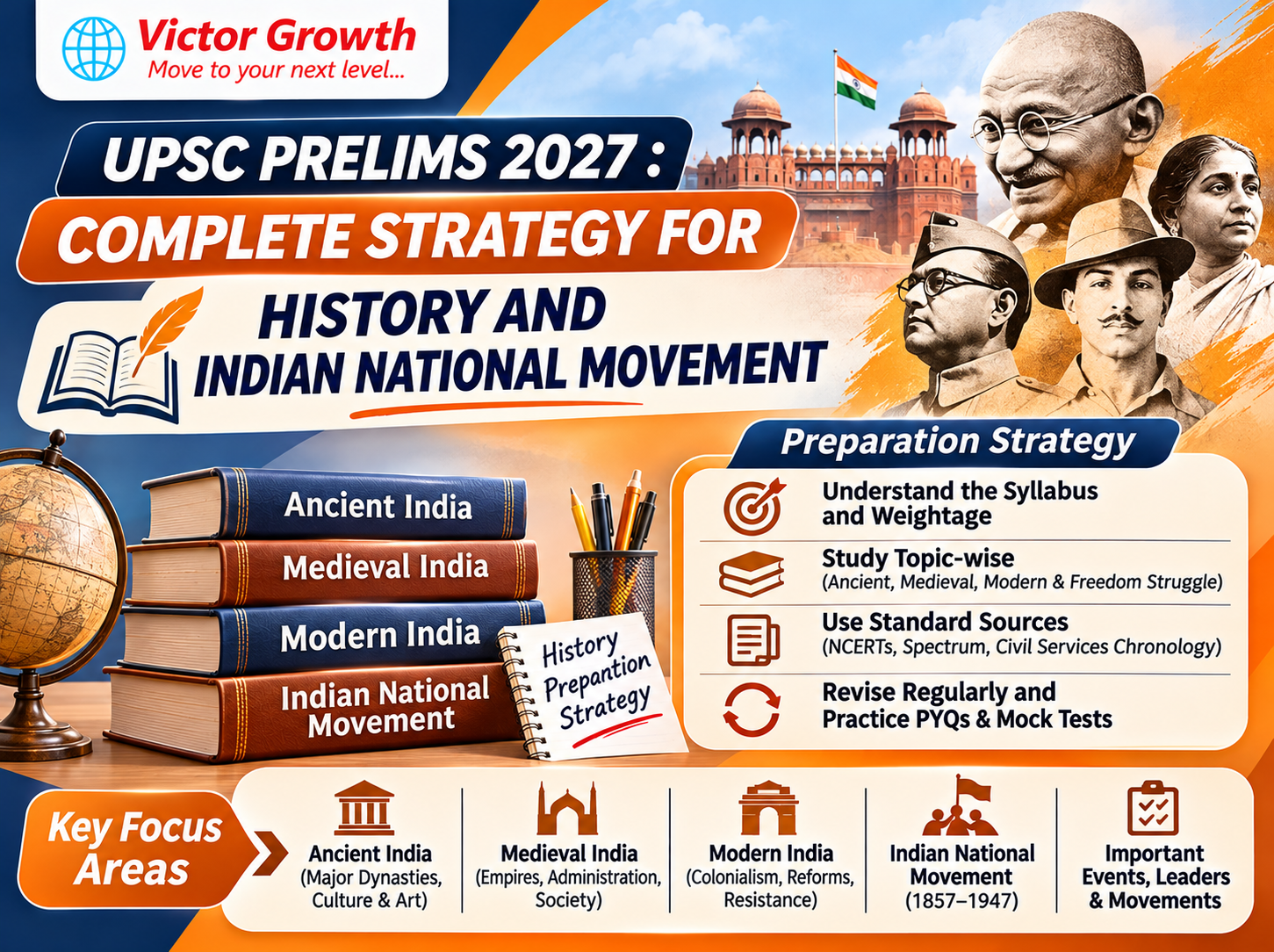
History is an important part of General Studies Paper I in the UPSC Civil Services Preliminary Examination. It helps candidates understand India’s cultural development, historical events, social transformations, and struggle for independence.
For beginners preparing for UPSC Prelims 2027, covering Ancient, Medieval, and Modern Indian History requires a systematic study plan. Special attention should be given to the Indian National Movement, including its important leaders, organisations, events, and contributions.
Aspirants looking for the best NDA coaching in Kerala should note that NDA and UPSC have different examination syllabuses and preparation requirements. This guide focuses specifically on History preparation for UPSC Prelims 2027.
1. Understand the UPSC History Syllabus
Before starting preparation, divide History into three major sections.
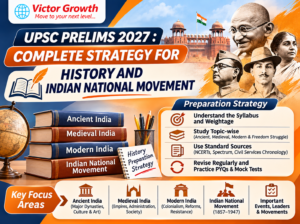
Ancient Indian History: Early human settlements, Indus Valley Civilisation, Vedic Period, Buddhism, Jainism, Mauryan Empire, Gupta Empire, and ancient art and architecture.
Medieval Indian History: Delhi Sultanate, Mughal Empire, regional kingdoms, Bhakti and Sufi movements, and medieval art and architecture.
Modern Indian History: Arrival of Europeans, British expansion, colonial administration, social reform movements, Revolt of 1857, and the Indian freedom struggle.
Pay particular attention to Modern Indian History and the Indian National Movement.
2. Choose the Right Books for History Preparation
Using limited and reliable resources helps save time and makes revision easier.
Recommended books:
A Brief History of Modern India – Rajiv Ahir (Spectrum): Useful for studying British rule, reform movements, and the freedom struggle.
NCERT History textbooks: Helpful for understanding Ancient, Medieval, and Modern Indian History.
Previous-year UPSC question papers: Essential for understanding question patterns and important topics.
Avoid referring to too many books for the same subject. Focus on completing and revising selected resources.
3. Focus on Important Topics in Ancient and Medieval History
Although Modern History deserves particular attention, candidates should not ignore Ancient and Medieval History.
Ancient History:
Indus Valley Civilisation.
Vedic society and literature.
Buddhism and Jainism.
Mauryan and Gupta administrations.
Sangam literature and ancient South Indian kingdoms.
Ancient temples, sculpture, and architecture.
Medieval History:
Delhi Sultanate and Mughal administration.
Vijayanagara and Bahmani kingdoms.
Bhakti and Sufi movements.
Important regional kingdoms.
Medieval literature, paintings, and architecture.
Preparation tip: Prepare short notes on important rulers, dynasties, religious movements, and cultural contributions. Use timelines and tables to remember historical developments.
4. Give Special Attention to Modern Indian History
Modern Indian History is an important area of UPSC preparation. Understand how British rule expanded and how Indian resistance developed over time.
Important topics include:
Arrival of European trading companies.
Battle of Plassey and Battle of Buxar.
British administrative and economic policies.
Revolt of 1857 and its consequences.
Socio-religious reform movements.
Formation of the Indian National Congress.
Swadeshi and Home Rule movements.
Non-Cooperation Movement.
Civil Disobedience Movement.
Quit India Movement.
Revolutionary activities and important organisations.
Constitutional developments under British rule.
Preparation tip: Understand the causes, objectives, leaders, methods, and consequences of each major movement instead of memorising dates alone.
5. Prepare the Indian National Movement Chronologically
The Indian National Movement is easier to understand when studied in chronological order.
Period | Important developments |
|---|---|
1885–1905 | Formation of INC and Moderate phase |
1905–1919 | Swadeshi Movement and rise of assertive nationalism |
1919–1930 | Non-Cooperation Movement and related developments |
1930–1942 | Civil Disobedience Movement and political developments |
1942–1947 | Quit India Movement and final phase of independence struggle |
Also study important leaders, revolutionary organisations, newspapers, sessions of the Indian National Congress, and constitutional developments.
6. Practise Previous-Year Questions and Mock Tests
History preparation requires regular question practice to improve factual accuracy and conceptual understanding.
Solve previous-year UPSC questions topic-wise.
Practise questions on important personalities and movements.
Revise dates, organisations, and historical events.
Attempt subject-wise mock tests.
Analyse incorrect answers and revise weak areas.
Pay attention to how questions connect historical events with social, political, and economic developments.
7. Follow a Simple Daily History Study Plan
Activity | Suggested time |
|---|---|
Read a new History topic | 40 minutes |
Revise previous topics | 15 minutes |
Prepare short notes or timelines | 15 minutes |
Practise MCQs | 20 minutes |
Adjust the schedule according to your overall UPSC preparation plan. At the end of each week, revise the completed chapters and attempt a short test.
8. Common Mistakes to Avoid
Studying only Modern History and ignoring other periods.
Memorising dates without understanding events.
Collecting too many reference books.
Ignoring art and culture-related topics.
Skipping previous-year questions.
Not revising historical personalities and movements.
Making lengthy notes that are difficult to revise.
A balanced approach and regular revision are essential for effective History preparation.
9. Choosing the Best UPSC Coaching in Kerala
Structured guidance can help aspirants understand historical events, organise the syllabus, and prepare systematically.
When searching for the best UPSC coaching in Kerala, consider:
Experienced faculty with strong History subject knowledge.
Complete coverage of Ancient, Medieval, and Modern History.
Clear explanations of the Indian National Movement.
Updated study materials and concise revision notes.
Regular MCQ practice and mock tests.
Doubt-clearing sessions and individual guidance.
A good coaching programme should encourage conceptual learning and independent revision rather than depending only on classroom notes.
Frequently Asked Questions (FAQs)
1. Which book is best for Modern Indian History for UPSC Prelims 2027?
A Brief History of Modern India by Rajiv Ahir (Spectrum) is a widely used reference book. NCERT textbooks are also useful for building basic understanding.
2. Is Ancient and Medieval History important for UPSC Prelims?
Yes. Candidates should cover Ancient and Medieval History, including important dynasties, religious movements, literature, and architecture.
3. Which topics are important in the Indian National Movement?
Focus on the Revolt of 1857, socio-religious reform movements, formation of the Indian National Congress, Swadeshi Movement, Non-Cooperation Movement, Civil Disobedience Movement, and Quit India Movement.
4. How should beginners remember important historical dates?
Use timelines, revision charts, and short notes. Remember dates in connection with events rather than memorising isolated numbers.
5. Are NCERT books enough for UPSC History preparation?
NCERT books provide a strong foundation, but candidates should also use standard reference books, previous-year questions, and regular mock tests.
6. How can I find the best UPSC coaching in Kerala for History preparation?
Compare faculty experience, subject coverage, teaching methods, study materials, mock tests, and revision support before selecting a coaching institute.
Conclusion
Preparing History for UPSC Prelims 2027 requires a systematic understanding of historical periods, important events, and the Indian National Movement. Start with NCERT textbooks, use reliable reference books, prepare chronological notes, and practise previous-year questions regularly. With consistent revision and suitable academic guidance, aspirants can strengthen their History preparation and improve their overall General Studies performance.