Preparing for UPSC Civil Services Prelims 2027 requires a strong understanding of fundamental concepts across subjects such as History, Geography, Polity, Economy, Science, and Environment. One of the best ways to build this foundation is by studying NCERT textbooks.
NCERT books are especially useful for beginners because they explain complex topics in simple language and help develop conceptual clarity. Before moving on to advanced reference books and current affairs, aspirants should develop a strong foundation through NCERTs.
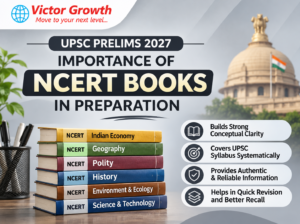
1. Why Are NCERT Books Important for UPSC Prelims 2027?
NCERT textbooks play an important role in UPSC preparation for several reasons:
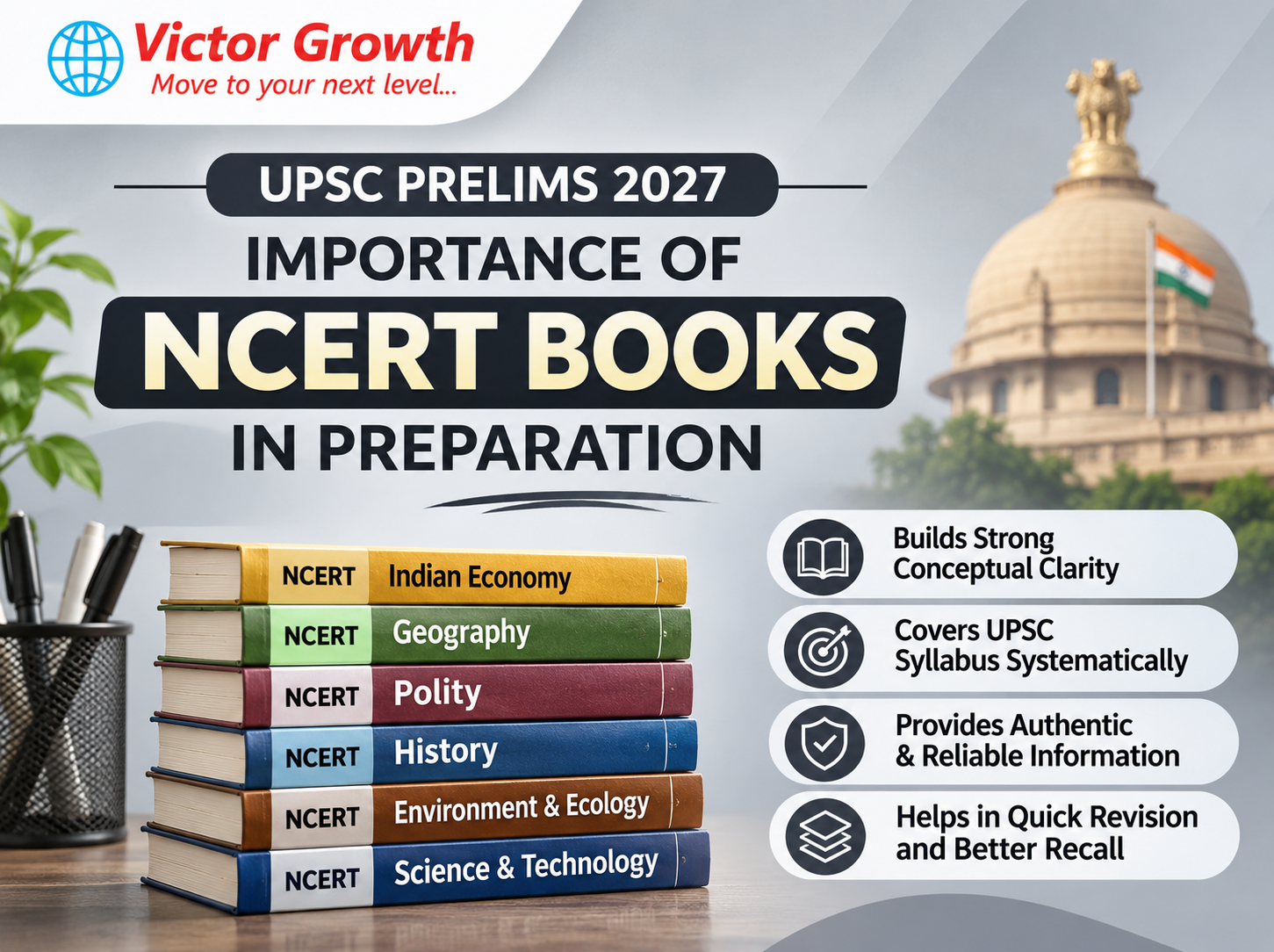
Builds Conceptual Clarity: NCERT books explain basic concepts in a simple and structured manner.
Strengthens Fundamentals: They help beginners understand subjects before studying advanced materials.
Easy to Understand: The language is generally simple, making it easier for students from different academic backgrounds.
Covers Important Topics: Many fundamental concepts relevant to the UPSC syllabus are explained in NCERT textbooks.
Supports Advanced Preparation: NCERT knowledge makes it easier to understand standard reference books and current affairs.
Useful for Revision: Their organised chapters make it easier to revise important concepts.
2. Important NCERT Books for UPSC Prelims 2027
Aspirants should focus on NCERT textbooks relevant to the UPSC syllabus rather than reading every available book.
Subject | Important NCERT books |
|---|---|
History | Classes 6–12 History textbooks |
Geography | Classes 6–12 Geography textbooks |
Indian Polity | Class 11 Political Science – Indian Constitution at Work |
Economy | Class 11 – Indian Economic Development; Class 12 – Introductory Macroeconomics |
Science | Classes 6–10 Science textbooks |
Environment | Relevant Biology and Geography chapters |
Sociology | Selected Class 11 and 12 chapters for society-related topics |
Tip: Start with the basic textbooks and move towards higher classes as your understanding improves. Check the latest NCERT editions and align your reading with the UPSC syllabus.
3. Subject-Wise Importance of NCERT Books
History
NCERT History books help aspirants understand ancient, medieval, and modern Indian history. Pay special attention to the freedom struggle, important historical events, cultural developments, and major personalities.
Geography
Geography NCERTs are important for understanding physical geography, climate, rivers, mountains, soils, natural resources, and Indian geography. They also help build a foundation for map-based preparation.
Indian Polity
Political Science NCERTs introduce important constitutional concepts, fundamental rights, Parliament, the judiciary, federalism, and the functioning of democratic institutions.
Indian Economy
Economics NCERTs help explain national income, economic development, poverty, employment, money, banking, and other fundamental concepts. These basics are useful when studying the Union Budget and Economic Survey.
Science and Environment
Science NCERTs from Classes 6–10 provide basic knowledge of physics, chemistry, and biology. Relevant Biology and Geography chapters also help aspirants understand biodiversity, ecosystems, pollution, and environmental issues.
4. How to Read NCERT Books Effectively
Simply reading NCERT books once is not enough. Aspirants should follow a systematic approach.
Start with the syllabus: Identify the topics relevant to UPSC Prelims before beginning each subject.
Read basic textbooks first: Start with Classes 6–10 where necessary, then move to Classes 11 and 12.
Understand concepts: Focus on understanding the topic instead of memorising every sentence.
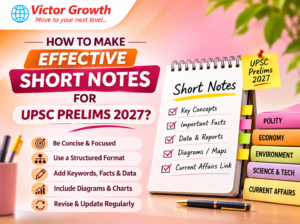
Prepare short notes: Record important definitions, facts, dates, and concepts for revision.
Practise questions: Solve topic-wise questions and UPSC previous-year questions.
Revise regularly: Revisit important chapters to improve retention.
5. Common Mistakes to Avoid While Studying NCERTs
Many aspirants spend too much time reading textbooks without connecting them to the UPSC syllabus. Avoid these common mistakes:
Reading every NCERT textbook without prioritising relevant chapters.
Memorising facts without understanding concepts.
Ignoring maps, diagrams, tables, and illustrations.
Studying NCERTs without practising previous-year questions.
Collecting too many books and repeatedly changing study materials.
Ignoring current affairs after completing static subjects.
Remember, NCERT books are the foundation of preparation, not the complete source for UPSC Prelims.
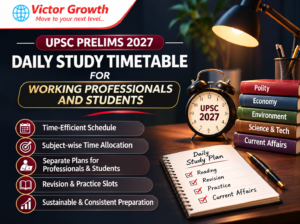
6. NCERT-Based Study Plan for UPSC Prelims 2027
A simple weekly plan can help candidates cover the important NCERT subjects systematically.
Day | Subject |
|---|---|
Monday | History |
Tuesday | Geography |
Wednesday | Indian Polity |
Thursday | Indian Economy |
Friday | Science |
Saturday | Environment |
Sunday | Revision and practice questions |
Try to spend around 1–2 hours daily on NCERT preparation, depending on your overall study schedule. Complete the basic reading first and then move towards advanced books and current affairs.
7. The Role of Coaching and Proper Guidance
A structured preparation strategy can help aspirants use NCERT books more effectively. Experienced faculty can guide students in identifying important chapters, understanding difficult concepts, and connecting static subjects with current affairs.
When searching for the best NDA coaching in Kerala, students should consider faculty experience, study materials, regular tests, and individual support. However, NDA and UPSC Civil Services have different examination patterns, so UPSC aspirants should choose guidance specifically designed for Civil Services preparation.
Frequently Asked Questions (FAQs)
1. Are NCERT books enough for UPSC Prelims 2027?
No. NCERT books provide a strong foundation, but aspirants also need standard reference books, current affairs, previous-year questions, and mock tests.
2. Which NCERT subjects should I study first for UPSC?
History, Geography, Polity, Economy, and Science are good starting points. You can then cover relevant Environment and Society topics.
3. Should I read NCERT books from Class 6 to 12?
You do not need to read every chapter from every class. Select books and chapters according to the UPSC syllabus and your existing knowledge.
4. How many times should I read NCERT books?
Read each relevant chapter carefully at least once, then revise important concepts and notes two or three times based on your retention.
5. Can beginners start UPSC preparation with NCERT books?
Yes. NCERT textbooks are particularly useful for beginners because they explain fundamental concepts in simple language.
6. Should I make notes while reading NCERT books?
Yes. Prepare short and clear notes containing important concepts, facts, definitions, and diagrams. Avoid copying entire paragraphs.
Conclusion
NCERT books are an essential starting point for building a strong foundation for UPSC Prelims 2027. They help aspirants develop conceptual clarity, understand important subjects, and prepare for advanced study materials. However, NCERT preparation should be combined with current affairs, standard reference books, regular revision, and mock tests. With a structured study plan and consistent effort, aspirants can make their UPSC preparation more effective and organised.