
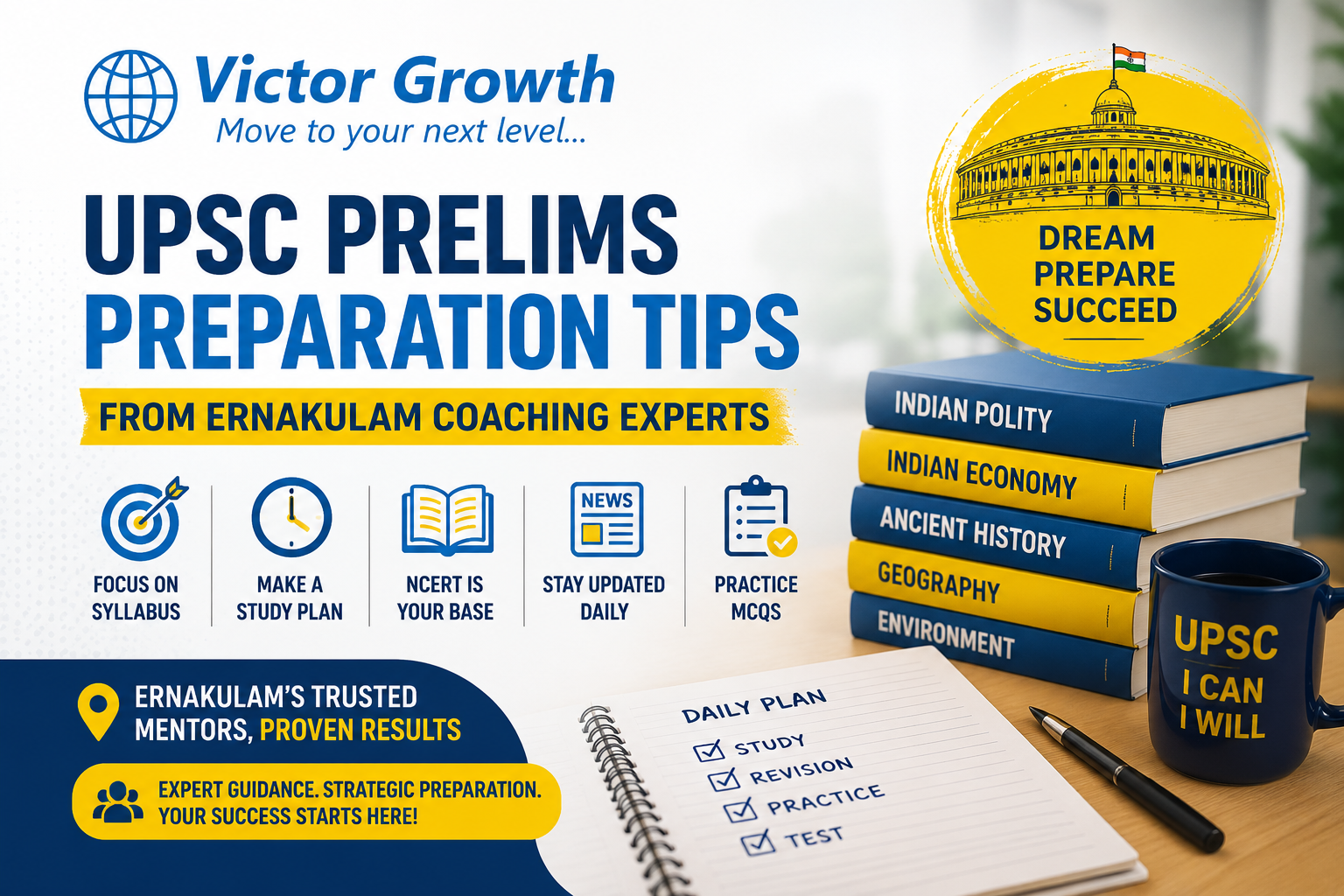
The UPSC Civil Services Preliminary Examination is the first and one of the most challenging stages of the UPSC selection process. Every year, lakhs of aspirants appear for the exam, but only a small percentage qualify for the Mains examination. According to experienced mentors and faculty members from the best IAS coaching in Kerala, success in UPSC Prelims depends on consistency, smart strategy, revision, and effective test practice rather than simply studying for long hours.
Ernakulam has become one of Kerala’s leading centers for civil services preparation, with many successful candidates attributing their Prelims success to structured mentorship, disciplined preparation, and regular mock tests. Coaching experts in Ernakulam emphasize that UPSC Prelims preparation requires conceptual clarity, current affairs awareness, and strong elimination skills.
This article provides detailed and practical UPSC Prelims preparation tips recommended by coaching experts in Ernakulam.
Understanding the UPSC Prelims Examination
UPSC Prelims consists of two papers:
General Studies Paper I
This paper determines qualification for the Mains examination.
Subjects Covered:
- History
- Geography
- Indian Polity
- Economy
- Environment & Ecology
- Science & Technology
- Current Affairs
CSAT (Paper II)
CSAT is qualifying in nature.
Areas Covered:
- Comprehension
- Logical reasoning
- Quantitative aptitude
- Decision making
- Basic numeracy
Although qualifying, many aspirants underestimate CSAT and fail to clear the cutoff.
Start with the UPSC Syllabus and Previous Year Questions
One of the first recommendations from faculty members at the best IAS coaching in Kerala is to thoroughly understand the UPSC syllabus and analyze previous year question papers.
Why This Is Important:
- Helps identify important topics
- Avoids unnecessary study
- Understands UPSC trends
- Improves preparation direction
Experts recommend analyzing at least the last 10 years of Prelims question papers.
Build a Strong Foundation with NCERT Books
NCERT textbooks are considered the backbone of UPSC preparation.
Recommended Subjects:
- History
- Geography
- Economics
- Polity
- Science
- Sociology
Benefits of NCERTs:
- Easy language
- Conceptual clarity
- Useful for beginners
- Important for static subjects
Most toppers from Kerala begin their preparation with NCERT books before moving to advanced resources.
Follow Limited Standard Books
A major mistake many aspirants make is referring to too many sources.
Coaching experts in Ernakulam strongly advise sticking to standard books such as:
Recommended Books:
- Indian Polity – M. Laxmikanth
- Spectrum Modern History
- Ramesh Singh Economy
- Shankar IAS Environment
- G.C. Leong Geography
Why Limited Sources Matter:
- Better revision
- Reduced confusion
- Improved retention
- Faster preparation
Revision is more important than collecting excessive materials.
Master Current Affairs Preparation
Current affairs play a decisive role in UPSC Prelims.
Important Sources:
- The Hindu
- Indian Express
- PIB
- Monthly current affairs compilations
- Government reports
- Budget and Economic Survey
Expert Tips:
- Read newspapers daily
- Make short notes
- Focus on issue-based learning
- Revise monthly current affairs regularly
Students preparing under the guidance of the best IAS coaching in Kerala often receive structured current affairs support and analysis.
Develop a Smart Revision Strategy
According to Ernakulam coaching experts, revision is the key to clearing Prelims.
Ideal Revision Strategy:
- Daily revision of studied topics
- Weekly revision schedules
- Monthly full syllabus revision
- Short note preparation
- Highlighting important facts
Most successful candidates revise standard books multiple times before the examination.
Practice Mock Tests Regularly
Mock tests are one of the most important components of UPSC Prelims preparation.
Benefits of Mock Tests:
- Improves time management
- Develops elimination techniques
- Builds exam temperament
- Identifies weak areas
- Improves accuracy
Experts recommend:
- One mock test per week initially
- Increasing frequency closer to the exam
- Analyzing mistakes after every test
Many coaching institutes in Ernakulam conduct detailed Prelims test series with performance analysis.
Learn the Art of Elimination
UPSC questions are often analytical and tricky. Elimination techniques help improve accuracy.
Common Elimination Methods:
- Removing extreme statements
- Identifying factual errors
- Comparing options carefully
- Using logical reasoning
Smart guessing can significantly improve scores in Prelims.
Focus on High-Weightage Subjects
Some subjects consistently contribute more questions in UPSC Prelims.
Important Subjects:
- Polity
- Environment
- Economy
- Current Affairs
- Modern History
- Geography
Experts suggest prioritizing these areas during revision.
Do Not Ignore CSAT Preparation
Many aspirants fail despite scoring well in General Studies because they neglect CSAT.
Important CSAT Areas:
- Reading comprehension
- Basic mathematics
- Logical reasoning
- Data interpretation
Expert Advice:
- Practice CSAT weekly
- Solve previous year papers
- Improve reading speed
- Focus on accuracy
Even students from non-mathematics backgrounds can clear CSAT through consistent practice.
Make Short Notes for Quick Revision
Short notes help during the final months before Prelims.
Useful Note-Making Areas:
- Current affairs
- Important constitutional articles
- Environment conventions
- Economic terms
- Geography facts
Benefits:
- Faster revision
- Better memory retention
- Easy last-minute preparation
Maintain Consistency in Preparation
One of the biggest lessons shared by successful candidates is consistency.
Daily Routine Suggestions:
- Fixed study hours
- Newspaper reading
- Revision time
- MCQ practice
- Answer analysis
Studying consistently for months is more effective than irregular long study sessions.
Avoid Common Mistakes in UPSC Prelims Preparation
1. Using Too Many Study Materials
This creates confusion and weakens revision.
2. Ignoring Previous Year Questions
PYQs reveal UPSC trends and important topics.
3. Neglecting Revision
Without revision, retention becomes weak.
4. Avoiding Mock Tests
Mock tests are essential for exam readiness.
5. Ignoring CSAT
Many capable candidates fail because of poor CSAT preparation.
Importance of Guidance and Mentorship
Experienced mentors can help aspirants:
- Avoid unnecessary materials
- Create realistic study plans
- Improve preparation strategy
- Stay motivated
- Track progress effectively
This is why many aspirants search for the best IAS coaching in Kerala to receive structured guidance and disciplined preparation support.
Role of Coaching Institutes in Ernakulam
Top coaching institutes in Ernakulam provide:
- Structured Prelims classes
- Daily current affairs support
- Test series programs
- Personal mentorship
- Doubt-clearing sessions
- Revision programs
The competitive environment and mentorship help aspirants stay focused throughout preparation.
Final 3-Month Strategy Before UPSC Prelims
Month 1:
- Complete pending syllabus
- Revise static subjects
- Practice sectional tests
Month 2:
- Full-length mock tests
- Intensive revision
- Current affairs consolidation
Month 3:
- Rapid revision
- Daily MCQ practice
- Focus on weak areas
- Avoid new study materials
Experts strongly recommend maintaining confidence and avoiding panic during the final stage.
Conclusion
UPSC Prelims preparation requires a combination of conceptual clarity, current affairs awareness, revision, and consistent mock test practice. The success strategies recommended by Ernakulam coaching experts emphasize discipline, smart planning, and focused preparation rather than random hard work.
Students searching for the best IAS coaching in Kerala should look for institutes that provide structured mentorship, quality test series, current affairs guidance, and continuous evaluation. With proper strategy and dedication, clearing UPSC Prelims becomes a realistic and achievable goal.
Frequently Asked Questions (FAQ)
How should beginners start UPSC Prelims preparation?
Beginners should start with the UPSC syllabus, NCERT textbooks, and previous year question papers before moving to advanced books.
Which books are best for UPSC Prelims?
Popular books include M. Laxmikanth for Polity, Spectrum for Modern History, Ramesh Singh for Economy, and Shankar IAS for Environment.
How important are current affairs in UPSC Prelims?
Current affairs are extremely important because many questions are directly or indirectly linked to contemporary events.
How many mock tests should I attempt before Prelims?
Most experts recommend attempting at least 30 to 50 quality mock tests before the examination.
Is coaching necessary for UPSC Prelims?
Coaching is not compulsory, but proper mentorship, test series, and structured preparation can significantly improve performance.
How can I improve accuracy in Prelims?
Accuracy improves through revision, mock tests, elimination techniques, and careful question analysis.
How many hours should I study daily for UPSC Prelims?
Most aspirants study between 6 to 10 productive hours daily depending on their preparation stage.
Is CSAT difficult to clear?
CSAT can be cleared with regular practice, especially in comprehension and logical reasoning.
What is the biggest mistake in UPSC Prelims preparation?
The biggest mistakes include lack of revision, ignoring mock tests, and using too many study resources.
How do coaching institutes in Ernakulam help UPSC aspirants?
They provide structured classes, expert mentorship, mock tests, current affairs support, and personalized preparation strategies.