1. Introduction
In January 2026, the United States conducted a direct military operation in Venezuela, codenamed “Operation Absolute Resolve”, resulting in the capture of President Nicolás Maduro, First Lady Cilia Flores, and senior officials.
This marked one of the most explicit US military interventions in Latin America in recent decades, signalling a revival of the Monroe Doctrine in a contemporary strategic context.
The operation has far-reaching implications for:
International law and sovereignty
Great power competition
Energy geopolitics
India’s foreign policy and strategic autonomy
2. Background: Venezuela’s Prolonged Crisis
(a) Political Crisis
Nicolás Maduro assumed power in 2013 after Hugo Chávez.
Repeated allegations of authoritarianism, electoral manipulation, and democratic backsliding.
2024 Venezuelan elections were widely questioned; the US and over 50 countries withdrew recognition of Maduro.
(b) Economic Collapse
Hyperinflation, currency collapse, and sanctions.
Nearly 8 million Venezuelans migrated, creating one of the largest displacement crises globally.
Oil production fell from:
3.5 million barrels/day (1990s)
to ~900,000 barrels/day (2025)
(c) Strategic Dependence
Maduro regime survived through:
Military loyalty
Support from Cuba, China, and Russia
Oil-for-loan arrangements, especially with China
3. Operation Absolute Resolve: What Happened?
Date: 3 January 2026
Target: Miraflores Palace, Caracas
Action: US Special Operations Forces extracted:
President Nicolás Maduro
First Lady Cilia Flores
Senior regime officials
Casualties
Over 80 casualties reported.
32 Cuban military personnel killed (Cuban forces were providing security assistance).
US Justification
Based on narco-terrorism charges filed earlier by the US Department of Justice.
Allegations that the Venezuelan state was complicit in drug trafficking networks.
4. Strategic Rationale Behind US Intervention
4.1 Revival of the Monroe Doctrine
Monroe Doctrine (1823)
Declared the Western Hemisphere off-limits to European powers.
Emphasised non-colonisation and non-interference.
Evolution
Roosevelt Corollary (1904):
Justified US intervention as an “international police power”.
Cold War: Used to counter Soviet influence (Cuba, Nicaragua).
Post–Cold War: Largely dormant.
“Trump Corollary” (2025–26)
Reasserts US primacy in the Americas.
Seeks to deny strategic space to China and Russia.
Frames intervention as a security necessity, not regime change.
4.2 Countering China and Russia
China is:
Venezuela’s largest oil buyer (~80%)
Major investor under Belt and Road Initiative
CNPC is the largest foreign operator in Venezuela’s oil sector.
Russia and Cuba provide:
Military training
Intelligence support
➡️ US perceives Venezuela as a strategic outpost of rival powers in its traditional sphere of influence.
4.3 Oil and Energy Geopolitics
Venezuela holds over 300 billion barrels of proven crude oil reserves
(~17–20% of global reserves).Trump publicly demanded the return of “stolen American oil assets”.
US aims to:
Reduce dependence on Middle Eastern oil
Limit China’s energy access
Reinsert US oil companies into Venezuela
4.4 Narco-Terrorism Narrative
US indicted Maduro for:
Drug trafficking conspiracy
Using state infrastructure for narcotics trade
Framed Venezuela as:
A state-sponsored narco-terrorist entity
Linked to US domestic drug crisis (fentanyl)
➡️ This narrative provided legal and political cover for intervention.
5. International Law and Legal Controversies
5.1 UN Charter Provisions
Article 2(4): Prohibits use of force against another state.
Article 51: Allows self-defence only in case of armed attack.
UNSC Authorisation: No explicit Security Council approval obtained.
US Argument
Claims self-defence against state-linked narco-terrorism.
Argues that since the US does not recognise Maduro as legitimate, sovereignty protections are weakened.
Criticism
ICJ precedent favours strict interpretation of self-defence.
Narco-terrorism does not clearly meet the armed attack threshold.
6. Regional and Global Reactions
Latin America: Mexico, Colombia, Cuba expressed concern over sovereignty erosion.
Global South: Fear of precedent for unilateral intervention.
Multipolar Order: Raises questions about selective application of international law.
7. India’s Position on the Crisis
Official Response (4 January 2026)
Expressed “deep concern”
Emphasised:
Peaceful dialogue
Well-being of Venezuelan people
Respect for sovereignty
Consistency with India’s Foreign Policy
Non-intervention
UN Charter principles
Strategic autonomy
8. Impact of the Conflict on India
8.1 Trade and Economy
Minimal impact:
India–Venezuela trade already reduced due to sanctions.
Exports in FY2025: USD 95.3 million (mainly pharmaceuticals).
8.2 Energy Security
Oil imports declined by 81.3% in FY2025.
Short-term impact negligible.
Long-term possibility:
Sanctions easing could allow discounted Venezuelan crude
Enhances diversification and bargaining power
8.3 Strategic Autonomy Challenge
India must balance:
Partnership with the US
Solidarity with Global South norms
Opposition to unilateral regime change
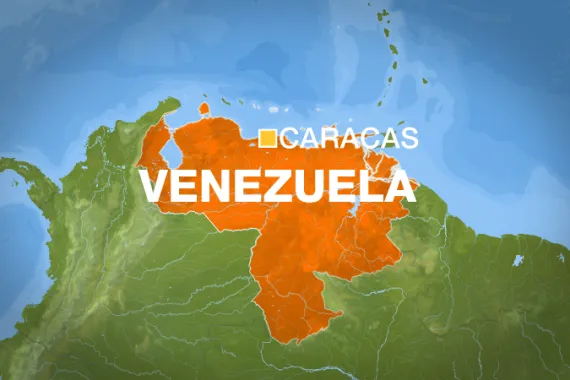
9. Venezuela: Strategic and Geographical Importance (Prelims Ready)
Location: Northern South America
Borders: Colombia, Brazil, Guyana
Capital: Caracas
Resources: Oil, gas, gold, iron ore
OPEC founding member
Key features:
Orinoco River
Lake Maracaibo
Andes Mountains
Angel Falls (world’s highest waterfall)
Territorial dispute: Essequibo region with Guyana
10. Conclusion
The US military intervention in Venezuela represents a decisive revival of the Monroe Doctrine under a new strategic framework. While the US justifies its action through security, narcotics control, and democratic restoration, the operation raises serious concerns about sovereignty, international law, and global power asymmetries.
For India, the episode reinforces the importance of:
Strategic autonomy
Multilateralism
Peaceful conflict resolution
In a multipolar world, such unilateral actions risk undermining global stability and the credibility of international legal norms.