
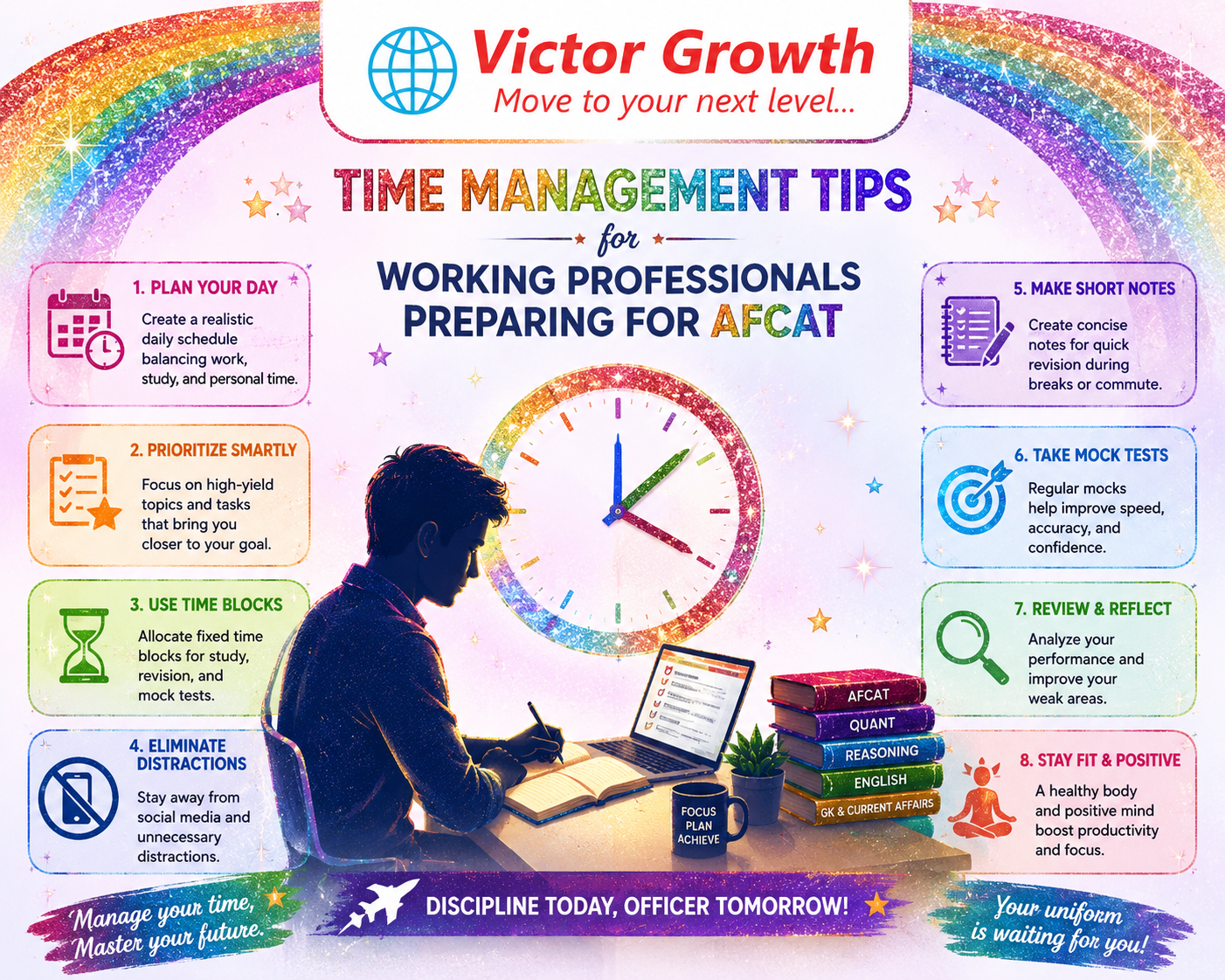
A Complete Guide to Balancing Work and AFCAT Preparation Successfully
Preparing for the Air Force Common Admission Test (AFCAT) while managing a full-time job can be challenging. Long working hours, commuting, family responsibilities, and workplace commitments often leave limited time for focused study. However, every year, many working professionals successfully clear AFCAT and achieve their dream of joining the Indian Air Force.
The key to success is not necessarily studying for long hours but studying smartly with proper planning, consistency, and effective time management. This is where guidance from the best AFCAT coaching in Kerala can play a vital role by helping working professionals follow structured study plans and maximize productivity.
This comprehensive guide provides practical and proven time management strategies for working professionals preparing for AFCAT while balancing their professional and personal commitments.
Why Time Management Is Crucial for Working Professionals
Unlike full-time students, working professionals face several challenges:
- Limited study hours
- Job-related stress
- Frequent travel
- Family responsibilities
- Lack of regular study schedules
Without proper time management, even highly motivated candidates struggle to complete the AFCAT syllabus on time.
Effective time management helps candidates:
- Complete the syllabus systematically
- Reduce stress
- Improve consistency
- Increase productivity
- Maintain work-study balance
Understanding AFCAT Preparation Requirements
Before creating a study plan, candidates must understand what needs to be prepared.
The AFCAT examination consists of:
General Awareness
- Current Affairs
- History
- Geography
- Polity
- Science
- Defence Knowledge
Verbal Ability in English
- Grammar
- Vocabulary
- Reading Comprehension
Numerical Ability
- Arithmetic
- Algebra
- Data Interpretation
Reasoning and Military Aptitude
- Logical Reasoning
- Analytical Ability
- Spatial Ability
In addition to the written examination, candidates must also prepare for:
- AFSB Interview
- Psychological Tests
- Group Tasks
- Personal Interview
A structured approach is therefore essential.
Common Challenges Faced by Working Professionals
Lack of Time
Most professionals work 8–10 hours daily, leaving limited time for study.
Irregular Schedule
Work deadlines and meetings can disrupt study plans.
Mental Fatigue
After work, concentration levels often decrease.
Inconsistent Preparation
Frequent breaks can result in loss of momentum.
The best AFCAT coaching in Kerala often helps working professionals overcome these challenges through customized study plans and flexible learning schedules.
Time Management Tips for AFCAT Preparation
1. Create a Realistic Study Plan
One of the biggest mistakes candidates make is creating unrealistic schedules.
Avoid plans like:
- Studying 6–8 hours daily after work
- Completing large portions of the syllabus in a few days
Instead:
Weekdays
- 2–3 hours of focused study
Weekends
- 5–8 hours of intensive preparation
Consistency is more important than studying excessively for a few days.
2. Identify Your Most Productive Hours
Every individual has peak productivity periods.
Morning Learners
Study before office hours.
Evening Learners
Study after work.
Night Learners
Utilize late-night hours effectively.
Choose a schedule that matches your energy levels.
3. Follow the 80/20 Rule
The Pareto Principle suggests that 20% of topics often contribute to 80% of results.
Focus on:
General Awareness
- Current Affairs
- Defence News
English
- Vocabulary
- Grammar
Numerical Ability
- Frequently asked topics
Reasoning
- High-scoring question types
This strategy improves efficiency.
4. Use Micro Study Sessions
Many working professionals underestimate short study periods.
Utilize:
- Lunch breaks
- Commute time
- Waiting periods
- Tea breaks
Activities can include:
- Reading current affairs
- Learning vocabulary
- Solving reasoning questions
Small daily efforts accumulate significantly over time.
5. Prioritize Current Affairs Daily
General Awareness requires continuous preparation.
Spend:
20–30 Minutes Daily
Reading:
- National News
- International Events
- Defence Updates
- Science and Technology
Daily preparation prevents last-minute pressure.
6. Set Weekly Targets Instead of Daily Targets
Work schedules often vary.
Instead of rigid daily goals, focus on:
Weekly Goals
Example:
- Complete one reasoning chapter
- Solve two mock tests
- Revise current affairs
Weekly targets provide flexibility while maintaining progress.
7. Follow a Subject Rotation Strategy
Studying the same subject daily can lead to boredom.
A better approach:
Monday
English
Tuesday
Reasoning
Wednesday
Numerical Ability
Thursday
General Awareness
Friday
Revision
Saturday
Mock Test
Sunday
Performance Analysis
This improves engagement and retention.
8. Avoid Excessive Study Materials
Many aspirants collect numerous books and online resources.
This often causes:
- Confusion
- Information overload
- Lack of revision
Experts from the best AFCAT coaching in Kerala recommend using:
- One AFCAT guide
- One current affairs source
- One mock test series
Mastering a few resources is more effective than skimming many.
9. Utilize Weekends Effectively
Weekends provide the best opportunity for focused preparation.
Suggested weekend activities:
Full-Length Mock Tests
Revision Sessions
Current Affairs Compilation
AFSB Preparation
Weak Area Improvement
Weekends should be treated as high-productivity study days.
10. Practice Mock Tests Regularly
Mock tests help:
- Improve speed
- Enhance accuracy
- Build confidence
- Develop exam temperament
Working professionals should attempt:
One Full-Length Mock Test Weekly
And gradually increase frequency closer to the examination.
11. Minimize Digital Distractions
Social media consumes significant preparation time.
Common distractions include:
- YouTube
- Gaming
Consider:
- App blockers
- Study mode applications
- Scheduled social media usage
Focused study sessions produce better results.
12. Maintain a Revision Schedule
Without revision, information retention declines rapidly.
Daily Revision
15–20 minutes
Weekly Revision
1–2 hours
Monthly Revision
Comprehensive review
Revision should be integrated into the study plan.
13. Focus on Quality Over Quantity
Success in AFCAT does not depend on studying for 10 hours daily.
Instead focus on:
- Concentration
- Consistency
- Understanding
- Practice
Two productive hours are often more valuable than six distracted hours.
14. Start AFSB Preparation Early
Many candidates wait until after clearing the written exam.
This is a mistake.
Prepare simultaneously for:
- Communication Skills
- Group Discussions
- Current Affairs
- Psychological Tests
Early preparation reduces pressure later.
15. Take Care of Physical Fitness
Indian Air Force selection includes medical standards and physical fitness expectations.
Working professionals should:
Exercise Regularly
- Running
- Walking
- Strength Training
Maintain Healthy Habits
- Proper sleep
- Balanced diet
- Stress management
Fitness improves both productivity and selection readiness.
Sample AFCAT Study Plan for Working Professionals
Weekdays
Morning (6:00–7:00 AM)
- Current Affairs
- Vocabulary
Evening (8:00–10:00 PM)
- Core Subject Preparation
Saturday
Morning
Mock Test
Evening
Performance Analysis
Sunday
Morning
Weak Area Improvement
Evening
Revision and Planning
This schedule allows steady progress without affecting work performance.
How the Best AFCAT Coaching in Kerala Helps Working Professionals
Professional coaching institutes often provide:
Flexible Timings
Weekend and evening batches.
Recorded Sessions
Learn at your convenience.
Structured Study Plans
Customized for working candidates.
Mock Tests
Regular evaluation and performance tracking.
AFSB Training
Integrated preparation for interview stages.
Expert Mentorship
Guidance for balancing work and preparation.
These features make preparation more manageable for employed candidates.
Common Mistakes Working Professionals Must Avoid
- Waiting for the “perfect time” to start preparation
- Studying only on weekends
- Ignoring current affairs
- Neglecting revision
- Skipping mock tests
- Using too many study materials
- Ignoring physical fitness
- Delaying AFSB preparation
Avoiding these mistakes significantly improves selection chances.
Conclusion
Preparing for AFCAT while working full-time is undoubtedly challenging, but it is entirely achievable with the right strategy. Success depends on effective time management, disciplined study habits, regular revision, mock test practice, and consistent effort.
Working professionals do not need to study all day; they need to study smartly and consistently. By following a structured schedule and seeking guidance from the best AFCAT coaching in Kerala, candidates can efficiently balance their careers while pursuing their dream of becoming officers in the Indian Air Force.
Remember, small daily efforts combined with disciplined execution can lead to extraordinary results. Your job may pay your bills today, but your AFCAT preparation can shape your future career as an Air Force officer.
Frequently Asked Questions (FAQs)
1. Can a working professional crack AFCAT?
Yes. Many working professionals successfully clear AFCAT every year through disciplined preparation and effective time management.
2. How many hours should a working professional study daily for AFCAT?
Ideally, 2–3 focused hours on weekdays and 5–8 hours on weekends are sufficient.
3. Is weekend preparation alone enough for AFCAT?
No. Daily study, even for short durations, is essential for consistent progress.
4. How can I prepare current affairs while working?
Use commute time, lunch breaks, and daily 20–30 minute reading sessions to stay updated.
5. Should working professionals join AFCAT coaching?
Professional coaching can provide structure, expert guidance, mock tests, and flexible learning options.
6. When should I start AFCAT preparation?
It is advisable to begin at least 4–6 months before the examination.
7. How important are mock tests for working professionals?
Mock tests are extremely important for improving speed, accuracy, and exam readiness.
8. Can I prepare for AFSB along with the written exam?
Yes. Early AFSB preparation improves confidence and overall selection chances.
9. How can I manage stress during AFCAT preparation?
Maintain a balanced schedule, exercise regularly, get adequate sleep, and avoid last-minute preparation.
10. Why should I choose the best AFCAT coaching in Kerala?
The best AFCAT coaching in Kerala offers flexible schedules, expert faculty, mock tests, study materials, AFSB guidance, and personalized mentoring, helping working professionals balance their careers while preparing effectively for AFCAT.