
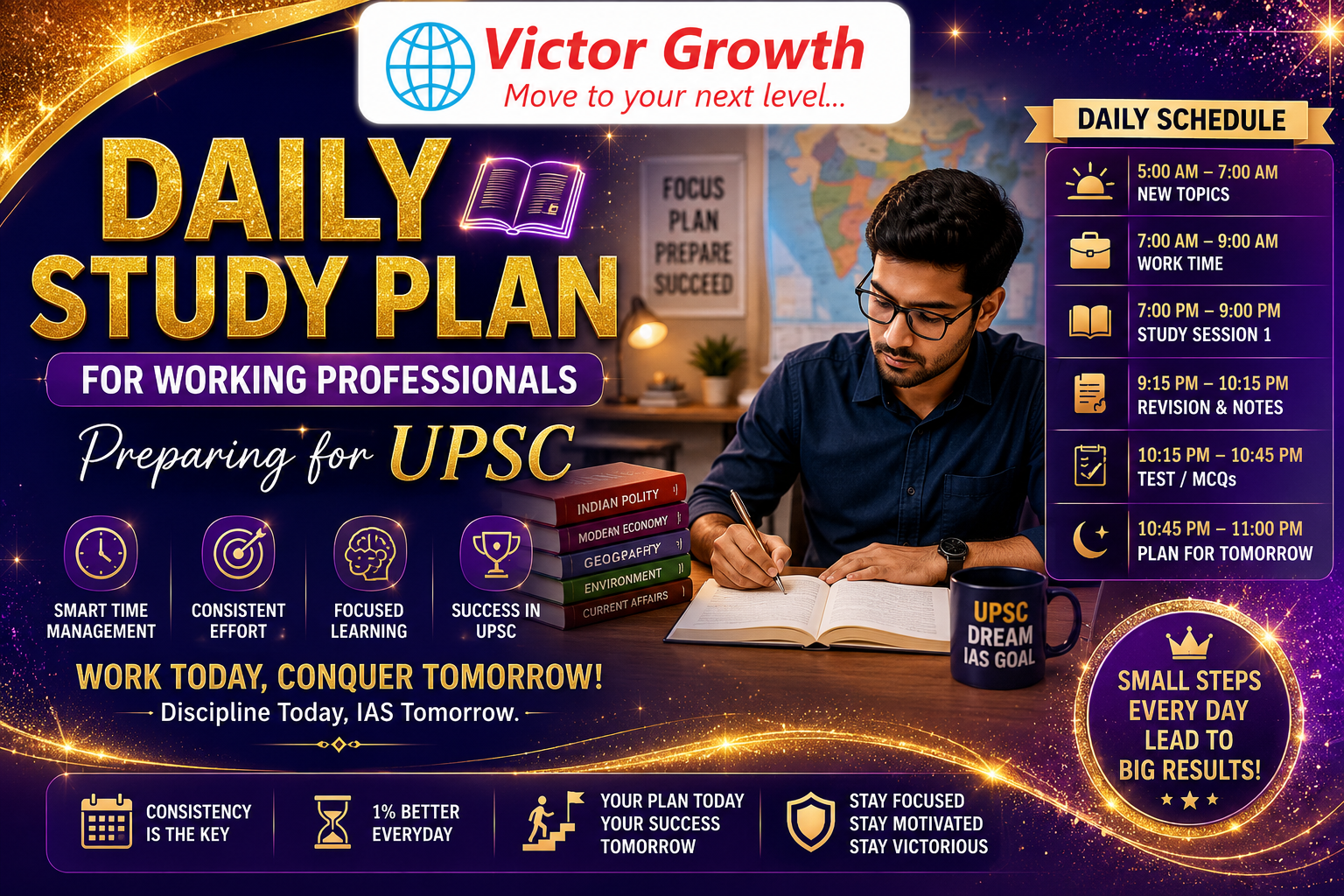
Preparing for the UPSC Civil Services Examination while managing a full-time job may seem challenging, but thousands of successful candidates have proved that it is possible with discipline, smart planning, and consistent effort. The key is not studying for 10-12 hours a day; instead, it is making the most of the limited time available.
If you are searching for the best IAS coaching in Kerala, this comprehensive guide will help you create a practical daily study plan that balances your professional commitments and UPSC preparation effectively.
Why Working Professionals Have an Advantage in UPSC
Many aspirants believe that quitting their jobs is necessary to crack UPSC. In reality, working professionals often possess several advantages:
- Better discipline and time management
- Financial stability
- Higher maturity in decision making
- Practical understanding of administration
- Strong work ethics
- Less dependency on others
Many successful IAS, IPS, and IFS officers have cleared the examination while working full-time.
Understanding the UPSC Exam Before Planning
The UPSC Civil Services Examination consists of three stages:
Stage 1: Preliminary Examination
- General Studies Paper I
- CSAT (Qualifying)
Focus Areas
- History
- Geography
- Economy
- Polity
- Environment
- Science & Technology
- Current Affairs
Stage 2: Main Examination
Nine descriptive papers including:
- Essay
- Ethics
- General Studies I-IV
- Optional Subject
- Language Papers
Stage 3: Personality Test
Interview conducted by UPSC Board.
Biggest Challenges Faced by Working Professionals
Most professionals struggle because of:
- Lack of study hours
- Office stress
- Long commuting
- Family responsibilities
- Weekend social commitments
- Inconsistent revision
The solution is not studying longer—it is studying smarter.
Ideal Daily Study Hours
For working professionals:
| Day | Study Hours |
|---|---|
| Weekdays | 3–4 hours |
| Saturdays | 6–8 hours |
| Sundays | 8–10 hours |
Weekly Target
Approximately 30–35 productive hours.
Consistency matters far more than occasional marathon study sessions.
Sample Daily Study Plan (Morning Shift Employees)
Morning (5:00 AM – 7:00 AM)
5:00–5:20
- Wake up
- Freshen up
- Meditation
- Light exercise
5:20–6:20
Core Subject Study
Examples:
- Polity
- Economy
- Geography
- History
Focus on conceptual understanding.
6:20–7:00
Revision of previous day’s topics.
During Commute
Use travel time wisely.
Listen to:
- PIB summaries
- Newspaper analysis
- Government schemes
- Rajya Sabha TV discussions
- UPSC podcasts
Avoid wasting commuting hours on social media.
Lunch Break (20–30 Minutes)
Read:
- Current Affairs
- Newspaper editorials
- Monthly magazine notes
Evening (7 PM–9 PM)
7–8 PM
Practice
- MCQs
- Answer Writing
- Optional Subject
8–9 PM
Current Affairs
- Newspaper
- Government reports
- Monthly revision
Before Sleeping
Spend 15 minutes revising what you learned throughout the day.
Sample Schedule for Night Shift Employees
If your office timing differs:
Morning after work
- Sleep
Afternoon
- Study 2 hours
Evening
- Current Affairs
Weekend
- Long study sessions
- Mock tests
- Revision
Adjust the schedule according to your energy levels rather than sticking to fixed clock times.
Weekend Study Plan
Saturday
Morning
- General Studies
Afternoon
- Optional Subject
Evening
- Mock Test
Night
- Revision
Sunday
Morning
- Full-Length Test
Afternoon
- Test Analysis
Evening
- Current Affairs
Night
- Weekly Revision
Monthly Study Plan
Week 1
- Polity
- Economy
Week 2
- Geography
- Environment
Week 3
- Modern History
- Ancient History
Week 4
- Science & Technology
- Current Affairs Revision
- Mock Tests
Time Allocation for Subjects
| Subject | Hours per Week |
|---|---|
| Polity | 5 |
| Economy | 4 |
| Geography | 4 |
| History | 4 |
| Environment | 3 |
| Science & Technology | 2 |
| Ethics | 2 |
| Essay | 2 |
| Optional Subject | 8 |
| Current Affairs | 6 |
Golden Rule: Morning is for Learning
Morning hours should be reserved for:
- New concepts
- Difficult subjects
- NCERTs
- Standard books
Avoid social media before studying.
Evening is for Practice
Evening sessions should focus on:
- MCQs
- PYQs
- Answer Writing
- Revision
Never spend the entire evening reading new material.
Best Daily Newspaper Strategy
Spend no more than 45–60 minutes.
Read:
- National News
- International Relations
- Economy
- Editorials
- Government Schemes
- Supreme Court Judgments
- Parliament Updates
Avoid:
- Political gossip
- Crime news
- Celebrity news
- Sports (unless relevant)
Current Affairs Plan
Daily
- Newspaper
- PIB highlights
Weekly
- Revision
Monthly
- Current Affairs magazine
- Government reports
Every 3 Months
- Complete revision
Answer Writing Strategy
Start from Day 1.
Daily Target
- 2 GS answers
- 1 Optional answer
- 1 Ethics case study every week
Time yourself exactly like the examination.
MCQ Practice
Daily
20–30 questions
Weekly
100 questions
Monthly
500+ questions
Always analyze your mistakes.
Revision Strategy
The 3-7-30 Rule works well.
Revise:
- After 3 days
- After 7 days
- After 30 days
This significantly improves long-term retention.
Best Books for Working Professionals
Polity
- M. Laxmikanth
History
- Spectrum Modern India
Geography
- NCERTs
- G.C. Leong
Economy
- Basic NCERTs
- Standard Economy textbook
Environment
- Standard Environment book
- Government reports
Ethics
- Lexicon
- Case Studies
Current Affairs
- Newspaper
- PIB
- Monthly magazines
Stick to a limited number of trusted resources instead of collecting too many books.
Digital Resources to Save Time
Working professionals should maximize technology.
Useful resources include:
- Recorded classes
- Mobile learning apps
- Digital notes
- Flashcards
- Mind maps
- Online mock tests
- Cloud-based note-taking
These help you continue preparation during commutes, breaks, and travel.
Common Mistakes Working Professionals Must Avoid
- Waiting for “free time” to study
- Ignoring revision
- Reading too many books
- Not practicing answer writing
- Skipping mock tests
- Studying only on weekends
- Frequently changing study plans
- Comparing preparation with full-time aspirants
- Ignoring sleep and health
- Quitting the job without a well-thought-out plan
Productivity Tips
- Study before office whenever possible.
- Keep concise notes for quick revision.
- Use commute time for audio learning.
- Follow a fixed timetable.
- Maintain a daily checklist.
- Solve one mock test every week.
- Revise every Sunday.
- Aim for consistency rather than perfection.
How Coaching Helps Working Professionals
A structured coaching program can reduce the burden of planning and resource selection.
If you are looking for the best IAS coaching in Kerala, consider an institute that offers:
- Flexible online and offline classes
- Weekend batches
- Recorded lectures
- Daily current affairs support
- Personal mentorship
- Regular answer-writing practice
- Test series with detailed feedback
- Optional subject guidance
- Interview preparation
The right coaching institute helps working professionals stay accountable and make efficient use of their limited study time.
Why Choose Victor Growth?
For aspirants searching for the best IAS coaching in Kerala, Victor Growth provides a learner-centric approach designed for both full-time students and working professionals.
Key Features
- Experienced UPSC mentors
- Flexible online and offline batches
- Weekend classes for professionals
- Recorded video lectures for anytime learning
- Comprehensive printed and digital study material
- Daily current affairs and editorial analysis
- Prelims and Mains integrated preparation
- Regular mock tests and answer-writing evaluation
- One-to-one mentorship and performance tracking
- Interview guidance by experienced faculty
Whether you are managing a demanding career or family responsibilities, Victor Growth’s structured learning system enables you to prepare consistently without compromising your professional commitments.
Final Thoughts
Preparing for UPSC while working full-time is undoubtedly demanding, but it is entirely achievable with the right strategy. Focus on quality study sessions, disciplined revision, consistent practice, and efficient time management rather than counting study hours. Even 3–4 focused hours on weekdays, supplemented by productive weekends, can lead to success over time.
If you are searching for the best IAS coaching in Kerala, choose an institute that understands the unique challenges of working professionals and offers flexible learning, mentorship, and continuous guidance to keep your preparation on track.
Frequently Asked Questions (FAQs)
1. Can a working professional crack the UPSC exam?
Yes. Many successful IAS, IPS, and IFS officers have cleared the UPSC examination while working full-time. Consistency and smart planning are more important than studying long hours.
2. How many hours should a working professional study daily for UPSC?
A practical target is 3–4 focused hours on weekdays and 6–10 hours on weekends, resulting in approximately 30–35 productive study hours per week.
3. Is quitting a job necessary for UPSC preparation?
Not necessarily. Unless your work schedule makes preparation impossible, many candidates successfully balance employment and UPSC studies. Financial stability can also reduce stress during preparation.
4. Which is the best time to study for UPSC while working?
Early morning is generally the most productive time for learning new concepts, while evenings are ideal for revision, MCQ practice, and answer writing.
5. How should I prepare for current affairs with a busy schedule?
Read a quality newspaper for 45–60 minutes daily, revise weekly, and use monthly current affairs compilations. Listening to podcasts or news analysis during your commute can also save time.
6. Should working professionals join IAS coaching?
Coaching is not mandatory, but it can provide structure, mentorship, mock tests, and expert guidance. Flexible weekend and online programs are especially useful for working professionals.
7. Which optional subject is best for working professionals?
The best optional is one that aligns with your interest, academic background, and availability of quality guidance and study resources. There is no universally “easy” optional subject.
8. How often should I take mock tests?
Aim for one Prelims mock test every week during the preparation phase and regular Mains answer-writing practice. Analyze every test thoroughly to identify areas for improvement.
9. How can I stay motivated throughout UPSC preparation?
Set weekly goals, track your progress, maintain a healthy routine, celebrate small milestones, and stay connected with mentors or study groups for accountability.
10. What should I look for in the best IAS coaching in Kerala?
Look for experienced faculty, flexible class schedules, recorded lectures, comprehensive study materials, regular test series, personal mentorship, current affairs support, and a strong track record of guiding aspirants toward UPSC success.