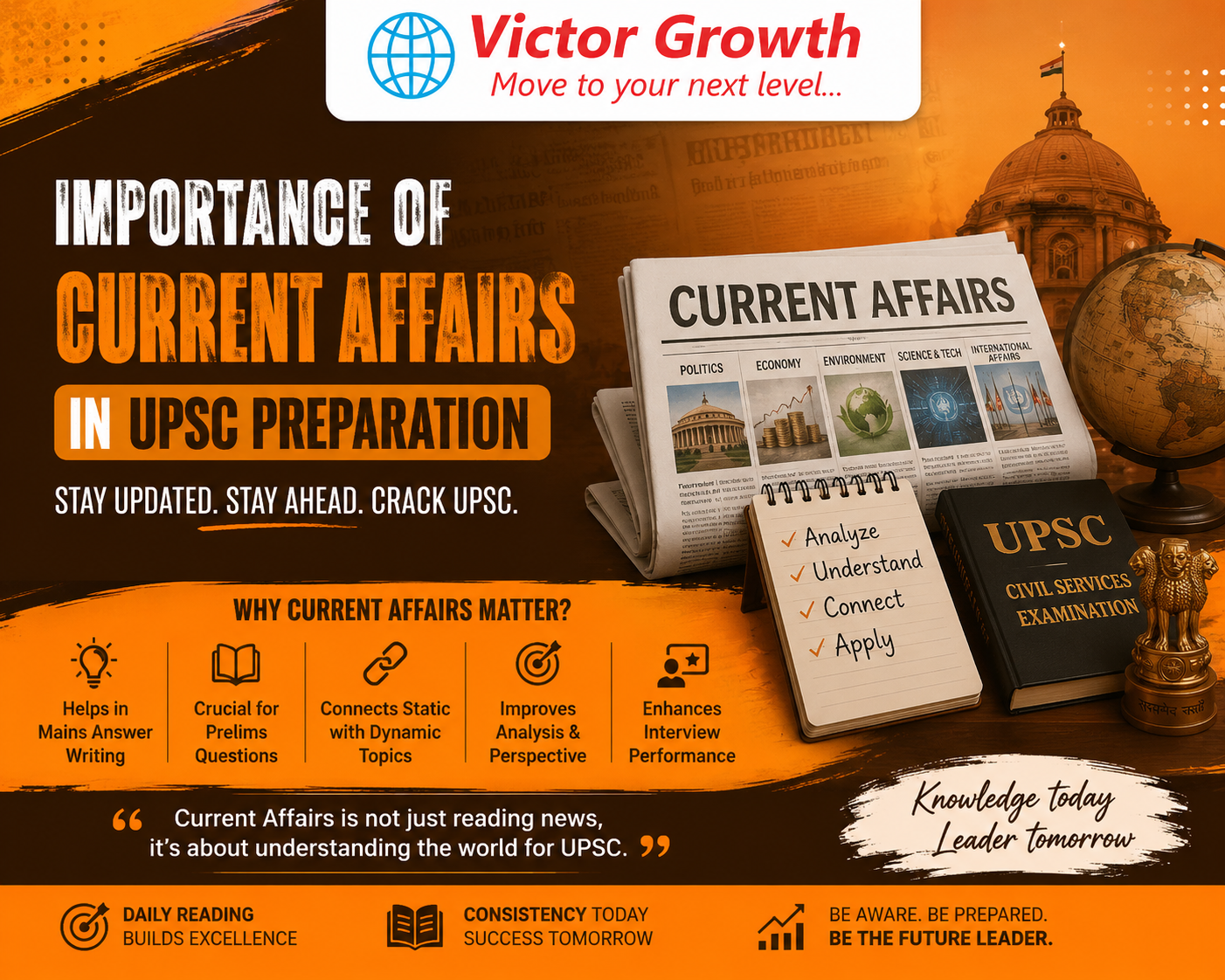
Current Affairs is the backbone of the UPSC Civil Services Examination. Unlike many competitive exams that focus mainly on static knowledge, UPSC evaluates an aspirant’s awareness of national and international developments, analytical thinking, decision-making ability, and understanding of governance. Whether it is the Preliminary Examination, Mains, or the Personality Test, current affairs influence every stage of the selection process.
If you are searching for the best IAS coaching in Kerala, understanding how to effectively prepare current affairs can significantly improve your chances of securing a top rank. This comprehensive guide explains why current affairs are important, how to study them efficiently, the best sources to follow, and strategies to integrate them into your daily UPSC preparation.
Why Current Affairs Matter in UPSC
UPSC is not merely a knowledge-based examination; it is an assessment of your ability to understand and analyze issues affecting India and the world.
Current affairs help aspirants:
- Understand government policies and governance
- Develop analytical and critical thinking
- Improve answer-writing quality
- Connect static subjects with contemporary developments
- Build balanced opinions for the Interview
- Enhance essay-writing with real-life examples
A well-prepared aspirant is expected to know not just what happened, but also why it happened, its impact, challenges, and possible solutions.
Role of Current Affairs in Every Stage of UPSC
1. UPSC Preliminary Examination
Current affairs contribute significantly to the General Studies Paper I.
Questions are regularly asked from:
- Government schemes
- International organizations
- Economy
- Environment
- Science & Technology
- Awards and honours
- Reports and indices
- International relations
- Constitutional developments
- Important judgments
Many static questions are also framed using current contexts.
Example
Instead of asking directly about wetlands, UPSC may ask about a wetland that was recently included in the Ramsar List.
2. UPSC Mains Examination
Current affairs form the foundation of high-quality answers.
General Studies Paper I
- Society
- Geography
- Culture
- Social issues
General Studies Paper II
- Constitution
- Governance
- Parliament
- Judiciary
- International Relations
General Studies Paper III
- Economy
- Agriculture
- Internal Security
- Environment
- Disaster Management
- Science & Technology
General Studies Paper IV
- Ethics
- Integrity
- Case Studies
- Good Governance
Almost every answer becomes stronger when supported by recent examples, government initiatives, committee recommendations, reports, and current events.
3. Essay Paper
Current affairs provide:
- Contemporary examples
- Data
- Government initiatives
- International comparisons
- Real-life case studies
- Quotes from leaders and reports
These elements make essays more balanced, relevant, and impactful.
4. UPSC Personality Test (Interview)
The Interview board often asks questions about:
- Recent national developments
- International relations
- Economic reforms
- Government policies
- Your state
- Your profession
- Current debates
A well-informed candidate demonstrates maturity, awareness, and balanced judgment.
Static and Current Affairs: A Powerful Combination
One of the biggest mistakes aspirants make is studying static subjects and current affairs separately.
UPSC expects candidates to integrate both.
Example 1
Static Topic:
Indian Parliament
Current Affairs:
Recent Parliamentary reforms, legislative debates, or important Bills.
Example 2
Static Topic:
Environment
Current Affairs:
Climate conferences, biodiversity reports, renewable energy initiatives, or conservation projects.
Example 3
Static Topic:
Economy
Current Affairs:
Union Budget, Economic Survey, inflation trends, RBI policies, employment data.
Connecting static knowledge with current developments leads to better understanding and stronger answers.
Important Areas in Current Affairs
Every UPSC aspirant should focus on:
Polity
- Constitutional amendments
- Supreme Court judgments
- Election Commission
- Parliament
- Important Bills
- Governance reforms
Economy
- Budget
- Economic Survey
- Inflation
- RBI policies
- Banking reforms
- Fiscal policy
- Employment
- GDP trends
International Relations
- Bilateral relations
- Multilateral organizations
- Global conflicts
- Trade agreements
- India’s foreign policy
- International summits
Environment
- Climate change
- Biodiversity
- Wildlife conservation
- National parks
- Environmental reports
- COP meetings
Science & Technology
- Space missions
- Artificial Intelligence
- Biotechnology
- Digital governance
- Cybersecurity
- Health innovations
Social Issues
- Education
- Women empowerment
- Child welfare
- Poverty
- Health
- Nutrition
- Social justice
Internal Security
- Border security
- Cyber threats
- Terrorism
- Coastal security
- Disaster preparedness
Best Sources for Current Affairs
Newspapers
Read one quality newspaper daily.
Focus on:
- Editorials
- National news
- Economy
- International relations
- Science & Technology
- Environment
- Government initiatives
Avoid:
- Political gossip
- Crime stories
- Celebrity news
- Entertainment
PIB (Press Information Bureau)
PIB provides authentic information about:
- Government schemes
- Cabinet decisions
- Policy announcements
- Ministries
- Development programmes
Government Reports
Important reports include:
- Economic Survey
- Union Budget
- NITI Aayog reports
- India State of Forest Report
- National Family Health Survey
- SDG reports
Monthly Current Affairs Magazines
Monthly compilations help consolidate daily news and are especially useful for revision.
Yojana and Kurukshetra
These magazines are valuable for:
- Governance
- Rural development
- Social issues
- Inclusive growth
- Government initiatives
Daily Current Affairs Strategy
Morning (30–45 Minutes)
Read the newspaper.
Focus on:
- Editorials
- National issues
- Economy
- International relations
Afternoon
Read PIB highlights or government releases.
Evening
Revise the day’s notes.
Connect the news with static subjects.
Night
Attempt 10–15 MCQs based on current affairs.
Weekly Current Affairs Plan
Every weekend:
- Revise all news covered during the week.
- Prepare concise notes.
- Practice MCQs.
- Write 2–3 Mains answers using recent examples.
Monthly Current Affairs Plan
At the end of every month:
- Revise monthly compilations.
- Update subject-wise notes.
- Prepare important facts and data.
- Revise government schemes and reports.
- Solve previous years’ current affairs questions.
How to Make Effective Current Affairs Notes
Good notes should be:
- Short
- Subject-wise
- Easy to revise
- Updated regularly
For every topic, include:
- Background
- Current issue
- Challenges
- Government initiatives
- Constitutional provisions
- Committee recommendations
- Way forward
Avoid copying newspaper articles word for word.
How Current Affairs Improve Answer Writing
Current examples make answers richer and more analytical.
Instead of writing:
“Climate change affects agriculture.”
Write:
“Climate change has increased the frequency of extreme weather events, affecting agricultural productivity. Government initiatives promoting climate-resilient farming and sustainable irrigation aim to mitigate these challenges.”
Such answers demonstrate awareness, depth, and practical understanding.
Common Mistakes in Current Affairs Preparation
- Reading multiple newspapers every day
- Collecting excessive notes
- Ignoring revision
- Memorizing facts without understanding
- Focusing on sensational news
- Neglecting government reports
- Ignoring previous year questions
- Reading without linking topics to the UPSC syllabus
Remember: Quality is more important than quantity.
Time Management for Current Affairs
Ideal daily allocation:
| Activity | Time |
|---|---|
| Newspaper | 45–60 Minutes |
| PIB/Government Updates | 20 Minutes |
| Revision | 20 Minutes |
| MCQs | 20 Minutes |
Total: Approximately 1.5–2 hours daily.
Revision Strategy
Current affairs require continuous revision.
Follow this cycle:
- Daily revision
- Weekly revision
- Monthly revision
- Quarterly revision
- Final revision before Prelims and Mains
Repeated revision improves retention and recall.
Integration with Static Subjects
Current affairs should always complement static preparation.
Examples:
| Static Subject | Current Affairs Integration |
|---|---|
| Polity | Constitutional amendments, Supreme Court judgments |
| Economy | Budget, RBI policies, inflation |
| Geography | Climate events, disasters |
| Environment | Biodiversity reports, conservation initiatives |
| Science | Space missions, AI, biotechnology |
| Ethics | Governance examples, ethical dilemmas |
| Essay | Current examples, data, reports |
Digital Resources for Efficient Preparation
Working professionals and students can benefit from:
- Daily current affairs videos
- Editorial analysis
- Monthly PDF compilations
- Online quizzes
- Mobile learning apps
- Flashcards
- Government portals
These resources save time and improve revision.
How Coaching Helps in Current Affairs Preparation
Current affairs can be overwhelming because of the vast amount of information available every day. A structured coaching program filters relevant topics and provides systematic guidance.
If you are searching for the best IAS coaching in Kerala, choose an institute that offers:
- Daily newspaper analysis
- PIB summaries
- Monthly current affairs magazines
- Government report analysis
- Daily MCQs
- Mains answer-writing practice
- Editorial discussions
- Current affairs test series
- Integrated Prelims and Mains preparation
The right mentorship helps aspirants focus only on exam-relevant content and avoid information overload.
Why Choose Victor Growth?
For aspirants looking for the best IAS coaching in Kerala, Victor Growth provides a structured current affairs programme designed to simplify preparation and improve consistency.
Key Features
- Daily current affairs classes
- Editorial and newspaper analysis
- Monthly current affairs compilations
- PIB and government scheme coverage
- Prelims-focused MCQ practice
- Mains answer-writing sessions
- Essay guidance using current examples
- Personal mentorship
- Regular revision programmes
- Flexible online and offline learning options
Victor Growth integrates current affairs with General Studies, ensuring that aspirants develop the analytical skills required for every stage of the UPSC examination.
Final Thoughts
Current affairs are not an additional subject in UPSC—they are the thread that connects every aspect of the examination. From Prelims to Mains and the Interview, a strong command of current developments helps you write better answers, analyze issues critically, and perform confidently before the UPSC board.
The secret to mastering current affairs is consistency. Read daily, revise regularly, make concise notes, and integrate current events with static subjects. Over time, this habit will become one of your greatest strengths.
If you are searching for the best IAS coaching in Kerala, choose an institute that provides structured current affairs guidance, expert mentorship, and integrated preparation to help you stay ahead in your UPSC journey.
Frequently Asked Questions (FAQs)
1. Why are current affairs important for UPSC preparation?
Current affairs are essential because they influence all three stages of the UPSC examination—Prelims, Mains, and the Personality Test. They help candidates connect theoretical knowledge with real-world developments.
2. How much time should I spend on current affairs every day?
Most aspirants should spend 1.5 to 2 hours daily, including newspaper reading, government updates, revision, and practice questions.
3. Which newspaper is best for UPSC current affairs?
A reputed national newspaper with strong editorial coverage is generally sufficient. Consistency matters more than reading multiple newspapers.
4. Is reading the newspaper alone enough for UPSC?
No. Along with newspapers, aspirants should study PIB releases, government reports, monthly current affairs compilations, and practice MCQs and Mains answer writing.
5. How should I make current affairs notes?
Prepare concise, subject-wise notes covering the background, present issue, challenges, government initiatives, constitutional provisions, committee recommendations, and the way forward.
6. How many months of current affairs should I prepare before the UPSC exam?
Ideally, revise at least 12–18 months of relevant current affairs before the examination, while maintaining a strong understanding of ongoing developments.
7. Can I rely only on monthly current affairs magazines?
Monthly magazines are excellent for revision but should complement regular newspaper reading and conceptual understanding rather than replace them entirely.
8. How do current affairs help in UPSC Mains?
They provide recent examples, government initiatives, committee recommendations, reports, statistics, and case studies that make answers more analytical, balanced, and scoring.
9. How can working professionals manage current affairs preparation?
Use a fixed schedule—read the newspaper in the morning, revise key points in the evening, and utilize commute time for podcasts or editorial analysis. Weekend revision is equally important.
10. What should I look for in the best IAS coaching in Kerala for current affairs preparation?
Look for comprehensive newspaper analysis, PIB summaries, monthly current affairs booklets, integrated Prelims and Mains coverage, answer-writing guidance, regular tests, and experienced mentors who help you focus on exam-relevant issues rather than information overload.