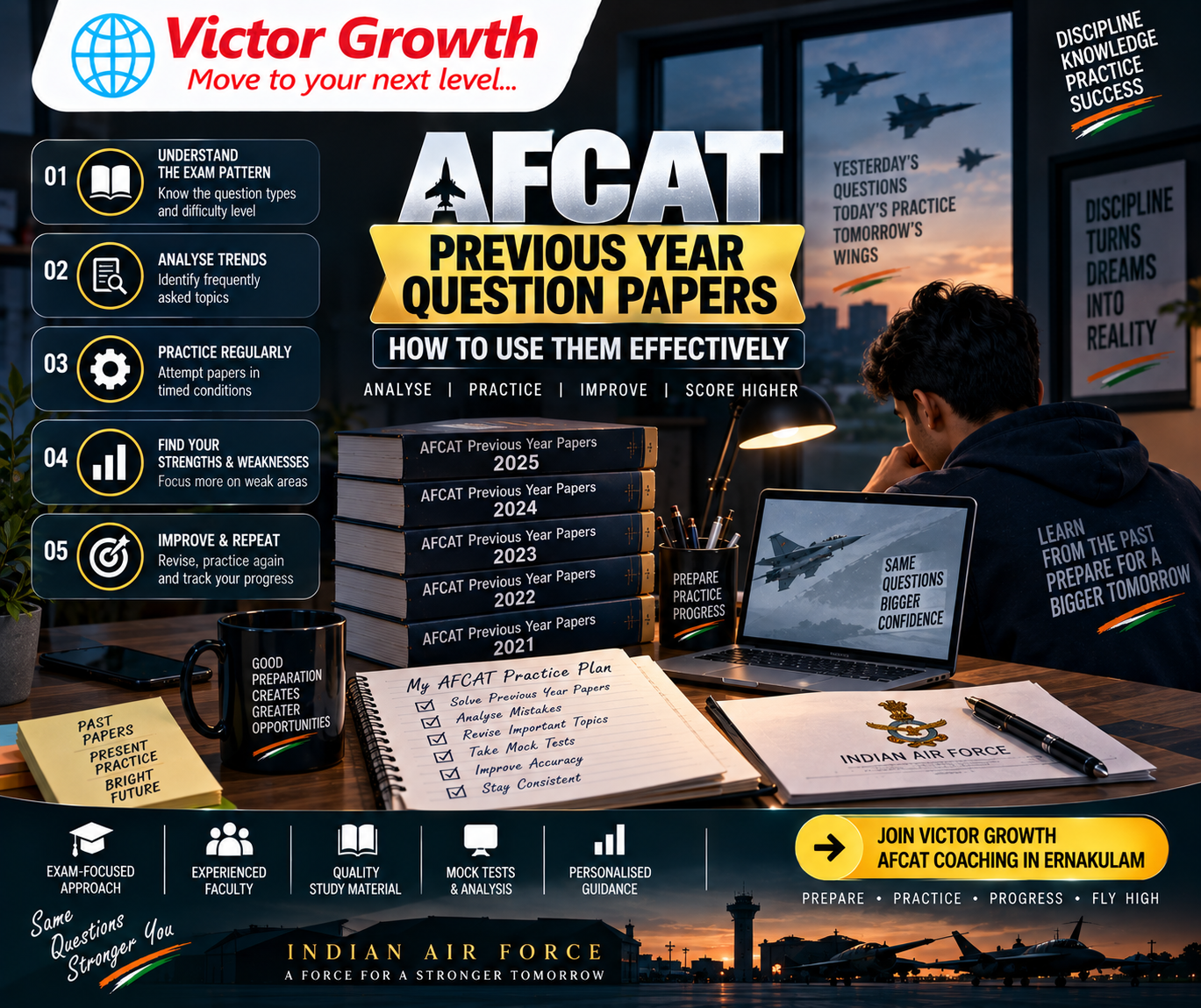
Preparing for the AFCAT exam requires more than simply studying the syllabus. AFCAT previous year question papers are valuable preparation tools that help aspirants understand the question pattern, difficulty level, important topics and time-management requirements.
For students looking for the best AFCAT coaching in Kerala, practising previous year papers along with expert guidance, study materials and mock tests can make preparation more structured and effective.
Why AFCAT Previous Year Question Papers Are Important
Previous year question papers give candidates practical exposure to the type of questions asked in the examination. They can help you:
- Understand the AFCAT question pattern
- Identify frequently tested topics
- Improve speed and accuracy
- Practise time management
- Understand the difficulty level
- Identify personal strengths and weaknesses
- Improve confidence before the examination
Instead of solving papers only before the exam, candidates should include them throughout their preparation.
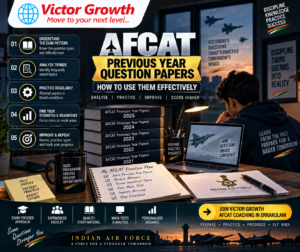
How to Use AFCAT Previous Year Question Papers Effectively
1. Start After Building Your Basics
Do not immediately begin solving complete papers if you are unfamiliar with the syllabus. First learn the basic concepts in English, General Awareness, Numerical Ability and Reasoning & Military Aptitude.
Once you have covered the fundamentals, start solving previous year questions topic by topic.
2. Practise Subject-Wise Questions
Divide previous year questions according to subjects. For example, practise Mathematics questions separately from Reasoning or English.
This approach helps you identify which topics repeatedly require more attention.
3. Solve Papers Under Exam Conditions
After completing sufficient topic-wise practice, attempt a complete previous year paper like an actual examination.
Set a timer, avoid distractions and try to complete the paper within the prescribed time.
This helps develop the speed and concentration required during the AFCAT examination.
4. Analyse Every Attempt
Simply checking your score is not enough. After completing a paper, analyse:
- Questions you answered incorrectly
- Questions you guessed
- Questions that took too much time
- Topics you could not understand
- Questions you left unanswered
This analysis helps turn every question paper into a learning opportunity.
5. Maintain a Mistake Notebook
Write down recurring mistakes, difficult formulas, confusing concepts and unfamiliar vocabulary.
Revise this notebook regularly, especially before mock tests and the examination.
Use Previous Papers Along with Mock Tests
Previous year papers and mock tests serve different purposes. Previous papers help you understand actual question trends, while mock tests provide additional practice in a simulated examination environment.
A good preparation strategy can include:
Concept Learning → Topic Practice → Previous Year Questions → Mock Test → Mistake Analysis → Revision
This systematic approach can help candidates gradually improve their performance.
AFCAT Coaching in Kerala and Previous Year Papers
Students preparing through AFCAT coaching in Kerala can benefit from guided analysis of previous year questions. Experienced faculty can explain difficult questions, identify important concepts and help students understand how to approach different question types.
When choosing the best AFCAT coaching in Kerala, candidates can consider whether the institute provides:
- Previous year question papers
- Topic-wise question practice
- Regular mock tests
- Detailed answer explanations
- Performance analysis
- Doubt-clearing sessions
- Revision classes
- AFCAT-focused study materials
The combination of coaching and independent practice can help create a more disciplined preparation routine.
Common Mistakes to Avoid
While using AFCAT previous year question papers, avoid these common mistakes:
- Solving papers without understanding the concepts
- Memorising answers instead of learning methods
- Checking the answer key immediately
- Ignoring questions you got wrong
- Repeating the same mistakes
- Focusing only on scores
- Waiting until the last few weeks to practise papers
The main purpose of previous year papers is learning and improvement, not simply obtaining a high score.
Final Strategy for AFCAT Aspirants
Make previous year question papers a regular part of your preparation. Start with topic-wise questions, gradually move to complete papers and analyse every attempt carefully.
With proper coaching, consistent self-study, regular mock tests and effective use of previous year papers, candidates can develop better speed, accuracy, confidence and examination awareness.
For aspirants searching for the best AFCAT coaching in Kerala, choosing a programme that combines classroom or online guidance with extensive question practice and test-based preparation can provide a structured approach to AFCAT preparation.
Frequently Asked Questions
1. Are AFCAT previous year question papers important?
Yes. They help candidates understand the question pattern, difficulty level and commonly tested concepts while providing valuable practice.
2. When should I start solving AFCAT previous year papers?
Start with topic-wise questions after learning the basics. Once you have covered most of the syllabus, begin attempting complete papers under timed conditions.
3. How many previous year papers should I solve?
Focus on solving as many relevant papers as possible with proper analysis. Quality of practice and mistake correction is more important than simply counting the number of papers.
4. Should I solve previous year papers before mock tests?
You can use both. Previous year papers help understand the examination pattern, while mock tests provide additional timed practice.
5. Can AFCAT coaching in Kerala help with previous year paper analysis?
Yes. A structured coaching programme can provide topic-wise practice, explanations, performance analysis and guidance on how to approach different question types.
6. What is the best way to analyse an AFCAT question paper?
Review every wrong, guessed and time-consuming question. Identify the underlying topic, understand the correct method and revise it before attempting another test.