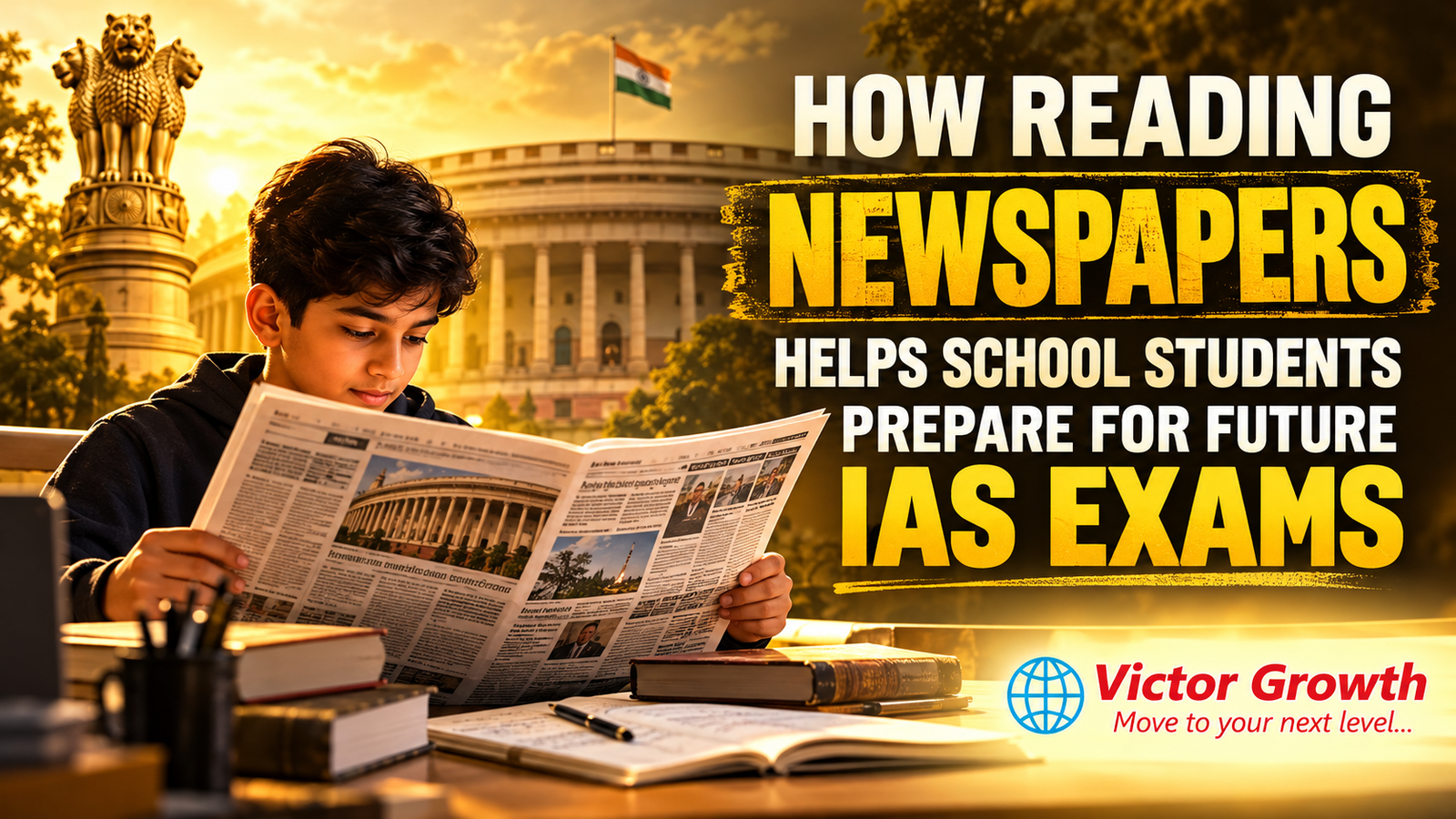
Reading newspapers is one of the most valuable habits school students can develop if they are interested in a future career in the Indian Administrative Service (IAS). The UPSC Civil Services Examination requires more than textbook knowledge. It also tests awareness of current events, understanding of social issues, analytical thinking and the ability to connect concepts with real-world developments.
Although school students do not need to begin intensive UPSC preparation, developing a regular reading habit can help them build a strong foundation for the future.
For parents searching for the Best IAS Coaching in Kerala, newspaper reading is an important habit to encourage alongside school studies and age-appropriate IAS Foundation preparation.
Why Is Newspaper Reading Important for Future IAS Aspirants?
1. Improves Current Affairs Awareness
Newspapers introduce students to important developments in India and around the world. They can gradually learn about government policies, elections, scientific discoveries, environmental challenges, international relations and economic developments.
This awareness can become valuable when students begin serious UPSC preparation later.
2. Connects School Subjects With Real Life
Newspaper reading helps students understand how classroom concepts apply to everyday events.
For example:
History and Civics: News about Parliament, elections and constitutional developments.
Geography: Reports on floods, monsoons, agriculture and natural disasters.
Science: News about space missions, artificial intelligence and scientific discoveries.
Economics: Reports on inflation, employment, banking and government budgets.
Environment: News about climate change, pollution and wildlife conservation.
Connecting these subjects with current events can make learning more meaningful.
3. Develops Analytical Thinking
UPSC preparation requires students to understand issues rather than simply memorise facts.
While reading a news report, students can ask:
What happened?
Why did it happen?
Who is affected?
What are the possible consequences?
What solutions could help?
These questions encourage logical thinking and help students develop the habit of examining issues from different perspectives.
4. Improves English Vocabulary and Comprehension
Regular newspaper reading can help students improve their vocabulary, sentence construction, reading comprehension and ability to understand complex information.
Students can note a few unfamiliar words, learn their meanings and use them in their own sentences. Over time, this practice can strengthen their reading and writing abilities.
5. Builds Writing and Communication Skills
Reading well-written articles exposes students to different ways of presenting information and organising arguments.
Students can practise writing a short summary of an article in their own words. They can also discuss an important news topic with parents, teachers or classmates.
These activities help develop clear expression, structured writing and confidence in communication.
6. Encourages Independent Thinking
Newspapers expose students to different viewpoints on public issues. With appropriate guidance, students can learn to distinguish facts from opinions and consider multiple perspectives.
This encourages independent thinking instead of blindly accepting every statement they read.
Which Newspaper Should School Students Read?
Students should choose a reliable newspaper that suits their age, reading ability and language preference.
Parents can introduce English or Malayalam newspapers depending on the student’s comfort level. The important thing is to understand the news rather than struggle with difficult language.
School students can focus on reports about education, science, the environment, important national developments, sports, society and government initiatives.
They do not need to read every page, editorial or political report.
How Should School Students Read Newspapers for IAS Foundation?
A simple routine is more effective than trying to study the entire newspaper.
Step 1: Read for 15–20 minutes. Start with a few important and understandable news stories.
Step 2: Identify the main points. Understand what happened, where it happened and why it matters.
Step 3: Connect the news with school subjects. Relate the story to history, geography, science, civics or economics where possible.
Step 4: Write a short summary. Use three to five sentences in your own words.
Step 5: Discuss or revise. Explain the news to a parent, teacher or friend.
This routine helps students develop comprehension and analysis without adding too much to their school workload.
Common Newspaper Reading Mistakes to Avoid
School students should avoid:
Trying to read the entire newspaper every day.
Memorising every news item.
Collecting excessive current-affairs notes.
Spending too much time on social media discussions.
Believing unverified news or opinions.
Neglecting school studies to follow current affairs.
The objective is to build awareness, curiosity and understanding—not to turn newspaper reading into another stressful examination.
Role of IAS Foundation Coaching in Newspaper Reading
A structured IAS Foundation Course can help school students understand which news stories are important and how they relate to broader subjects.
A good programme may include current-affairs discussions, quizzes, simplified news analysis, reading exercises and short writing activities.
For parents looking for the Best IAS Coaching in Kerala, it is worth checking whether the foundation programme develops these skills in an age-appropriate way rather than asking children to memorise large amounts of daily news.
IAS Foundation Preparation at Victor Growth
Victor Growth, located in Kadavanthra, Kochi, offers foundation-oriented learning for school students interested in developing an early understanding of Civil Services and competitive examinations.
Current affairs, general awareness, conceptual learning, quizzes, reading activities and analytical thinking can help students develop habits that support their future academic and competitive-examination goals.
For families searching for the Best IAS Coaching in Kerala, the emphasis should be on a balanced approach that builds reading and thinking skills while allowing students to focus on school education.
Frequently Asked Questions
1. Should school students read newspapers for future IAS preparation?
Yes. Newspaper reading can help develop current-affairs awareness, comprehension, vocabulary and analytical thinking. These skills can be useful during future UPSC preparation.
2. How much time should school students spend reading newspapers?
Around 15–20 minutes a day can be a reasonable starting point. Students can increase the time gradually if they find it useful and can manage it alongside schoolwork.
3. Which newspaper is best for IAS Foundation preparation?
Students should choose a reliable English or Malayalam newspaper suited to their reading level. Understanding important news is more valuable than choosing a newspaper that is too difficult for them.
4. Should school students make newspaper notes?
Yes, but notes should be simple. A short summary, a few key facts or a mind map is sufficient at the foundation stage.
5. Is newspaper reading enough for UPSC preparation?
No. Newspaper reading is only one part of preparation. Future aspirants also need systematic syllabus coverage, conceptual learning, revision, practice tests and answer-writing practice.
6. How can parents encourage children to read newspapers?
Parents can discuss one or two interesting news stories each day, ask questions and encourage children to explain what they have learned. Making reading interactive can help develop a lasting habit.
7. How can parents choose the Best IAS Coaching in Kerala for school students?
Look for an age-appropriate curriculum, experienced mentors, current-affairs guidance, reading and writing activities, quality study materials and a balanced schedule that complements school education.
Conclusion
Newspaper reading can be a powerful habit for school students interested in a future career in Civil Services. It helps them understand current events, connect academic concepts with real life, improve language skills and develop analytical thinking.
Students do not need to memorise every headline or begin intensive UPSC preparation during school. They simply need to read regularly, understand important issues, ask questions and think independently.
For parents exploring the Best IAS Coaching in Kerala, a foundation programme that encourages these habits can help students build a strong base for future IAS preparation while continuing to enjoy their school years.