Preparing for the UPSC Civil Services Examination requires strong conceptual knowledge, reading habits, and analytical thinking. For school students who aspire to become IAS officers, starting with the right books can help build a solid foundation without creating unnecessary academic pressure.
Choosing suitable books is an important part of IAS foundation preparation. Students should focus on understanding basic concepts, developing general awareness, and improving their reading and writing skills rather than studying advanced UPSC materials too early.
For parents looking for the Best IAS Coaching in Kerala, it is equally important to select a foundation programme that guides students in choosing the right resources and developing effective study habits.
Why Are Books Important for IAS Foundation Preparation?
Books help school students develop the knowledge and skills required for future competitive examinations. Regular reading improves vocabulary, comprehension, general awareness, and the ability to understand different perspectives.
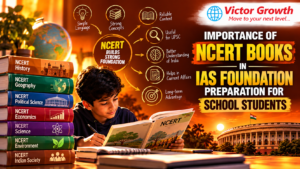
During the school years, students should prioritise NCERT textbooks and age-appropriate reference materials. These resources provide a strong foundation in subjects such as History, Geography, Political Science, Economics, and Science.
The objective is not to complete the entire UPSC syllabus during school but to develop a lasting interest in learning.
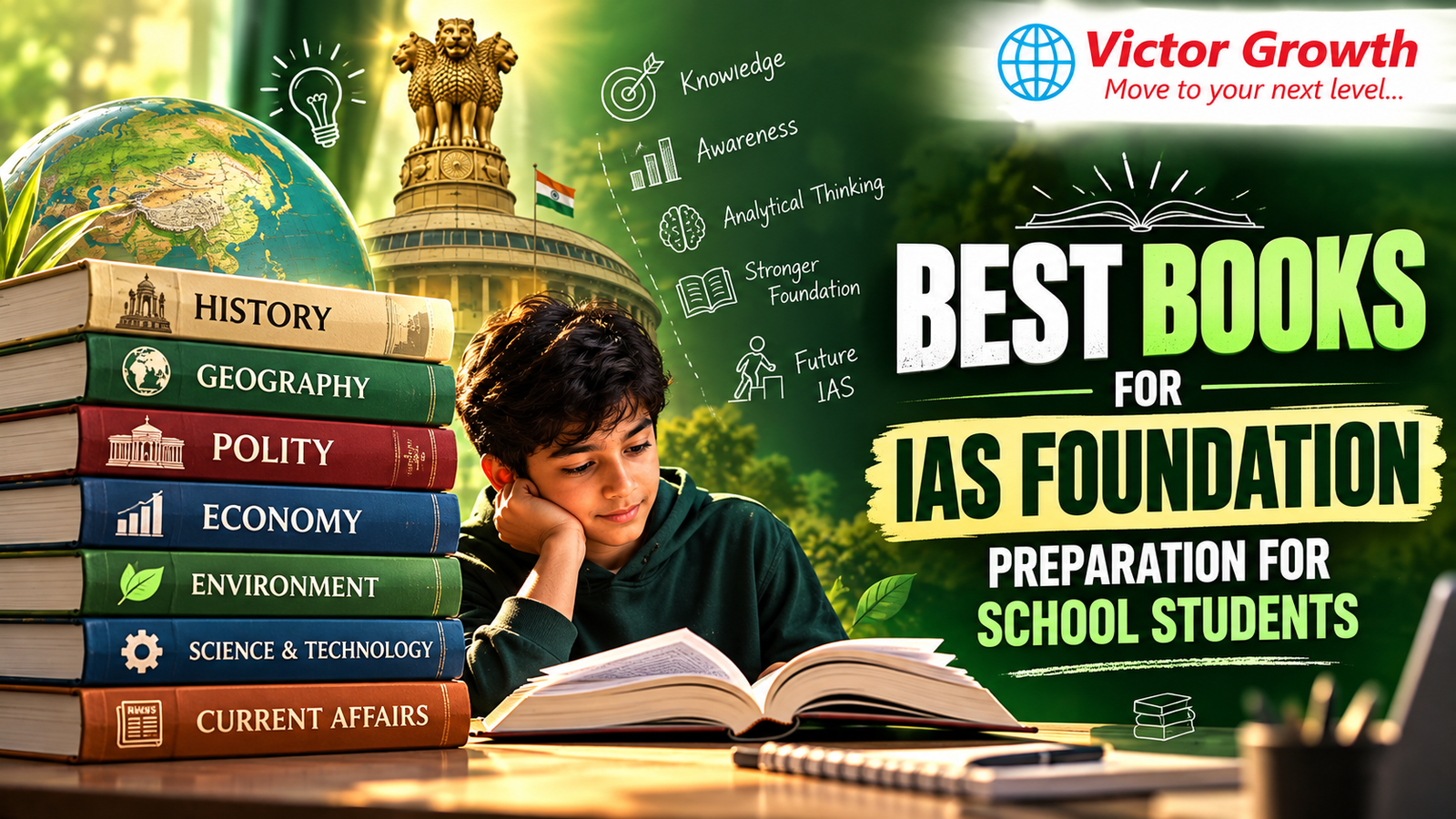
Best Books for IAS Foundation Preparation for School Students
1. NCERT Textbooks
NCERT textbooks are among the most useful resources for building a foundation for the UPSC Civil Services Examination.
Students can focus on school-level textbooks covering:
History: Ancient, medieval, and modern Indian history.
Geography: Physical geography, climate, resources, and human settlements.
Political Science and Civics: The Constitution, democracy, government, and citizenship.
Economics: Basic economic concepts, development, and the Indian economy.
Science: Scientific principles, the environment, and everyday applications.
Students should begin with the textbooks prescribed for their current class and gradually explore relevant NCERT books from higher classes when they are ready.
2. A Good Newspaper
Newspapers help students connect classroom learning with real-world events. Reading a reliable newspaper regularly can improve comprehension, vocabulary, and awareness of national and international developments.
School students can start with 15–20 minutes of daily reading. They should focus on important topics such as education, science, the environment, government initiatives, and significant national events.
Instead of memorising every news item, students should try to understand what happened, why it matters, and how it relates to society.
3. A General Knowledge Book
A reliable general knowledge book can help students learn about Indian history, geography, important personalities, scientific discoveries, sports, and international organisations.
Students should choose a book appropriate for their age and academic level. General knowledge books are useful for revision and quizzes, but they should complement—not replace—school textbooks and newspaper reading.
4. Indian Constitution and Civics Resources
Understanding the Indian Constitution and the functioning of government is valuable for future civil services aspirants.
School textbooks on Civics and Political Science are the best starting point. As students progress, they can gradually explore simplified explanations of fundamental rights, fundamental duties, Parliament, the judiciary, elections, and local self-government.
Advanced reference books can be introduced later, depending on the student’s age and level of understanding.
5. Basic Geography and Atlas
A good school atlas is a useful resource for IAS foundation preparation. It helps students identify Indian states, rivers, mountains, neighbouring countries, important cities, and major geographical features.
Students can practise locating places mentioned in newspapers and understanding maps related to climate, agriculture, natural resources, and population.
Regular map practice makes Geography more interesting and improves long-term retention.
6. Books for English and Writing Skills
Clear communication is an important skill for future competitive examination aspirants. Students should read age-appropriate English books, short biographies, essays, and non-fiction articles.
They can also practise writing short summaries, maintaining a daily journal, and explaining current events in their own words. These activities improve vocabulary, grammar, comprehension, and structured thinking.
Malayalam reading and writing can also help students understand local issues and develop a broader perspective on Kerala and Indian society.
How Should School Students Choose the Right Books?
Students do not need to purchase every book recommended for UPSC preparation. A small collection of carefully selected resources is more useful than a large collection that remains unread.
Follow these simple guidelines:
Begin with textbooks prescribed for the student’s current class.
Add one reliable newspaper and one age-appropriate general knowledge resource.
Use an atlas regularly for Geography.
Avoid advanced UPSC reference books until basic concepts are clear.
Revise important topics instead of continuously buying new books.
Balance IAS foundation learning with school examinations, hobbies, sports, and rest.
The best book list is one that matches the student’s age, interests, and learning pace.
How Can IAS Foundation Coaching Help Students?
The right books are important, but students also need guidance on how to read, revise, and apply what they learn. A structured IAS foundation programme can help students build consistent habits through quizzes, discussions, current affairs sessions, writing exercises, and conceptual learning.
At Victor Growth in Kadavanthra, Kochi, students can explore a foundation-oriented approach to competitive examination preparation that encourages curiosity, awareness, and independent thinking.
Parents searching for the Best IAS Coaching in Kerala should look for a programme that complements school education, provides appropriate mentorship, and encourages gradual learning instead of excessive pressure.
Conclusion
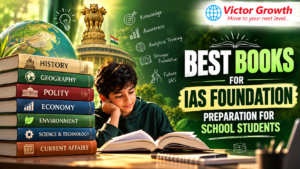
The best books for IAS foundation preparation for school students are those that develop strong basics and encourage a genuine interest in learning. NCERT textbooks, newspapers, general knowledge resources, school atlases, and books that improve reading and writing skills can provide an excellent starting point.
With consistent reading, regular revision, and the right guidance, students can gradually develop the knowledge and confidence needed for future UPSC preparation.
Frequently Asked Questions (FAQs)
1. Which books are best for IAS foundation preparation for school students?
NCERT textbooks, a reliable newspaper, a general knowledge book, a school atlas, and age-appropriate reading materials are good starting points.
2. Can school students start UPSC preparation early?
Yes. Students can begin by strengthening their school subjects, reading regularly, learning about current affairs, and developing analytical and communication skills.
3. Are NCERT books enough for IAS foundation preparation?
NCERT textbooks provide a strong foundation. Students can gradually add other resources according to their age, understanding, and learning goals.
4. Should school students read newspapers daily?
Yes. Around 15–20 minutes of age-appropriate newspaper reading can help improve general awareness, vocabulary, and comprehension.
5. Do school students need advanced UPSC reference books?
Not initially. It is better to understand school-level concepts thoroughly before moving on to advanced reference materials.
6. How can parents choose the Best IAS Coaching in Kerala for foundation preparation?
Parents should consider the quality of mentorship, teaching methods, age-appropriate study materials, current affairs guidance, and the programme’s ability to balance competitive preparation with regular school studies.