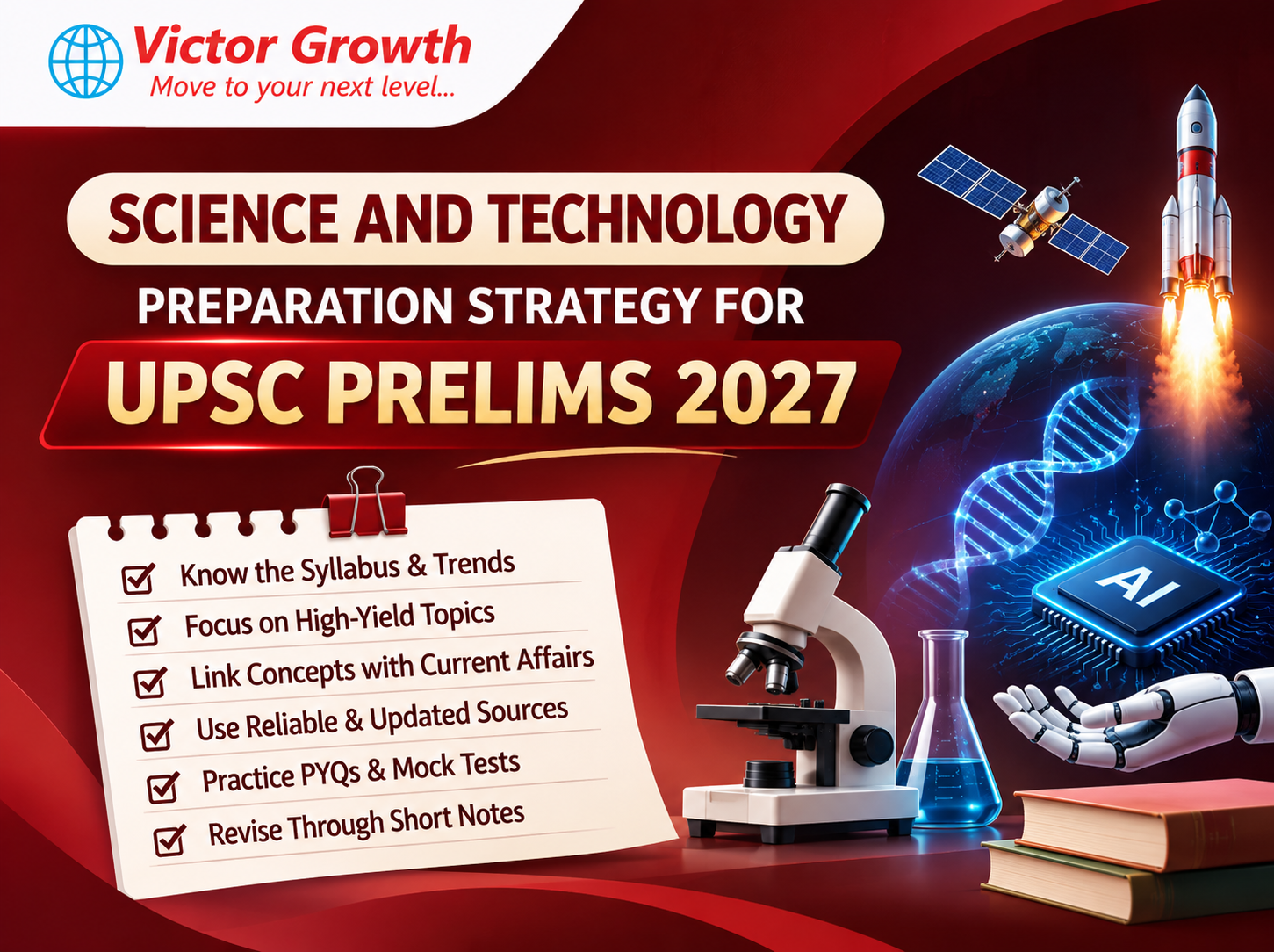
Science and Technology is an important part of the UPSC Civil Services Preliminary Examination. Questions from this section test candidates’ understanding of scientific developments, emerging technologies, and their applications in everyday life. Topics such as Artificial Intelligence, biotechnology, space technology, nanotechnology, defence technology, and information technology are particularly important.
For UPSC Prelims 2027, candidates should focus on understanding basic scientific concepts and connecting them with current affairs rather than memorising complicated technical details. A systematic preparation strategy, regular revision, and practice with previous-year questions can help improve performance.
1. Understand the UPSC Science and Technology Syllabus
UPSC does not provide a separate, detailed syllabus for Science and Technology. Questions are generally based on developments in science and technology and their practical applications.
Candidates should cover the following important areas:
Space Technology: ISRO missions, satellites, launch vehicles, Gaganyaan, Chandrayaan, and navigation systems.
Biotechnology: Genetic engineering, DNA technology, gene therapy, vaccines, stem cells, and genetically modified crops.
Artificial Intelligence: Machine learning, robotics, deep learning, and applications of AI.
Information Technology: Quantum computing, blockchain, cybersecurity, 5G, and emerging digital technologies.
Nanotechnology: Nanomaterials, applications in medicine, agriculture, and electronics.
Defence Technology: Missiles, drones, fighter aircraft, radar systems, and indigenous defence technologies.
Health and Medicine: New vaccines, diseases, diagnostic technologies, and important medical discoveries.
Energy Technology: Green hydrogen, nuclear energy, solar energy, battery technology, and fuel cells.
2. Focus on Important Science and Technology Topics for 2027
Certain topics are especially useful for focused preparation.
Artificial Intelligence and Emerging Technologies
Understand the basic concepts of AI, machine learning, robotics, quantum computing, and their applications. Also study issues such as data privacy, cybersecurity, and ethical concerns.
Space Technology
Follow major ISRO missions and understand satellite applications, launch vehicles, space exploration, and India’s achievements in space research.
Biotechnology and Genetic Engineering
Prepare topics such as CRISPR technology, genome sequencing, DNA profiling, stem cell research, mRNA vaccines, and genetically modified organisms.
Defence Technology
Study India’s missile programmes, unmanned aerial vehicles, indigenous fighter aircraft, and important defence research developments.
Environmental and Energy Technologies
Understand green hydrogen, carbon capture, electric vehicles, advanced batteries, and renewable energy technologies.
3. Read Current Affairs Regularly
Current affairs play a major role in Science and Technology preparation. UPSC frequently connects scientific concepts with recent developments in India and around the world.
Follow these sources:
The Hindu or The Indian Express – Science and technology news.
PIB – Government announcements and scientific developments.
ISRO official website – Space missions and research updates.
DRDO official website – Defence research and technology.
Ministry of Science and Technology – Important initiatives and developments.
Do not read every science-related news item. Focus on developments that have national importance, practical applications, or links with the UPSC syllabus.
4. Refer to the Right Study Materials
Using too many resources can make preparation confusing. Choose limited and reliable materials.
Study material | Purpose |
|---|---|
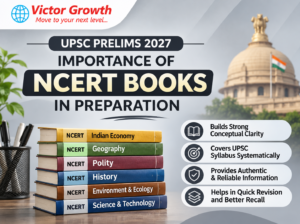
NCERT Science (Classes 6–10) | Build basic scientific understanding |
Selective Class 11–12 NCERT chapters | Understand relevant advanced concepts |
Current affairs magazines | Cover recent scientific developments |
PIB and ISRO updates | Follow government initiatives and missions |
UPSC previous-year questions | Understand question patterns |
Candidates should avoid spending excessive time on highly technical details that are unlikely to be relevant to the examination.
5. Solve Previous-Year Questions and Mock Tests
Previous-year questions help identify important themes and understand how UPSC frames Science and Technology questions.
Practise at least the last 10 years of relevant UPSC Prelims questions.
Identify frequently repeated concepts.
Attempt topic-wise mock tests after completing each subject.
Analyse incorrect answers and understand why the options are wrong.
Practise eliminating confusing options.
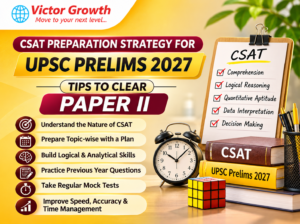
Regular mock tests help improve accuracy, time management, and confidence.
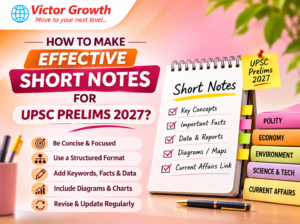
6. Create Short Notes for Quick Revision
Science and Technology involves many new terms, discoveries, and technologies. Preparing short notes makes revision easier.
Organise notes under separate headings such as:
Space missions and satellites
Biotechnology and health
Artificial Intelligence and IT
Defence technology
Energy and environmental technologies
For every important technology, note its meaning, working principle, applications, advantages, and major limitations. Update these notes whenever an important development appears in current affairs.
7. Follow a Practical Study Plan
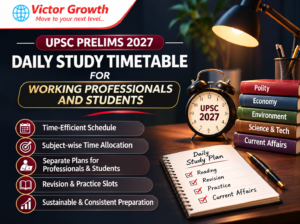
Consistency is more important than studying for long hours occasionally. Candidates can follow this simple weekly approach:
Day | Preparation focus |
|---|---|
Monday | Space technology |
Tuesday | Biotechnology |
Wednesday | AI and information technology |
Thursday | Defence technology |
Friday | Health and medical developments |
Saturday | Energy and emerging technologies |
Sunday | Revision and mock tests |
Spend around 45–60 minutes daily on Science and Technology, adjusting the time according to your overall UPSC preparation schedule.
8. Choose the Right Coaching and Guidance
Proper guidance can help candidates understand difficult scientific concepts and identify examination-relevant current affairs. When searching for the best NDA coaching in Kerala, students should also consider the quality of faculty, study materials, test series, and individual academic support. For UPSC preparation, ensure that the coaching programme specifically covers the Civil Services syllabus and Prelims requirements.
Victor Growth Coaching Centre can be considered by aspirants exploring competitive examination preparation in Kerala. Before joining any programme, compare the course structure, faculty experience, and teaching methodology.
Frequently Asked Questions (FAQs)
1. Is Science and Technology important for UPSC Prelims 2027?
Yes. It is an important area of General Studies Paper I, with questions often linked to current scientific developments and their applications.
2. Which topics are most important in Science and Technology for UPSC 2027?
Artificial Intelligence, biotechnology, space technology, defence technology, nanotechnology, quantum computing, and renewable energy are important areas to prepare.
3. Are NCERT books enough for Science and Technology?
NCERT books help build basic knowledge, but candidates should also follow current affairs, government publications, and previous-year questions.
4. How should beginners prepare for Science and Technology?
Start with basic science concepts from NCERT books. Then study important technologies and connect them with current affairs. Practise questions regularly.
5. How much time should I spend on Science and Technology daily?
Around 45–60 minutes daily is a practical starting point. Revise regularly and adjust the time based on your preparation progress.
6. Is Science and Technology difficult for non-science students?
No. UPSC generally tests conceptual understanding and practical applications rather than advanced scientific calculations. Students from any academic background can prepare effectively with consistent practice.
Conclusion
Science and Technology preparation for UPSC Prelims 2027 requires a combination of basic concepts, current affairs, regular revision, and question practice. Focus on important technologies, understand their applications, and avoid unnecessary technical details. With a structured study plan and consistent effort, candidates can improve their confidence and accuracy in this section. Choosing appropriate guidance and a reliable test series can further strengthen overall UPSC preparation.