Cracking the Air Force Common Admission Test (AFCAT) in the first attempt is a goal for many defence aspirants who dream of becoming officers in the Indian Air Force. However, achieving this goal requires more than hard work. Candidates need a clear preparation strategy, a strong understanding of the syllabus, regular practice, and effective time management.
With the right approach and consistent preparation, beginners can also prepare confidently for AFCAT 2027.
This article explains how to prepare for AFCAT 2027, important subjects to focus on, common mistakes to avoid, and practical strategies to improve your chances of success in the first attempt.
1. Understand the AFCAT 2027 Exam Pattern
The first step towards successful preparation is understanding the examination structure.
Particulars | Details |
|---|---|
Examination mode | Online |
Total questions | 100 |
Maximum marks | 300 |
Duration | 2 hours |
Correct answer | +3 marks |
Incorrect answer | -1 mark |
Unattempted question | 0 marks |
The examination covers four major sections:
General Awareness
Verbal Ability in English
Numerical Ability
Reasoning and Military Aptitude
Understanding the pattern helps candidates divide their preparation time effectively.
2. Know the Complete AFCAT Syllabus
Candidates should understand the important topics in each subject before starting preparation.
English
Comprehension
Synonyms and antonyms
Error detection
Sentence completion
Idioms and phrases
One-word substitution
Vocabulary and grammar
General Awareness
Indian History and Geography
Indian Polity and Economy
Current Affairs
Defence-related developments
Science and Technology
Sports, awards, and important appointments
Numerical Ability
Percentage
Average
Ratio and proportion
Profit and loss
Simple and compound interest
Time and work
Speed, time, and distance
Number system
Reasoning and Military Aptitude
Analogy
Coding-decoding
Number and letter series
Classification
Blood relations
Direction sense
Non-verbal reasoning
Spatial ability
Make a checklist of these topics and track your progress throughout preparation.
3. Follow a Proper Study Timetable
A realistic timetable is essential for completing the syllabus without unnecessary pressure. Give attention to all four sections and allocate additional time to your weaker subjects.
Daily AFCAT 2027 study timetable
Subject / Activity | Time |
|---|---|
English | 30 minutes |
General Awareness | 30 minutes |
Numerical Ability | 40 minutes |
Reasoning | 30 minutes |
Revision and MCQ practice | 20 minutes |
Total | 2 hours 30 minutes |
You can adjust the timings according to your daily routine. The most important thing is to study consistently rather than following an unrealistic schedule.
4. Strengthen Your Basic Concepts
Many candidates make the mistake of immediately practising difficult questions without understanding the fundamentals.
For first-time aspirants, building a strong foundation is especially important.
Learn basic grammar rules before attempting advanced English questions.
Understand arithmetic concepts before memorising shortcuts.
Study static General Awareness along with current affairs.
Practise simple reasoning questions before moving to complex patterns.
Once your fundamentals are strong, solving questions becomes easier and faster.
5. Practise Previous Year Question Papers
Previous year question papers are valuable preparation resources. They help candidates understand the examination pattern and become familiar with different question types.
Use them to:
Identify frequently tested concepts.
Understand the difficulty level of questions.
Improve speed and accuracy.
Recognise weak areas.
Practise time management.
Start with topic-wise questions and gradually attempt full-length papers under the actual two-hour time limit. Remember that previous year questions are useful for practice, but they cannot predict the exact questions in AFCAT 2027.
6. Take Mock Tests Regularly
Mock tests play an important role in first-attempt preparation. They help candidates understand how well they can apply their knowledge under examination conditions.
After each test, analyse:
Your total score.
Correct and incorrect answers.
Questions that consumed too much time.
Topics where you made repeated mistakes.
Areas that require additional revision.
Maintain a record of your performance and work on improving it gradually.
7. Improve Speed and Accuracy
AFCAT is a time-bound examination. Candidates must learn to solve questions efficiently without compromising accuracy.
Follow these strategies:
Practise mental calculations daily.
Memorise useful mathematical formulas.
Improve vocabulary through regular reading.
Solve reasoning questions with a time limit.
Avoid spending too long on difficult questions.
Read every question carefully before answering.
Since AFCAT has negative marking, avoid random guessing. Focus on answering questions you can solve confidently.
8. Prepare for Current Affairs Every Day
General Awareness requires continuous preparation. Leaving current affairs until the final month can make revision difficult.
Focus on:
National and international events.
Defence exercises and developments.
Indian Armed Forces.
Government schemes.
Science and technology.
Sports and awards.
Important appointments and summits.
Read a reliable newspaper, prepare short notes, and revise important events every week.
9. Understand the AFSB Selection Process
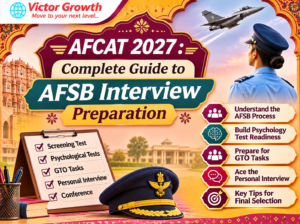
Clearing the AFCAT written examination is only one stage of the selection process. Candidates shortlisted through the written examination must also prepare for the Air Force Selection Board (AFSB).
The AFSB process includes assessments such as:
Officer Intelligence Rating (OIR) tests.
Picture Perception and Discussion Test (PPDT).
Psychological tests.
Group tasks.
Personal interview.
Computerised Pilot Selection System (CPSS), where applicable for Flying Branch candidates.
Medical examination and final merit requirements.
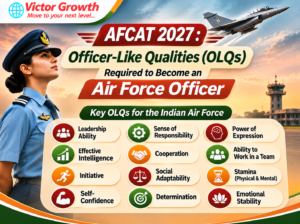
Candidates should understand the selection process early and gradually develop communication, reasoning, leadership, and problem-solving skills.
10. Choose the Right Coaching and Guidance
Proper guidance can help aspirants follow a structured study plan, understand difficult topics, and practise through regular tests.
Students searching for the best NDA coaching in Kerala should evaluate institutes based on faculty experience, syllabus coverage, study materials, mock test facilities, and individual academic support.
Victor Growth Coaching Centre in Kochi provides guidance for defence examination aspirants. Candidates preparing for AFCAT should choose a programme that specifically covers the AFCAT syllabus, online examination practice, and AFSB preparation.
Remember that NDA and AFCAT are different examinations with separate eligibility requirements and selection processes. Choose coaching according to your examination goal.
11. Common Mistakes to Avoid
Avoid these mistakes during your AFCAT 2027 preparation:
Starting preparation without understanding the syllabus.
Ignoring weak subjects.
Collecting too many study materials.
Avoiding previous year question papers.
Taking mock tests without analysing mistakes.
Neglecting current affairs.
Depending entirely on guesswork.
Ignoring AFSB preparation.
Following an unrealistic study timetable.
Not revising completed topics.
A consistent and balanced approach is more effective than studying for long hours without a clear plan.
Frequently Asked Questions (FAQs)
1. Can I crack AFCAT 2027 on my first attempt?
Yes. With proper planning, a strong understanding of the syllabus, regular practice, and consistent revision, first-time candidates can prepare effectively for AFCAT.
2. How many months are required to prepare for AFCAT 2027?
The preparation period depends on your existing knowledge and daily study time. Starting early gives you more time to understand concepts, practise questions, and revise.
3. Is AFCAT difficult for beginners?
AFCAT is manageable with structured preparation. Beginners should first understand the syllabus and build their fundamentals before attempting full-length mock tests.
4. How many hours should I study daily for AFCAT?
Around 2–3 hours of focused daily study can be a useful starting point. Candidates may need additional time depending on their preparation level.
5. Are previous year question papers enough to crack AFCAT?
No. Previous year papers are useful for understanding question patterns, but candidates must also study the complete syllabus, practise mock tests, and revise regularly.
6. Is coaching necessary to clear AFCAT in the first attempt?
Coaching is not compulsory. However, structured guidance, regular mock tests, and expert support can help candidates prepare more systematically.
7. What happens after clearing the AFCAT written examination?
Shortlisted candidates proceed to the AFSB selection process. Further selection involves applicable assessments, medical examination, and final merit requirements.
8. How can I avoid negative marking in AFCAT?
Read questions carefully, avoid random guessing, practise regularly, and focus on accuracy rather than attempting questions without sufficient understanding.
Conclusion
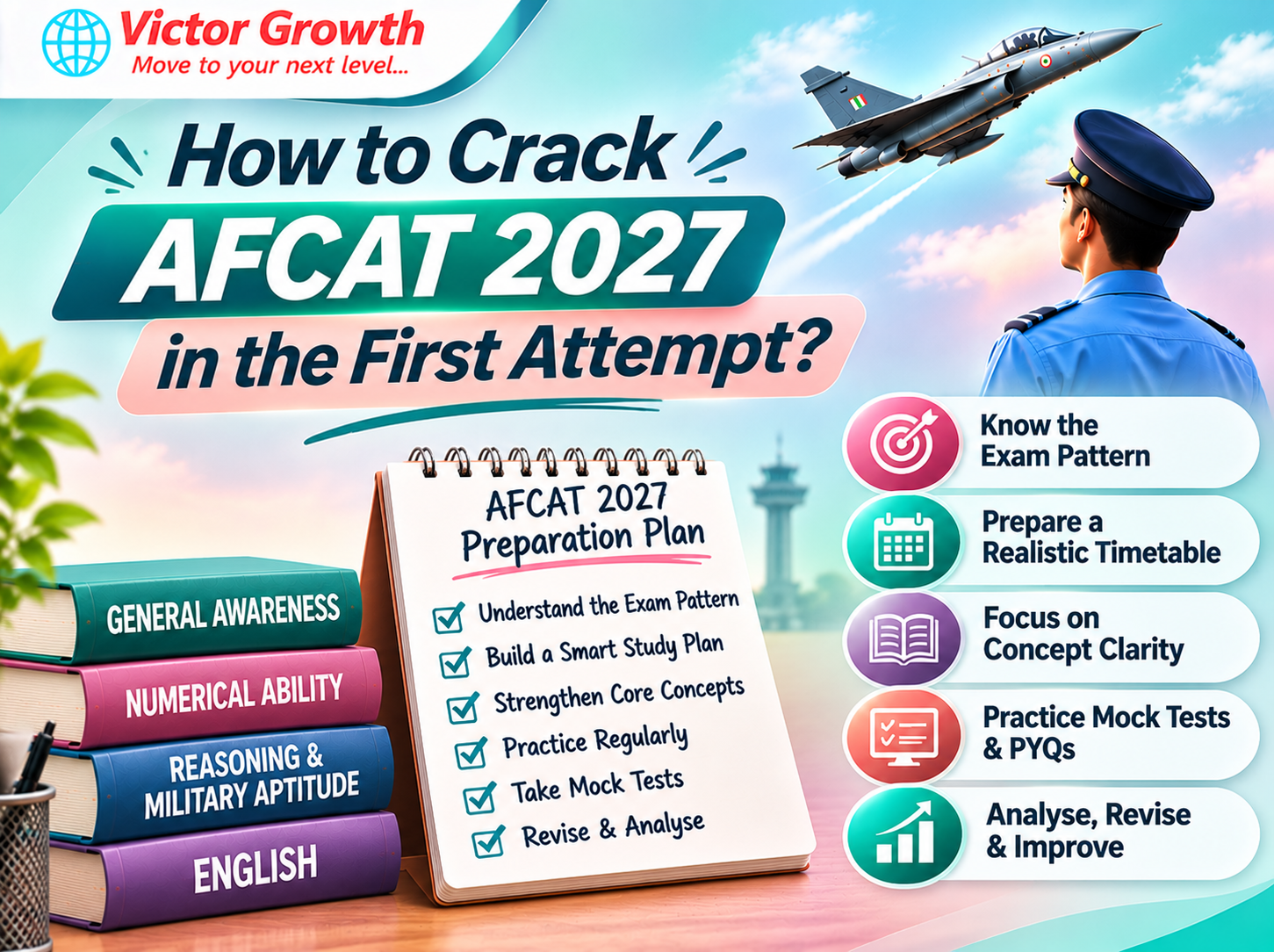
Cracking AFCAT 2027 in the first attempt is possible with a well-planned preparation strategy and consistent effort. Understand the syllabus, strengthen your fundamentals, practise previous year question papers, take regular mock tests, and prepare for the AFSB selection process.
Do not compare your preparation progress with others. Identify your weaknesses, work on them patiently, and revise regularly. With discipline, confidence, and the right guidance, you can move closer to your dream of becoming an officer in the Indian Air Force.