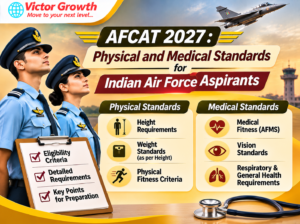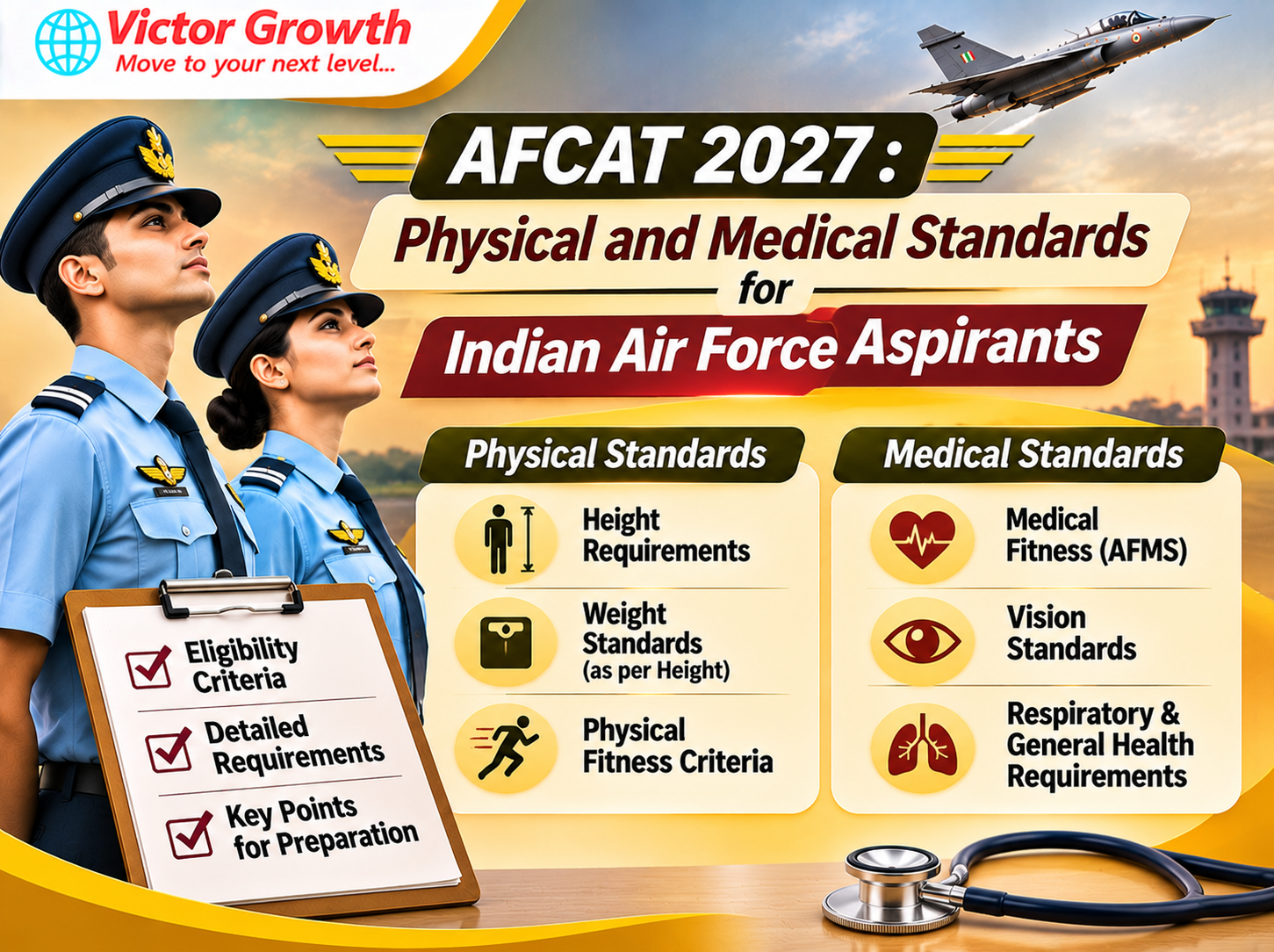
Joining the Indian Air Force is a dream for many defence aspirants. However, clearing the AFCAT written examination and AFSB interview is not the only requirement. Candidates must also satisfy the prescribed physical and medical standards to become eligible for final selection.
The Indian Air Force follows specific medical guidelines to ensure that candidates are physically and medically fit for the responsibilities of military service. These standards may differ depending on the branch, entry type, gender, and nature of duties.
This guide explains the important physical and medical requirements that AFCAT 2027 aspirants should understand before beginning their preparation.
1. Why Are Physical and Medical Standards Important?
Physical and medical fitness are essential for serving in the Indian Air Force. Officers may have to perform demanding duties, work under challenging conditions, and maintain high levels of physical and mental alertness.
The medical examination generally evaluates:
Height and weight.
Vision and eyesight.
Hearing ability.
Cardiovascular health.
Respiratory health.
Musculoskeletal condition.
General physical and mental health.
Meeting the prescribed standards is essential for progressing through the selection process.
2. Physical Standards for AFCAT 2027 Candidates
Physical requirements vary according to the branch selected.
A. Height Requirements
The minimum height requirements for different branches are generally:
Branch / Category | Minimum Height |
|---|---|
Ground Duty – Men | 157 cm |
Ground Duty – Women | 152 cm |
Flying Branch – Men | 162.5 cm |
Flying Branch – Women | 162.5 cm |
Certain relaxations may apply to candidates from specific regions and communities under applicable medical standards.
For Flying Branch candidates, additional requirements relating to sitting height, leg length, and thigh length may apply.
B. Weight Requirements
There is no single weight requirement applicable to every AFCAT candidate. Acceptable weight is assessed according to:
Height.
Age.
Gender.
Branch.
Applicable medical standards.
Candidates should aim to maintain a healthy body weight rather than following extreme dieting or weight-gain methods.
C. Physical Fitness
Candidates should develop general physical fitness before attending the selection process.
Useful activities include:
Walking and jogging.
Running and endurance training.
Push-ups and basic strength exercises.
Stretching and flexibility exercises.
Sports and outdoor activities.
A gradual and consistent fitness routine is preferable to suddenly starting intense workouts.
3. Height and Body Measurements
Flying Branch candidates must meet additional body measurement requirements.
Important measurements include:
Sitting height: 81.5–96 cm.
Leg length: 99–120 cm.
Thigh length: Maximum 64 cm.
Weight is assessed according to the official height-and-age charts. Male candidates must also meet the prescribed chest measurement and expansion requirements.
These standards may vary according to the entry and branch. Candidates should verify the latest applicable medical requirements before applying.
4. Vision and Eyesight Requirements
Vision standards are especially important for candidates applying to the Flying Branch. The requirements are generally stricter for aircrew than for Ground Duty candidates.
Flying Branch
Candidates are assessed for:
Visual acuity.
Myopia and hypermetropia.
Astigmatism.
Colour vision.
Other eye conditions that may affect flying duties.
Ground Duty Branches
Candidates must meet the prescribed visual acuity and refractive error limits. Corrective glasses may be permitted within the applicable limits.
Can candidates wearing spectacles apply for AFCAT?
Yes, candidates may be eligible depending on the branch and the degree of refractive error. Flying Branch standards are particularly strict, so candidates who wear spectacles should check the exact criteria before applying.
Colour Vision
Colour vision is assessed as part of the medical examination. Flying duties generally require a stricter colour perception standard than Ground Duty roles.
5. Medical Examination and Health Requirements
The medical examination checks whether candidates are physically and mentally capable of handling the demands of Air Force training and service.
Important areas include:
A. General Health
Doctors assess overall health, physical development, medical history, and any condition that could interfere with military duties.
B. Hearing
Hearing ability is tested to ensure that candidates can understand normal speech and respond appropriately to instructions.
C. Heart and Respiratory Health
The examination may include cardiovascular and respiratory assessments to identify conditions that could affect physical performance.
D. Dental Health
Candidates must meet the prescribed dental fitness standards. Oral health, functional teeth, and dental conditions are examined.
E. Blood and Urine Tests
Medical investigations may include blood counts, blood glucose, liver and kidney function, urine examination, and other tests as required.
F. Musculoskeletal Health
Doctors assess posture, joints, limbs, spine, movement, and physical abnormalities that may affect training or service.
6. Can Candidates Who Have Undergone LASIK Apply?
Candidates who have undergone LASIK, PRK, Femto LASIK, SMILE, or equivalent refractive surgery may be considered if they satisfy the applicable conditions.
Important conditions may include:
Surgery must not have been performed before the prescribed minimum age.
The required waiting period must have passed after uncomplicated, stable surgery.
There must be no history or evidence of complications.
Prescribed limits for residual refractive error, eye axial length, and corneal thickness must be met.
Certain procedures, such as Radial Keratotomy, may not be accepted.
Eligibility also depends on the visual requirements of the particular branch. Candidates should consult the official medical standards before deciding on any eye surgery.
7. Physical Fitness Preparation for AFCAT 2027
The Indian Air Force advises prospective candidates to maintain good physical fitness before joining training.
The following activities are useful preparation targets:
Activity | Recommended Level |
|---|---|
Running | Up to 4 km in 15 minutes |
Push-ups | Minimum 20 |
Sit-ups | Minimum 20 |
Chin-ups | 8 |
Rope climbing | 3–4 metres |
Swimming | 25 metres |
Skipping | Regular practice |
These are recommended fitness preparation targets for adapting to training, not a separate universal physical test for passing the AFCAT written examination.
Tips to Improve Physical Fitness
Start with walking and gradually increase running distance.
Practise basic strength exercises consistently.
Include stretching and flexibility exercises.
Learn swimming if you have access to proper training.
Maintain a balanced diet and adequate sleep.
Avoid sudden, intense workouts that may cause injuries.
8. Common Medical Reasons for Rejection
Candidates may be declared medically unfit if they do not meet the prescribed standards.
Some areas that may require particular attention include:
Vision or colour perception outside the permitted limits.
Certain heart or respiratory conditions.
Significant bone, joint, or spinal abnormalities.
Hearing difficulties outside the acceptable standards.
Dental conditions that fail the prescribed requirements.
Medical conditions that could interfere with training or service.
A past illness, surgery, or use of spectacles does not automatically mean every candidate will be rejected. The final decision depends on the official medical assessment and applicable branch standards.
9. How to Prepare for the AFCAT Medical Examination
Candidates can take a few sensible steps before attending the medical board:
Get an eye examination from a qualified ophthalmologist.
Check height and weight against the official standards.
Maintain good dental hygiene.
Review any previous medical or surgical records.
Inform the medical authorities honestly about existing conditions and treatments.
Avoid crash diets, unverified supplements, and extreme exercise routines.
Read the medical instructions in the AFCAT notification carefully.
Do not attempt to hide a medical condition or alter test results. Accurate medical information is important for your safety and eligibility.
10. Choosing the Right Coaching for Defence Exam Preparation
Along with written examination preparation, candidates should understand the AFSB process and medical eligibility requirements.
Students searching for the best NDA coaching in Kerala should compare institutes based on faculty experience, syllabus coverage, mock tests, study materials, and individual guidance.
Victor Growth Coaching Centre in Kochi provides guidance for defence examination aspirants. AFCAT candidates should choose a programme that specifically covers AFCAT preparation, AFSB guidance, and awareness of the applicable selection requirements.
Remember that NDA and AFCAT are different examinations with separate eligibility criteria and selection procedures.
Frequently Asked Questions (FAQs)
1. What is the minimum height required for AFCAT 2027?
For Ground Duty, the minimum is generally 157 cm for men and 152 cm for women. For the Flying Branch, the minimum is generally 162.5 cm for both men and women, subject to the applicable entry requirements.
2. Can candidates wearing spectacles apply for AFCAT?
Yes, candidates may be eligible depending on their branch and refractive error. Flying Branch visual standards are stricter than Ground Duty standards.
3. Is LASIK surgery allowed for AFCAT 2027?
Certain refractive surgeries may be accepted if the candidate satisfies the age, waiting-period, stability, and other medical requirements.
4. Is there a minimum weight requirement for AFCAT?
Yes. Weight is assessed according to the official height-and-age charts. Candidates must fall within the acceptable range for their category.
5. Is swimming compulsory for AFCAT?
Swimming is included in the recommended physical conditioning routine for Air Force training. Candidates should develop swimming ability and follow the applicable training requirements.
6. Is there a physical fitness test before the AFCAT written examination?
The AFCAT written examination is an online test. Physical and medical fitness are assessed during the subsequent selection and medical process rather than through a separate physical test for the written examination.
7. Can candidates with previous medical conditions apply for AFCAT?
It depends on the condition, its severity, treatment history, and the applicable medical standards. Candidates should seek an assessment from a qualified doctor.
8. Where can I check the latest AFCAT medical standards?
Candidates should refer to the medical standards appendix in the latest AFCAT notification published by the Indian Air Force.
Conclusion
Physical and medical fitness are important parts of the AFCAT 2027 selection process. Candidates should understand the height, weight, eyesight, and general medical requirements of their chosen branch well before attending AFSB.
Start building your fitness gradually, take care of your health, and check the official medical standards rather than depending on outdated information. Along with written examination preparation and AFSB practice, maintaining good physical health can help you prepare for a career in the Indian Air Force.