
Choosing the right branch in the Indian Air Force is one of the most important decisions for AFCAT 2027 aspirants. The Indian Air Force offers exciting career opportunities through two major categories: Flying Branch and Ground Duty Branch. Both branches provide opportunities to serve the nation, develop leadership skills and build a respected career as an Air Force officer.
However, the roles, responsibilities, training, lifestyle and career opportunities differ.
If you are preparing for AFCAT 2027, understanding these differences will help you select a branch that matches your interests, educational qualifications and career goals.
Let’s explore the major differences between the Flying Branch and Ground Duty Branch.
1. What is the Flying Branch in AFCAT?
The Flying Branch is one of the most exciting career options in the Indian Air Force. Officers in this branch are trained to operate military aircraft and perform various flying operations.
Depending on their training and allocation, officers may fly fighter aircraft, transport aircraft or helicopters.
Major Responsibilities:
Operating fighter, transport and helicopter aircraft.
Participating in air defence and combat missions.
Carrying out surveillance and reconnaissance operations.
Supporting rescue and humanitarian missions.
Protecting Indian airspace and national security.
Who Should Choose the Flying Branch?
The Flying Branch is suitable for candidates who:
Have a strong passion for flying and aviation.
Enjoy challenges and high-responsibility tasks.
Possess good decision-making and problem-solving abilities.
Meet the required physical and medical standards.
Are comfortable working in demanding situations.
2. What is the Ground Duty Branch in AFCAT?
The Ground Duty Branch plays an equally important role in the functioning of the Indian Air Force. While Flying Branch officers operate aircraft, Ground Duty officers manage the technical, administrative and operational activities that keep the Air Force running efficiently.
Ground Duty is divided into two main categories.
A. Ground Duty (Technical)
Technical officers are responsible for maintaining and managing the technical systems and equipment of the Indian Air Force.
Major responsibilities include:
Maintaining aircraft and aviation equipment.
Managing mechanical and electronic systems.
Ensuring aircraft safety and operational readiness.
Supervising technical teams.
Handling engineering-related responsibilities.
B. Ground Duty (Non-Technical)
Non-Technical officers manage the administrative and organisational activities of the Air Force.
Major responsibilities include:
Managing personnel and administration.
Handling logistics and supply management.
Managing financial operations and accounts.
Supporting education and training activities.
Managing meteorological services and weather-related information.
Who Should Choose Ground Duty?
Ground Duty is suitable for candidates who:
Are interested in engineering, management or administration.
Enjoy organising and leading teams.
Prefer technical or operational management responsibilities.
Want to contribute to the Air Force beyond flying operations.
3. Flying Branch vs Ground Duty Branch: Key Differences
Both branches offer opportunities to become commissioned officers in the Indian Air Force. However, their daily duties and career responsibilities are different.
Factors | Flying Branch | Ground Duty Branch |
|---|---|---|
Main role | Flying and aircraft operations | Technical and management operations |
Work environment | Aircraft and flying stations | Airbases, offices and technical units |
Responsibilities | Flying missions and air defence | Administration, engineering and logistics |
Medical standards | Strict flying medical standards | Branch-specific medical standards |
Career focus | Aviation and flying operations | Technical and operational management |
Training | Flying and military training | Military and branch-specific training |
Both branches are equally important to the operational strength and success of the Indian Air Force.
4. Eligibility Criteria: Flying Branch vs Ground Duty
Before choosing a branch, candidates must check whether they satisfy its educational, age and medical requirements.
Age Limit:
Flying Branch: 20–24 years.
Ground Duty Branch: 20–26 years.
Candidates holding a valid and current DGCA Commercial Pilot Licence may receive an upper-age relaxation for the Flying Branch, subject to notification conditions.
Educational Qualifications:
Flying Branch:
Must have passed Class 12 with at least 50% marks each in Physics and Mathematics.
Must have a recognised graduation degree of at least three years with 60% marks or an eligible BE/BTech qualification with 60% marks.
Ground Duty (Technical):
Must satisfy the required Class 12 Physics and Mathematics criteria.
Must possess an eligible engineering qualification.
Ground Duty (Non-Technical):
Educational requirements depend on the selected specialisation.
Different qualifications are accepted for Administration, Logistics, Accounts, Education and Meteorology branches.
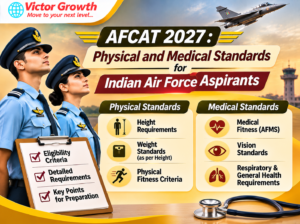
Medical fitness is also essential. Flying Branch candidates must satisfy additional flying medical and anthropometric standards.
Note: Age limits and educational requirements must be verified against the official AFCAT 2027 notification, as eligibility conditions can vary between courses.
5. Salary, Benefits and Career Opportunities
One common question among AFCAT aspirants is whether Flying Branch officers receive a higher salary than Ground Duty officers.
Both branches offer attractive salary packages and several benefits as commissioned officers.
Starting basic pay at the rank of Flying Officer: ₹56,100 per month.
Military Service Pay (MSP): ₹15,500 per month.
Flying Branch officers receive applicable flying allowance.
Other allowances depend on posting, duties and eligibility.
Both branches provide opportunities for career progression, leadership responsibilities, professional development and various service benefits.
Therefore, salary should not be the only factor when choosing your branch.
6. Which Branch Should You Choose?
There is no single correct answer. Your choice should depend on your interests, educational qualifications and long-term career goals.
Choose the Flying Branch if:
Your dream is to become an Air Force pilot.
You are passionate about aviation and flying.
You can meet the strict medical and physical requirements.
You enjoy challenging responsibilities and quick decision-making.
Choose Ground Duty if:
You are interested in engineering, administration or management.
You want to contribute to aircraft operations without becoming a pilot.
You enjoy technical problem-solving and organisational responsibilities.
Your educational qualification matches the available Ground Duty specialisations.
Our Advice: Never choose a branch just because it is considered more prestigious or popular. Choose the branch where your interests, qualifications and abilities match the responsibilities.
7. AFCAT 2027 Preparation: How to Start?
After choosing your preferred branch, the next step is to prepare effectively for the AFCAT examination.
AFCAT preparation requires a proper understanding of the syllabus, regular practice and consistent revision.
Focus on these important areas:
General Awareness: History, Geography, Polity, Economics, Science and Current Affairs.
English: Grammar, vocabulary, comprehension and verbal ability.
Numerical Ability: Basic mathematics, percentages, averages, ratios and other arithmetic topics.
Reasoning and Military Aptitude: Verbal and non-verbal reasoning, spatial ability and logical thinking.
Along with written examination preparation, candidates should also develop communication skills, confidence, leadership qualities and decision-making abilities for the AFSB selection process.
8. Frequently Asked Questions (FAQs)
1. Which is better: Flying Branch or Ground Duty in AFCAT?
Both branches offer excellent career opportunities. Flying Branch is ideal for candidates passionate about aviation, while Ground Duty is suitable for those interested in technical, administrative and management roles.
2. Can female candidates apply for both branches?
Yes. Both male and female candidates can apply for Flying and Ground Duty branches, subject to the eligibility conditions mentioned in the official notification.
3. Is Maths compulsory for the Flying Branch?
Yes. Candidates must have studied Mathematics and Physics in Class 12 and secured the required minimum marks.
4. Can a BCom graduate apply for AFCAT Ground Duty?
Yes. BCom graduates may be eligible for certain Ground Duty Non-Technical specialisations, particularly Accounts, provided they satisfy the specific educational qualification and percentage requirements.
5. Is the Flying Branch more difficult than Ground Duty?
Flying Branch has additional flying training and stricter medical requirements. However, both branches require discipline, leadership, professional knowledge and dedication.
6. What is the selection process for AFCAT 2027?
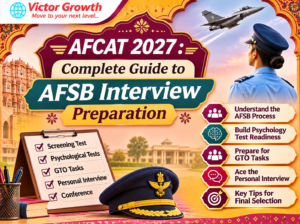
The selection process generally includes:
AFCAT written examination.
Air Force Selection Board (AFSB) testing.
Medical examination.
Final merit list.
7. Do Flying Branch officers receive additional allowances?
Yes. Eligible Flying Branch officers receive flying allowance in addition to their regular salary and applicable allowances.
8. Can I select both Flying and Ground Duty branches?
Candidates can indicate their preferences for eligible branches as permitted by the application and notification guidelines. Final allocation depends on eligibility, vacancies, merit and service requirements.
Conclusion
Choosing between the Flying Branch and Ground Duty Branch is an important step towards building your career in the Indian Air Force. Both branches provide an opportunity to serve the nation as an officer and contribute to India’s defence capabilities.
If you dream of flying military aircraft, the Flying Branch may be your ideal choice. If you are interested in engineering, administration, accounts or management, Ground Duty can offer an equally rewarding career.
Start your AFCAT 2027 preparation early, understand the eligibility requirements and work consistently towards your goal.
Prepare for Your Defence Career with Victor Growth!
Looking for the best NDA coaching in Kerala? Victor Growth, located in Kadavanthra, Kochi, provides structured defence examination coaching and guidance for aspirants preparing for NDA, AFCAT and CDS examinations.
Build your knowledge, improve your confidence and take your first step towards becoming an officer in the Indian Armed Forces.