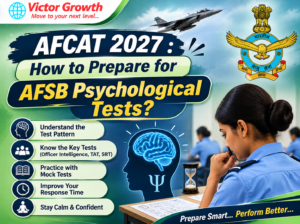
Clearing the AFCAT written examination is an important achievement, but the journey towards becoming an Indian Air Force officer does not end there. After qualifying for the written examination, candidates must attend the Air Force Selection Board (AFSB), where their personality, intelligence, leadership qualities and officer-like qualities are assessed.
One of the most important stages of AFSB selection is the Psychological Test. These tests are designed to understand how candidates think, react to situations, solve problems and handle responsibilities.
For AFCAT 2027 aspirants, preparing for psychological tests requires more than memorising answers. It requires self-awareness, regular practice, confidence and a positive approach.
Let’s understand the different psychological tests in AFSB and how you can prepare for them effectively.
1. What Are AFSB Psychological Tests?
AFSB psychological tests are part of the Stage II selection process. They are conducted by trained psychologists to assess a candidate’s personality and suitability for becoming an officer in the Indian Air Force.
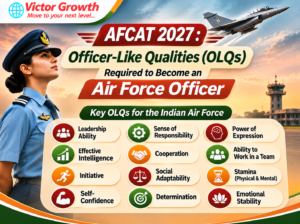
These tests evaluate important Officer Like Qualities (OLQs), such as:
Effective intelligence.
Reasoning ability.
Social adaptability.
Sense of responsibility.
Initiative and confidence.
Leadership qualities.
Decision-making ability.
Determination and courage.
The purpose is not to find candidates who give perfect answers but to understand their natural thought processes and behaviour.
2. Different Types of AFSB Psychological Tests
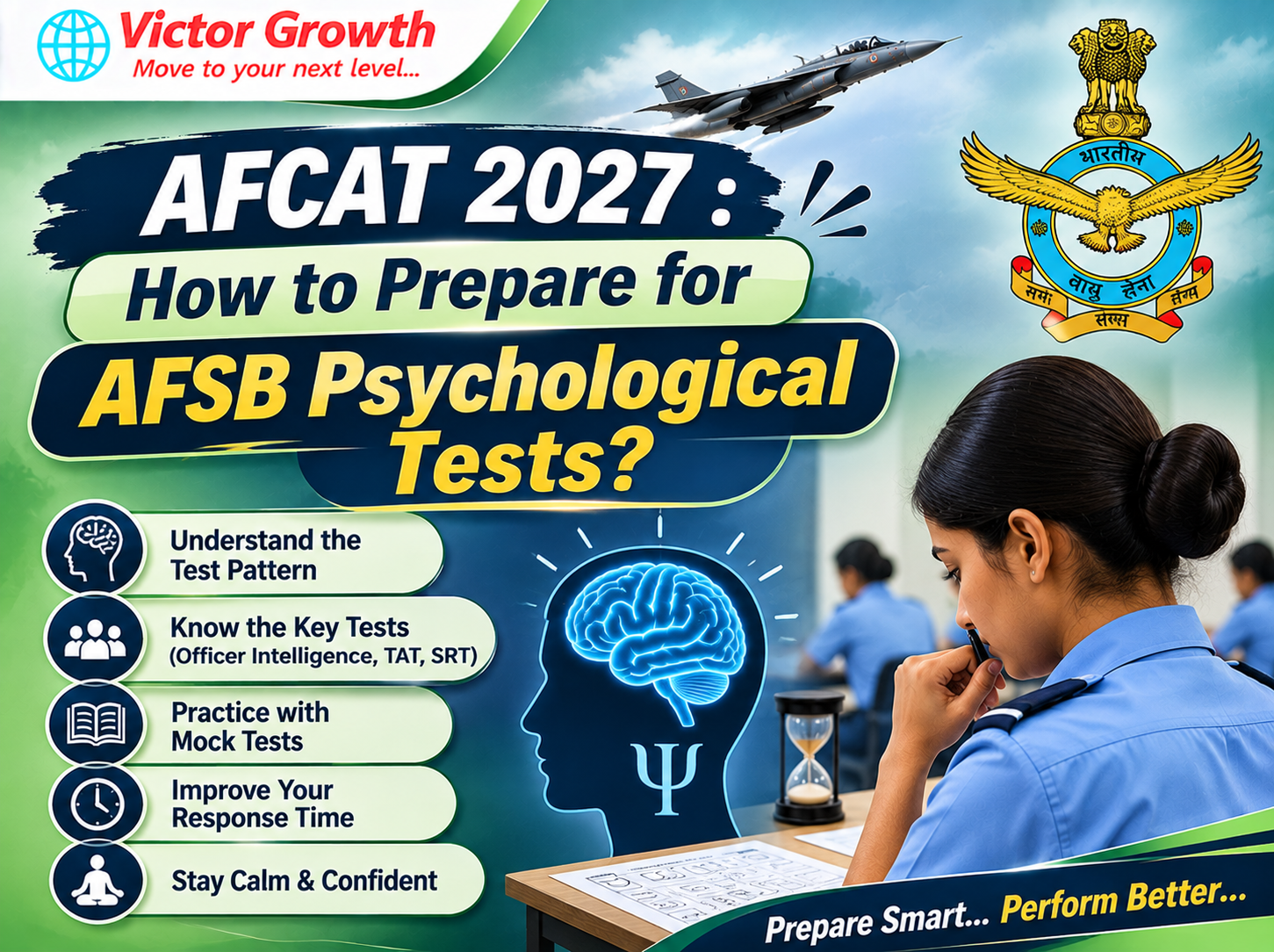
The AFSB psychological assessment generally includes four major tests. Each test evaluates different aspects of your personality.
A. Thematic Apperception Test (TAT)
THEMATIC APPERCEPTION TEST
In TAT, candidates are shown a series of pictures and asked to write stories based on what they observe. One picture is usually blank, where candidates must create their own story.
How to prepare:
Observe the picture carefully.
Identify the main character and situation.
Create a realistic and meaningful story.
Include a practical solution to the problem.
Show qualities such as responsibility, initiative and teamwork.
Example: If the picture shows a person standing near a damaged road, you can create a story about how the person identifies the problem, organises local support and helps arrange repairs.
Avoid unnecessarily dramatic or unrealistic stories.
B. Word Association Test (WAT)
WORD ASSOCIATION TEST
In WAT, candidates are shown a series of words, one after another. They must write the first meaningful sentence that comes to their mind within the given time.
The test evaluates your thought patterns, attitude and personality.
How to prepare:
Practise forming meaningful sentences using random words.
Develop a positive and practical mindset.
Improve your vocabulary.
Avoid memorised quotations and artificial sentences.
Write naturally without overthinking.
Example:
Word: Responsibility
Sentence: A responsible person completes assigned work on time.
The aim is to express your natural thinking clearly and quickly.
C. Situation Reaction Test (SRT)
SITUATION REACTION TEST
In SRT, candidates are given different real-life situations and must write how they would react to each situation.
These situations test your decision-making ability, presence of mind, responsibility and problem-solving skills.
How to prepare:
Practise solving everyday problems.
Think logically before making decisions.
Develop a sense of responsibility.
Learn to remain calm under pressure.
Give practical and action-oriented responses.
Example:
Situation: You are travelling to an important examination, and your vehicle suddenly breaks down. What will you do?
Possible response: I will arrange alternative transport immediately and reach the examination centre on time.
Your response should demonstrate practical thinking and timely action.
D. Self-Description Test (SDT)
SELF-DESCRIPTION TEST
In this test, candidates are asked to describe themselves from different perspectives.
Typically, they are asked to write about:
What their parents think about them.
What their teachers think about them.
What their friends think about them.
What they think about themselves.
Their strengths and areas for improvement.
How to prepare:
Understand your strengths and weaknesses.
Be honest about your personality.
Identify areas where you need improvement.
Think about your achievements and experiences.
Avoid presenting yourself as a perfect person.
Self-awareness and honesty are important when writing your self-description.
3. Effective Preparation Tips for AFSB Psychological Tests
Preparing for AFSB psychological tests requires consistency rather than last-minute preparation.
Follow these practical tips for AFCAT 2027:
1. Practise Every Day
Spend at least 30–45 minutes practising TAT, WAT, SRT and SDT. Regular practice will improve your speed and confidence.
2. Develop a Positive Mindset
A positive attitude helps you approach difficult situations with confidence. Learn to focus on solutions instead of problems.
3. Improve Decision-Making Skills
Observe everyday situations and think about how you would handle them. Practise making practical decisions without unnecessary delay.
4. Read Newspapers and Current Affairs
Reading newspapers improves awareness, vocabulary and understanding of social issues. It also helps you develop logical opinions.
5. Improve Communication Skills
Practise expressing your thoughts clearly. Good communication is important throughout the AFSB selection process.
6. Understand Yourself
Identify your strengths, weaknesses, interests, achievements and personal goals. This will help you prepare naturally for the Self-Description Test and personal interview.
4. Common Mistakes to Avoid During AFSB Psychological Tests
Many candidates make avoidable mistakes because they focus too much on producing impressive answers.
Avoid these common mistakes:
Memorising stories and sentences from preparation books.
Giving unrealistic solutions to simple problems.
Trying to portray yourself as a perfect person.
Writing negative or unnecessarily complicated responses.
Spending too much time on one question.
Copying answers from other candidates.
Ignoring time management.
Remember, AFSB psychological tests are designed to understand your personality, not just your writing skills.
5. How Victor Growth Helps You Prepare for AFSB
Preparing for AFCAT requires a balanced approach that includes written examination preparation and personality development.
At Victor Growth, we understand the importance of preparing defence aspirants for different stages of selection. Our structured guidance helps candidates strengthen their knowledge, improve confidence and develop essential skills required for defence examinations.
For aspirants looking for the best NDA coaching in Kerala, Victor Growth in Kadavanthra, Kochi, provides guidance for NDA, AFCAT and CDS preparation.
With consistent practice, proper guidance and dedication, you can work towards developing the qualities expected from an Indian Air Force officer.
6. Frequently Asked Questions (FAQs)
1. What are the psychological tests in AFSB?
AFSB psychological tests generally include TAT, WAT, SRT and SDT. These tests assess a candidate’s personality, thinking patterns, decision-making ability and officer-like qualities.
2. Is the AFSB psychological test difficult?
The tests can be challenging because candidates must respond within limited time. Regular practice and self-awareness can help improve performance.
3. Can I prepare for AFSB psychological tests at home?
Yes. You can practise TAT stories, WAT sentences, SRT situations and SDT responses at home. However, honest self-assessment and regular practice are essential.
4. How many days should I prepare for AFSB psychological tests?
There is no fixed preparation period. Ideally, candidates should develop their personality and practise regularly rather than depending on a few days of preparation.
5. Is English compulsory for AFSB psychological tests?
Candidates should be comfortable expressing their thoughts in English, particularly during written psychological tests. Clear and understandable responses are more important than using complicated vocabulary.
6. Are psychological tests conducted on the first day of AFSB?
No. Psychological tests are generally conducted during Stage II of the AFSB selection process, after candidates qualify for Stage I screening.
7. What qualities do psychologists look for in AFSB candidates?
Psychologists assess qualities such as intelligence, initiative, responsibility, confidence, social adaptability, determination, leadership and practical decision-making.
8. Can memorised answers help in AFSB psychological tests?
Memorised answers are not a reliable preparation strategy. Candidates should focus on developing natural thinking, practical responses and genuine personality traits.
Conclusion
AFSB psychological tests are an important part of the AFCAT selection process. They provide an opportunity for candidates to demonstrate their personality, thinking ability, confidence and suitability for an officer’s responsibilities.
For AFCAT 2027 aspirants, the best preparation strategy is to practise consistently, develop self-awareness, improve decision-making and maintain a positive attitude.
Remember, becoming an Air Force officer is not just about clearing an examination. It is about developing the qualities, discipline and responsibility required to lead.
Start your preparation today with Victor Growth and take a confident step towards your dream of joining the Indian Air Force!