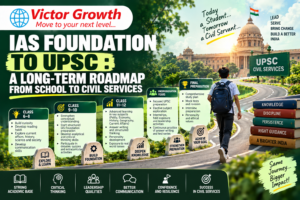
Preparing for the UPSC Civil Services Examination is a long-term journey that requires knowledge, discipline, critical thinking and a strong understanding of current affairs. For school students, IAS foundation preparation is an opportunity to develop these skills gradually without compromising regular academics, hobbies or personal well-being.
Parents play an important role in making this learning journey positive and effective. With the right guidance, encouragement and learning environment, they can help their children build a strong foundation for future civil services preparation.
For families searching for the Best IAS Coaching in Kerala, understanding the role of parents is just as important as choosing the right coaching institute.
1. Encourage Curiosity and a Habit of Learning
IAS foundation preparation should begin with curiosity rather than pressure. Parents can encourage children to ask questions about society, government, history, geography, science and current events.
Simple activities can make learning enjoyable:
Discuss important national and international news during family conversations.
Explain how government schemes and public institutions work.
Encourage children to explore maps, historical events and scientific discoveries.
Let them ask questions and express their opinions freely.
These habits help children develop general awareness and analytical thinking, which are valuable for future UPSC preparation.
2. Develop a Regular Reading Habit
Reading plays a significant role in civil services preparation. Parents can help children develop a reading habit by introducing age-appropriate newspapers, magazines, biographies, storybooks and educational resources.
Instead of asking children to read for long hours, start with 15–20 minutes a day and gradually build consistency. Encourage them to summarise what they read in their own words.
The objective is not to memorise information but to understand different perspectives, improve vocabulary and develop the ability to communicate clearly.
3. Support School Academics Alongside IAS Foundation
IAS foundation preparation should complement school education, not replace it. Subjects such as History, Geography, Political Science, Economics and Science provide a useful foundation for understanding many topics relevant to the UPSC syllabus.
Parents should ensure that children:
Complete school assignments and revise lessons regularly.
Understand concepts instead of relying only on memorisation.
Follow a manageable study schedule.
Have enough time for sports, hobbies, sleep and relaxation.
A balanced approach helps students develop consistent learning habits without experiencing unnecessary academic pressure.
4. Choose the Right IAS Foundation Coaching Institute
Professional guidance can help students learn systematically and develop good study habits. When selecting the Best IAS Coaching in Kerala, parents should consider the quality of teaching, age-appropriate study materials, mentorship, practical learning activities and flexibility in class schedules.
Important factors to evaluate include:
Experienced mentors: Teachers who explain concepts clearly and encourage questions.
Structured learning: A suitable curriculum covering general knowledge, basic concepts and current affairs.
Interactive classes: Discussions, quizzes, presentations and activities that make learning engaging.
Progress assessment: Regular feedback to identify strengths and areas for improvement.
Flexible learning options: Online, offline or recorded classes that fit the child’s school schedule.
Victor Growth in Kadavanthra, Kochi, offers coaching and learning support for competitive examinations, including foundation-level learning for school students. Parents can explore whether its teaching approach and schedule match their child’s needs.
The right institute should build confidence and curiosity rather than create pressure to achieve immediate examination results.
5. Help Children Understand Current Affairs
Current affairs can seem complicated to school students unless explained in simple language. Parents can connect news stories with familiar situations and encourage children to understand why an event matters.
For example, discussions about elections can introduce democracy, while news about rainfall or floods can lead to conversations about geography, climate and disaster management.
Parents can ask questions such as:
What happened?
Why did it happen?
Who is affected?
What could be done to address the issue?
These discussions encourage independent thinking and help children move beyond memorising facts.
6. Motivate Without Creating Pressure
Every child learns at a different pace. Parents should avoid comparing their children with classmates or expecting them to master the entire UPSC syllabus during school.
Instead, celebrate small achievements such as completing a book, understanding a difficult concept or explaining a current-affairs topic confidently.
Allow children to explore their interests and develop their own goals. IAS foundation preparation should be a gradual learning process, not a demand to choose a career before they are ready.
7. Build Discipline, Confidence and Independence
Parents can support preparation by helping children create a realistic weekly routine. However, children should gradually learn to manage their own time, organise study materials and complete tasks independently.
Encourage activities such as:
Preparing short notes after reading.
Taking part in quizzes and group discussions.
Giving short presentations on topics of interest.
Reviewing mistakes and learning from feedback.
Participating in sports and extracurricular activities.
These experiences develop communication, leadership, decision-making and time-management skills that are useful beyond competitive examinations.
8. Maintain Open Communication with Teachers and Mentors
Regular communication with teachers helps parents understand their child’s progress, interests and learning challenges. Instead of focusing only on marks or test scores, discuss whether the child is understanding concepts, participating in class and becoming more confident.
If the workload becomes stressful, parents should work with teachers to adjust the schedule. A supportive relationship between parents, students and mentors creates a healthier learning environment.
Conclusion
Parents are among the most important supporters in a child’s IAS foundation journey. By encouraging curiosity, promoting reading, supporting school academics and providing emotional encouragement, they can help children develop the skills needed for future civil services preparation.
Choosing the Best IAS Coaching in Kerala can provide structured guidance, but a child’s long-term development also depends on a supportive home environment, consistent habits and the freedom to learn at an appropriate pace.
The goal of IAS foundation preparation is not to turn schoolchildren into full-time UPSC aspirants. It is to help them become informed, confident, responsible and independent learners who are better prepared for future opportunities.
Frequently Asked Questions (FAQs)
1. When should parents start IAS foundation preparation for their children?
Children can begin developing useful habits during the middle-school years through reading, general knowledge, basic civics and age-appropriate current-affairs discussions. The pace should suit their age and school workload.
2. How many hours should a school student spend on IAS foundation preparation daily?
There is no fixed number of hours for every child. Short, consistent learning sessions are often more suitable than long study hours. Schoolwork, sleep, sports and relaxation should remain priorities.
3. Is IAS foundation coaching necessary for school students?
Coaching is not compulsory, but a well-designed foundation programme can provide structured learning, mentorship and opportunities to practise analytical thinking. Parents should choose a programme that complements regular education.
4. How can parents help children follow current affairs?
Encourage children to read age-appropriate news, discuss important events and explain what they have understood. Focus on the reasons and impact of events rather than memorising large amounts of information.
5. How should parents choose the Best IAS Coaching in Kerala?
Compare the curriculum, teaching quality, mentor support, learning materials, class schedule and student feedback. Choose an institute that encourages conceptual understanding and balances foundation learning with school education.
6. Can IAS foundation preparation affect a child’s school performance?
A balanced programme can support school learning by strengthening reading, reasoning and general awareness. However, excessive workload can create stress, so parents should monitor the child’s well-being and adjust the routine when necessary.