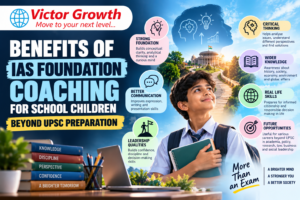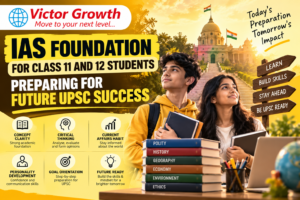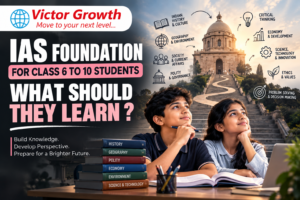
Classes 11 and 12 are important years for students who aspire to become IAS officers. At this stage, students begin studying subjects in greater depth, develop independent learning habits, and start exploring their future career options. These years offer an excellent opportunity to build a strong foundation for the UPSC Civil Services Examination while prioritising school studies and board examination preparation.
IAS foundation preparation during higher secondary education should focus on conceptual understanding, current affairs, analytical thinking, reading, and writing skills. Students do not need to complete the entire UPSC syllabus before graduation. Instead, they can use these years to develop the knowledge and habits that will make future preparation more organised.
For parents and students searching for the Best IAS Coaching in Kerala, choosing a programme that balances competitive examination awareness with academic responsibilities is an important first step.
Why Should Class 11 and 12 Students Consider IAS Foundation Preparation?
The UPSC Civil Services Examination covers a broad range of subjects, including History, Geography, Indian Polity, Economics, Science, Environment, and Current Affairs. Developing familiarity with these areas early can help students understand connections between different subjects.
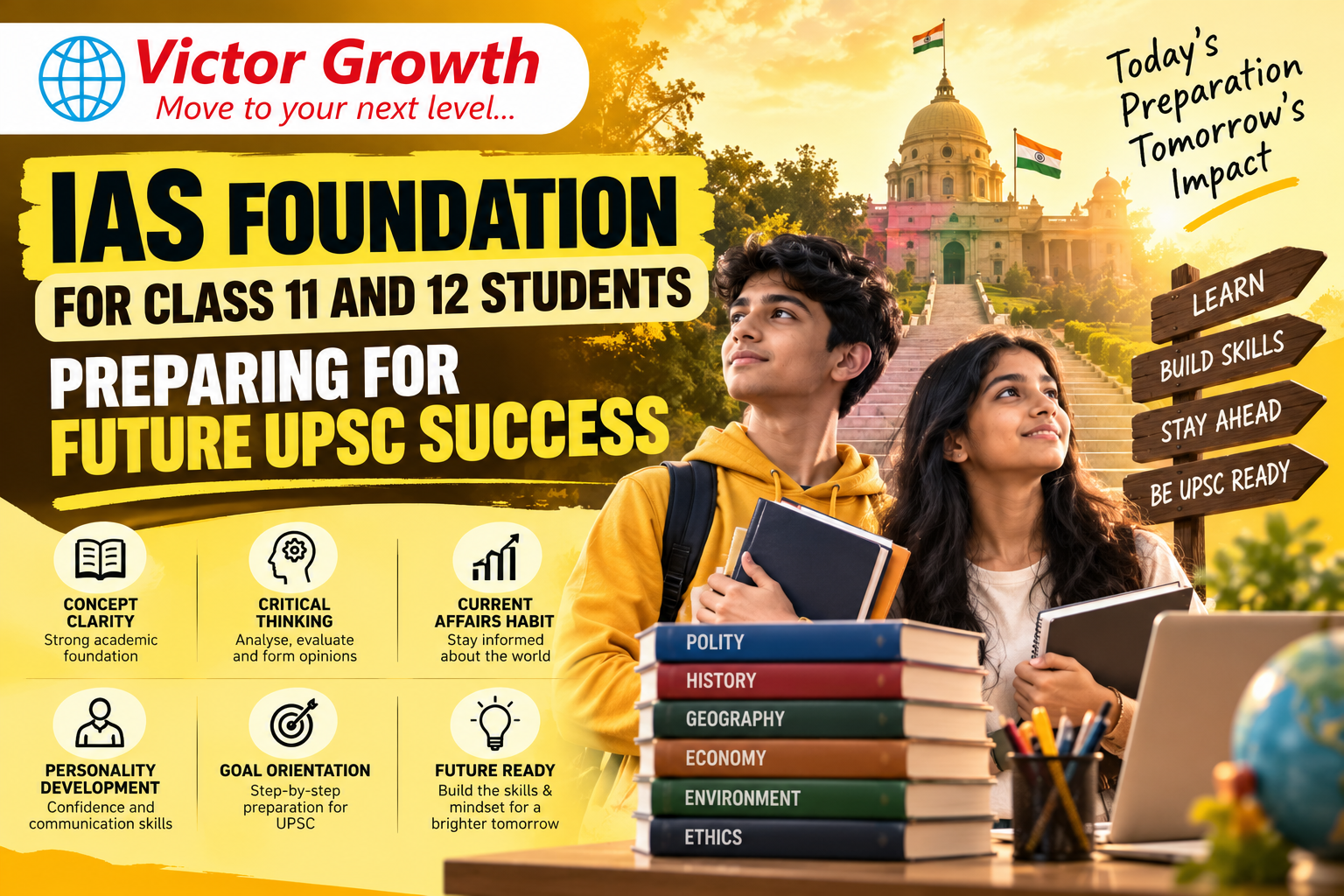
IAS foundation preparation can help students:
Strengthen conceptual knowledge in relevant subjects.
Improve reading comprehension and vocabulary.
Develop awareness of national and international issues.
Build critical thinking and problem-solving skills.
Practise structured writing and effective communication.
Develop discipline and independent study habits.
These abilities can benefit students in higher education as well as their future competitive examination preparation.
What Should Class 11 and 12 Students Learn for UPSC Foundation?
1. Strengthen NCERT and School-Level Concepts
NCERT textbooks are useful resources for developing the fundamentals required for future UPSC preparation. Students should focus on understanding relevant concepts in History, Geography, Political Science, Economics, and Science.
Students should begin with their prescribed school textbooks and gradually explore relevant NCERT materials from other classes where useful. Understanding concepts thoroughly is more important than rushing through multiple books.
2. Develop a Regular Current Affairs Habit
Current affairs help students connect academic concepts with real-world developments. Reading a reliable newspaper or selected educational news summaries for around 15–20 minutes a day can be a practical starting point.
Students can focus on government policies, the Indian economy, science and technology, environmental issues, international relations, and important developments in Kerala and India.
They should learn to identify the main issue, understand its causes, and consider its broader impact rather than memorising headlines.
3. Improve Reading and Answer-Writing Skills
Reading informative books, editorials, biographies, and educational articles can improve comprehension and expose students to different perspectives.
Students can practise writing short summaries, explaining current affairs in their own words, and preparing brief essays on social or environmental topics. These exercises develop clarity of thought and structured expression, both valuable for future UPSC preparation.
4. Build Critical Thinking and Analytical Ability
Civil services preparation requires students to understand issues from multiple perspectives. Class discussions, debates, quizzes, and problem-solving activities can help develop this ability.
For example, students studying Economics can discuss unemployment or inflation, while Geography lessons can lead to discussions about floods, climate change, and disaster management.
The objective is to learn how to analyse information and support conclusions with logical reasoning.
5. Understand the UPSC Examination Structure
Class 11 and 12 students can become familiar with the broad structure of the Civil Services Examination, including the Preliminary Examination, Main Examination, and Personality Test.
They can explore the types of subjects and skills involved without beginning intensive exam-specific preparation. As they progress towards graduation, they can study the official syllabus in detail and develop a more focused preparation plan.
6. Develop Discipline and Time Management
Higher secondary students must balance school classes, practical work, examinations, hobbies, and personal commitments. A realistic routine is therefore essential.
Students can set aside a short period for reading, current affairs, or revision on suitable days. Regularity is more useful than an intensive timetable that affects school performance or well-being.
How to Balance Board Examinations and IAS Foundation Preparation
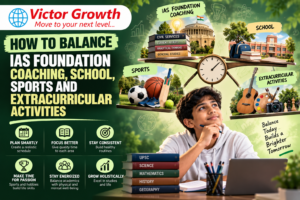
Board examinations should remain a priority in Classes 11 and 12. A sensible approach is to use school subjects as the foundation for future civil services preparation and add small, manageable learning activities.
Students can follow these guidelines:
Complete school assignments and revise academic subjects first.
Read current affairs regularly without spending excessive time.
Practise short writing exercises or quizzes once or twice a week.
Avoid purchasing too many advanced UPSC books at this stage.
Increase foundation study gradually when school workload permits.
A balanced approach helps students prepare for the future without compromising their immediate academic goals.
Choosing the Best IAS Coaching in Kerala for Class 11 and 12 Students
A suitable foundation programme should offer concept-based teaching, current affairs guidance, age-appropriate study materials, analytical exercises, and mentorship. It should also recognise the academic demands of higher secondary education.
Victor Growth, located in Kadavanthra, Kochi, offers coaching for competitive examinations and supports foundation-oriented learning. Students and parents searching for the Best IAS Coaching in Kerala can evaluate programmes based on teaching quality, guidance, learning resources, and the flexibility to balance school studies with foundation activities.
The best programme is one that helps students develop knowledge and confidence without unnecessary pressure.
Conclusion
IAS foundation preparation for Class 11 and 12 students is about building the right habits before beginning intensive UPSC preparation. Strong subject knowledge, regular reading, current affairs awareness, analytical thinking, and effective time management can provide a valuable starting point for future success.
By balancing school education with structured foundation learning, students can enter higher education with greater awareness, confidence, and a clearer understanding of their civil services goals.
Frequently Asked Questions (FAQs)
1. Can Class 11 students start IAS foundation preparation?
Yes. They can begin with NCERT concepts, current affairs, reading, writing, and analytical activities while continuing to prioritise school studies.
2. Is IAS foundation coaching useful for Class 12 students?
It can help students strengthen relevant concepts, improve general awareness, and develop study habits that support future UPSC preparation.
3. Should Class 11 and 12 students study the complete UPSC syllabus?
No. They should focus on foundational knowledge and essential skills. Detailed syllabus-based preparation can be planned later, depending on their academic stage and goals.
4. Which subjects are important for IAS foundation preparation in Classes 11 and 12?
History, Geography, Political Science, Economics, Science, Environment, and Current Affairs are useful areas to explore alongside prescribed school subjects.
5. How much time should higher secondary students spend on IAS foundation preparation?
A short, consistent routine is usually more practical than long study sessions. The schedule should be adjusted around schoolwork, practical examinations, and board examination preparation.
6. How can students choose the Best IAS Coaching in Kerala?
Students and parents should look for concept-based teaching, appropriate study materials, current affairs guidance, supportive mentorship, and a balanced approach to higher secondary education and future UPSC preparation.