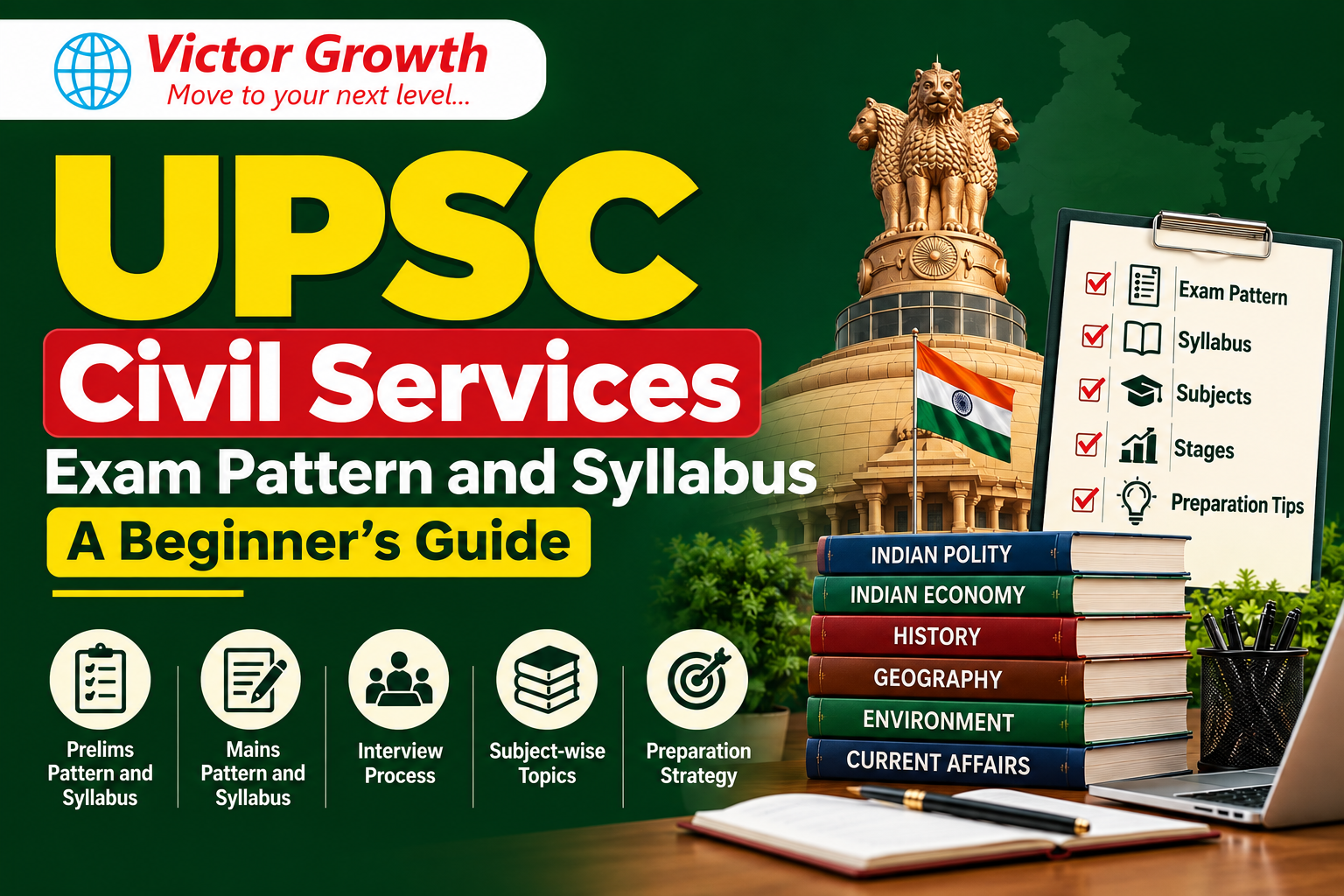
Current affairs are an important component of UPSC Civil Services Examination preparation. Questions related to recent developments can appear directly or indirectly across Prelims, Mains Essay, General Studies papers and the Personality Test.
For Kerala aspirants, the challenge is not simply reading the news every day. The real challenge is identifying relevant information, connecting current events with the UPSC syllabus and revising it effectively.
For students searching for the Best IAS Coaching in Kerala, understanding how to approach current affairs can make UPSC preparation more focused and productive.
Why Are Current Affairs Important for UPSC?
UPSC increasingly tests whether candidates can connect static concepts with contemporary developments.
For example:
A new government scheme can be linked to Governance and Social Justice.
A climate-related development can be connected with Environment and Geography.
A change in monetary policy can be linked to the Indian Economy.
An international agreement can be relevant to International Relations.
A new technological development can become part of Science and Technology.
Therefore, current affairs should not be treated as a separate subject. They should be integrated with static subjects.
Current Affairs in UPSC Prelims
In Prelims, current affairs can be tested through factual as well as conceptual questions.
Aspirants should focus on:
Government schemes and initiatives
Important reports and indices
Environment and biodiversity
Science and technology developments
International organisations
Economy and financial developments
Important national and international events
Places, species and geographical developments
The key is to understand the background and significance of an issue rather than simply memorising news headlines.
Current Affairs in UPSC Mains
Current affairs become particularly important in Mains because they provide examples and contemporary context for analytical answers.
They can strengthen answers in:
General Studies I
Use relevant examples for society, geography, culture and history-related issues.
General Studies II
Connect current developments with governance, Constitution, social justice and international relations.
General Studies III
Use contemporary examples in economy, agriculture, environment, science and technology, internal security and disaster management.
General Studies IV
Use real-life examples and case studies while discussing ethics, integrity and public service.
Essay
Current affairs provide examples, data, contemporary developments and multiple perspectives that can make essays more relevant and analytical.
How Kerala Aspirants Should Read Current Affairs
1. Follow Limited Sources
Reading multiple newspapers and websites can consume several hours without necessarily improving preparation.
Choose a limited number of reliable sources and follow them consistently.
2. Connect News with the Syllabus
Whenever you read an important news item, ask:
Which part of the UPSC syllabus does this belong to?
This simple habit prevents unnecessary information collection.
3. Make Short Notes
Avoid copying entire newspaper articles.
Create concise notes containing:
What happened?
Why is it important?
Background
Key facts
Government initiatives
Challenges
Possible solutions
Relevant examples or data
4. Revise Regularly
Current affairs become useful only when they are remembered and applied.
Follow a simple cycle:
Daily Reading → Weekly Revision → Monthly Consolidation → Prelims/Mains Practice
5. Practise with Current Affairs Questions
Use current affairs in both MCQs and Mains answer writing.
Try asking yourself:
“If UPSC asks a question about this issue, how would I answer it?”
This converts passive reading into active preparation.
Importance of Kerala-Specific Current Affairs
Kerala aspirants should also remain aware of important developments related to the state.
Topics such as:
Kerala economy
Local governance
Environment and biodiversity
Coastal issues
Disaster management
Public health
Social development
Agriculture
Tourism
Infrastructure
can provide useful examples, particularly in Mains answers and essays.
However, Kerala-specific current affairs should complement—not replace—national and international coverage.
How UPSC Coaching in Kerala Can Help with Current Affairs
A structured UPSC coaching program in Kerala can help aspirants save time by providing:
Daily or weekly current-affairs discussions
Monthly current-affairs compilations
Prelims-oriented MCQs
Mains-oriented issue analysis
Current-affairs revision sessions
Model answers
Integration with static subjects
Regular current-affairs tests
For aspirants looking for the Best IAS Coaching in Kerala, the quality of current-affairs guidance and its integration with the UPSC syllabus should be an important consideration.
Victor Growth – Current Affairs Support for UPSC
Victor Growth, Kochi incorporates current affairs into UPSC preparation through structured learning, study materials, test practice and mentorship.
The objective is to help aspirants understand important developments, connect them with the UPSC syllabus and apply relevant information in Prelims and Mains preparation.
Frequently Asked Questions
1. How important are current affairs for UPSC?
Current affairs are important across Prelims, Mains, Essay and the Personality Test. They should be integrated with static subjects rather than studied completely separately.
2. How many hours should I spend reading current affairs?
There is no fixed number. The focus should be on understanding relevant issues efficiently rather than spending excessive time reading every news item.
3. Should Kerala aspirants study Kerala current affairs?
Yes. Important Kerala developments can provide useful examples for Mains and Essay preparation, but national and international current affairs remain essential.
4. Should I make newspaper notes for UPSC?
Yes, but notes should be concise and syllabus-oriented. Avoid copying entire articles.
5. Is a monthly current-affairs magazine enough for UPSC?
A good monthly compilation can be useful for consolidation, but aspirants should ensure that they understand the underlying concepts and regularly practise applying current affairs to Prelims and Mains questions.
6. How can the best IAS coaching in Kerala help with current affairs?
A good coaching program can provide curated current affairs, issue-based discussions, MCQs, Mains questions, revision material and guidance on connecting current events with the UPSC syllabus.
Conclusion
Current affairs are not about memorising everything that appears in the news. Effective UPSC preparation requires selecting relevant issues, understanding their background, connecting them with the syllabus, making concise notes and revising them regularly.
For Kerala aspirants searching for the Best IAS Coaching in Kerala, choose a program that integrates current affairs with Prelims preparation, Mains answer writing, Essay, static subjects and regular tests.
A focused current-affairs strategy can help aspirants turn daily news into useful knowledge for the UPSC Civil Services Examination.