Students in Classes 6 to 10 have an excellent opportunity to build the knowledge, habits, and skills that can support their future UPSC Civil Services Examination preparation. At this stage, the goal should not be to study the entire IAS syllabus or follow an intensive competitive examination schedule. Instead, students should strengthen their school subjects, develop reading habits, understand current affairs, and learn to think independently.
A well-planned IAS foundation programme introduces these skills gradually while allowing students to enjoy their school years.
For parents looking for the Best IAS Coaching in Kerala, choosing a programme that combines conceptual learning, general awareness, and age-appropriate activities can help children develop a strong academic foundation.
Why Should Students Begin IAS Foundation Preparation in Classes 6 to 10?
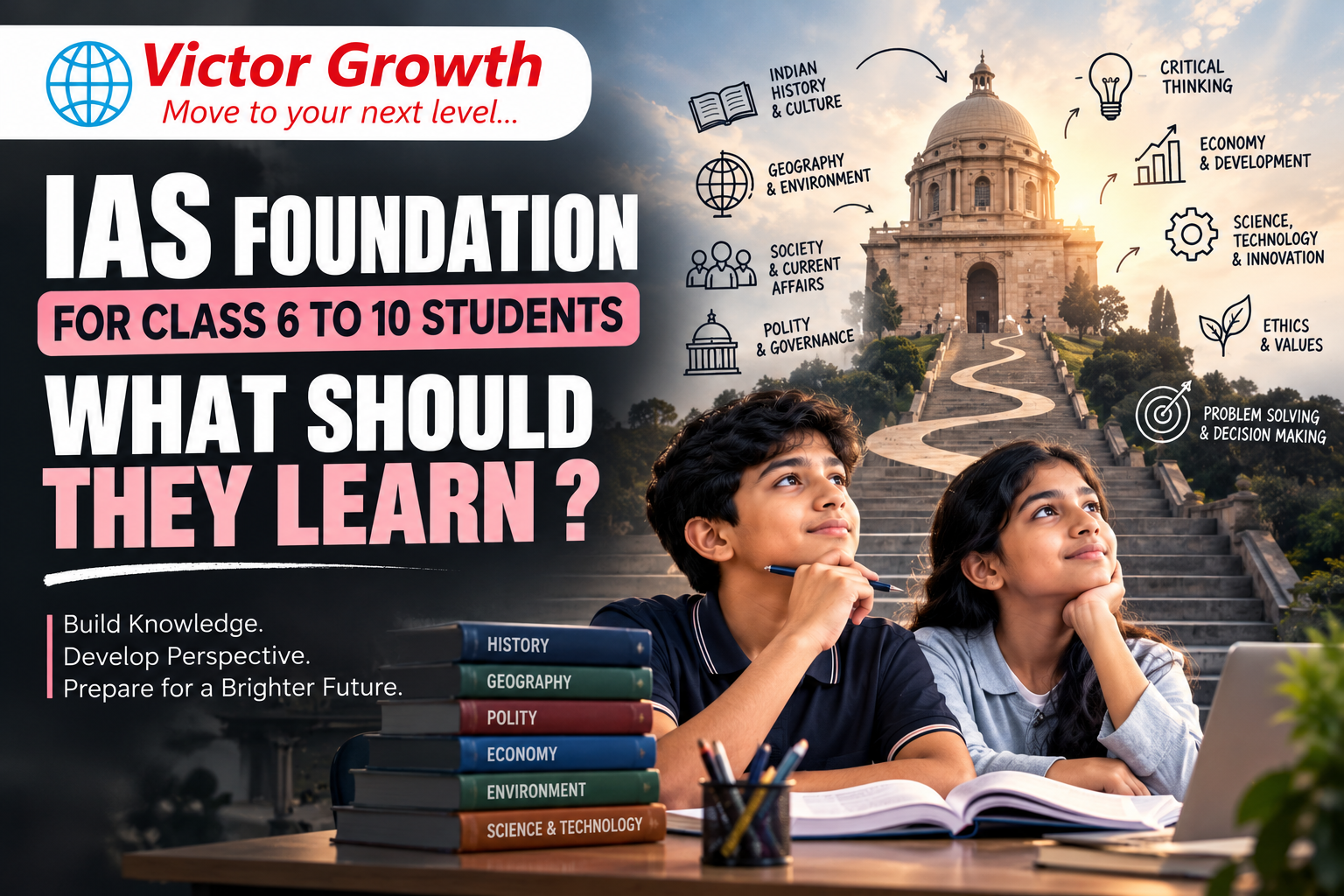
The UPSC Civil Services Examination covers a wide range of subjects, including History, Geography, Polity, Economy, Science, Environment, and Current Affairs. Building familiarity with these areas during school can make future preparation more organised.
Early foundation learning can help students:
Strengthen their understanding of school subjects.
Improve reading, writing, and communication skills.
Develop curiosity about India and the world.
Build logical reasoning and critical thinking.
Learn consistency, discipline, and independent study habits.
The focus should be on gradual development rather than examination pressure.
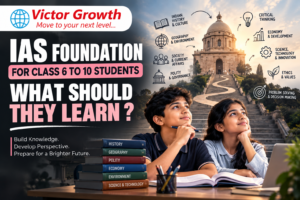
What Should Students Learn in Classes 6 to 10?
1. History and Indian Heritage
Students should develop an understanding of India’s past, including ancient civilisations, medieval kingdoms, the freedom struggle, and important personalities. They can also explore Kerala’s history, cultural traditions, and heritage.
NCERT History textbooks provide a useful starting point. Stories, timelines, maps, and biographies can make historical events easier to understand and remember.
2. Geography and Environmental Awareness
Geography helps students understand the physical world and the relationship between people and their environment.
Important areas include:
Continents, oceans, mountains, rivers, and climate.
India’s physical features, states, and major rivers.
Agriculture, natural resources, and population.
Biodiversity, pollution, climate change, and conservation.
Using an atlas regularly can improve map-reading skills. Students can also connect these topics with environmental issues and geographical events reported in the news.
3. Indian Constitution and Civics
Students can gradually learn how democracy works and how India’s government is organised. Topics such as fundamental rights, fundamental duties, Parliament, elections, local self-government, and the judiciary provide a useful introduction to Indian Polity.
The emphasis should be on understanding the purpose of institutions and the role of citizens, rather than memorising complex constitutional details.
4. Basic Economics and Financial Awareness
An introduction to Economics helps students understand how people, businesses, and governments use resources.
Students can begin with concepts such as money, savings, budgeting, markets, employment, agriculture, and economic development. Everyday examples make these subjects easier to understand and encourage practical thinking.
5. Science and Technology
A strong understanding of school-level Science is useful for developing scientific reasoning and awareness of modern developments.
Students should learn fundamental concepts in Physics, Chemistry, and Biology, while exploring topics such as space missions, renewable energy, artificial intelligence, health, and environmental technology through age-appropriate material.
The objective is to understand scientific ideas rather than memorise technical information.
6. Current Affairs and General Knowledge
Reading selected news articles and discussing important events can help students connect classroom knowledge with real-world developments.
Students can focus on education, science, sports, the environment, important national events, and major international developments. A short daily reading routine, followed by a weekly discussion or quiz, is a practical way to build awareness.
7. Reading, Writing, and Communication Skills
Future UPSC aspirants need to understand information and communicate ideas clearly. School students can develop these abilities through regular reading, short summaries, essays, speeches, and group discussions.
Encourage students to explain what they have learned in their own words. This strengthens comprehension, vocabulary, confidence, and logical expression.
8. Logical Reasoning and Critical Thinking
Puzzles, quizzes, debates, and problem-solving activities encourage students to analyse information and consider different perspectives.
For example, students discussing water conservation can identify the causes of water scarcity, examine its effects, and suggest possible solutions. Such activities promote independent thinking and practical problem-solving.
A Gradual Learning Approach for Classes 6 to 10
Students’ learning needs change as they progress through school. A flexible approach can help them develop without unnecessary pressure.
Classes 6–7: Focus on school subjects, reading habits, maps, general knowledge, and curiosity-driven activities.
Classes 8–9: Introduce more structured current affairs learning, short notes, quizzes, discussions, and basic analytical exercises.
Class 10: Strengthen conceptual understanding, practise summarising issues, and improve writing and reasoning skills while prioritising board examination preparation.
Students should continue to have time for sports, hobbies, friendships, and rest.
How to Choose the Best IAS Coaching in Kerala for School Students
Parents should look for an IAS foundation programme that complements school education instead of adding excessive academic pressure. Useful features include age-appropriate study materials, concept-based teaching, current affairs discussions, quizzes, communication activities, and regular mentorship.
Victor Growth, located in Kadavanthra, Kochi, supports competitive examination preparation and foundation-oriented learning. Families searching for the Best IAS Coaching in Kerala can evaluate whether a programme’s teaching approach, learning resources, and mentoring style suit their child’s needs.
Conclusion
IAS foundation preparation for Classes 6 to 10 should focus on strong basics, curiosity, and the development of lifelong learning habits. History, Geography, Civics, Science, basic Economics, current affairs, reading, writing, and critical thinking all contribute to a useful foundation for future UPSC preparation.
With consistent practice and appropriate guidance, students can gradually become informed, confident, and independent learners—without compromising their regular school education.
Frequently Asked Questions (FAQs)
1. Can students in Class 6 start IAS foundation preparation?
Yes. They can begin with school subjects, general knowledge, reading habits, maps, and age-appropriate activities without intensive UPSC study.
2. What subjects should students in Classes 6 to 10 focus on for IAS foundation?
History, Geography, Civics, Science, basic Economics, current affairs, and language skills are useful areas to develop gradually.
3. Should Class 6 to 10 students study the complete UPSC syllabus?
No. They should focus on conceptual understanding, school academics, and essential learning skills. Detailed UPSC syllabus preparation can come later.
4. Are NCERT books useful for IAS foundation preparation?
Yes. NCERT textbooks help students build strong subject knowledge and understand concepts in a structured way.
5. How much time should school students spend on IAS foundation learning?
The schedule should depend on the student’s age and school workload. Short, regular sessions are preferable to intensive study schedules that interfere with schoolwork or rest.
6. How can parents find the Best IAS Coaching in Kerala for Classes 6 to 10?
Look for age-appropriate teaching, supportive mentorship, current affairs guidance, interactive activities, and a balanced approach that complements school education.