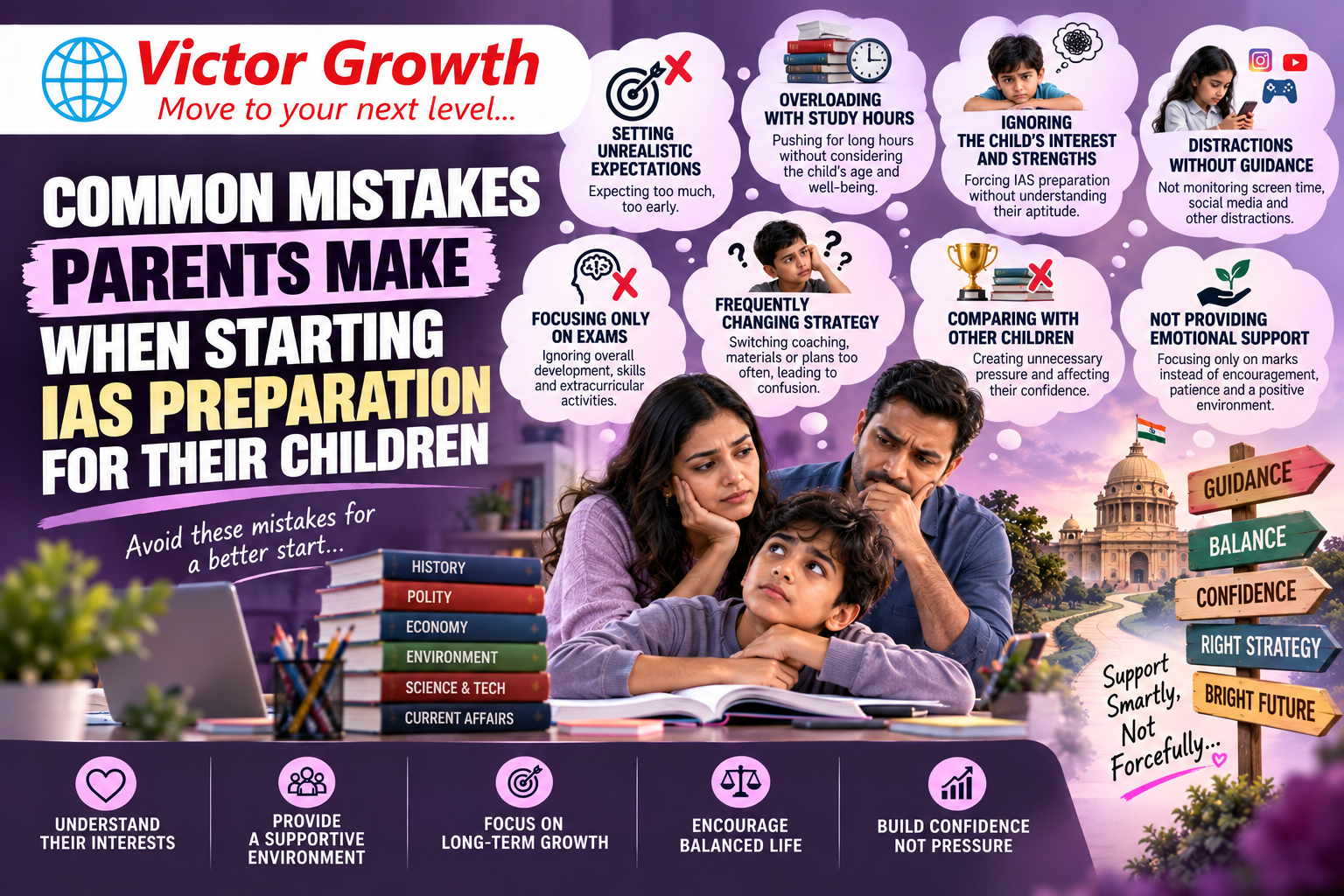
Many parents want to prepare their children for a successful future by introducing them to IAS foundation coaching during their school years. Early exposure to general knowledge, current affairs, reading and analytical thinking can be beneficial. However, the way parents approach this preparation makes a significant difference.
IAS foundation preparation should help children become curious, confident and independent learners. It should not create unnecessary academic pressure or take away the joy of childhood. Understanding common mistakes can help parents make better decisions and choose the right learning environment for their children.
For parents searching for the Best IAS Coaching in Kerala, it is important to understand that successful foundation preparation depends on balanced guidance, age-appropriate learning and consistent encouragement.
1. Starting Preparation Too Intensively at an Early Age
One common mistake is expecting young children to study the UPSC syllabus in detail before they are ready. The Civil Services Examination covers a vast range of subjects, and attempting to master everything during school can overwhelm students.
What parents can do: Focus on building a strong foundation through reading, basic geography, history, civics, science and general awareness. Keep learning interesting and suitable for the child’s age.
2. Creating Excessive Academic Pressure
Some parents expect immediate results from foundation coaching, including high test scores and extensive knowledge of current affairs. Constant pressure can reduce a child’s interest in learning and affect confidence.
What parents can do: Set realistic expectations and appreciate gradual improvement. Encourage children to ask questions, learn from mistakes and explore subjects at their own pace.
3. Ignoring Regular School Studies
IAS foundation preparation can support school learning, but it should never replace it. School subjects develop essential knowledge and conceptual understanding that can be useful for future UPSC preparation.
What parents can do: Ensure that children complete schoolwork, revise lessons and prepare for examinations. A realistic timetable should also include rest, hobbies and physical activities.
4. Choosing Coaching Based Only on Advertisements
Parents may select an institute because of promotional claims, discounts or promises of success. However, a suitable coaching programme should be evaluated on the quality of its teaching and the needs of the child.
When searching for the Best IAS Coaching in Kerala, parents should consider:
The experience and teaching approach of mentors.
A structured, age-appropriate foundation curriculum.
Interactive classes, discussions and practical activities.
Quality of study materials and regular feedback.
Flexible schedules that accommodate school commitments.
Student and parent feedback, where available.
Victor Growth, located in Kadavanthra, Kochi, provides coaching for competitive examinations and foundation-level learning. Parents can assess its programme, teaching methods and schedule to determine whether it is suitable for their child.
The right institute should encourage understanding and curiosity rather than promise guaranteed results.
5. Expecting Children to Memorise Everything
Another mistake is focusing entirely on memorising facts, dates, names and definitions. While factual knowledge is useful, future civil services preparation also requires comprehension, critical thinking and the ability to connect ideas.
What parents can do: Encourage children to explain concepts in their own words. Discuss why an event happened, how it affects people and what lessons can be learned from it.
6. Neglecting Reading and Current Affairs Habits
Some parents assume that joining a coaching programme alone is enough. However, regular reading and curiosity about the world are important parts of foundation learning.
What parents can do: Introduce age-appropriate newspapers, magazines, biographies and educational books. Discuss important news stories during family conversations and encourage children to express their views respectfully.
Even 15–20 minutes of regular reading can help develop vocabulary, comprehension and awareness over time.
7. Comparing Children With Others
Comparing a child with classmates, siblings or other students can create anxiety and reduce motivation. Every child has a different learning pace, interests and strengths.
What parents can do: Track individual progress rather than comparing scores. Celebrate improvements in reading, communication, reasoning and consistency. Give children the confidence to learn without fear of failure.
8. Overlooking Sports, Hobbies and Emotional Well-Being
Filling every available hour with classes and study sessions may appear productive, but children also need play, rest, social interaction and creative activities.
What parents can do: Create a balanced routine that includes physical exercise, hobbies, family time and adequate sleep. Watch for signs of stress or loss of interest and adjust the workload when necessary.
A healthy routine supports long-term learning far better than an overloaded timetable.
9. Making Career Decisions on Behalf of the Child
Parents may become so focused on the goal of civil services that they forget their child is still discovering personal interests and abilities. Early exposure to IAS preparation should not mean that a child must commit to becoming an IAS officer.
What parents can do: Present civil services as one possible future career. Help children learn about public service, leadership and social issues while allowing them to explore other interests and career options.
How Parents Can Make IAS Foundation Preparation Effective
A positive approach combines encouragement, structure and flexibility. Parents should build reading habits, support school academics, encourage questions and communicate regularly with teachers and mentors.
When choosing the Best IAS Coaching in Kerala, prioritise an institute that develops foundational knowledge, critical thinking and confidence while respecting the child’s age and school commitments.
Conclusion
IAS foundation preparation can be a valuable learning experience when introduced in the right way. The biggest mistakes parents can avoid are creating excessive pressure, ignoring school education, expecting memorisation, comparing children and overlooking their overall well-being.
The purpose of foundation coaching is not to rush children into competitive examinations. It is to help them develop the knowledge, curiosity, discipline and independent thinking that will benefit them throughout their education and future careers.
With the right support at home and suitable guidance from a coaching institute, children can explore civil services preparation in a healthy and enjoyable way.
Frequently Asked Questions (FAQs)
1. What is the right age to start IAS foundation preparation?
School students can gradually develop useful habits during the middle-school years. Start with reading, general knowledge, basic civics and age-appropriate current affairs rather than intensive UPSC syllabus preparation.
2. Can IAS foundation coaching create pressure on school students?
It can if the workload is excessive or expectations are unrealistic. A well-balanced programme should complement school studies and leave enough time for sleep, sports, hobbies and relaxation.
3. How can parents identify the Best IAS Coaching in Kerala?
Evaluate the curriculum, teaching quality, mentor support, study materials, schedule and student feedback. Choose an institute that focuses on conceptual understanding and age-appropriate learning.
4. Should children memorise the UPSC syllabus during school?
No. School students should focus on understanding basic concepts, developing reading habits and improving reasoning skills. Detailed examination-oriented preparation can be planned at an appropriate stage.
5. How can parents motivate children who lose interest in IAS foundation preparation?
Discuss what they find difficult, reduce unnecessary pressure and make learning more interactive. Use books, quizzes, maps and conversations to help them explore topics naturally.
6. Is IAS foundation preparation useful even if a child does not become an IAS officer?
Yes. Reading, communication, critical thinking, general awareness and time management are valuable skills for higher education and many career paths, regardless of the child’s eventual profession.