Becoming an Indian Administrative Service (IAS) officer requires dedication, conceptual understanding, analytical thinking and consistent preparation. While serious UPSC Civil Services Examination preparation generally takes place after graduation, students can begin developing useful knowledge and skills during their school years through a balanced IAS foundation programme.
An effective long-term roadmap helps students progress from basic awareness to advanced examination preparation without unnecessary pressure. For parents searching for the Best IAS Coaching in Kerala, understanding this journey can help them make informed decisions about their child’s education and future goals.
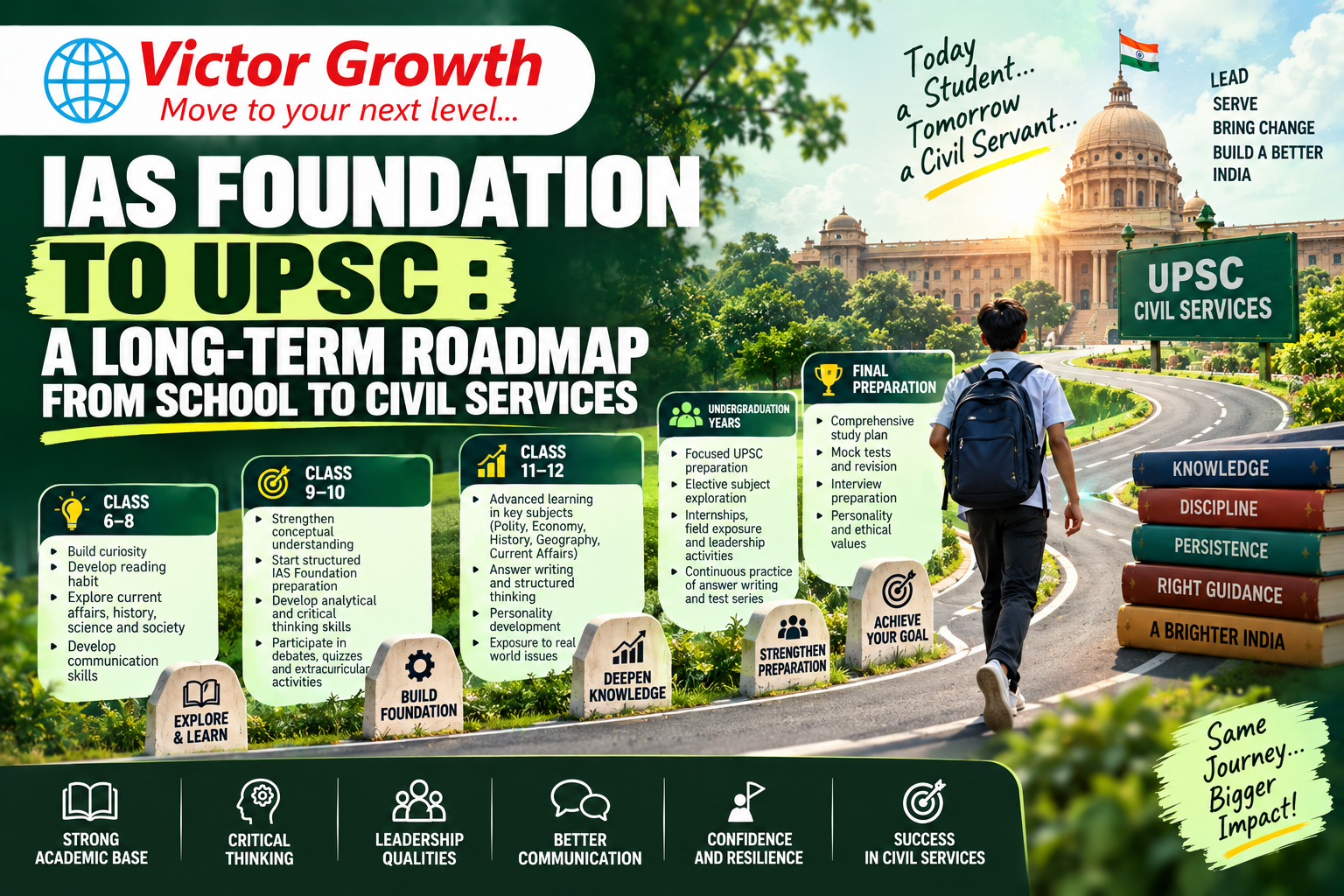
1. Classes 6–8: Build Curiosity and Basic Knowledge
The middle-school years are an ideal time to develop a natural interest in learning about the world. Students do not need to study the complete UPSC syllabus at this stage.
Key areas to focus on:
Reading storybooks, biographies and age-appropriate newspapers.
Understanding basic history, geography, science and civics.
Learning about India’s states, important institutions and cultural diversity.
Developing vocabulary, reading comprehension and communication skills.
Participating in quizzes, discussions and creative activities.
The primary objective is to make learning enjoyable and encourage children to ask questions about society, government and current events.
2. Classes 9–10: Strengthen Concepts and Analytical Thinking
During secondary school, students can gradually develop a more structured understanding of subjects relevant to future civil services preparation.
Important activities include:
Strengthening concepts through school textbooks.
Developing an understanding of the Constitution, democracy and governance.
Following important national and international developments.
Practising short summaries and note-making.
Participating in debates, group discussions and presentations.
At this stage, students should learn to connect information across subjects. For example, studying climate can introduce geography, environmental protection, agriculture and disaster management.
IAS foundation coaching can provide a structured learning environment, provided it complements school academics rather than competing with them.
3. Classes 11–12: Develop Subject Knowledge and Study Discipline
Higher secondary education is an important stage for building independent learning habits. Students can explore topics such as Indian polity, economics, modern history, geography and environmental issues in greater depth.
Recommended priorities:
Focus on school subjects and board examination preparation.
Strengthen understanding of relevant NCERT textbooks.
Read current affairs regularly and identify important issues.
Practise structured writing and logical reasoning.
Learn to organise notes and revise consistently.
Students should choose their higher secondary stream based on their interests, strengths and future plans. The UPSC Civil Services Examination is open to graduates from recognised disciplines; choosing Humanities is not compulsory.
4. During Graduation: Begin Structured UPSC Preparation
Graduation is the stage when students can move towards systematic, examination-oriented preparation. The UPSC Civil Services Examination includes the Preliminary Examination, Main Examination and Personality Test, subject to the applicable examination rules.
A structured preparation plan should include:
UPSC syllabus: Understand the requirements of each examination stage.
NCERT and standard books: Build conceptual clarity before expanding into specialised resources.
Current affairs: Connect important developments with the syllabus.
Prelims practice: Solve multiple-choice questions and analyse mistakes.
Mains preparation: Practise answer writing, essay writing and structured arguments.
Revision and mock tests: Regularly assess progress and improve weak areas.
Students should also check the latest official UPSC notification for eligibility requirements, age limits, attempts and examination dates.
5. The Final Preparation Phase: Practise, Revise and Evaluate
As the examination approaches, preparation should become more focused. Instead of collecting too many books or resources, aspirants should revise selected materials and practise under examination conditions.
A practical approach includes:
Revising important topics repeatedly.
Taking mock tests and reviewing incorrect answers.
Improving time management and accuracy.
Practising Mains answers with clear introductions, arguments and conclusions.
Preparing for the Personality Test by developing awareness, balanced opinions and communication skills.
The exact duration of this phase depends on the aspirant’s existing knowledge, preparation level and examination schedule.
6. How to Choose the Right IAS Foundation Coaching
The right coaching institute can help students follow a structured learning path while developing independent thinking. Parents searching for the Best IAS Coaching in Kerala should look beyond advertisements and evaluate the actual learning experience.
Consider these factors:
Experienced teachers and accessible mentorship.
An age-appropriate curriculum that progresses gradually.
Quality study materials and regular assessments.
Interactive classes that encourage questions and discussions.
Flexible online, offline or recorded learning options.
A manageable schedule that protects schoolwork and personal time.
Victor Growth, located in Kadavanthra, Kochi, offers coaching for competitive examinations and foundation-level learning. Parents can review its curriculum, teaching approach and schedule to determine whether the programme fits their child’s needs.
The best foundation programme is one that builds strong learning habits and confidence, rather than pushing school students into premature examination pressure.
7. The Role of Parents in the Long-Term Journey
Parents can make a meaningful difference by supporting reading habits, encouraging curiosity and helping children maintain a healthy routine. They should avoid comparing children with others or treating IAS as the only acceptable career option.
Regular conversations with teachers and mentors can help identify learning difficulties early. Equally important are sports, hobbies, friendships, adequate sleep and time to relax.
A sustainable preparation journey is more valuable than an intense schedule that a child cannot maintain.
Conclusion
The journey from IAS foundation to UPSC success is a gradual process. School years should focus on curiosity, basic knowledge and communication skills; higher secondary education should strengthen concepts and independent study habits; and graduation is an appropriate time to begin structured, examination-oriented preparation.
For families exploring the Best IAS Coaching in Kerala, the priority should be finding guidance that supports this progression while respecting each child’s interests, academic responsibilities and well-being.
With consistent learning, suitable mentorship and a balanced approach, students can build a strong foundation for civil services preparation and develop skills that remain valuable regardless of their eventual career choice.
Frequently Asked Questions (FAQs)
1. Can students start UPSC preparation while they are in school?
Yes. School students can develop useful foundations through reading, general knowledge, current affairs and conceptual learning. Intensive UPSC examination preparation is generally more suitable during graduation.
2. Which class is best for starting IAS foundation coaching?
There is no single ideal class for every student. Foundation learning can begin gradually during middle school, with the curriculum adapted to the student’s age, interests and academic workload.
3. Is a particular degree required to become an IAS officer?
No specific degree stream is compulsory. Candidates must meet the educational and other eligibility requirements specified in the applicable UPSC Civil Services Examination notification.
4. Are NCERT books important for UPSC preparation?
Yes. NCERT textbooks can help build a clear understanding of foundational concepts in subjects such as history, geography, economics and science. They are a starting point, not the entirety of UPSC preparation.
5. How can parents choose the Best IAS Coaching in Kerala?
Compare the curriculum, faculty, mentorship, study materials, assessment methods and flexibility of the schedule. Choose a programme that develops understanding and complements regular education.
6. Does IAS foundation coaching guarantee UPSC success?
No coaching programme can guarantee selection. Coaching can provide structure and guidance, but outcomes depend on many factors, including the aspirant’s preparation, consistency, performance and eligibility.