The Union Cabinet approved Green Energy Corridor Phase-III (GEC-III) on 30 September 2026 to strengthen India’s transmission infrastructure and facilitate the integration of large-scale renewable energy into the national grid.
GEC-III has a total outlay of ₹1,86,405 crore and will enable the evacuation of up to 135 GW of renewable energy. It also includes 50 GWh of Battery Energy Storage Systems (BESS) to improve grid flexibility. The scheme is targeted for completion by FY 2032–33.
What is the Green Energy Corridor?
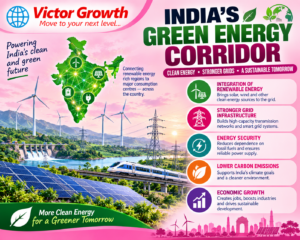
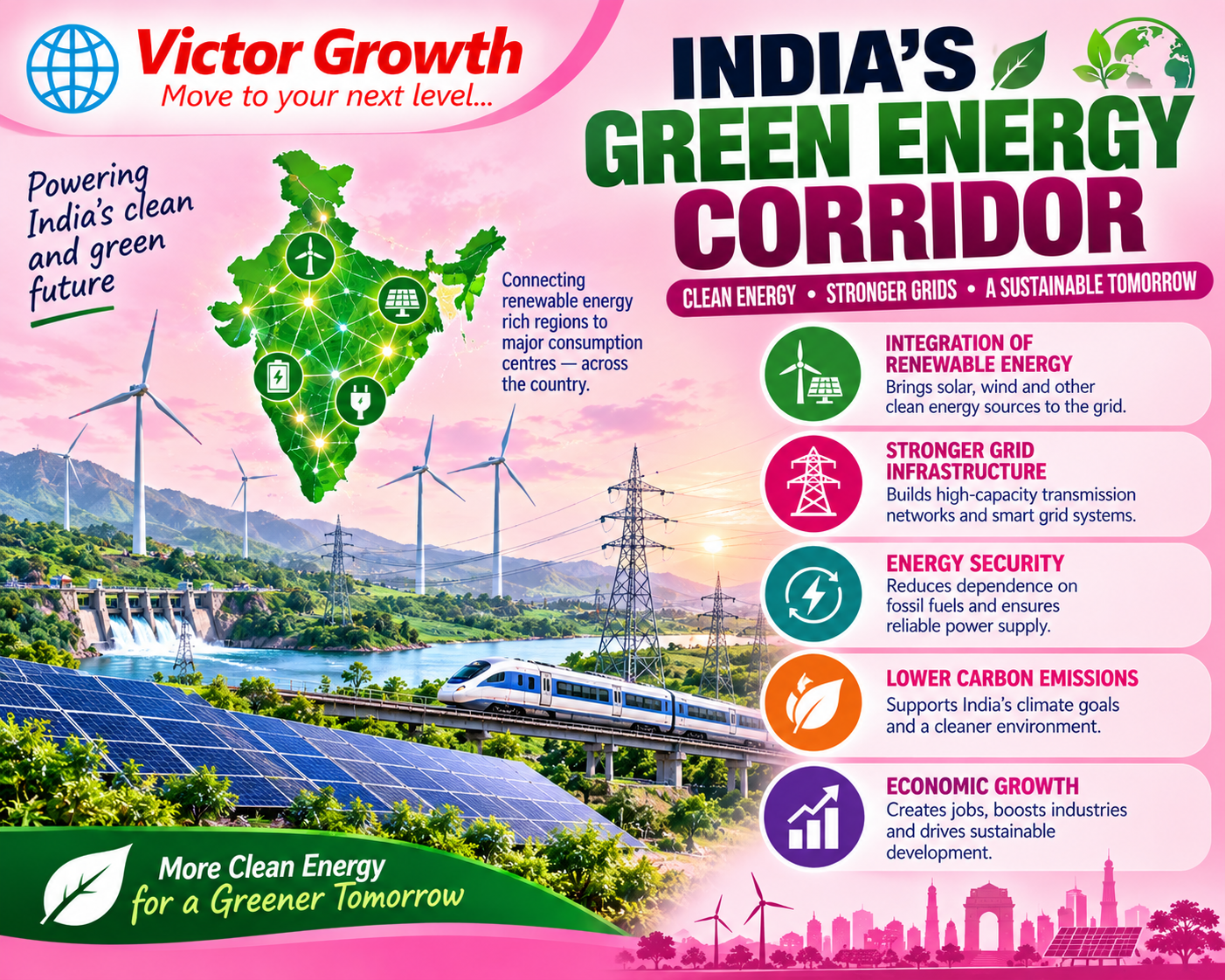
The Green Energy Corridor (GEC) is a government initiative to develop dedicated transmission infrastructure for evacuating electricity generated from renewable energy sources such as solar and wind.
India’s renewable-energy potential is concentrated in particular regions, while electricity demand is distributed across the country. Therefore, generation capacity alone is not sufficient.
The Green Energy Corridor aims to create the transmission backbone required to transport renewable electricity from generation centres to consumption centres.
Green Energy Corridor Phase-III: Key Features
The latest GEC-III scheme focuses on strengthening the Intra-State Transmission System (InSTS).
| Feature | GEC-III |
|---|---|
| Renewable power evacuation | Up to 135 GW |
| Battery storage | 50 GWh |
| Total outlay | ₹1,86,405 crore |
| Transmission component | ₹1,36,378 crore |
| BESS component | ₹50,000 crore |
| Central Financial Support | ₹54,082 crore |
| Target completion | FY 2032–33 |
The Central Financial Support is intended to reduce the impact of intra-state transmission charges and ultimately help keep electricity costs under control.
Why Does India Need a Green Energy Corridor?
1. Rapid Growth of Renewable Energy
India is rapidly expanding solar and wind power. The government is targeting 500 GW of non-fossil fuel capacity by 2030.
As renewable generation increases, transmission infrastructure must expand simultaneously to prevent congestion and under-utilisation of generating capacity.
2. Renewable Energy is Intermittent
Solar power depends on sunlight, while wind power depends on wind conditions.
This creates fluctuations in electricity generation.
Therefore, India needs a combination of:
Renewable energy + transmission + energy storage + grid management
to ensure reliable electricity supply.
3. Avoiding Renewable Energy Curtailment
Insufficient transmission capacity can force grid operators to reduce or curtail renewable generation even when electricity is available.
A stronger transmission network allows more renewable electricity to reach consumers.
Role of Battery Energy Storage Systems
A major feature of GEC-III is the deployment of 50 GWh of BESS.
Battery storage can:
Store surplus renewable electricity
Supply electricity during peak demand
Reduce renewable-energy curtailment
Manage solar and wind intermittency
Improve grid stability
Supply electricity during non-solar hours
Thus, GEC-III moves India’s renewable-energy strategy beyond simply installing solar and wind capacity towards integrated grid management.
Green Energy Corridor: Earlier Phases
Before GEC-III, the government implemented GEC-I and GEC-II.
The first two phases focused on strengthening intra-state transmission systems in renewable-energy-rich states.
The programme covers states including:
Rajasthan
Gujarat
Tamil Nadu
Karnataka
Andhra Pradesh
Madhya Pradesh
Maharashtra
Kerala
Uttar Pradesh
Himachal Pradesh
GEC-I and GEC-II together were designed to facilitate evacuation of about 44 GW of renewable energy, with around 26 GW integrated as of early 2026.
Green Energy Corridor and India’s Energy Transition
The Green Energy Corridor supports India’s broader energy-transition objectives by connecting renewable generation with the electricity grid.
It also complements:
Battery Energy Storage Systems
Pumped Storage Projects
Green hydrogen
Solar and wind power
Smart-grid technologies
Renewable Energy Management Centres
The government has planned expansion of transmission infrastructure alongside renewable capacity addition, recognising that generation and transmission must grow together.
Challenges
Despite its importance, the Green Energy Corridor faces several challenges:
High capital costs
Land acquisition and right-of-way issues
Environmental concerns
Intermittency of renewable generation
Need for large-scale energy storage
Coordination between Centre and States
Increasing demand for critical minerals and battery technologies
Effective planning, modern grid-management systems and greater storage capacity will therefore be essential.
UPSC Relevance
Prelims
Remember:
GEC: Green Energy Corridor
GEC-III approved: September 2026
Renewable evacuation capacity: 135 GW
Battery storage: 50 GWh
Total outlay: ₹1.864 lakh crore
Central Financial Support: ₹54,082 crore
Target completion: FY 2032–33
Focus of GEC-III: Intra-State Transmission System
Mains – GS Paper III
The topic can be linked with:
Renewable energy
Energy security
Electricity transmission
Energy storage
Climate change
Sustainable development
Grid stability
India’s energy transition
Possible UPSC Mains Question
“India’s renewable-energy transition requires not only generation capacity but also robust transmission and storage infrastructure. Discuss the role of the Green Energy Corridor in achieving this objective.”
Conclusion
The Green Energy Corridor is a critical component of India’s renewable-energy transition. The approval of GEC-III, with provisions for 135 GW of renewable-energy evacuation and 50 GWh of battery storage, represents a shift towards building an integrated and flexible electricity system.
For UPSC aspirants, the topic should be studied through the interconnected themes of renewable energy, energy security, battery storage, climate action, transmission infrastructure and sustainable development.