Preparing for the Air Force Common Admission Test (AFCAT) 2027 requires discipline, consistency and proper time management. With four major subject areas to cover, many aspirants find it difficult to balance their preparation, especially when managing college, work or other responsibilities.
A well-planned daily study timetable helps candidates complete the syllabus, practise important questions and revise regularly without feeling overwhelmed.
Whether you are a beginner or have already started preparing, following a realistic study schedule can improve your preparation and confidence. This guide provides a practical daily timetable and useful preparation tips for AFCAT 2027 aspirants.
1. Understand the AFCAT 2027 Exam Structure
Before preparing a timetable, understand the four main subject areas of the AFCAT written examination.
Subject | Important Areas |
|---|---|
English | Grammar, Vocabulary and Comprehension |
General Awareness | History, Geography, Polity, Science and Current Affairs |
Numerical Ability | Percentage, Average, Profit and Loss, Time and Work |
Reasoning and Military Aptitude | Analogy, Coding-Decoding, Series and Non-Verbal Reasoning |
The AFCAT written examination consists of 100 questions carrying 300 marks, with a duration of two hours. Candidates should give sufficient attention to all four sections.
2. Ideal Daily Study Timetable for AFCAT 2027
Aspirants can follow this suggested timetable to cover all subjects systematically.
Time | Subject / Activity | Duration |
|---|---|---|
5:30 AM – 6:00 AM | Newspaper and Current Affairs | 30 minutes |
6:00 AM – 7:00 AM | English | 1 hour |
7:00 AM – 8:00 AM | Numerical Ability | 1 hour |
8:00 AM – 9:00 AM | Breakfast and Break | 1 hour |
10:00 AM – 11:00 AM | General Awareness | 1 hour |
11:00 AM – 11:30 AM | Defence Awareness | 30 minutes |
4:00 PM – 5:00 PM | Reasoning and Military Aptitude | 1 hour |
7:00 PM – 7:30 PM | Practice Questions | 30 minutes |
7:30 PM – 8:00 PM | Revision | 30 minutes |
This timetable is a suggested routine, not a compulsory schedule. Adjust the timings according to your daily commitments and concentration levels.
3. Subject-Wise Daily Preparation Strategy
A. English – 1 Hour Daily
English requires regular reading and grammar practice.
Daily activities:
Learn 10 new vocabulary words.
Practise grammar exercises.
Read an English newspaper or article.
Solve comprehension passages.
Practise synonyms, antonyms and idioms.
Focus on improving vocabulary, grammar and reading speed.
B. Numerical Ability – 1 Hour Daily
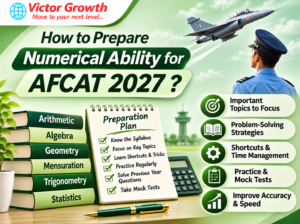
Numerical Ability requires conceptual understanding and regular problem-solving practice.
Daily activities:
Revise important formulas.
Learn one mathematical concept.
Solve 20–30 practice questions.
Practise mental calculations.
Review incorrect answers.
Give additional time to topics you find difficult, such as Time and Work, Percentage and Time, Speed and Distance.
C. General Awareness – 1 to 1.5 Hours Daily
General Awareness covers both static knowledge and current affairs.
Daily activities:
Read important national and international news.
Revise History, Geography and Polity.
Study basic Science and Economy.
Follow defence-related developments.
Practise General Awareness MCQs.
Pay special attention to military exercises, defence technology, aircraft, missiles and important national events.
D. Reasoning and Military Aptitude – 1 Hour Daily
Reasoning improves through consistent practice.
Daily activities:
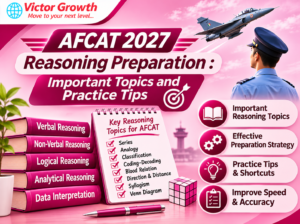
Practise analogy and classification.
Solve coding and decoding questions.
Revise number and alphabet series.
Practise blood relations and direction sense.
Solve non-verbal reasoning questions.
Focus on understanding the logic behind each question rather than memorising answers.
4. Weekly Study Plan for AFCAT 2027
Apart from daily preparation, follow a weekly plan to monitor your progress.
Day | Main Focus |
|---|---|
Monday | English and Numerical Ability |
Tuesday | General Awareness and Reasoning |
Wednesday | English and Numerical Ability |
Thursday | History, Geography and Defence Awareness |
Friday | Reasoning and General Awareness |
Saturday | Revision and Topic-Wise Tests |
Sunday | Full-Length Mock Test and Analysis |
Continue practising all four subjects throughout the week. The table indicates the additional focus for each day, not the only subjects to study.
5. Include Mock Tests and Revision in Your Timetable
Mock tests are essential for understanding your preparation level and improving examination performance.
Follow these suggestions:
Attempt topic-wise tests after completing each chapter.
Take full-length mock tests regularly.
Practise within the actual two-hour examination duration.
Analyse incorrect answers.
Identify weak subjects and revise them.
Maintain a notebook of frequently repeated mistakes.
Since AFCAT has negative marking, focus on accuracy and avoid random guessing.
6. How to Balance AFCAT Preparation with College or Work
Many aspirants prepare for AFCAT while attending college or working. A flexible timetable can help them maintain consistency.
Consider these suggestions:
Study difficult subjects when your concentration is highest.
Use short breaks for vocabulary and current affairs revision.
Practise mathematics and reasoning regularly.
Reserve weekends for mock tests and revision.
Avoid studying continuously without breaks.
Maintain sufficient sleep and physical activity.
Even three to four focused hours daily can be productive when supported by a consistent routine.
7. Prepare for AFSB Alongside Written Examination
AFCAT preparation should not stop with the written examination. Candidates who qualify are called for the Air Force Selection Board (AFSB) process, subject to eligibility.
Start developing:
Communication skills
Leadership qualities
Confidence
General awareness
Decision-making ability
Teamwork and problem-solving skills
Regular reading, group discussions, physical activity and awareness of national developments can support your overall preparation.
8. Choose the Right Defence Coaching in Kerala
A proper learning environment can help aspirants follow a structured timetable, understand difficult concepts and practise through regular assessments.
When searching for the best NDA coaching in Kerala, remember that NDA and AFCAT are different examinations with separate eligibility requirements and preparation strategies. NDA is an entry route after Class 12, whereas AFCAT is designed for eligible graduates and other candidates meeting the prescribed qualifications.
Victor Growth Coaching Centre in Kochi provides coaching support for defence examination aspirants. Before choosing a programme, evaluate faculty experience, syllabus coverage, study materials, mock tests and individual academic support.
Frequently Asked Questions (FAQs)
1. How many hours should I study daily for AFCAT 2027?
Around three to five focused hours can be a useful starting point. Beginners may gradually increase their study time depending on their preparation level.
2. Which subject should I study first in the morning?
Choose a subject that requires greater concentration, such as Numerical Ability or English. You can adjust the order based on your strengths.
3. Is six months enough to prepare for AFCAT?
Six months can provide sufficient preparation time for many candidates if they follow a structured timetable, cover the syllabus and practise regularly.
4. Should I study all four AFCAT subjects every day?
Studying all four subjects regularly is helpful. You can vary the time allocated to each subject based on your strengths and weaknesses.
5. How many mock tests should I attempt for AFCAT?
Start with topic-wise tests and gradually attempt full-length mock tests every week. Increase the frequency as the examination approaches.
6. Can working professionals prepare for AFCAT 2027?
Yes. Working professionals can prepare by following a flexible timetable, studying during available hours and using weekends for revision and mock tests.
7. Is physical fitness important for AFCAT aspirants?
Yes. Candidates should maintain good physical fitness and understand the medical and physical standards applicable to their chosen branch.
Conclusion
A well-planned daily study timetable can make AFCAT 2027 preparation more organised and effective. Focus on English, General Awareness, Numerical Ability and Reasoning, while giving sufficient time to revision and mock tests.
Remember, success does not depend only on the number of hours you study. Consistency, discipline and effective time management are equally important. Follow a realistic timetable, identify your weak areas and work towards your goal of becoming an officer in the Indian Air Force.