Separating Facts from Misconceptions for Early UPSC Success | Best IAS Coaching in Kerala
The dream of becoming an Indian Administrative Service (IAS) officer inspires thousands of students across India. Many students begin developing this aspiration during their school years after learning about the role of civil servants in governance, public administration, and nation-building. However, along with this ambition come several misconceptions about the Union Public Service Commission (UPSC) Civil Services Examination and the preparation required to succeed.
School students often receive advice from friends, relatives, social media, or unverified online sources that can create confusion and unnecessary anxiety. Some believe they must study for 12–15 hours a day, while others think only students from certain academic backgrounds can become IAS officers. These myths discourage many talented students from starting their preparation early.
The truth is that UPSC rewards conceptual understanding, analytical thinking, consistency, discipline, and a balanced personality, not shortcuts or unrealistic study routines. The best IAS coaching in Kerala helps students understand the realities of UPSC preparation and guides them with a structured, age-appropriate learning approach.
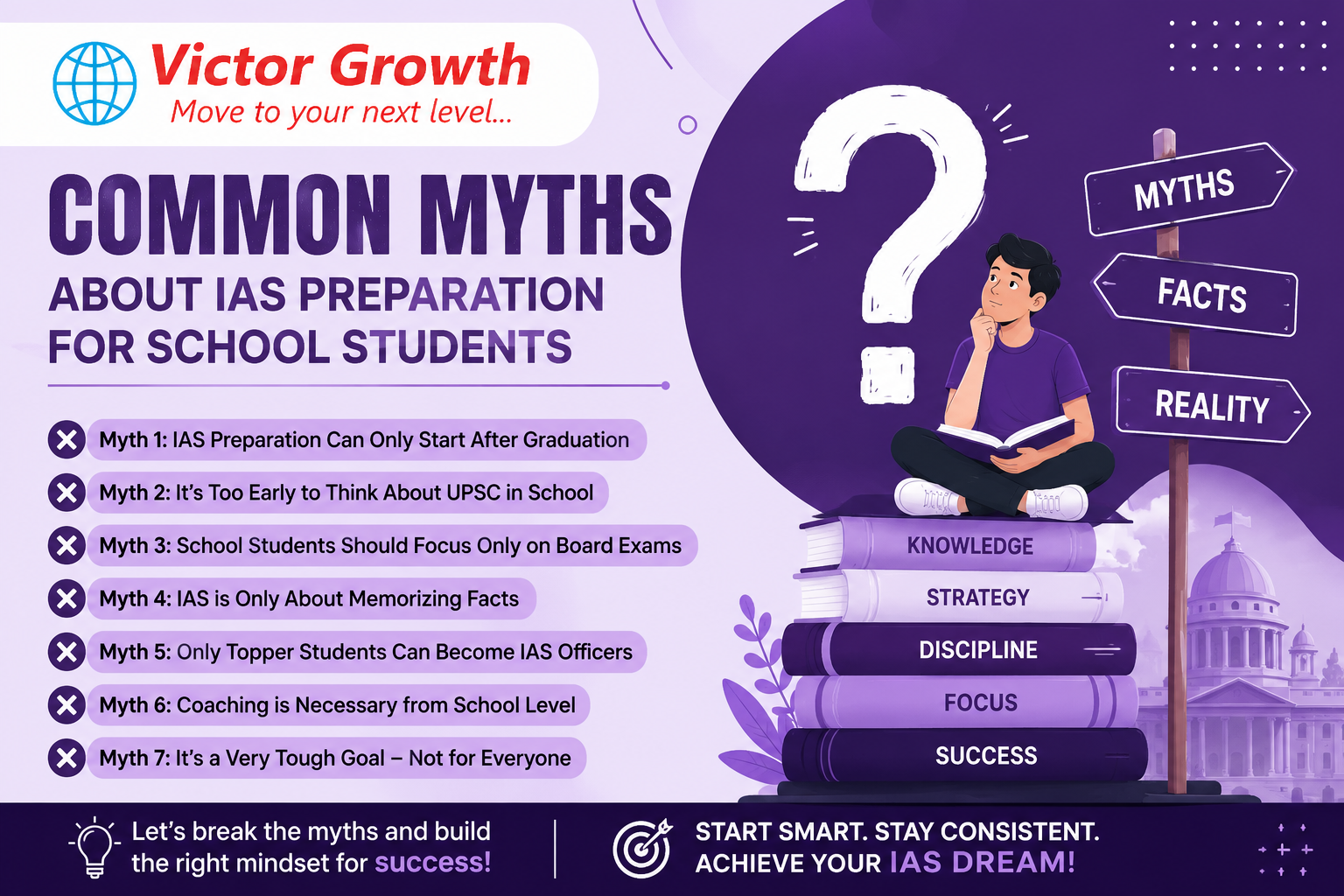
This comprehensive guide addresses the most common myths about IAS preparation for school students and explains the facts every aspiring civil servant should know.
Why It Is Important to Understand the Truth About IAS Preparation
Believing myths can lead to:
- Unnecessary stress
- Poor study habits
- Loss of confidence
- Unrealistic expectations
- Inefficient preparation
- Academic imbalance
Understanding the reality allows students to prepare systematically while enjoying their school years and developing the skills needed for long-term success.
Myth 1: Students Must Start Serious UPSC Preparation Only After Graduation
Reality
One of the biggest misconceptions is that UPSC preparation should begin only after completing a degree.
In reality, school years are the best time to build the foundation.
Students in Classes 8–12 can focus on:
- NCERT textbooks
- Reading newspapers
- Improving vocabulary
- Developing reading habits
- Strengthening communication skills
- Building general knowledge
- Enhancing analytical thinking
Early preparation is not about studying advanced UPSC books but about developing the habits that lead to future success.
Myth 2: Only Students with Exceptional Intelligence Can Become IAS Officers
Reality
UPSC does not exclusively select the “most intelligent” candidates.
Successful aspirants are usually those who demonstrate:
- Consistency
- Discipline
- Conceptual clarity
- Effective time management
- Critical thinking
- Emotional resilience
- Strong writing skills
Hard work combined with smart preparation often matters more than natural intelligence.
Myth 3: School Students Must Study for 10–12 Hours Daily
Reality
This is one of the most harmful myths.
School students should prioritize:
- School academics
- Conceptual learning
- Reading habits
- Current affairs
- Balanced extracurricular activities
For IAS Foundation preparation, 1–2 focused hours daily (depending on the student’s class and schedule) are generally sufficient. Quality of study is far more important than the number of hours.
Myth 4: Memorizing Facts Is Enough to Clear UPSC
Reality
The UPSC examination evaluates understanding rather than rote learning.
Students must learn to:
- Analyze issues
- Connect concepts
- Solve problems
- Present balanced opinions
- Apply knowledge to real-life situations
Critical thinking is one of the most important skills for future IAS officers.
Myth 5: English Medium Students Have an Advantage
Reality
UPSC allows candidates to write the Mains Examination in several Indian languages listed in the Constitution.
Success depends on:
- Conceptual clarity
- Strong answer writing
- Consistent preparation
- Analytical thinking
Language is a medium of expression, not a barrier to success.
Myth 6: School Marks Decide UPSC Success
Reality
Excellent school marks are beneficial but they do not determine UPSC success.
UPSC evaluates:
- Current affairs awareness
- General Studies
- Optional subject knowledge
- Ethics
- Essay writing
- Personality
- Decision-making ability
Students with average school marks have also achieved remarkable success through disciplined preparation.
Myth 7: Students Must Read Hundreds of Books
Reality
Many beginners believe they need an enormous collection of books.
The truth is that a small number of quality resources are enough.
Recommended resources include:
- NCERT textbooks
- Standard reference books (at the appropriate stage)
- Newspapers
- Government publications
- Current affairs notes
Reading fewer books thoroughly is much more effective than collecting many books.
Myth 8: Current Affairs Are Important Only in Higher Classes
Reality
Current affairs should become a habit from school itself.
Reading newspapers develops:
- Vocabulary
- General knowledge
- Analytical thinking
- Communication skills
- Awareness of society
Students who begin early gain a significant advantage.
Myth 9: Only Arts Students Can Become IAS Officers
Reality
Students from all academic streams successfully clear UPSC.
Successful IAS officers come from:
- Science
- Commerce
- Humanities
- Engineering
- Medicine
- Law
- Agriculture
- Management
The Civil Services Examination values diverse educational backgrounds.
Myth 10: Coaching Alone Guarantees Success
Reality
Coaching provides guidance, but success ultimately depends on the student’s dedication.
The best IAS coaching in Kerala helps students by offering:
- Structured study plans
- Expert mentorship
- Current affairs guidance
- Answer writing practice
- Leadership development
- Regular assessments
However, consistent self-study remains essential.
Myth 11: Students Should Ignore Extracurricular Activities
Reality
Future civil servants require well-rounded personalities.
Activities such as:
- Debates
- Quiz competitions
- Sports
- Public speaking
- Essay writing
- Leadership programs
- Community service
help develop communication, confidence, teamwork, and leadership skills.
Myth 12: UPSC Is Only About General Knowledge
Reality
General knowledge is important but only one part of preparation.
UPSC also evaluates:
- Polity
- Economy
- Geography
- History
- Environment
- Ethics
- Science and Technology
- Governance
- International Relations
- Essay writing
- Personality
A balanced preparation strategy is essential.
Myth 13: Failure Means You Are Not Capable
Reality
Many successful civil servants did not clear the examination on their first attempt.
Failures provide opportunities to:
- Improve strategy
- Identify weaknesses
- Strengthen concepts
- Build resilience
Learning from mistakes is an important quality for future administrators.
Myth 14: Students Should Depend Only on Social Media for Preparation
Reality
Social media can provide updates, but it should never replace authentic learning resources.
Students should rely primarily on:
- NCERT textbooks
- Standard books
- Newspapers
- Government publications
- Trusted educational platforms
- Expert guidance
Verifying information is essential.
Myth 15: School Students Must Study Advanced UPSC Books
Reality
Students in Classes 8–12 should first master:
- School textbooks
- NCERT books
- Reading habits
- Current affairs
- Writing skills
- Vocabulary
Advanced UPSC books should be introduced gradually with proper guidance.
Myth 16: IAS Preparation Means Sacrificing Childhood
Reality
Children should continue enjoying:
- Sports
- Hobbies
- Family time
- Friendships
- Creative activities
A balanced lifestyle improves learning, emotional health, and long-term productivity.
UPSC preparation is a journey of gradual growth, not constant pressure.
The Right Approach for School Students
Instead of worrying about myths, students should focus on:
- Building strong concepts
- Reading every day
- Improving communication skills
- Following current affairs
- Developing leadership qualities
- Practicing writing
- Managing time effectively
- Staying physically active
- Maintaining curiosity
These habits create a strong foundation for future success.
Role of Parents in Overcoming Myths
Parents can help by:
- Encouraging conceptual learning
- Avoiding unrealistic expectations
- Appreciating consistent effort
- Supporting balanced routines
- Promoting reading habits
- Limiting misinformation from unreliable sources
Positive encouragement builds confidence and motivation.
How the Best IAS Coaching in Kerala Helps Students Avoid Common Myths
Professional guidance helps students prepare with confidence and clarity.
The best IAS coaching in Kerala provides:
- Age-appropriate Foundation Programs
- Personalized mentoring
- Structured study plans
- NCERT-based learning
- Current affairs sessions
- Leadership development
- Personality enhancement
- Parent guidance
- Regular assessments
- Career counseling
Students receive accurate guidance based on the actual requirements of the UPSC examination rather than common misconceptions.
Why Victor Growth is Among the Best IAS Coaching in Kerala
Victor Growth’s IAS Foundation Program is designed to provide students with a realistic, balanced, and structured approach to Civil Services preparation. Instead of encouraging unnecessary pressure, the program focuses on building strong fundamentals, curiosity, analytical thinking, and leadership qualities from an early age.
Key features include:
- Comprehensive NCERT-based learning
- Daily current affairs discussions
- Reading habit development
- Leadership and personality development workshops
- Answer-writing practice
- Weekly assessments
- Individual mentoring
- Parent guidance sessions
- Time management support
- Integrated preparation for UPSC and other competitive examinations
By helping students distinguish facts from myths and encouraging disciplined, concept-based learning, Victor Growth empowers young aspirants to pursue their IAS dreams with confidence. This student-centric approach has made it one of the preferred choices for families looking for the best IAS coaching in Kerala.
Conclusion
The journey toward becoming an IAS officer is filled with challenges, but it should never be guided by myths and misconceptions. Students who understand the realities of UPSC preparation can build strong habits, maintain confidence, and enjoy a more meaningful learning experience.
School years are not meant for stressful preparation but for developing curiosity, conceptual understanding, communication skills, analytical thinking, leadership qualities, and disciplined study habits. These qualities become the true foundation for future success in the Civil Services Examination.
With consistent effort, informed guidance, and support from the best IAS coaching in Kerala, every aspiring student can move beyond myths and prepare with clarity, confidence, and purpose.
Frequently Asked Questions (FAQs)
1. Should school students start preparing for IAS?
Yes. Students in Classes 8–12 can begin by strengthening NCERT concepts, reading newspapers, improving general knowledge, and developing communication and analytical skills.
2. Do students need to study for 10–12 hours every day?
No. School students should focus on quality learning. A balanced routine with 1–2 hours of focused IAS Foundation preparation, along with school studies, is generally sufficient.
3. Is English medium necessary to become an IAS officer?
No. UPSC allows candidates to write the Mains Examination in several Indian languages. Conceptual understanding and answer-writing ability are more important than the medium of instruction.
4. Can Commerce and Science students become IAS officers?
Yes. Students from Science, Commerce, Humanities, Engineering, Medicine, Law, and many other academic backgrounds have successfully cleared the UPSC Civil Services Examination.
5. Are NCERT books enough for school-level IAS preparation?
Yes. NCERT textbooks are the best starting point for building conceptual clarity. Advanced resources can be added gradually under expert guidance.
6. Is coaching compulsory for IAS preparation?
Coaching is not mandatory, but a quality IAS Foundation Program can provide structured guidance, expert mentoring, current affairs support, and a disciplined study plan.
7. Should students stop participating in extracurricular activities?
No. Debates, sports, quizzes, leadership programs, and public speaking activities help develop confidence, teamwork, communication, and leadership skills that are valuable for future civil servants.
8. How important are current affairs for school students?
Current affairs improve awareness, vocabulary, analytical thinking, and understanding of governance, making them an essential part of early UPSC preparation.
9. How does the best IAS coaching in Kerala help students avoid common myths?
Leading coaching institutes provide authentic guidance, structured Foundation Programs, mentorship, current affairs classes, leadership development, and personalized support to ensure students follow the right preparation strategy.
10. Why should parents encourage early IAS Foundation preparation?
Early preparation helps children develop reading habits, conceptual clarity, critical thinking, communication skills, leadership qualities, and disciplined study routines, creating a strong foundation for future UPSC success.