The dream of becoming an Indian Administrative Service (IAS) officer inspires thousands of students across India every year. The prestige, responsibility, and opportunity to serve society make the IAS one of the most respected careers in the country.
However, the UPSC Civil Services Examination is considered one of the toughest competitive examinations in India. Every year, over a million candidates apply, but only a small percentage are finally selected.
The difference between successful candidates and others is often not intelligence alone—it is consistent preparation, strong fundamentals, disciplined study habits, analytical thinking, and effective guidance developed over several years.
The best approach is not to begin intensive UPSC coaching during school, but to build a strong academic and personal foundation step by step.
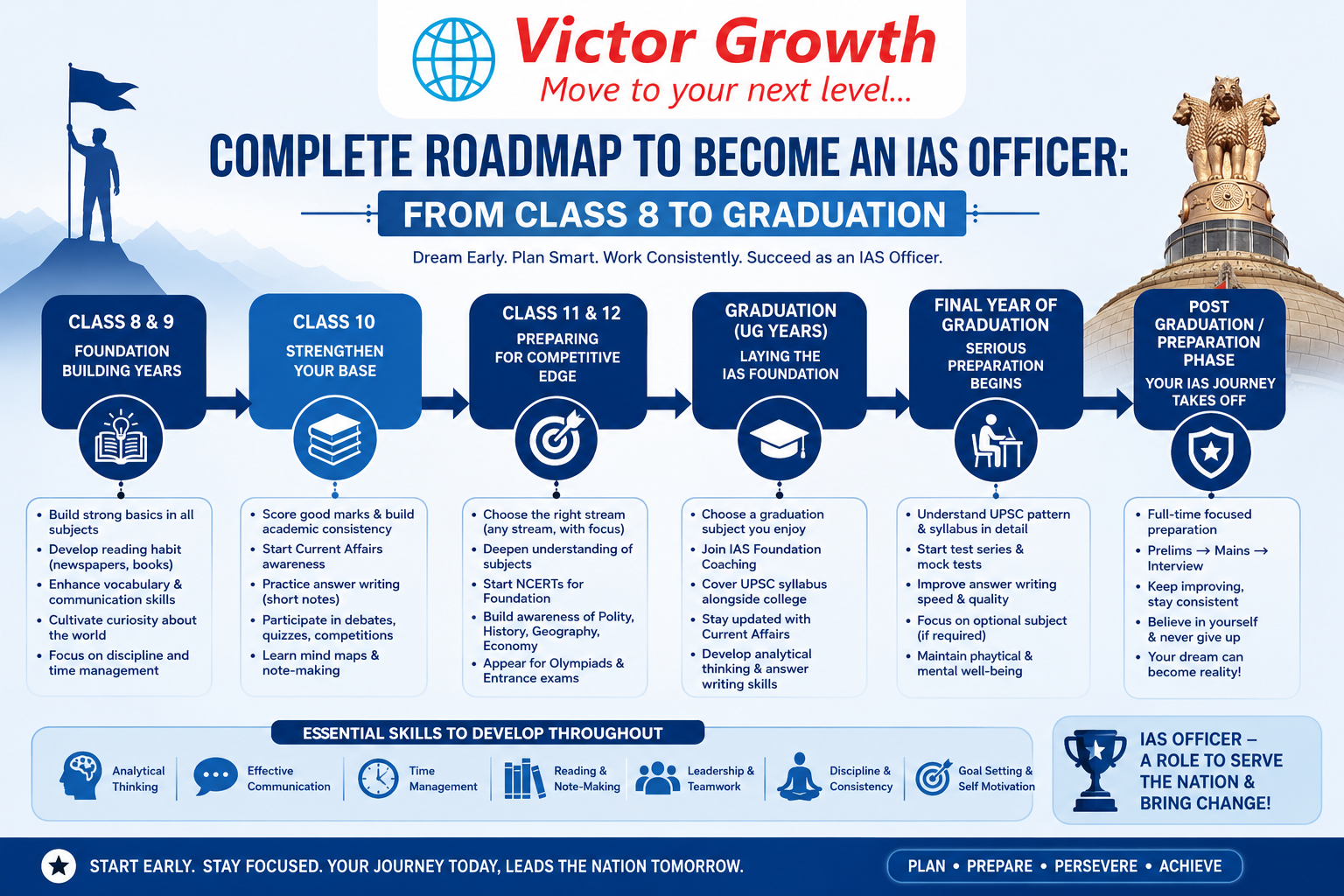
This roadmap explains how students can prepare from Class 8 to Graduation, allowing them to develop the knowledge, skills, and confidence required for future success.
For families searching for the best IAS coaching in Kerala, this guide provides a structured pathway that balances school education with long-term civil services preparation.
Why Start Planning from Class 8?
Class 8 marks an important stage in a student’s educational journey.
Students become capable of understanding:
- Society
- Government
- Science
- Geography
- History
- Current affairs
- Logical reasoning
At this age, learning remains enjoyable and curiosity is naturally high.
Rather than studying the complete UPSC syllabus, students should focus on developing strong fundamentals.
Stage 1: Class 8 – Building the Foundation
Primary Objective
Develop curiosity and good learning habits.
Academic Focus
Students should strengthen:
- History
- Geography
- Science
- English
- Social Science
Conceptual understanding is more important than memorization.
Reading Habit
Start reading:
- Children’s newspapers
- Newspapers with parental guidance
- Biographies
- General knowledge books
- Storybooks
- Science magazines
Reading daily for 20–30 minutes is sufficient at this stage.
Current Affairs
Learn basic awareness about:
- India
- World events
- Science
- Sports
- Environment
Current affairs should be discussed rather than memorized.
Skill Development
Focus on:
- Reading
- Vocabulary
- Communication
- Curiosity
- Observation
Stage 2: Class 9 – Strengthening Concepts
Academic Goals
Master school subjects thoroughly.
Pay special attention to:
- Geography
- History
- Civics
- Science
These subjects form the backbone of future UPSC preparation.
Develop Map Skills
Practice:
- Indian states
- Rivers
- Mountains
- Capitals
- Countries
- Oceans
Map learning makes geography enjoyable and improves retention.
Writing Practice
Start:
- Essay writing
- Paragraph writing
- Note-making
Writing develops clarity of thought.
Activities
Participate in:
- Quiz competitions
- Debates
- Public speaking
- Science exhibitions
Stage 3: Class 10 – Building Academic Excellence
Board Examination Priority
School academics should remain the primary focus.
Aim to build:
- Strong conceptual understanding
- Consistent study habits
- Time management
Reading
Increase reading to include:
- Editorials (simplified)
- History books
- Science articles
- Government initiatives
Skills
Develop:
- Communication
- Logical reasoning
- Confidence
- Discipline
Stage 4: Classes 11–12 – Developing Analytical Thinking
Higher secondary education is one of the most important phases.
Students become capable of deeper analysis.
Subject Selection
Choose streams based on interest rather than myths.
Students from:
- Science
- Commerce
- Humanities
can all become IAS officers.
No stream guarantees success.
NCERT Mastery
Study NCERT textbooks thoroughly.
Especially:
- History
- Geography
- Economics
- Political Science
- Sociology
- Science
NCERT books remain valuable even during later UPSC preparation.
Newspaper Reading
Read newspapers daily.
Focus on:
- National issues
- Economy
- Science
- Environment
- International relations
- Government schemes
Avoid sensational news.
Current Affairs Notes
Maintain a notebook for:
- Important events
- Government policies
- Supreme Court judgments
- Science updates
- Awards
- Reports
Communication Skills
Participate regularly in:
- Debates
- Group discussions
- Presentations
These activities improve confidence.
Leadership
Take part in:
- Student councils
- Volunteer programmes
- Social service
- NSS
- Community projects
Leadership is developed through experience.
Stage 5: Graduation – Structured UPSC Preparation
Graduation is the stage for serious UPSC preparation.
Choose Graduation Wisely
Select a degree based on genuine interest.
Popular choices include:
- BA
- BSc
- BCom
- Engineering
- Medicine
- Law
- Management
UPSC accepts graduates from all recognized disciplines.
Understand the UPSC Syllabus
Study:
Prelims
- General Studies
- CSAT
Mains
- Essay
- General Studies I
- General Studies II
- General Studies III
- General Studies IV
- Optional Subject
Interview
- Personality Test
Choose an Optional Subject Carefully
Select an optional based on:
- Interest
- Availability of guidance
- Availability of study material
- Previous academic background
Avoid choosing solely based on popularity.
Standard Books
Begin reading standard reference books in addition to NCERTs.
Use authentic sources and avoid collecting too many books.
Answer Writing Practice
Practice writing:
- 150-word answers
- 250-word answers
- Essays
Regular writing improves speed, structure, and clarity.
Test Series
Join quality:
- Prelims test series
- Mains answer-writing practice
Testing helps identify strengths and weaknesses.
Daily Habits That Build Future IAS Officers
Regardless of the academic stage, students should cultivate these habits:
Read Every Day
Develop a lifelong reading habit.
Ask Questions
Curiosity is more valuable than memorization.
Improve Vocabulary
Learn new words daily.
Write Regularly
Maintain journals, essays, or summaries.
Stay Healthy
Maintain:
- Regular exercise
- Healthy diet
- Adequate sleep
A healthy body supports effective learning.
Limit Screen Time
Use technology primarily for educational purposes.
Follow Current Affairs
Stay informed about national and global developments.
Skills Every Student Should Develop
Communication
Clear expression builds confidence.
Leadership
Take responsibility and work with teams.
Analytical Thinking
Learn to examine issues from multiple perspectives.
Time Management
Balance academics, hobbies, and personal growth.
Ethics
Develop honesty, empathy, and integrity.
Emotional Intelligence
Understand emotions and communicate respectfully.
Digital Literacy
Use technology responsibly for learning and research.
Common Mistakes to Avoid
Starting Full UPSC Coaching Too Early
School students need foundation learning—not graduate-level coaching.
Ignoring School Academics
Strong school performance builds confidence and conceptual understanding.
Depending Only on Coaching
Self-study and consistent reading remain essential.
Memorizing Without Understanding
Conceptual learning is more valuable than rote learning.
Collecting Too Many Books
Quality matters more than quantity.
Study fewer books thoroughly.
Ignoring Communication Skills
Future civil servants must communicate effectively.
Practice speaking and writing regularly.
Role of Parents
Parents should:
- Encourage curiosity
- Create a reading-friendly environment
- Support extracurricular participation
- Appreciate consistent effort
- Avoid unnecessary academic pressure
- Promote healthy routines
Balanced encouragement is more effective than excessive expectations.
How an IAS Foundation Programme Supports This Roadmap
An IAS Foundation Programme aligns perfectly with this long-term journey by helping students develop:
- Conceptual clarity
- Reading habits
- Current affairs awareness
- Leadership
- Public speaking
- Essay writing
- Personality development
- Time management
- Analytical thinking
- Confidence
Instead of rushing students into advanced UPSC preparation, the programme builds the right foundation at the right age.
Why Choose the Best IAS Coaching in Kerala?
Choosing the best IAS coaching in Kerala can make a significant difference in a student’s long-term development.
A quality institute provides:
- Experienced UPSC mentors
- Structured foundation programmes
- Age-appropriate curriculum
- Interactive classroom learning
- Comprehensive study materials
- Communication and leadership training
- Personality development workshops
- Current affairs discussions
- Individual mentorship
- Regular assessments and progress tracking
The goal is to help students excel academically while preparing them for future competitive examinations and leadership roles.
Final Roadmap Summary
| Stage | Primary Focus |
|---|---|
| Class 8 | Reading habits, curiosity, vocabulary, general knowledge, strong school concepts |
| Class 9 | Geography, History, writing skills, maps, quizzes, public speaking |
| Class 10 | Board exam preparation, discipline, communication, conceptual clarity |
| Classes 11–12 | NCERT mastery, newspaper reading, current affairs, leadership, analytical thinking |
| Graduation | Complete UPSC syllabus, optional subject, answer writing, test series, interview preparation |
Conclusion
Becoming an IAS officer is not the result of a few months of preparation—it is the outcome of years of disciplined learning, curiosity, consistent reading, and personal growth.
Students who begin building these qualities from Class 8 onwards often develop stronger academic foundations, better communication skills, greater confidence, and deeper analytical thinking. By the time they graduate, they are better prepared to undertake focused UPSC preparation.
For parents looking for the best IAS coaching in Kerala, choosing a structured IAS Foundation Programme is a valuable investment in a child’s future. It supports school education while nurturing the knowledge, skills, and character required to become a successful civil servant and a responsible citizen.
Success in the UPSC journey is not about starting early with exam pressure—it is about starting early with the right habits, the right guidance, and the right mindset.
Frequently Asked Questions (FAQs)
1. Is Class 8 the right time to start preparing for IAS?
Yes. Class 8 is an excellent stage to begin building reading habits, conceptual understanding, communication skills, and current affairs awareness. Students should focus on foundation learning rather than intensive UPSC coaching.
2. Which stream should I choose in Class 11 to become an IAS officer?
Students from Science, Commerce, and Humanities can all become IAS officers. The best stream is the one that matches the student’s interests and strengths.
3. Should students study the full UPSC syllabus during school?
No. School students should prioritize academics while gradually developing skills such as reading, writing, analytical thinking, leadership, and general awareness. Detailed UPSC preparation is usually more appropriate during graduation.
4. Which books should school students read?
Students can start with:
- NCERT textbooks
- Age-appropriate newspapers
- Biographies of national leaders
- General knowledge books
- Science magazines
- Books on history and geography suitable for their level
5. Does joining an IAS Foundation Programme improve school performance?
Yes. Foundation programmes strengthen conceptual understanding, reading habits, communication, writing, and analytical thinking, which often help students perform better in school examinations.
6. How many hours should school students spend preparing?
Students should focus primarily on school education. Around 30–60 minutes of reading and skill development on most days, along with 3–6 hours per week of a structured foundation programme, is generally sufficient. Maintaining a healthy balance with sports, hobbies, and rest is equally important.
7. How do parents choose the best IAS coaching in Kerala?
Parents should look for:
- Experienced faculty
- Structured and age-appropriate curriculum
- Interactive teaching methods
- Leadership and personality development
- Current affairs integration
- Individual mentorship
- Regular assessments
- A balanced approach that complements school education
8. Is an IAS Foundation Programme useful if my child chooses another career?
Absolutely. The programme develops transferable skills such as leadership, communication, critical thinking, discipline, ethical reasoning, and problem-solving, which are valuable in engineering, medicine, law, management, entrepreneurship, research, public policy, and many other professions.