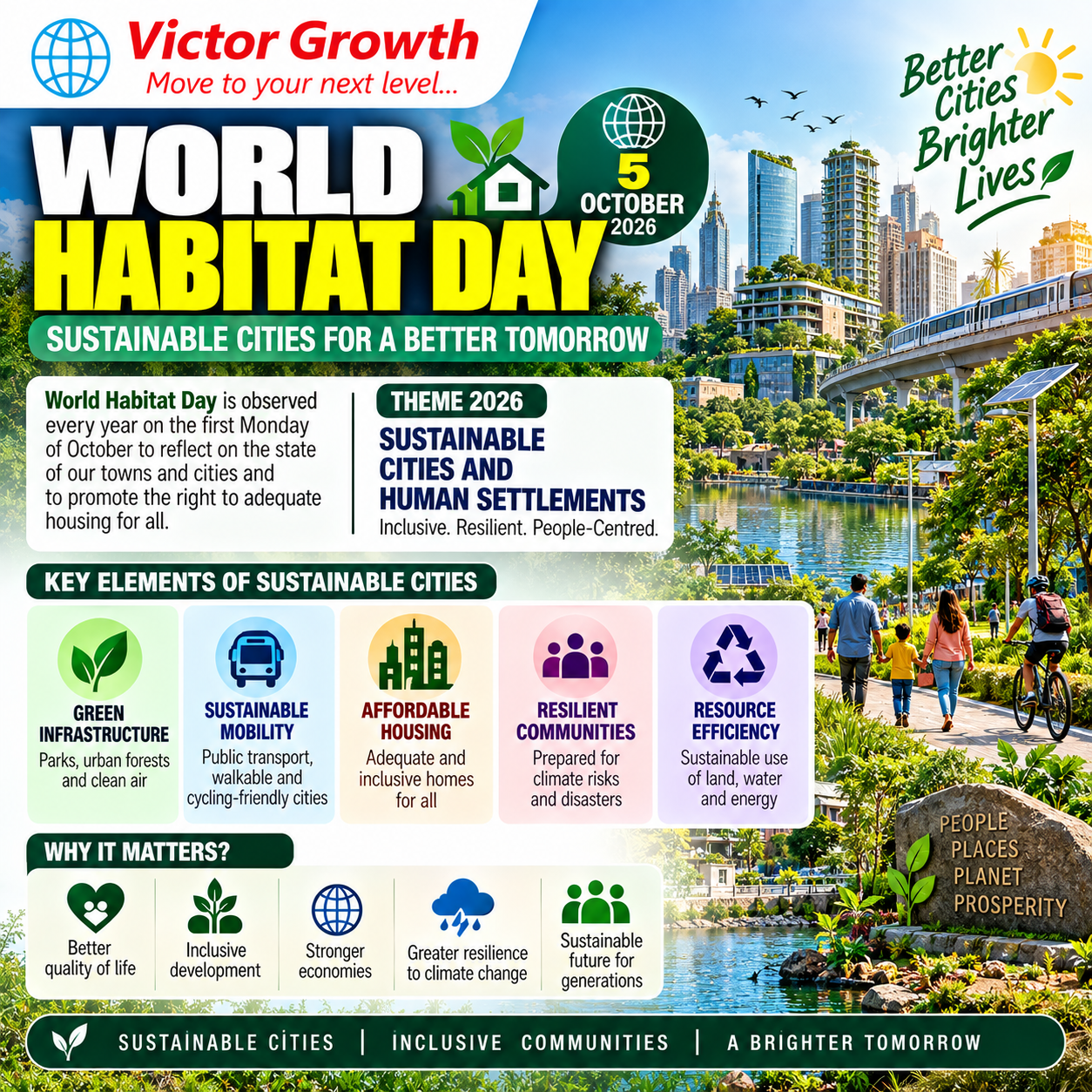
World Habitat Day 2026 will be observed on 5 October, the first Monday of October. The United Nations observes the day to reflect on the state of towns and cities and the basic right to adequate shelter.
The 2026 theme is “Adequate Housing for All”, highlighting the global housing crisis and the need for safe, affordable, accessible, climate-resilient and sustainable housing. The global observance will be held in Muscat, Oman.
According to UN-Habitat, around 2.8 billion people face some form of housing inadequacy, while nearly 1.1 billion people live in slums and informal settlements.
What is World Habitat Day?
The United Nations designated the first Monday of October as World Habitat Day in 1985, and the first observance was held in 1986 in Nairobi, Kenya.
The day seeks to promote awareness about:
Adequate and affordable housing
Sustainable urban development
Inclusive cities
Access to basic services
Climate-resilient settlements
Improved quality of urban life
World Habitat Day also marks the beginning of Urban October, which concludes with World Cities Day on 31 October.
Sustainable Cities: Why They Matter
Rapid urbanisation is increasing pressure on land, housing, water, transport, energy and waste-management systems.
A sustainable city seeks to balance economic development, social inclusion and environmental protection.
Key Features of Sustainable Cities
1. Affordable Housing:
Housing should be accessible to different income groups and supported by secure tenure and basic services.
2. Sustainable Transport:
Public transport, walking and cycling can reduce congestion, pollution and greenhouse-gas emissions.
3. Green Infrastructure:
Urban forests, parks, wetlands and green spaces can reduce heat and improve air quality.
4. Climate Resilience:
Cities need systems capable of dealing with floods, heatwaves, cyclones and other climate-related hazards.
5. Efficient Resource Use:
Water conservation, renewable energy, waste segregation, recycling and circular-economy practices are essential.
6. Inclusive Urban Governance:
Local communities, municipalities and vulnerable groups should participate in urban planning.
India and Sustainable Urbanisation
India’s rapid urbanisation creates both opportunities and challenges. Major concerns include:
Housing shortages and informal settlements
Urban flooding
Air pollution
Traffic congestion
Water scarcity
Solid-waste management
Urban heat islands
Pressure on urban infrastructure
India’s urban-development initiatives such as Smart Cities Mission, AMRUT, PMAY-Urban, Swachh Bharat Mission-Urban and Metro Rail expansion seek to address different dimensions of urban sustainability.
However, sustainable urbanisation requires greater coordination between Union, State and local governments, better urban planning, municipal capacity and innovative financing.
SDG 11: Sustainable Cities and Communities
World Habitat Day is closely connected with Sustainable Development Goal 11 (SDG 11):
“Make cities and human settlements inclusive, safe, resilient and sustainable.”
SDG 11 covers areas such as:
Affordable housing
Sustainable transport
Participatory urban planning
Protection of cultural and natural heritage
Disaster resilience
Reduction of environmental impacts
Access to green and public spaces
The 2026 focus on adequate housing reinforces the connection between housing, human dignity and sustainable urbanisation.
UPSC Relevance
Prelims
Important facts:
World Habitat Day: First Monday of October
2026 theme: Adequate Housing for All
Global observance 2026: Muscat, Oman
Linked SDG: SDG 11
UN-Habitat: United Nations agency dealing with human settlements and sustainable urbanisation
Urban October ends with World Cities Day – 31 October
Mains
GS Paper I: Urbanisation, human settlements and geography
GS Paper II: Urban governance, housing and local government
GS Paper III: Sustainable development, climate resilience and urban infrastructure
Essay: Inclusive and sustainable cities
Possible UPSC Mains Question
“Rapid urbanisation can become a driver of economic growth only when cities are inclusive, resilient and environmentally sustainable. Discuss with reference to India.”
Conclusion
World Habitat Day 2026 highlights that sustainable cities cannot be built without addressing the fundamental need for adequate housing. India’s urban future requires integrated planning that combines affordable housing, efficient infrastructure, climate resilience, sustainable mobility and effective local governance.
For UPSC aspirants, the topic connects urbanisation, sustainable development, climate change, housing, governance and SDG 11.